Pricing and availability
We compare 600+ stores and found this item at 1 store. Prices updated .
Store
Reviews
Price




* Product prices and availability are updated by Equipboard every 24hrs and are subject to change. Equipboard may receive compensation for purchases made at participating retailers linked on this site. This compensation does not affect what products or prices are displayed, or the order of prices listed. For more information, please refer to our affiliate disclosure.
Description
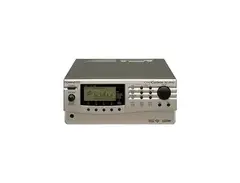
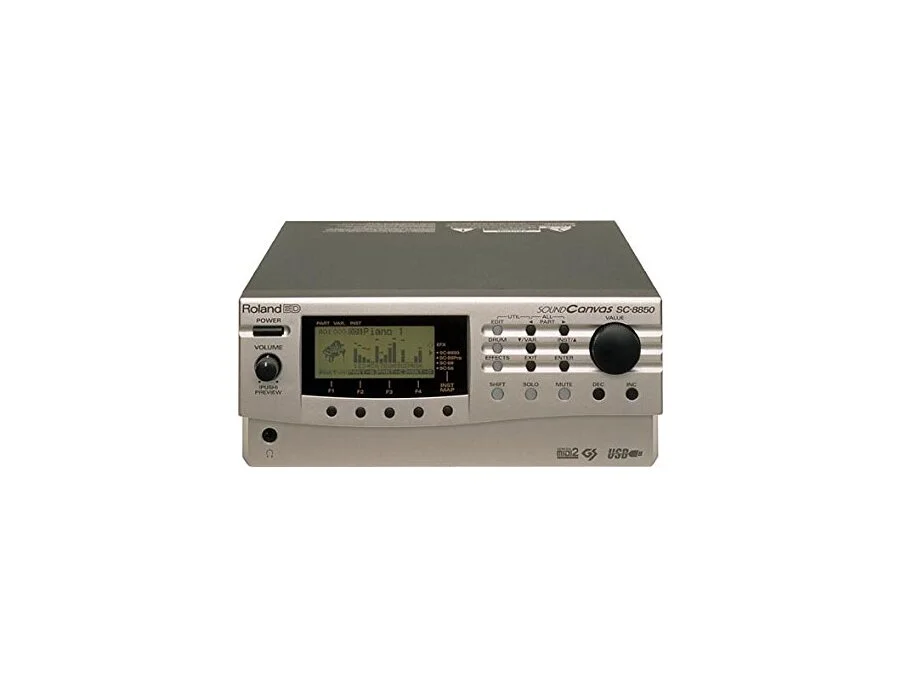
The Roland ED Sound Canvas SC-8850 is a GS-compatible MIDI sound module released in 1999 by Roland under the name Edirol. The SC-8850 was the first sound module to incorporate the new General MIDI Level 2 standard. The SC-8850 uses a PCM sampling engine, supports 128-voice polyphony with 64-part multitimbrality. It comes preloaded with the soundsets of all older Sound Canvas models, as well as the CM-32 and MT-32.
Videos

Speedy DTM
Roland ED SC-8850: The First USB Synth! - Sound Profile
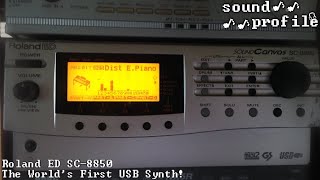
Roland ED SC-8850: The First USB Synth! - Sound Profile
Speedy DTM
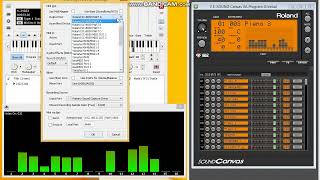
Roland SC-8850 vs Roland SC-8820 (SOUND Canvas VA)

Maven P. Kim
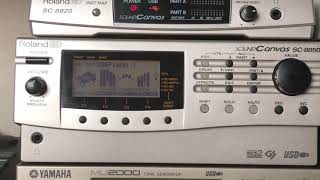
Stargame MIDI on Roland SC-8850

WavetableChannel
Reviews
PROS
-
Solid build with ideal buttons and lighted knobs for easy navigation
-
Dual RCA stereo outputs enhance connectivity
-
Convenient 3.5mm headphone jack and USB-MIDI port
-
Vintage late 20th-century sounds, suitable for retro gaming music
-
Wide range of sounds including great keyboards, basses, and synthesized sounds
-
Features universal switching power supply for global use
-
Offers unique retro sounds reminiscent of early PlayStation era music
-
Easily switch between instrument maps for more sound patches
-
Supports up to 64 MIDI channels across 4 parts
-
Roland provides operating manuals and drivers online
CONS
-
Screen could be bigger and easier to read
-
Limited by one EFX slot, affecting sound effect versatility
-
Inconsistencies in Roland SC map series affecting sound accuracy
-
USB-MIDI port prone to ground loop noise (fixable with USB isolator)
-
USB driver installation can be challenging on modern systems
-
General MIDI 2 map underwhelming; GS mode preferred for better compatibility
Owner Insights
We analyzed real musician discussions from forums and Reddit to find what players love, question, and tweak about Roland ED Sound Canvas SC-8850.
Comparisons
-
The Roland Sound Canvas SC-8850 was a staple synth for Japanese composers in the '90s, often compared to the JV-1080 and later XV-5080 for its distinctive sound.
Source -
Some sounds on the SC-8850 are identical to those on the Roland SC-88, making it a popular choice among composers for its familiarity and versatility.
Source
Use cases and applications
-
The SC-8850's truncated sounds were favored for SNES/N64 game compositions, allowing easier adaptation to the limited sample capacity of those systems.
Source -
Owners enjoy combining the SC-8850 with Maschine+ for a unique blend of 90s rompler sounds, including orchestral and synth patches, offering a nostalgic and distinctive audio experience.
Source
Features and functionality
-
The SC-8850 is noted for its recognizable sound palette, which was prominently used in game soundtracks during the SNES and N64 eras.
Source -
The SC-8850 can operate via USB, managing all four virtual MIDI channels effectively on Linux systems.
Source -
The SC-8850 supports 64-part multi-timbral operation with 128 voices, effectively utilizing its synth engine when connected via USB to Maschine+.
Source
Software and compatibility
-
The Roland SC-8850 works seamlessly with Linux-based distributions like Kubuntu using ALSA, even without the outdated Windows-only drivers.
Source -
The SC-8850 is compatible with Roland's GS Advanced Editor when run through WINE on Linux, offering smooth functionality without native Windows drivers.
Source -
Despite not being class-compliant, the SC-8850 works with Maschine+ due to its Linux-based system, allowing kernel-level support for USB MIDI functionality.
Source
Critic Reviews
4.5 out of 5
Based on 4 Reviews and 5 Ratings

544
Great sounds in a compact box.
The SC-8850 might as well have been my introduction into HW as a whole, and definitely has been my introduction to the world of MIDI modules, whether those are desktop modules like this, or rackmount devices like the JV-1080, JD-990, and so on.
It's got a ton of great sounds that I use quite a lot these days - they might be more than two decades old, but that doesn't make them unusable at all. In fact, I think a device like this really shines in a day and age like today, where a lot of video games set out to emulate an aesthetic that only devices like these can produce, in terms of music.
Even outside of that, it's got great keyboards, fantastic reeds, decent guitars, outstanding basses, decent strings, loads of synthesized sounds, and flattering flutes. It's even got a few more obscure instruments, and while a few of them don't sound great, they're usable if you think outside the box.
The effects are great too, even if a bit limiting at times. You have your standard reverb, delay and chorus that are basically effect sends, but then you also have EFX, with dozens of effects that you can just apply to any sound, like distortion, bitcrushers, compressors, limiters, choruses, flangers, and more. There's even 'combo' versions of these as a single effect. As great as that all is, you only have one EFX slot. You can route as many channels to it as you want, but you don't really get more slots. You can't have both a guitar amp sim and a bitcrusher, for example.

116
Dream synth for old-school MIDI enthusiasts
So let me give you the pros and the cons in a neat little list:
Pros:
-Universal switching power supply, which means you can use this module anywhere in the world without worrying about connecting to the wrong voltage.
-Fun retro sounds that'll bring you back to the early PlayStation/PlayStation 2 era
-A great machine for composing songs with appealing and bright sounds
-If you like Golden Sun or Pokémon Generation 3's soundtracks, most of those sounds are here and accounted for.
-Easy to switch between instrument maps for even more sound patches
-It can sound great with retro PC games such as Rise of the Triad and HeXen, as well as adventure games in ScummVM.
-USB-MIDI port can save you a lot of space in terms of midi ports
-4 parts available, with sixteen MIDI channels each.
-Roland still has the operating manuals and drivers for this module on their site if you're missing one from your purchase.
Cons:
-The Roland SC-55, SC-88 and SC-88 Pro maps all have inconsistencies. From different filters to wrong samples, accuracy is not something you should expect.
-While it's not a big problem, the MIDI outputs only give you access to up to 32 MIDI channels. This won't be a big bother to most users.
-The USB-MIDI port is extremely susceptible to heavy ground loop noise, but with a USB isolator like the one from Nobsound (link further down) this can be eliminated. It still doesn't happen when you use the regular MIDI ports.
-The Roland SC-8850 USB driver can be a pain in the rear to install on modern systems, but thankfully just right-clicking and selecting "Install" on one of the driver folder's files can mostly fix that.
-The General MIDI 2 map is nothing to be excited about, so initialise to GS mode instead. Be aware that some old games don't mesh well with GS, so in that case I'd suggest trying a GM reset instead.
I love this module despite some of its warts, and it's been my workhorse synth for composition since early 2018. Highly recommended for anyone into retro midi sounds.
Link for the Nobsound USB to USB isolator: https://www.amazon.com/Nobsound-Audio-Eliminator-Industrial-Protection/dp/B07GB4CQQ3/ref=as_li_ss_tl?ie=UTF8&linkCode=sl1&tag=clyfaker-20&linkId=42b1653e3f3a725644b4dadfd1afc560&language=en_US

41031
functional GM rompler in a small form factory
I purchsed this second hand very cheaply with the thought I might use it for some extra layered textures when I ahd fewer programmable synths and no dedicated orchestral library. I believe its been recorded a few times but sparingly. Currently resides in a drawer. Its worth so little and takes up so little space being a little table top brick (somewhat taller than a TX7 or TG33 but really small) that its pointless to sell it. There are some respectable mid 90s type of JD/JX series sounds ranging from sample-based analog-alike sounds to chimey D50 and FMish tones and goofy world instrument and orchestral samples. If I recall this has some cheeseball gated drums too, but maybe not as cheesey as the yamaha SY series kits from the 35, 77 and 99... it sines most in key type sounds where its EP and piano sounds are drawn from the old roland digital piano modules (I think) like the MKS20 rack unit.
I think this is basically a rehoused SC-88 with a few more sounds. Mine says edirol on it. The Edirol brand also made a smaller one with elss controls. Those are HELLA cheap now. Skip if you insist programmability.... buy if you want some dated sounds that can't all be found in rompler plugins and sample packs for your DAW for 200 bucks or less.

27306
ehhh... if you want these old sounds, why not just buy one of the Roland cloud plugins? They have pretty much their entire ROMpler library from the D-50 onward tucked into various strangely-packaged ROMpler plugins. They've relented on the subscription thing a bit, and each plugin is now also available to purchase perpetually (they hide this fact, but it's an option)... the interfaces are head-scratching, the CPU use isn't great... but they sound as brilliant and/or crappy as their supposed to without wasting an interface input/mixer channel on hardware that doesn't provide much of that hardware joy.
27306
@jimmarchi1 I realize your purchase was in a different era... I asked about Roland plugins because I trialed the Roland Cloud recently, and the sound quality of both the ROMplers and the VAs was unimpeachable... so I figure it's worth mentioning (for others that might be reading) that Roland can sell you a virtual version that will save it's state along with the rest of your project, and will never needs it's internal battery replaced. :D
41031
@pkennethk aha.... now you're making me consider that pesky cloud service... I keep eyeballing these new jupiters, not to be a jupiter but for their whole roland cloud style 'synth museum' angle...
27306
I hate to admit it, but the 303 and 101 in Roland Cloud are the best I've ever tried. It's not that they're more accurate than ABL3 or TAL Bassline, but they've just got a great musicality where every knob position is gold. The only reason I didn't go forward after the trial was that the Cloud Manager kept dropping my login every other time I opened a new project.... but I'm sure they'll sort that... and I'm sure I'll eventually be back.

226
Very unique sounding module.
My likes:
It has a solid build, The buttons and knobs are ideal, and I like the lighted buttons. It's very easy to access all of the sounds without having to spend a long time trying to find a specific area. It has 2 RCA stereo outputs instead of one. The two tone grey and dark grey/black design. The 3.5mm is convenient honestly compared to a 1/4 inch being the option for phones. The USB option is obviously a nice add on for a '99 instrument. The sounds scream late 20th Century, and I definitely can work with the pads and the EPs from this.
My dislikes:
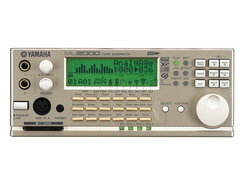
The screen could be bigger and easier to read (viewing from above is partially difficult). The Roland Edirol thing is kinda weird to me but whatever. The MU2000 looks more vibrant IMO and it has more bright lights to see what's being shown.
Preferred Settings + Usage:
JP8000 5thFb, Prologue, Soundtrack, Bowed Glass, Warm Pad, Goblin, E. Piano 1
Artist usage
Add artist
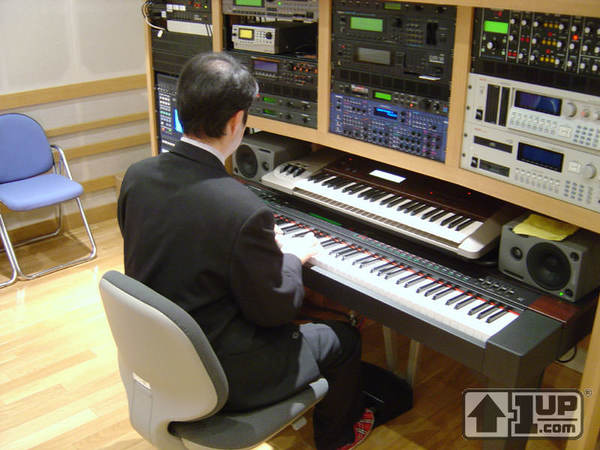
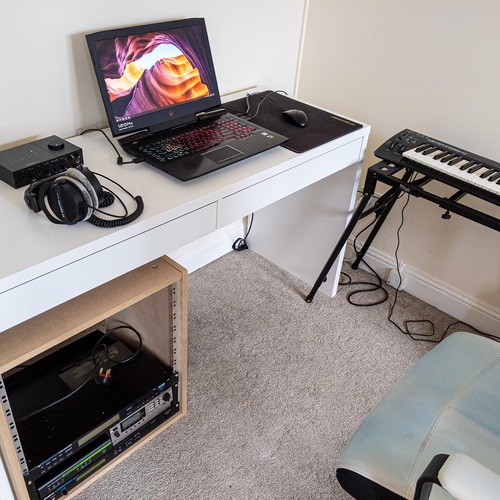
In this picture of Kondo's sound studio from 2006, the SC-8850 is sitting in the left space in the middle of the rack.


Genre Usage
Based on how artists on Equipboard use this gear, it is most commonly found in the following genres.
Used With
Based on how musicians on Equipboard use Roland ED Sound Canvas SC-8850, it is most commonly used with the following gear.



Community setups
Show yoursSimilar
Add recommendation1 alternative for Roland ED Sound Canvas SC-8850, curated by the Equipboard community.

$194.66
The SC-55 is the one that started it all, introducing all the standards Roland would rely on with subsequent synthesizers.
Because it was the first Sound Canvas, it only features around 400 sounds, doesn't have the FX unit, doesn't have an editable filter, envelope or vibrato, and has far fewer voice polyphony (you're going from 128 to 24, or 28 with the Mk2).
However, if you're someone who plays a lot of retro cornputer games that rely on the SC-55, this is the unit you should get regardless of anything - a lot of oddities on the SC-55 aren't replicated on later units (as described in more detail on my SC-55 review)
It's technically not cheaper anymore, those were made in the 90s and it's 2021 (at the time of writing), you'll be finding them used.
In short: If you're a composer and just want a preset box/rompler, go with the 8850 - if you're someone who plays retro DOS games, or listens to a lot of SC-55 midis, or need proper SC-55 compatibility (for composition or otherwise), go for this one instead.
Even if you're none of those, the SC-55 being relatively limited (features-wise) can bring out a lot of creativity out of you.
More Roland Sound Modules
-m.webp?v=1784991674)
$319.49
in Sound Modules Rank


$1,250.00 - $1,999.99
in Sound Modules Rank


$1,388.00
in Sound Modules Rank


$237.54
in Sound Modules Rank


$625.00
in Sound Modules Rank


$119.00
in Sound Modules Rank


$550.00
in Sound Modules Rank


$3,900.00
in Sound Modules Rank


$1,210.97
in Sound Modules Rank


$499.76
in Sound Modules Rank


$209.00
in Sound Modules Rank


$200.00
in Sound Modules Rank


$30.00
in Sound Modules Rank


$330.00
in Sound Modules Rank


$349.00
in Sound Modules Rank


$583.16
in Sound Modules Rank


$130.65
in Sound Modules Rank


$194.66
in Sound Modules Rank


$59.38
in Sound Modules Rank


$1,699.99
in Sound Modules Rank


$200.00
in Sound Modules Rank


$625.87
in Sound Modules Rank


$160.00
in Sound Modules Rank


$160.00
in Sound Modules Rank


$125.17
in Sound Modules Rank


$15.00
in Sound Modules Rank


$2,248.00 - $2,899.99
in Sound Modules Rank

$1,043.11
in Sound Modules Rank


$1,460.36
in Sound Modules Rank


-m.webp?v=1784876535)


Gear Guides





.webp)

Most Popular Sound Modules
Most Popular Brands
-
Added to Equipboard on by
 gboy
gboyGearIQ 2211
-

