


Pricing and availability
We compare 600+ stores and found this item at 1 store. Prices updated .
Store
Reviews
Price




Average Price: $1,250
High-end/Boutique
$200
$801+
Price Tier
Budget
Standard
High-end
* Product prices and availability are updated by Equipboard every 24hrs and are subject to change. Equipboard may receive compensation for purchases made at participating retailers linked on this site. This compensation does not affect what products or prices are displayed, or the order of prices listed. For more information, please refer to our affiliate disclosure.
Description
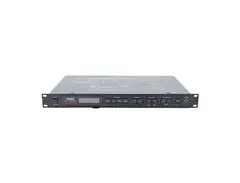
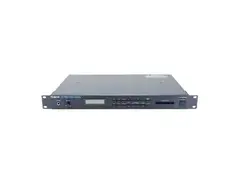
Dive into the lush soundscape of the Roland MKS-70, a timeless classic that brings the full-bodied analog synthesis of the legendary Super JX-10 into a compact, rack-mountable form. Perfect for studio musicians and live performers alike, this synthesizer offers unparalleled depth, from warm pads to piercing leads, thanks to its dual DCOs and resonant analog filter. Whether you're crafting intricate soundscapes or adding that missing piece to your track, the MKS-70 stands ready to breathe analog life into your music, without cluttering your space.
Key Features:
- 12-voice polyphony for rich, layered sounds
- Dual Digitally Controlled Oscillators (DCOs) per voice for detailed sound shaping
- Resonant 24dB/octave analog filter, infusing warmth and character
- Comprehensive MIDI implementation for seamless integration into modern setups
- PG-800 programmer compatibility for hands-on control over sound design
- Compact, rack-mountable form factor, ideal for space-conscious studios and stages
Product specs
| Brand | Roland |
| Model | MKS-70 Rackmount Analog Synthesizer |
| Finish | Black |
| Year | 1986 - 1990 |
| Made In | Japan |
| Categories | Analog Synths, Rackmount Synths |
| Analog / Digital | Analog |
| MIDI I/O | MIDI Input, MIDI Output, MIDI Through |
| Polyphony | 12 Voices |
FAQs
-
What type of synthesis does the Roland MKS-70 use?
-
The Roland MKS-70 is an analog rackmount synthesizer, known for its rich, warm analog sound, characteristic of the classic Roland sound from the 1980s.
-
How many voices of polyphony does the Roland MKS-70 support?
-
The Roland MKS-70 supports 12 voices of polyphony, allowing for complex, layered sounds and chords.
-
Can the Roland MKS-70 be integrated with modern MIDI setups?
-
Yes, the Roland MKS-70 features MIDI Input, Output, and Through, making it compatible with modern MIDI setups for seamless integration.
-
What are the standout features of the Roland MKS-70's sound engine?
-
The MKS-70's sound engine is renowned for its dual DCO architecture, offering lush pads, rich strings, and powerful basses that are ideal for a wide range of musical genres.
-
Is the Roland MKS-70 suitable for live performance?
-
While primarily designed as a studio module, the MKS-70 can be used in live performance settings with appropriate MIDI controllers, offering versatile sound options for live musicians.
Videos

SyntheticMachines
Roland MKS-70
Roland MKS-70
SyntheticMachines
Roland MKS-70 & MPG-70 Controller | The Perfect Match!

Espen Kraft
64 new sounds for Roland JX10/MKS70 Vecoven PWM 4.xx update

The Synth King
Roland MKS-70 Super JX

Perfect Circuit
Roland MKS-70 / JX-10 Super JX (1986) Analog Synthesizer Part 1

Nacho Marty Meyer
Roland JX-10/MKS-70 new sounds
The Synth King
Roland MKS-70 "Super JX" Presets (DI Recorded)

Greg
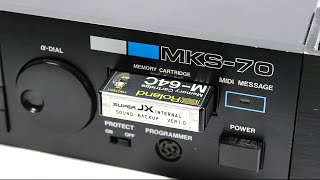
Roland MKS-70 / JX-10 Super JX (1986) Analog Synthesizer Part 3
Nacho Marty Meyer
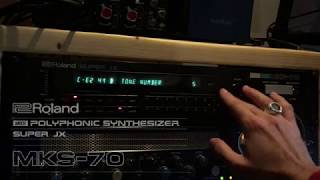
Roland MKS- 70 Tones exploration

Miguel d'Oliveira
Reviews
PROS
-
Multi-layered analog sounds offer vast sonic exploration
-
Two tone patches per preset for complex sound combinations
-
Vecoven firmware update enhances usability and features
-
12 voice, 24 DCO design for rich, powerful output
-
Bi-timbral capability allows for versatile sound production
-
Compatible with PG-800 for easier programming
CONS
-
Original presets can be misleading; manual editing required
-
Programming can be challenging without external controller
-
Considered overpriced compared to modern alternatives
-
Original OS may have limitations and bugs
Owner Insights
We analyzed real musician discussions from forums and Reddit to find what players love, question, and tweak about Roland MKS-70.
Features and functionality
-
The MKS-70's "dual mode" layers sounds from both synth engines across the entire key range, enhancing its versatility in sound design.
Source -
Some owners experience a common issue with the display where all segments light up, contributing to noise, which suggests a need for regular maintenance.
Source -
The JX-10 keyboard is noted for its quiet, semi-weighted action, although aftertouch often fails after decades of use.
Source
Use cases and applications
-
One user successfully used the MKS-70 for a "one-synth challenge," highlighting its capability to handle all melodic parts for an entire track.
Source
User experience
Software and compatibility
-
The MKS-70 integrates well with DAWs like Cubase, allowing seamless replacement of General MIDI tracks with custom patches for enhanced audio quality.
Source
Mods and upgrades
-
The aftermarket Vecoven firmware upgrade significantly enhances the MKS-70's capabilities, especially when paired with Max4Live tools to explore new sound possibilities through random CC values.
Source -
The Vecoven PWM upgrade and the forthcoming FPGA version are highly anticipated by users for their potential to elevate the MKS-70's sound quality further.
Source -
Vecoven firmware adds full MIDI CC control and a MIDI clocked arpeggiator to the MKS-70, enhancing programming ease and functionality.
Source
Setup and maintenance
-
Original PSU capacitors may need replacing as they exceed their lifespan; this is crucial for maintaining optimal performance and avoiding potential issues.
Source -
The MKS-70's disassembly can be challenging due to its densely packed internal components, requiring careful handling to avoid damaging old, fragile PCBs and pads.
Source
Critic Reviews
4.5 out of 5
Based on 2 Reviews and 14 Ratings

Lush late 80's sound
I just got the last firmware version on eBay, yet to install it, but hopefully will be easier to use and less buggy.


411
eBay??? Usually ver. 3.x firmware is sold directly from the author... Or do you mean Firmware 1.08?

1312
PG-800 doesn't work with Vecoven Firmware does it?
Artist usage
Add artist

David Rosenthal's understage control center includes a Roland MKS-70 with its PG-800 programmer, as detailed in his feature in Keyboard Magazine.


Moving on, a rack of modules provides a fair range of sounds to back up the Synclavier. One of the newest additions is an Emu Procussion, below which are a Roland MKS70, MIDIMoog ("it still goes out of tune; I was told it wouldn't"), Oberheim Matrix 6R, Korg DVP1, a slot for a Yamaha G10 guitar controller unit ("great with the TX802"), Roland D110, Roland P330, Yamaha TX81Z ("great for little clavs and so on"), and a Roland Planet P ("actually, I don't think I even turn that on any more").


"Regarding synth I use a lot of different ones like Prophet VS , Mini Moog , Casio Cz5000, yamaha Dx100 , Emu SQ80 , Polymoog, Korg Poly 800 , MonoPoly , 01WFD, Roland MKS 70"

:format(jpeg):mode_rgb():quality(90)/discogs-images/R-3089190-1374902675-4218.jpeg.jpg)
Roland MKS 70 is included in list of instruments played by Suzanne Ciani.

Eric Persing has had a unique and influential relationship with Roland Corp for two decades. He started as a product demonstrator in 1984, showing some of Roland's first MIDI instruments. He quickly became involved in the R&D side with Roland Japan, earning the title "Chief Sound Designer", and began contributing his design ideas, real-world studio experience and sound design expertise. Persing's skills have left their mark on countless classic Roland instruments.
He is the originator of many legendary Roland sounds that have become part of the vocabulary and lexicon of musical sound. These include the Factory D-50 sounds such as Fantasia, Soundtrack and Digital Native Dance, a majority of the JV/XP/XV series Classics, all the Factory JD-800 sounds, the original Juno "Hoover" sound and thousands of others.
Here is a partial list of the Roland instruments that Eric has contributed his sound design, sampling and design consulting skills:
Juno-106 Alpha Juno 1&2 JX-3P JX-8P JX-10 Jupiter 6 Super Jupiter D-50 D-550 D-110 D-10 D-20 D-70 MT-32 U-110 U-20 U-220 Sound Canvas JD-800 JD-990 JV-80 JV-90 JV-1000 JV-1080 JV-2080 XP-10 XP-50 XP-60 XP-80 XV-3080 XV-5050 XV-5080 Fantom JP-8000 JP-8080 S-10 S-220 S-50 S-550 S-770 S-760 S-750 MC-303 MC-500 MC-505 VP-9000 MSQ-700 MSQ-100 MKS-20 MKS-30 MKS-50 MKS-70 MKS-80 R-8 R-5 DR-660 DR-770 R-70 V-Drums V-Drums expansion board SRV-2000 DEP-5 RSP-550 R-880 SRV-330 SE-50 SE-70 VS-880 VS-1680 SR-JV series expansion boards SRX series expansion boards Sound Canvas Project series CD-ROM libraries Archives series CD-ROM libraries Composers series CD-ROM libraries

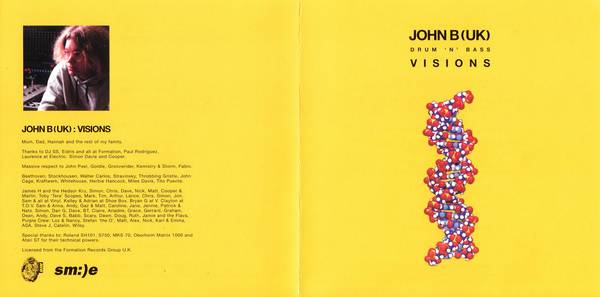
CD booklet of the album visions from 1998.
"Special thanks to: Roland SH101, S750, MKS-70, Oberheim Matrix 1000 and Atari ST for their technical powers."


Überzone is listed as using the Roland MKS-70 in the instrument list featured in the Academic Dictionaries and Encyclopedias article.

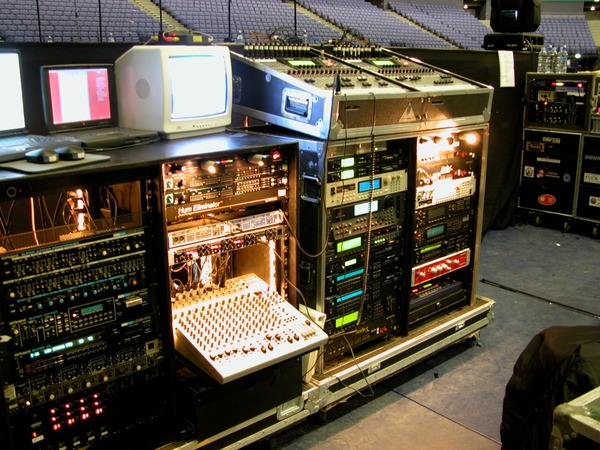
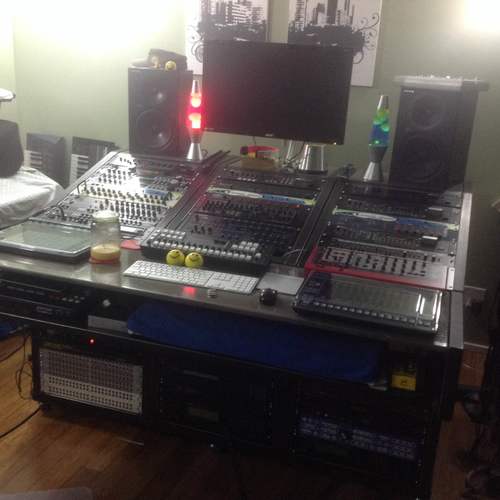
In this photo the MKS-70 can be seen in the far left rack below the MKS-80.

Eric Chevalier's gear list circa 2003:
Mixing Consoles: - Sony DMX-R100 - Yamaha 01V Monitors: - Genelec 1031.A - Genelec 1030.A Samplers: - Akai s6000 (x2) - Akai CD3000XL - Roland S760 (x4) - Roland SP 700 Synthesizers: - Roland JD800 - Roland JD990 - Roland MKS80 + PG - Roland MKS70 + PG (x2) - Roland XV3080 - Roland D550 - Roland A80 - E-MU Proteus 2000 - Yamaha TX802 - Kurzweil MicroPiano - Korg M1R EX - Korg Wavestation AD - Korg Triton - Alesis DM5 (drum machine) - Access Virus A - Access Virus C - The theremin - Nord Lead Computer (& Plugins): - PowerMac G4/733 - PowerBook Titanium - Monitors Plasma (x2) - Pro Tools Mix Plus (software) - Logic Audio Platinum (+ eMagic plugins) - Spectrasonics Athmosphere - Spectrasonics Stylus - Mac Five - DD 80 Go + 120 Go + 160 Go LaCie - DD 40 Go Ice - Synchro: "Time Machine" C Lab - Unitor MK2 (x3) Effects: - Lexicon 480L - PCM80 / LPX15 - Yamaha SPX90 / D1500 (x2) - Tube Tech Compressor LCA 2B - EQ Moog - TC Electronics M5000 - TC Electronic Finalizer 96K - DAT Panasonic SV-3800 - DAT Sony PCM R500


"I love Ensoniq Mirage sounds, and I've just bought the Roland Super JX module, and I like that a lot, there are so many sounds that are classics and that the new synths can't do. It's so rich; for pad sounds and horn sounds you can't beat it."

"A Prophet T-8 was the main controller, although not used all that much as sound source. A Yamaha DX-7 and TX-7 were used for all the electric piano sounds. A lot of the strings were a combo of two Roland synths, the MKS-70 and the D-550. I used an Akai s1000 a lot and a Linn 9000 as sequencer, drum machine (this was before powerful computers were easy to transport). An Emulator 2 was used for the guitar and many other samples."

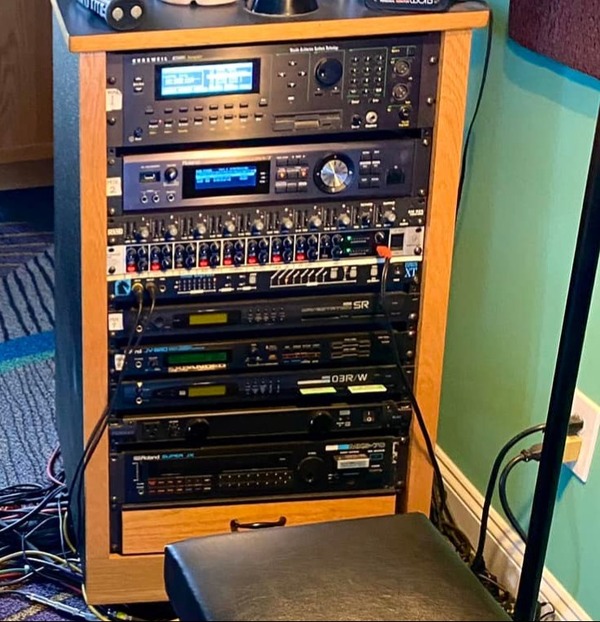
Bill Cuomo is confirmed to use a Roland MKS-70, as shown in a photograph on his Facebook music page, where the synthesizer is visible in a rack case in his studio. The image has been enhanced for better viewing.
Source: https://www.facebook.com/photo?fbid=405480918363560&set=pcb.405481231696862
Album Usage
The Roland MKS-70 has been featured on the following albums:
Genre Usage
Based on how artists on Equipboard use this gear, it is most commonly found in the following genres.
Used With
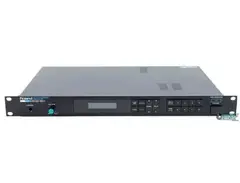
Based on how musicians on Equipboard use Roland MKS-70, it is most commonly used with the following gear.




Community setups
Show yoursSimilar
Add recommendation1 alternative for Roland MKS-70, curated by the Equipboard community.

$292.57
More Roland Sound Modules
-m.webp?v=1783238222)
$350.00
in Sound Modules Rank


$1,200.00 - $1,999.99
in Sound Modules Rank


$1,350.00
in Sound Modules Rank


$298.54
in Sound Modules Rank


$630.00
in Sound Modules Rank


$119.00
in Sound Modules Rank


$500.00
in Sound Modules Rank


$3,900.00
in Sound Modules Rank


$500.00
in Sound Modules Rank


$199.99
in Sound Modules Rank


$200.00
in Sound Modules Rank


$30.00
in Sound Modules Rank


$330.00
in Sound Modules Rank


$349.00
in Sound Modules Rank


$575.00
in Sound Modules Rank


$140.00
in Sound Modules Rank


$154.00
in Sound Modules Rank


$59.71
in Sound Modules Rank


$1,699.99
in Sound Modules Rank


$200.00
in Sound Modules Rank


$200.00
in Sound Modules Rank


$627.41
in Sound Modules Rank


$200.00
in Sound Modules Rank


$125.48
in Sound Modules Rank


$2,248.00 - $2,899.99
in Sound Modules Rank


$15.00
in Sound Modules Rank


$1,045.69
in Sound Modules Rank


$2,450.00
in Sound Modules Rank


-m.webp?v=1783238730)


Accessories & Related Items


Most Popular Sound Modules
Most Popular Brands


