

Pricing and availability
We compare 600+ stores and found this item at 7 stores. Prices updated .
Store
Reviews
Price







Average Price: $74
Standard/Professional
$59
$150+
Price Tier
Budget
Standard
High-end
Price History
Based on price data from 6 merchants for "Universal Audio 1176 Classic Limiter Plugin Collection". Prices shown reflect NEW condition. Tracking began Apr 2, 2026.
* Product prices and availability are updated by Equipboard every 24hrs and are subject to change. Equipboard may receive compensation for purchases made at participating retailers linked on this site. This compensation does not affect what products or prices are displayed, or the order of prices listed. For more information, please refer to our affiliate disclosure.
Description
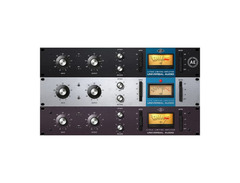
The Universal Audio 1176 Classic Limiter Plugin Collection is a quintessential tool for any audio engineer or musician seeking that signature compression sound. This legendary emulation offers three distinct versions of the iconic 1176 hardware compressor: Rev A, Rev E, and the Anniversary Edition Rev AE. Each version captures the unique tonal characteristics and behavior of its era, allowing you to infuse your tracks with the same warmth and character that have graced countless hit records.
The Rev A "Bluestripe" delivers the original Putnam design with its higher distortion and distinctive FET gain amplifier qualities, perfect for adding a vintage touch. Meanwhile, the Rev E "Blackface" brings the early 1970s low-noise improvements with a more straightforward compression behavior, ideal for clean and precise audio processing. The Rev AE "Anniversary Edition" adds a modern twist with exclusive modifications like a 2:1 compression ratio and an additional 10ms attack mode for those who crave versatility in their mixes.
Beyond its authentic emulations, this plugin collection embraces modern workflows with features like parallel compression and a sidechain filter to control low-frequency pumping. Enhanced graphics and improved VU metering ensure a seamless integration into today's digital environments. Plus, with expert presets from industry legends like Andy Johns and Andrew Scheps, achieving professional sound has never been easier.
Key Features:
- Emulates three versions: Rev A, Rev E, and Rev AE
- Original Putnam FET limiter design with unique gain amplifier characteristics
- Modern features include parallel compression and sidechain filter
- Compatible with Mac and Windows, plus support for Apollo interfaces and UAD-2 hardware
- Includes artist presets from leading engineers
Product specs
| Available since | March 2023 |
| Los artikel / bundelartikel | Los artikel |
| Delay | No |
| Dynamics | Yes |
| Effect Filter | No |
| Encoder/Decoder | No |
| Equalizer | No |
| Guitar amps/-effects | No |
| Channel Strip | No |
| Metering / Analysis / Correction | No |
| Modulation Effects | No |
| Multieffect / Plugin-Host | No |
| Overdrive/Distortion | No |
| Preamp / Saturation | No |
| Psychoacoustic tool / Enhancer / Exciter | No |
| Restauration | No |
| Reverb | No |
| Special FX | No |
| Summer / Mixing Consoles | No |
| Tape Simulation | No |
| Pitch Shifter / Harmonizer / Timestretching | No |
| Transient Processing | No |
| Vocoder / Vocal effect | No |
| Mastering Tools | No |
| Hardware Controller | No |
| Download | 1 |
| Requirements | registered Universal Audio UAD-Plugin |
FAQs
-
What are the differences between the Rev A, Rev E, and AE versions of the Universal Audio 1176 Classic Limiter Plugin?
-
The Rev A offers a brighter, more aggressive sound, the Rev E is known for its smoother, more balanced tone, and the AE version provides extended attack and release controls for greater flexibility.
-
Does the Universal Audio 1176 Classic Limiter Plugin Collection require any specific hardware to operate?
-
No specific hardware is required to operate the Universal Audio 1176 Classic Limiter Plugin Collection. It can be used as a native plugin with any registered Universal Audio UAD-Plugin.
-
Can the Universal Audio 1176 Classic Limiter Plugin Collection be used for mastering?
-
While primarily designed for tracking and mixing, the 1176's fast attack and release times can be creatively utilized in mastering for adding punch and character to mixes.
-
What are the "All-Button" and "No Ratio" modes in the Universal Audio 1176 Classic Limiter Plugin Collection?
-
The "All-Button" mode engages all ratio buttons for a highly aggressive compression effect, while "No Ratio" mode allows for subtle saturation without compression, offering unique tonal options.
-
Are there any presets included with the Universal Audio 1176 Classic Limiter Plugin Collection?
-
Yes, the plugin collection includes presets from renowned 1176 users such as Andy Johns, Andrew Scheps, and Ed Cherney, providing users with professional starting points for various applications.
Videos

Universal Audio
5 Minute UAD Tips: 1176 Classic Limiter Plug-In Collection
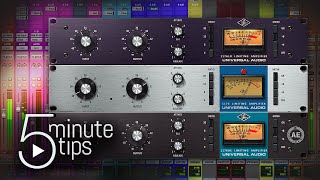
5 Minute UAD Tips: 1176 Classic Limiter Plug-In Collection
Universal Audio
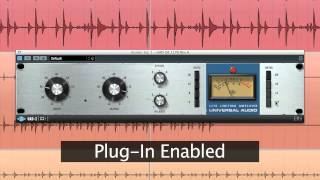
Tips & Tricks — 1176 Classic Limiter Collection Plug-Ins
Universal Audio
UA 1176 Classic Limiter Plug-In Collection | UAD Quick Tips
Universal Audio
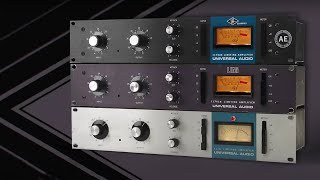
UA 1176 Classic Limiter Collection Trailer | UAD Native & UAD-2
Universal Audio
Extended Review of Universal Audio 1176 Classic Limiter Plug-In Collection

Production Expert
UAD 1176 Limiter Collection Secrets - UADx & UAD-2

Steve Kinney
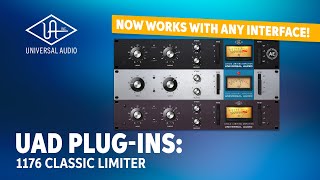
Universal Audio UAD 1176 Classic Limiter Collection Plug-in Demo

Sweetwater
Universal Audio 1176 Collection vs Hardware 1176

The Studio Rats
Reviews
PROS
-
Excellent emulation of vintage gear, offering authentic 1176 sound
-
Offers three distinct variants with unique tonal qualities
-
Transparent audio processing compared to other plugin clones
-
Maintains character even with exaggerated settings
-
Highly musical, balanced sound with impressive depth
-
Easy integration into existing workflows as a versatile compressor plugin
-
Outperforms many other software versions in sound quality
-
Provides a cost-effective solution compared to hardware equivalents
CONS
-
Requires constant internet connection for cloud-based authorization
-
iLok system is less favored compared to other authorization methods
-
Cannot compensate for poor performance or input quality
Owner Insights
We analyzed real musician discussions from forums and Reddit to find what players love, question, and tweak about Universal Audio 1176 Classic Limiter Plugin Collection.
Features and functionality
-
The 1176 plugin offers variable time constants across its three versions, making it highly adaptable for different compression needs.
Source -
The LA-2A plugin, while limited by fixed ratio and speed, includes a mix knob for parallel compression to reintegrate transients.
Source -
The 1176 Classic Limiter Collection lacks a mix knob and headroom adjustment, limiting its flexibility compared to other plugins with more control options.
Source -
The 1176 plugins now include a wet/dry knob, offering more flexibility for parallel compression directly within the plugin.
Source -
The UAD Neve 33609 is highlighted as a stereo compressor, while the 2254 offers a dual mode for stereo applications, providing versatility in bus compression.
Source
Use cases and applications
-
The 1176 is noted for effectively clamping down on transients and is suitable for a wide range of audio sources.
Source -
The Fairchild can be beneficial on the mix bus, often praised for its consistent excellent sound quality.
Source -
The UAD API 2500 is noted for its clean and transparent limiting capabilities, preferred by some for use on the master bus in jazz projects.
Source
User experience
-
The Fairchild plugin is praised for its quality even without adjusting settings, providing immediate sound enhancement.
Source -
Users express frustration over distinguishing between the 1176 Classic Limiter Collection and UA 1176 Classic FET Compressor due to unclear versioning and functionality labels.
Source -
Owners appreciate that just running audio through UAD plugins can add a subtle coloration, enhancing mixes without additional processing.
Source
Comparisons
Software and compatibility
-
Owners face confusion between UAD-2 and UADx compatibility, with some versions requiring specific licenses to function on Apollo hardware.
Source
Value and pricing
5.0 out of 5
Based on 2 Reviews and 22 Ratings
80
I love the UAD 1176
I love the UAD 1176. Espacaly the Ref A (modeld after the Ref B) it ads so much Flavor.
Preferred Settings + Usage:
Fast Attack, Mid release and the threshould so that only the loudest parts Compress, after that soft Compression by a LA-2A

5453
Ok!
Wow, not bad. Not like having the hardware but not bad.
I've used these a lot & I don't have the usual list of complaints. I track with outboard hardware whenever possible but I've had lots of situations where I ran outta hardware channels & inserted this and/or the LA2A & was pleasantly surprised.
Sound better than any other plugin "version" I've heard yet. Can't believe I'm saying it but they don't just control, they sound good. I've tried subbing them out for other options & these just sound more pleasing to my ears.
Not like the hardware but I'd feel good recommending these.
Artist usage
Add artist

The Universal Audio 1176 Compressor is one of Diplo's go-to plugins for vocalists.


In this inteview, Steve Aoki gives us a look to the main gear he use to produce records in both of his studios : The ''Neon Future Cave'' in Las Vegas, NV and the ''Dim Mak Studio'' in Los Angeles, CA.
Then I’m adding some inbox compression with the Universal Audio 1176LN compressor and the Teletronix LA-3A Classic Audio Leveler.


I'm using a lot of the Universal Audio plug-ins, which are fantastic emulations of original analogue stuff. Now I'm able to use emulations of a lot of the old analogue compressors, like the Fairchild or the 1176, and the EMT 140 plate — many of the things they were using at the time.

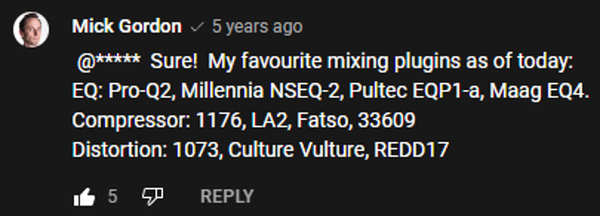
In the comment section of this video: https://www.youtube.com/watch?v=-bsXuaIVMB4 Mick answers questions and in one of his replies to a question regarding his favorite plugins, he mentioned this plugin
.jpg?v=1784733415)
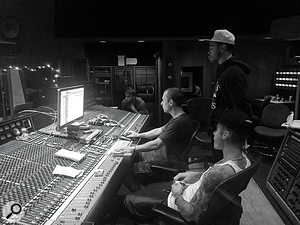
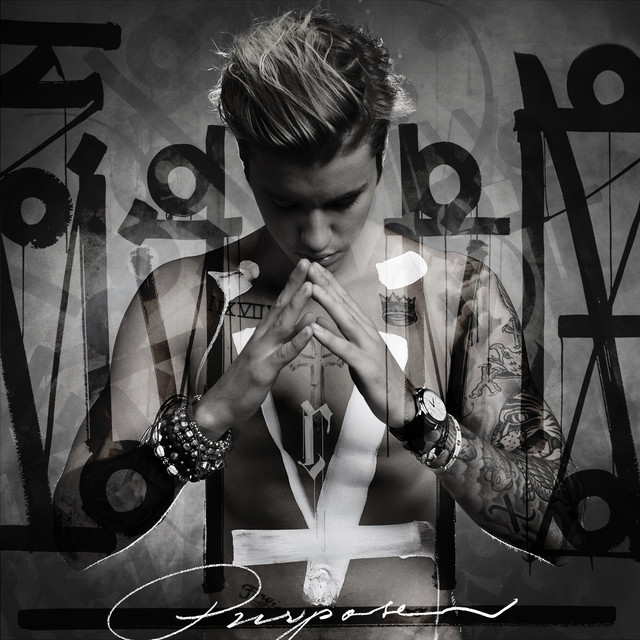
Used on Purpose, as stated by mix engineers Josh Gudwin and Andrew Wuepper in this May 2016 Sound on Sound interview about the mixing of the title track and others.
Gudwin picks out a few other interesting tracks, beginning with a vocal track named ‘vcls’. “That track contains a vocal sample that Blood made of Justin’s vocal. I’m just touching that with the LFO Tool for a bit of pumping, I take out some high frequencies with the Pro-Q 2, and then use the SoundToys Microshift for a slight pitch-shift/chorusing effect. ‘Sry1V’ below that is the vinyl sound in the track. ‘$JBU’ is the main lead vocal bus, on which I have the UAD 1176, Waves De-Esser, Manley Massive Passive, Metric Halo Channel Strip. The sends are to the generic aux tracks at the bottom of the sesion: verb, ping-pong delay, Dimension D. Below the lead vocal bus is the print track of a Bricasti outboard.”
Wuepper: “There are two tracks called ‘Bric’ around the main vocal bus; the one above is the print from the Bricasti effect that was used on the percussion, and the one below is the print of the Bricasti reverb on the vocal. Next are Josh’s vocal delays. Putting delays on audio snippets [ie. copying short vocal clips to new tracks and applying delays as inserts, rather than automating a send from the main vocal track] is a pretty interesting way of doing things. I’ve not seen anyone else do this, but it makes it easier for Josh to manipulate these delays and to go deeper into the effect. He can really fine tune the delay times and decay lengths and so on. Sometimes the feedback you get with plug-ins can act a little weird, and this approach allows him to have more control.”
Gudwin: “The five green tracks are all vocal throws and delays. I don’t like to automate delay throws via aux tracks. The top green track is the master track for the delays, ‘JB Throw All’, and it has a compressor and an SPL Vitalizer. The ‘1147’ delay track has the UAD Cooper Time Cube, with a quick ping-pong-y flutter delay that I use to widen, and the track called ‘1167’ has a basic eighth-note delay from the Echo Boy. The ‘A’ insert is Auto-Tune, but it’s not working on these tracks. When needed, our vocal tuning is normally done by Chris ‘Tek’ O’Ryan in Melodyne. I sometimes do it myself, if I have the time do it, in the stand-alone version.
“The blue vocal tracks below the vocal delay tracks are the main lead vocal comp tracks, and on many of them I have the UAD SSL Channel Strip, UAD LA-2A, and the Waves C6 multiband compressor, and sometimes also the Pro-Q 2 EQ. The ‘DLYP’ track has a delay pan effect, with the SoundToys Primal Tap delay and Panman auto-panner, SSL Channel Strip and the P&M Vinylizer. ‘White’ and ‘Master’ are printed reverbs recorded in two rooms at Henson. They are my main plug-in vocal reverbs, and the green tracks below are pitched with the Elastic Audio X-Form [in Pro Tools] and effected with the Waves H-Compressor for a pumping effect. I pitched the reverbs up an octave or two, and I mixed them in very low. The ‘PCM’ and ‘PC1’ tracks are prints from ping-pong delays from the Lexicon PCM42 outboard.
“Justin’s backing vocal tracks all go to the group track called ‘JBG1’, on which I have a Waves De-esser, an SSL Channel and the C6 multiband compressor, plus there are a number of delays and reverbs via the sends. Trevon’s backing vocals all go to ‘JBTR’, which has similar effects. I wanted to fill the song up a bit more, and sometimes it’s not the most enjoyable process for an artist to sing all these background parts. Plus a different vocalist will add a different texture to the song, as long as it complements the lead vocal and the record. As I mentioned, Julia added her vocals during the final mix in New York, and her group track also has the De-esser, SSl Channel and C6. Right at the bottom are some effects tracks, with the Dimension D and group delay throws, and so on.
(...) 'Love Yourself'
(...) Next are Justin’s vocals, with I overdubbed in New York. Almost all the regular vocal tracks have the UAD SSL Channel, LA2 and the Waves C6 multiband compressor. These three plug-ins work great on his vocals, so I tend to stick with them. Each of the vocal tracks has slightly different settings from them. They all go to Justin’s lead vocal bus above them, which has the FabFilter Pro-DS de-esser and the Pro-2 EQ. Justin’s lead vocals also go through the Bricasti, and the effect is printed. My own four backing vocals went through a vocal bus on which I had the SSL Channel, and a compressor, but they didn’t do much, nor did the sends. These vocals are very much in the background, I just wanted to add some texture really quickly. Finally, at the top of the session everything went through a Master track, on which I had the UAD SSL channel, mainly for compression set to mid-attack and auto-release — without drums you don’t need the slow attack and quick release — a Massey EQ, boosting 100Hz and 16kHz, a FabFilter Pro-L for level, and the Sonnox Oxford Inflator to add some sheen.”
'What Do You Mean?'
(...) “There were a few more complicated vocal effects, like the ‘JG FX’ track, on which I used the Vitalizer doing some spatial expanding, a UAD Fatso to thicken it up, and I then cut some low mids with an EQ, and used a de-esser. This effect track gave more depth to the vocal and made him sound more like an angel! Underneath that are two ‘Radio’ tracks [which sound like they could have come straight from Peter Gabriel’s ’80s Fairlight experiments]. I used Auto-Tune to pitch the vocals up, and then put on a SoundToys AlterBoy, which changed the formant, and then I’m filtering 350Hz and below.
“Below the ‘radio’ tracks are all my vocal delay tracks, in green as usual, with the bus for all delay throws at the top. One delay track, ‘Splaater’, is a flutter delay with Auto-Tune and the Cooper Time Cube, and the other two have the Waves H-Delay and SoundToys Echo Boy. They’re both quarter-note delays, but with different feels. Below the delay tracks are some ad lib tracks, and all the actual lead vocals, pulled out over several tracks. Most of them have my regular trio of UAD SSL Channel, LA2 and Waves C6 plug-ins, and all vocals are sent to the ‘JB Buss’, on which I have the FabFilter DS de-esser, a Manley EQ doing light cuts at 330Hz, 560Hz and 3kHz, and then a whole bunch of sends to my regular aux tracks at the bottom: a hall reverb, a plate reverb, a light quarter-inch delay, a light ping-pong delay and a Dimension D.
“Further down are four Justin backing vocal tracks, which go to a bus above them, ‘JBG1’, on which I have the SSL Channel, boosting highs and cutting lows and doing some heavy compression, a UAD 33609 compressor, and then the Waves Enigma [phaser/flanger] on a Mutron setting, adding some sweeping sounds. The sends are once again hall and plate reverbs, a quarter-note and a ping-pong delay and a UAD Roland Dimension D. Once Justin had decided to go with my rough mix, I spent another half hour on it, doing some EQ adjustments, and that was it.”


When the black Mac Pro was introduced, I switched from the UAD-2 Quad PCIe card to the UAD-2 Satellite Thunderbolt OCTO . One of my favorite plug-ins is the 1176 Classic Limiter, which I always use for snares . I often use A of the blue line, but since the timing of the distortion is different, I use it like a lottery (laugh). Other than the 1176 Classic Limiter, I also like the Brainworx bx_refinement and the Studer A800 Multichannel Tape Recorder . Brainworx bx_refinement is a sound that doesn't hate, and the Studer A800 Multichannel Tape Recorder should have a good ear familiarity. The sound is glossy, but it doesn't hurt your ears.


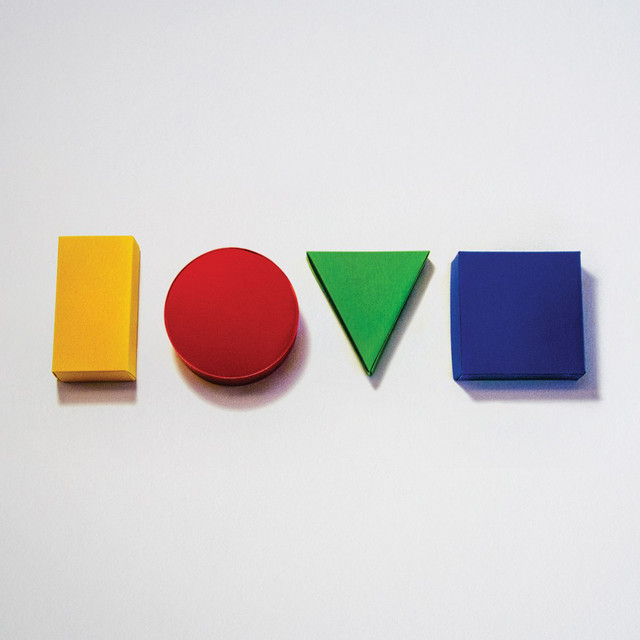
Used for the vocals on Love Is a Four Letter Word, as stated by producer Joe Chiccarelli in this July 26, 2012 Universal Audio blog interview.
Often when we mixed there was a plug-in on [Jason Mraz’s] vocal, whether it was the Teletronix® LA-2A Classic Leveling Amplifier, or an 1176 Classic Limiter, any additional compression came from plug-ins. Then, maybe some EQ for air on the top of his vocal. Jason’s got a lot of beautiful air and tone to his voice, so often I would enhance that with a plug-in.


"First of all, I have a compressor, it's, um, again, Universal Audio, the 1176. Perfect for drums." (15:14)
At 15:26, Thomas opens an instance of the 1176 on screen.


The 1176LN Rev E plugin was used for the bass track on "Beggin", as described by Alessandro Marcantoni in this October 2021 Sound on Sound interview.
“I kept the bass in place with the UAD 1176LN E, and it also has a send to the Room aux, which has a UAD Ocean Way room reverb. I added compression to the guitar tracks with the UAD LA‑2A S, and there are sends to the Hall aux, with a UAD Lexicon 224, on the two main guitar tracks. The two guitar tracks that I pulled out for the B sections have sends to the Hall and to the Chorus aux, which has a UAD Studio D Stereo Chorus.”


The Rev E emulation was used without compression for vocals on "Say So", as stated by mix engineer Clint Gibbs in this July 2020 Sound on Sound interview and as visible in this screenshot of the Pro Tools project. A larger version of the image can be downloaded here.
"All vocal audio tracks have the same signal path: Metric Halo Channel Strip 3, Avid Bomb Factory BF-76, Avid Dyn-3 De-Esser and in the case of the lead vocals, the FabFilter Pro‑Q 3, all on the inserts, plus sends to the quarter- and eighth–note delays and reverb. These are all part of the recording template, and came from Kalani. I am familiar with the settings, because I worked on them, so I didn't change them. The Metric Halo is doing a high-pass, the BF-76 has all buttons in to give it that pop vocal sound. I added the Q 3, cutting 1dB at 279Hz and at 740Hz. I like to do tons of minimal EQ cuts with many plug‑ins.
"The lead vocal audio tracks also have a send called Voc SC, which goes to the side-chain input of the Waves F6 on the Keys bus. It helps make a little extra pocket for the vocal. It creates dynamic dips in the 900Hz and 2kHz range when she is singing. I also have this F6 on the 808 bus of the remix, doing the same thing. All lead vocal audio tracks go to the LD Vocal aux, which has another instance of the Q 3, taking out quite a bit of low end to make space for the bass, and the McDSP AE600 dynamic EQ, taking out problem areas only when they occur. I do a lot of vocal riding on the lead vocal bus, pushing up specific syllables.
"There's also a track called Echo FX Clean. When I have to mute a word, I will take the word before it and will delay it with some reverb to fill the empty space. The additional plug‑in by Vengeance, the VPS philta XL filter, is doing a high and a low cut to give it more of that radio sound. The other vocal tracks are treated in similar ways as the lead vocals, though the BG2 bus has the Valhalla Vintage Verb, with a 2.4s reverb, Mix at 18 percent. I think that came from Kalani, but I added the FabFilter Pro‑DS, because I wanted to take the 's' frequency out of the reverb. All vocals go to the Vocals bus, which has the UAD 1176, switched off, and the JSTClip for some level boosting. The Vocal Rear track is the parallel, with -20dB compression on the 1176. This is where I get my vocal loudness from.

The Rev E emulation was used without compression for Minaj's feature on Doja Cat's "Say So" remix, as stated by mix engineer Clint Gibbs in this July 2020 Sound on Sound interview and as visible in this screenshot of the Pro Tools project. A larger version of the image can be downloaded here.
"All vocal audio tracks have the same signal path: Metric Halo Channel Strip 3, Avid Bomb Factory BF-76, Avid Dyn-3 De-Esser and in the case of the lead vocals, the FabFilter Pro‑Q 3, all on the inserts, plus sends to the quarter- and eighth–note delays and reverb. These are all part of the recording template, and came from Kalani. I am familiar with the settings, because I worked on them, so I didn't change them. The Metric Halo is doing a high-pass, the BF-76 has all buttons in to give it that pop vocal sound. I added the Q 3, cutting 1dB at 279Hz and at 740Hz. I like to do tons of minimal EQ cuts with many plug‑ins.
"The lead vocal audio tracks also have a send called Voc SC, which goes to the side-chain input of the Waves F6 on the Keys bus. It helps make a little extra pocket for the vocal. It creates dynamic dips in the 900Hz and 2kHz range when she is singing. I also have this F6 on the 808 bus of the remix, doing the same thing. All lead vocal audio tracks go to the LD Vocal aux, which has another instance of the Q 3, taking out quite a bit of low end to make space for the bass, and the McDSP AE600 dynamic EQ, taking out problem areas only when they occur. I do a lot of vocal riding on the lead vocal bus, pushing up specific syllables.
"There's also a track called Echo FX Clean. When I have to mute a word, I will take the word before it and will delay it with some reverb to fill the empty space. The additional plug‑in by Vengeance, the VPS philta XL filter, is doing a high and a low cut to give it more of that radio sound. The other vocal tracks are treated in similar ways as the lead vocals, though the BG2 bus has the Valhalla Vintage Verb, with a 2.4s reverb, Mix at 18 percent. I think that came from Kalani, but I added the FabFilter Pro‑DS, because I wanted to take the 's' frequency out of the reverb. All vocals go to the Vocals bus, which has the UAD 1176, switched off, and the JSTClip for some level boosting. The Vocal Rear track is the parallel, with -20dB compression on the 1176. This is where I get my vocal loudness from.
(...) "The Nicki Minaj remix happened very last minute. I got a text from her engineer, Aubry 'Big Juice' Delaine, saying, 'Here's a link for Nicki's vocals.' I opened it up and realised they were for 'Say So'. So I hit up the label and they confirmed that we were doing a remix. As I was mixing, I was getting updated versions of the vocals, verses, and so on. We did the mix, got it mastered, it was all approved, and the day before the remix was supposed to come out, someone wanted to change the beat underneath her vocals. All of a sudden there was an emergency!
"I got an email from Tyson Trax, saying: 'Here are the new beat stems for Nicki.' Among other things they contained some heavy 808s. I had an hour to mix in these new beat stems, because the remix was supposed to be released in Australia a few hours later. I pasted these new beats in just above the vocal VCA of the original session, and in Nicki Minaj's first verse I deactivated the clips from the original beat files for this section. But because the original did not have 808s, they killed my mix bus. I had to automate a new limiter during this part of the remix.
"I put Nicki's vocal at the bottom of the session, and just needed to pair them with the track. I added all plug‑ins on her vocals that you see in the session, but I did not need to do much, because the processed stems Big Juice sent me sounded great! The SoundToys Little Radiator adds a little warmth, and the Metric Halo Channel Strip boosts some top end while also cutting some low end. There are two Waves C6 plug‑ins dynamically suppressing 177Hz and 700Hz, with a -6dB range. There was some build-up in those frequencies that didn't work with the mix. On the inserts of the individual vocal tracks there also is a Waves Q8 doing two sharp 4-6 dB cuts at 10kHz and 11kHz, which was to tame some 's' harshness.
"One of the 808 audio tracks has the FabFilter Pro‑Q 2, with a high pass at 20Hz and a cut around 40Hz, and the Oeksound Soothe on a 'melodic bass control' setting. On the 808s aux bus and 808 parallel bus I have the FabFilter Saturn, Timeless, and the Waves F6. These 808 buses obviously were added for the remix. My approach with them was similar to that of the bass aux. The Saturn is only active on the parallel track, and is a bit dirtier on the 808 than on the bass. The F6 is side-chained to the vocal to suppress the mids of the 808 while Nicki is rapping. The Timeless also is only active on the parallel track, and adds a light chorus that spreads the 808 out slightly."


The 1176LN was used on SZA's vocals for "All the Stars", as stated by producer Matt Schaeffer in this May 2018 Sound on Sound interview. An image of the settings can be found here.
There are 12 SZA vocal audio tracks in total: two for the main hook, one second verse lead track, and nine verse backing tracks, which in fact provide emphasis and overdubs of single words. All SZA audio tracks have the Antares Auto?Tune 8.1 plug-in, the two hook tracks each also have the FabFilter Pro?Q2 equaliser, and the main SZA verse track also has a de-esser, while the backing vocals have two instances of the Waves RVerb and one of the same company’s H-Delay. Apart from Auto?Tune, most of the processing is done on the ‘SZA ?’ aux, to which all SZA audio tracks are sent.
Schaeffer: “The inserts of the sum track for SZA’s vocals consist of the EQ3 seven-band, Waves RComp, UAD Pultec EQP1A, UAD 1176E, Waves De-Esser, UAD LA2A, another Waves De-Esser, the Pro?Q2, yet another Waves De-Esser and the SoundToys MicroShift. The De-Essers affect 11400Hz, 15032Hz and 2000Hz respectively. I like stacking de-essers set to different frequencies. It works like narrow multiband compression. Sometimes I will in fact use a multiband compressor, like the Waves C4, but if the vocals have very specific harsh frequencies, I prefer to use several de-essers. They also are helpful as I like boosting high frequencies in vocals; here, the EQP1A boosts 16kHz. The EQ3 has a high-pass at 216Hz and cuts at 695Hz, and the Q2 lowers the high end to some degree. When a frequency bothers me, I usually sweep through [with a band set temporarily to boost] to find the frequency and then I cut. The MicroShift provides a little extra width and a slight ambience with the delay parameter, without actually making the vocal sound too stereo.
“The sends go to auxes called ‘SZA Verb’ and ‘DVerb’, both of which have the DVerb and EQ3 seven-band, two ‘SZA Delays’ with the Waves H-Delay, and the ‘SZA Chamber’, which has the Waves RVerb and again the EQ3 seven-band. I put an EQ after the reverb, because I don’t like too much low end in reverb. You get a cleaner sound by taking it out, and you make space for actual instruments to take up that spectrum. The delays are both set to eighth note, and one of them is set to ping-pong delay and also is automated to only come in on certain places.”
Album Usage
The Universal Audio 1176 Classic Limiter Plugin Collection has been featured on the following albums:
Genre Usage
Based on how artists on Equipboard use this gear, it is most commonly found in the following genres.
Used With
Based on how musicians on Equipboard use Universal Audio 1176 Classic Limiter Plugin Collection, it is most commonly used with the following gear.
-s.webp?v=1784815476)




Community setups
Show yours
Similar
Add recommendation1 alternative for Universal Audio 1176 Classic Limiter Plugin Collection, curated by the Equipboard community.

More Universal Audio Limiter Plugins

$28.00 - $99.00
in Limiter Plugins Rank


$49.00
in Limiter Plugins Rank
.jpeg?v=1784733415)


in Limiter Plugins Rank


in Limiter Plugins Rank


$179.00 - $199.00
in Limiter Plugins Rank


$63.00 - $264.00
in Limiter Plugins Rank


$36.00 - $399.00
in Limiter Plugins Rank
.jpg?v=1784733415)


-m.webp?v=1784871223)
$83.50 - $99.00
in Limiter Plugins Rank


$34.99
in Limiter Plugins Rank


-m.webp?v=1784871769)
$33.00 - $35.99
in Limiter Plugins Rank


$43.00
in Limiter Plugins Rank


$34.99 - $39.99
in Limiter Plugins Rank


$0.00
in Limiter Plugins Rank


$0.00
in Limiter Plugins Rank


$19.00 - $52.00
in Limiter Plugins Rank


$15.00 - $69.00
in Limiter Plugins Rank

$35.99 - $39.99
in Limiter Plugins Rank


$59.00
in Limiter Plugins Rank


$19.99 - $149.00
in Limiter Plugins Rank


$105.00 - $109.00
in Limiter Plugins Rank

$39.99 - $40.00
in Limiter Plugins Rank

$191.00 - $199.00
in Limiter Plugins Rank


$191.00 - $199.00
in Limiter Plugins Rank


$49.99
in Limiter Plugins Rank


$9.99 - $89.00
in Limiter Plugins Rank

$54.00 - $55.00
in Limiter Plugins Rank


$43.00
in Limiter Plugins Rank


$79.00 - $149.00
in Limiter Plugins Rank

$47.00 - $99.99
in Limiter Plugins Rank

$99.99 - $124.99
in Limiter Plugins Rank

$59.00 - $129.00
in Limiter Plugins Rank


$40.00 - $124.00
in Limiter Plugins Rank


$299.00
in Limiter Plugins Rank
Accessories & Related Items






Gear Guides






Most Popular Limiter Plugins
Most Popular Brands
-
Added to Equipboard on by
 equipboard
GearIQ 4934
-


