

Pricing and availability
We compare 600+ stores and found this item at 1 store. Prices updated .
Store
Reviews
Price




Average Price: $242
Standard/Professional
$200
$801+
Price Tier
Budget
Standard
High-end
* Product prices and availability are updated by Equipboard every 24hrs and are subject to change. Equipboard may receive compensation for purchases made at participating retailers linked on this site. This compensation does not affect what products or prices are displayed, or the order of prices listed. For more information, please refer to our affiliate disclosure.
Description
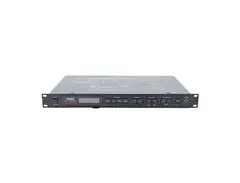
The TX81Z is a FM synthesizer. The famous Lately Bass patch was used by producers like Teddy Riley, Dave Hall, Nevelle Hodges, and Eddie F on multiple R&B hit in the '90s...
Product specs
| Brand | Yamaha |
| Model | TX81Z Rackmount FM Tone Generator |
| Finish | Black |
| Year | 1987 - 1988 |
| Made In | Japan |
| Categories | Digital Synthesizers, Rackmount Synths |
| Analog / Digital | Digital |
| MIDI I/O | MIDI Input, MIDI Output, MIDI Through |
| Polyphony | 8 Voices |
FAQs
-
What synthesis method does the Yamaha TX81Z use?
-
The Yamaha TX81Z utilizes FM (Frequency Modulation) synthesis, offering a variety of complex and dynamic sounds through its 4-operator FM engine.
-
How many voices of polyphony does the Yamaha TX81Z support?
-
The Yamaha TX81Z supports 8 voices of polyphony, allowing for the creation of rich and layered sounds.
-
Can the Yamaha TX81Z be used with modern MIDI setups?
-
Yes, the Yamaha TX81Z features MIDI Input, Output, and Through, making it compatible with modern MIDI setups for integration into current music production environments.
-
Is the Yamaha TX81Z suitable for live performances?
-
The Yamaha TX81Z is a rack-mounted sound module, which makes it ideal for studio use or live performances when paired with a MIDI controller or sequencer.
-
What makes the Yamaha TX81Z unique compared to other FM synthesizers?
-
The Yamaha TX81Z is known for its ability to produce unique and distinctive sounds, including the famous "Lately Bass" patch, thanks to its flexible FM synthesis engine and multi-waveform capability.
Videos

Alex Ball
Making a 90s Banger with the Yamaha TX81Z!
Making a 90s Banger with the Yamaha TX81Z!
Alex Ball
Bad Gear - Yamaha TX81Z

AudioPilz
Yamaha TX81Z- Punchy FM Basses and sounds only. No pianos and no talking ! Hi quailty

BEATS N BOBS
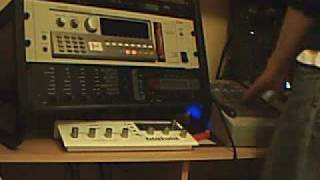
The many faces of TX81Z

vinyljunkie07
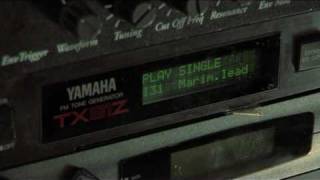
Yamaha TX81z

PERSON:A
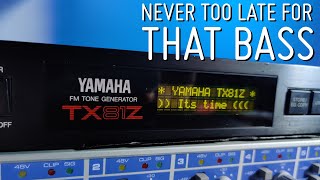
Yamaha TX81Z: Is it still useful today ?

Estuera
YAMAHA TX81Z (FACTORY SOUNDS by TIAGO MALLEN #VINTAGE #FM

Tiago Mallen
Yamaha TX81Z lushness

Stereo Realist
Twisted Electrons MegaFM vs Yamaha TX81Z - Compared Side by Side with Identical Settings

Miklo Music
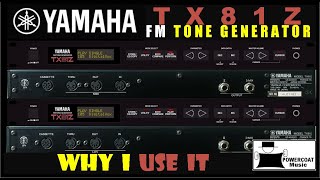
Yamaha TX81Z Tone Module: Why I Use It

Powercoat Music
Yamaha TX81z - just a quick function test / demo

Rob World
Reviews
PROS
-
Compact 1U rack size fits in any studio setup
-
Iconic 'Lately Bass' preset perfect for 90s hits
-
Unique character with ancient DAC for distinct sounds
-
Versatile with more waveforms than a DX7 for exotic sounds
-
8-part multitimbral with onboard editing capabilities
-
Extensive MIDI implementation for detailed control
-
Relatively affordable for a vintage FM synth
-
Compatible with software editors for easier programming
-
Offers punchy bass, drums, and rich pads with tweaking
-
Can produce classic DX-7 sounds despite fewer operators
CONS
-
User interface not intuitive for FM synthesis beginners
-
Some presets sound thin without editing
-
Factory presets can be unimpressive, requiring user creativity
-
Difficult to program without software editor
-
Limited by 4 operators compared to DX7's 6
-
Power supply issues reported
-
Lower overall volume output compared to some VST FM synths
-
Front panel programming not recommended, can be cumbersome
-
Can sound less warm compared to other synths
Owner Insights
We analyzed real musician discussions from forums and Reddit to find what players love, question, and tweak about Yamaha TX81Z.
Features and functionality
-
The TX81Z uses 4 operators, making it simpler to operate than more complex FM synths, and features strong multitimbral capabilities for its age.
Source -
It's noted that the TX81Z is 8-part multitimbral, allowing users to load the same patch in multiple slots and make slight detuning for a richer sound.
Source -
Users note that the TX81Z supports various waveforms, providing a broader range of sound design possibilities beyond its dated presets.
Source -
The TX81Z's stereo output can be utilized as two mono outputs by panning in performance mode, allowing separate sound processing.
Source
Use cases and applications
-
Owners find it fun to connect a MIDI controller to the TX81Z, enabling real-time control of the FM operators for dynamic sound manipulation.
Source -
The TX81Z can be configured for MPE (MIDI Polyphonic Expression), offering advanced MIDI control for expressive sound design.
Source -
The TX81Z may struggle with MIDI bandwidth when handling constant CC changes, performing better with note data alone.
Source
Setup and maintenance
-
Some users report that the TX81Z can be on the noisy side, which is an important consideration for those prioritizing sound clarity.
Source
Comparisons
-
The TX81Z is recommended over the Volca FM for those needing more polyphony and multitimbral capabilities, despite its lack of knobs and portability.
Source -
The FB-01 is considered easier to use and more affordable than the TX81Z, though it may lack some advanced features like sysex file uploads.
Source
Software and compatibility
Critic Reviews
4.0 out of 5
Based on 16 Reviews and 70 Ratings

424
Basic FM synth
I bought it with the TX802 and DX7. I can say it is the little brother. Small sound but interesting. Still working in perfect condition.

278


41029
I just got rid of mine, I never use it because its so limited compared with Yamaha's other FM offerings.


neat
Great for strange digital sounds. Latley Bass is a good patch.
41029
lately bass (and solid bass from the DX100), used to death... you can program this guy if you have serious patience. Even though ti ahs 2 less oeprators than a DX7 it happens to have multiple waveforms and not just sines. Powerfully underrated gadget. I miss mine.
359
Artist usage
Add artist
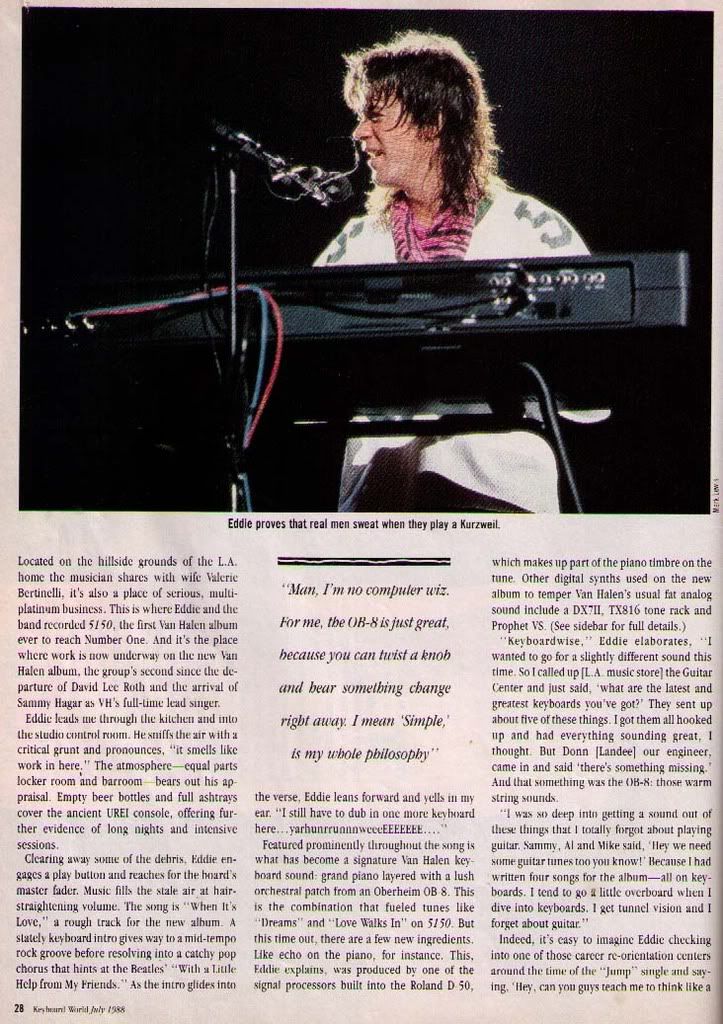
Expanding the band's sound for OU812, Van Halen looked to digital synthesisers to brighten up the 'fat analogue' sound of previous releases.

:max_bytes(150000):strip_icc()/Entertainment2x1-e66c3c3ed7b64685a92d514968b1151a.gif)
"Armin van Buuren: Yes, and I'm a big fan of the Nord Lead because it has a certain edge to it. I still use the Yamaha TX81Z, which is a really old machine and it's out of tune with most versions, but the FM sound is just fantastic."

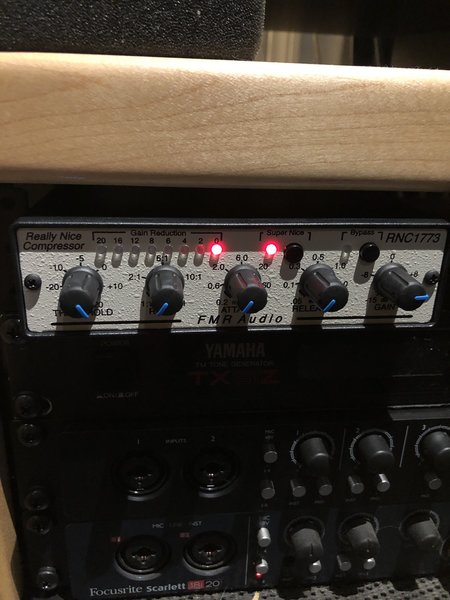
A TX81Z can be seen up close in Mat Zo's studio in this April 25, 2019 Twitter post.

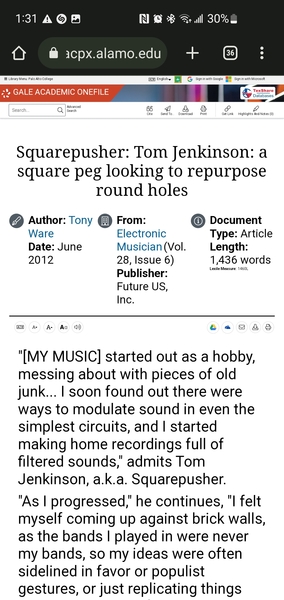
Key to this type of song creation is gear that has been in Jenkinson’s studio for decades. Mainstays include a Roland TB-303, TR-909 and SH-101, Eventide Orville and DSP4000 harmonizers, a Yamaha QY700 sequencer, and Yamaha CS80, TX81Z and FS1R synths.

At 8:50 of the video titled "AR Rahman & Firdaus Studios: A Scoring Stage For The 21st Century," A.R. Rahman states that he used a Yamaha TX81Z sound module, which he carried in a rack case for his writing sessions abroad. This information is provided by Sound On Sound magazine on YouTube.

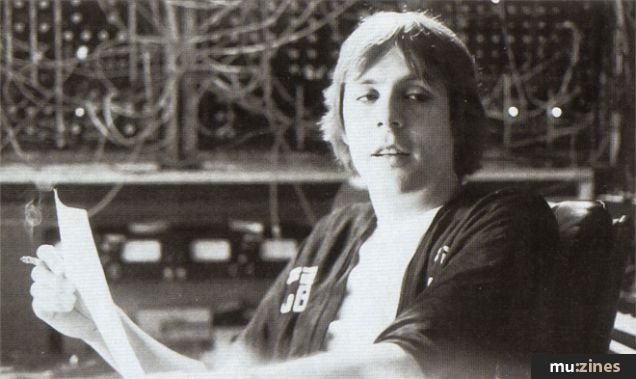
List of equipment used by Klaus Schulze, from the February 1993 issue of Sound on Sound:
4x Akai S1000PB (32MB) 2x Akai S1000KB (32MB) Akai S900 Akai S612 Akai S7000 Moog Modular CIII 2x Moog MiniMoog Studio Electronics MIDIMini Mellotron Yamaha CS80 Yamaha CP70 Yamaha TX81Z Yamaha SY99 Korg M1 Korg M1 EX Korg T1 Korg T3 Korg DVP1 Roland U110 Roland U220 Roland D50 Roland S50 sampler & monitor Roland Planet S & editor Roland Super Jupiter & editor 2 Roland TR505 Roland Octopad Roland JD800 Roland Super JX10 4x Hohner HS2/E sampler 5x Hohner HS1/E sampler Hohner HS1KB sampler Waldorf Microwave GDS computer synth Misc. Crumar keyboards Fairlight CMI Series II SCI Prophet 2000 SCI Prophet 2002 Emu Proteus/2 Emu Proteus/3 World Emu Emulator II Kurzweil K1000 Kawai K4 EMS Synthi A PPG Wave 2.2 Linn 9000 4x Oberheim DPX1 Yamaha RY30 drum machine Sonor timpanies and octo toms Paiste gongs and cymbals Martin 12-string guitar


Future Sound of London equipment list from the August 1992 issue of Music Technology Magazine:
Instruments
Akai S612 Sampler + MD280 Disk Drive Akai S900 Sampler Akai S1000 Sampler w/8Mb memory E-mu Proteus/1 w/Protologic board Jen SX1000 Synth Roland D110 Synth Module Roland JX3P Synth Roland MC202 Monosynth Roland MKS50 Synth Module + PG300 Programmer Roland TB303 Bass Synth Roland TR606 Drum Machine Yamaha DS55 Synth Yamaha TX81Z
Effects
Alesis Quadraverb (x2) Alesis MIDIverb II BBE 422A Sonic Maximiser Bel Electronics BD80 Digital Delay Drawmer DS201 Dual Gate Fostex 3070 Compressor/Limiter Ibanez DM1100 Digital Delay Korg DRV1000 Digital Reverb Yamaha SPX90 Multi effects Processor
Recording
Aiwa HDX1 DAT Recorder Atari 1040ST Computer w/C-lab Creator software Fostex B16 Multitrack Groove MC2V MIDI/CV Converter Korg KMS30 Sync Unit Nakamichi 480Z Cassette Deck Sony DTC1000ES DAT Recorder Soundtracs CM4400 Mixing Desk Technics SL1200 Mk2 Turntable Yamaha NS10M Monitors


Yamaha TX81Z FM synthesizer can be spotted in this picture from Andrew Bayer's Instagram


In this Reddit AMA, George mentions using a TX81Z.
"im blown away by the tx81z."
It can also be seen in this video at 9:35: https://youtu.be/BqqjOefczqg?t=575


In response to a tweet that said "Show me a picture on your phone that has your energy. Not a selfie." Skee quoted tweeted with his rackmount setup.


Gear Gods: Whenever I get the chance to talk to bands that were playing years and years ago, I think about how the tones that were available then were so different, and so much more limited. Cynic was trailblazing the ability to jump between so many different genres, which was a lot harder to do back in the early ‘90s. What were you and Jason playing through on the Focus tours? And how difficult was it to achieve the breadth of tones?
Paul Masvidal: Was I running an MP-1? I think I was. Yeah, at that time I was a rack guy. I had a 15-space rackmount. My main preamp was an ADA MP-1 and I used an ADA midi controller. I had a Roland GM-70 guitar synth, which was really cool back then because it had Portamento [pitch glide between notes, instead of set intervals]. You could assign custom midi controllers to the unit on your guitar. It was just really hip for its time. It was very clunky in terms of a big, bulky thing, but what you could do with it was phenomenal. It just had this natural, flawed, organic kind of thing that was very cool at the time.
And I had a Digitech, and then a Rane: different EQs that were programmable. So the EQs were constantly changing the guitar synth. And then with the guitar synth I had a, I think, a Yamaha TX 81Z, which was an FM analog old-school synth module. And I think I was using a Rocktron Intellifex back then. I had a bunch of different stuff, and it was all interacting. It was kind of a midi nightmare, but it was functional.

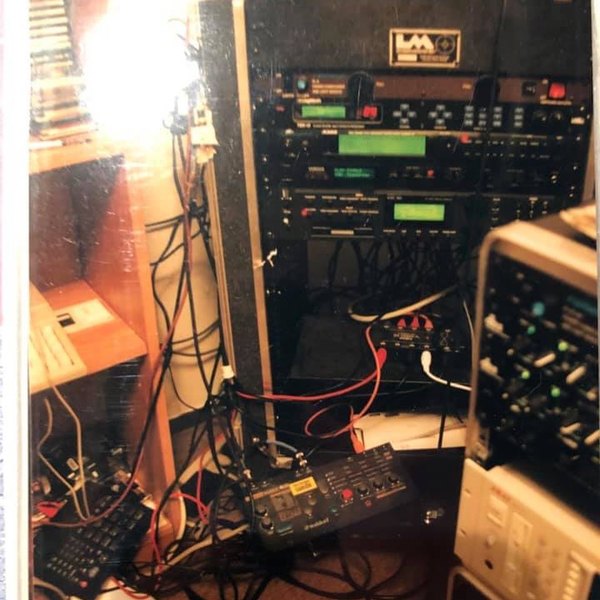
Album Usage
The Yamaha TX81Z has been featured on the following albums:
Oddyssey
Amtrac (2020)
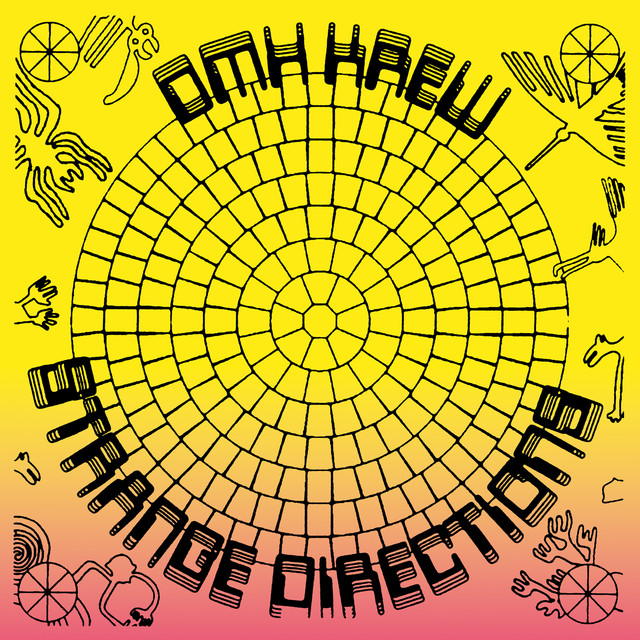
Strange Directions
DMX Krew (2017)
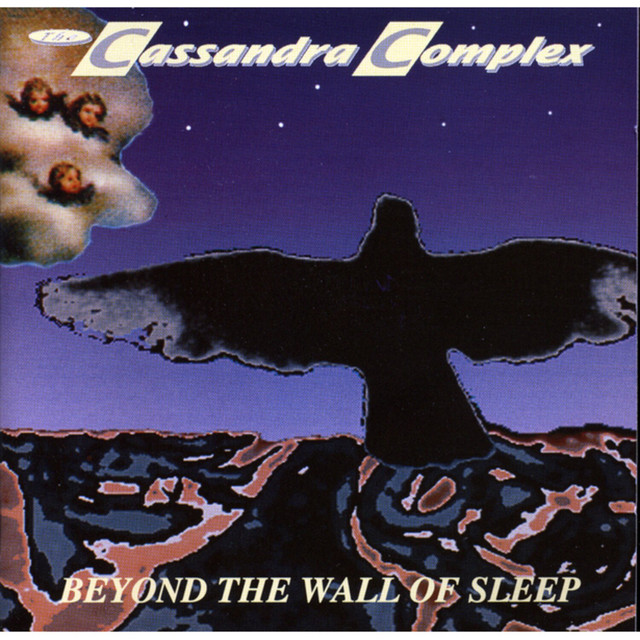
Beyond the Wall of Sleep
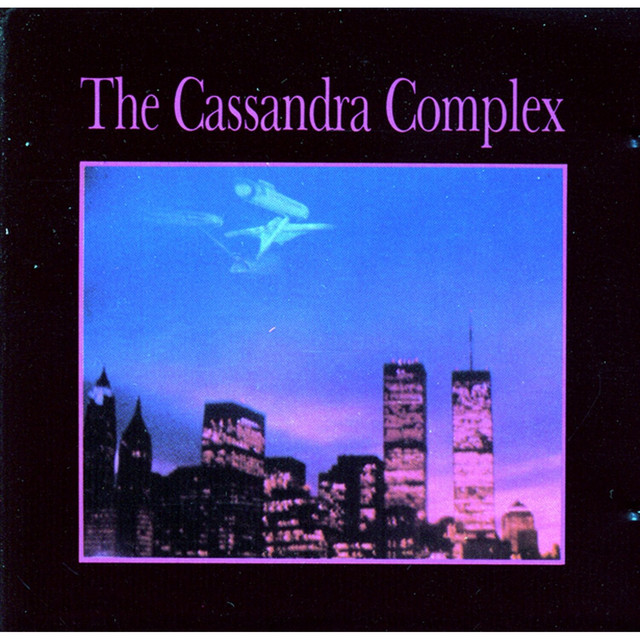
The Cassandra Complex (1992)
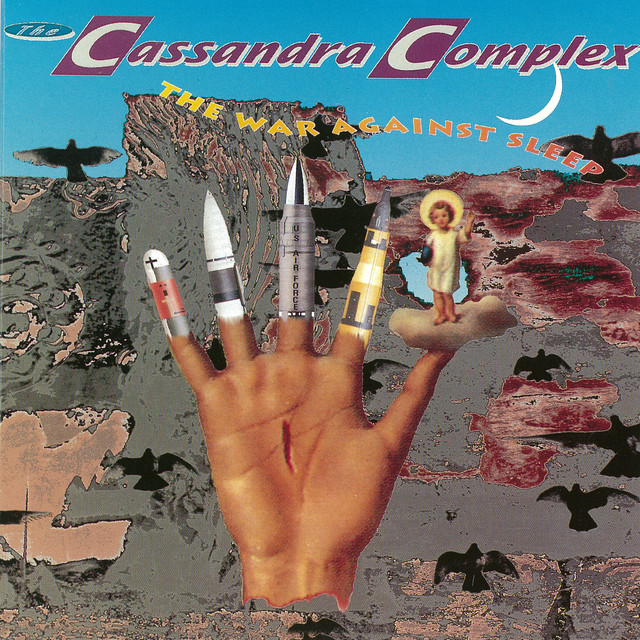
The War Against Sleep
The Cassandra Complex (1991)
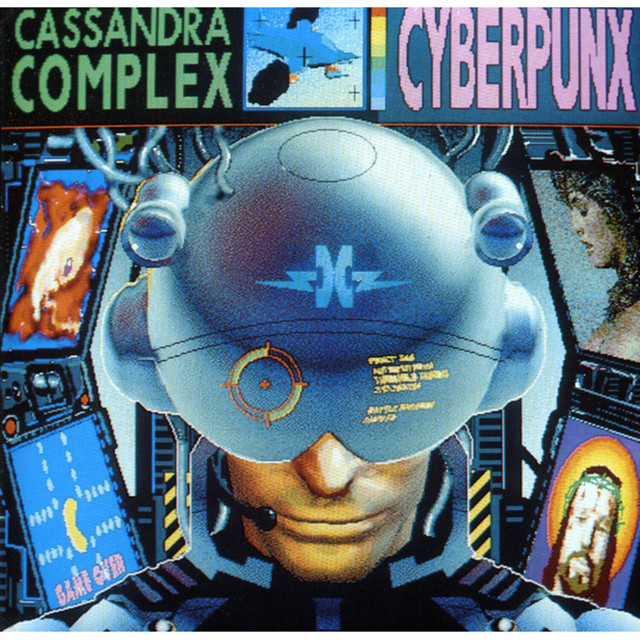
Cyberpunx
The Cassandra Complex (1990)

Flood
They Might Be Giants (1990)
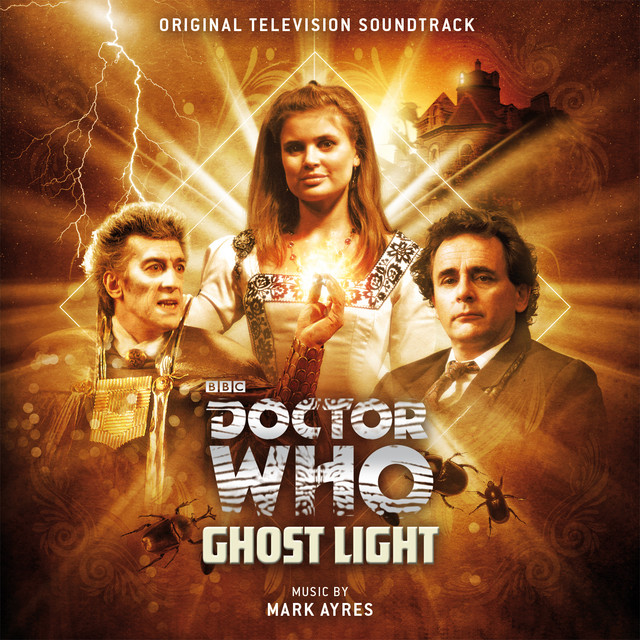
Doctor Who: Ghost Light (Original Television Soundtrack)
Mark Ayres & Keff McCulloch (1989)
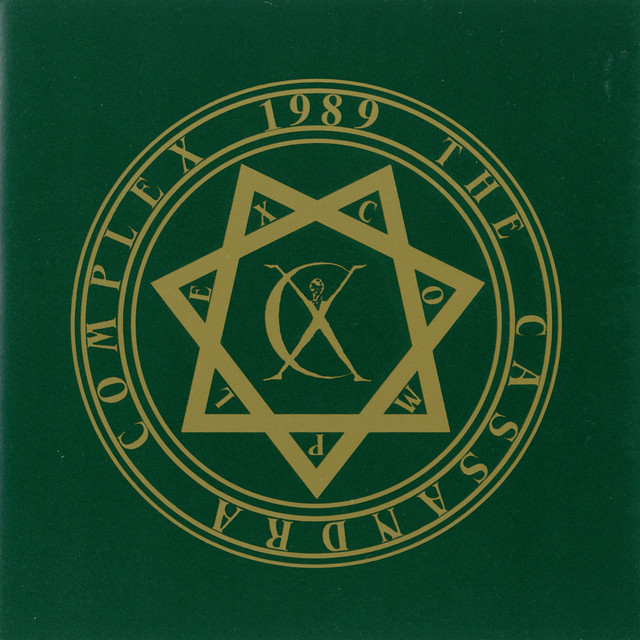
Satan, Bugs Bunny, And Me…
The Cassandra Complex (1989)
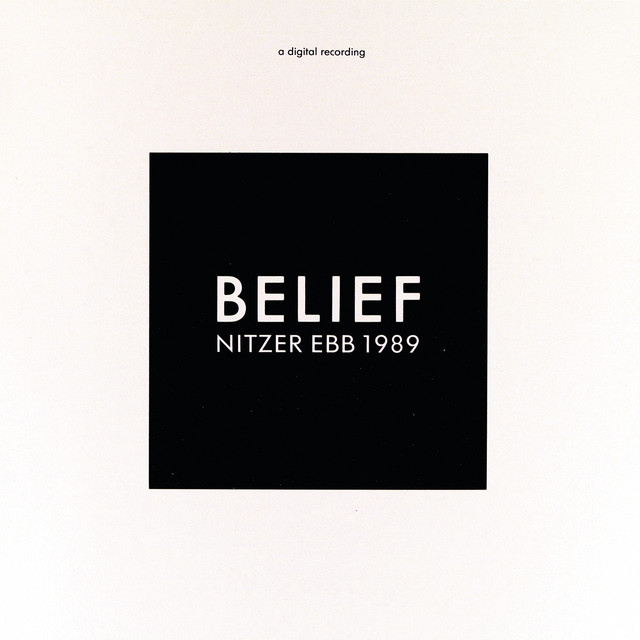
Belief
Nitzer Ebb (1989)
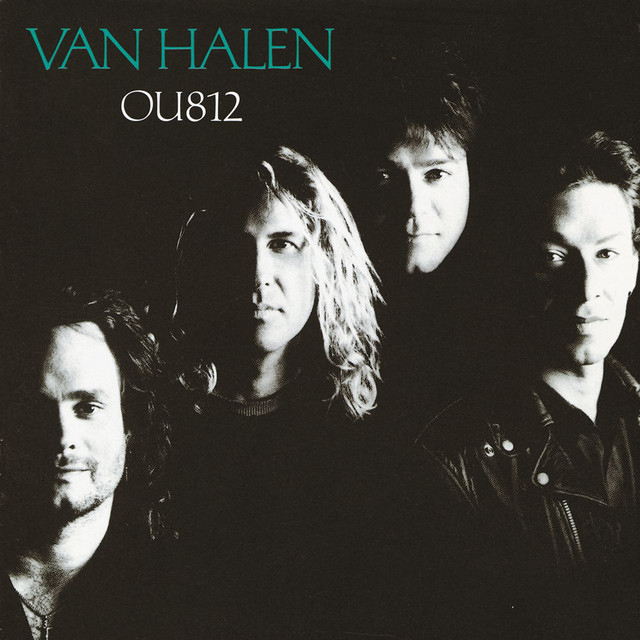
OU812
Van Halen (1988)
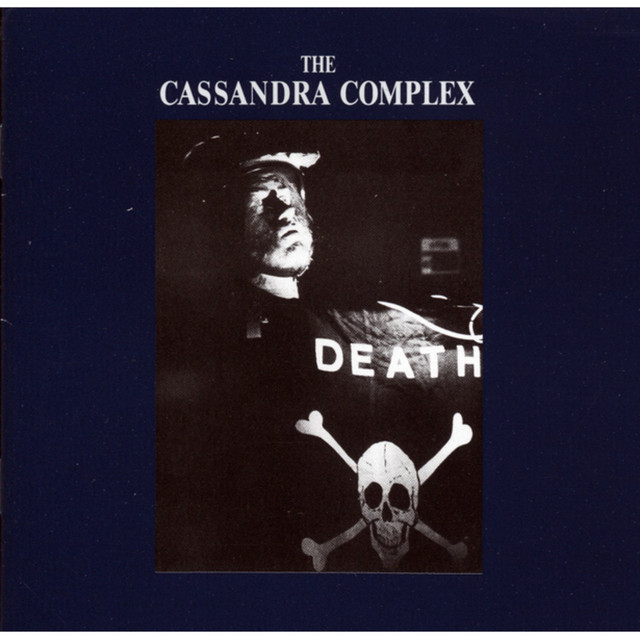
Feel the Width
The Cassandra Complex (1988)
Theomania
The Cassandra Complex (1987)
Genre Usage
Based on how artists on Equipboard use this gear, it is most commonly found in the following genres.
Used With
Based on how musicians on Equipboard use Yamaha TX81Z, it is most commonly used with the following gear.
-s.webp?v=1783349885)



-s.webp?v=1783318437)

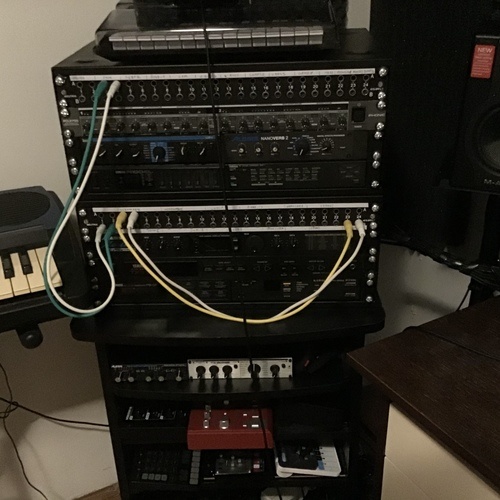
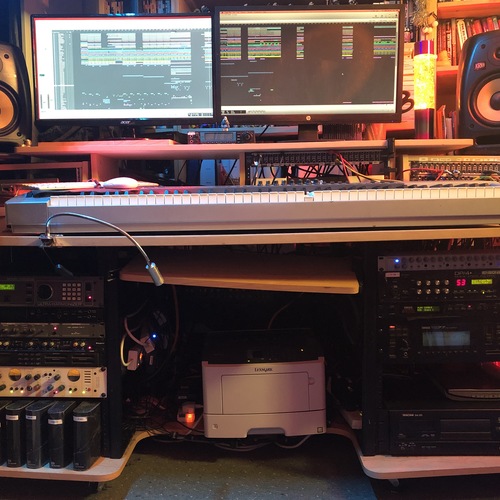
Community setups
Show yours


.jpeg?v=1725818427)


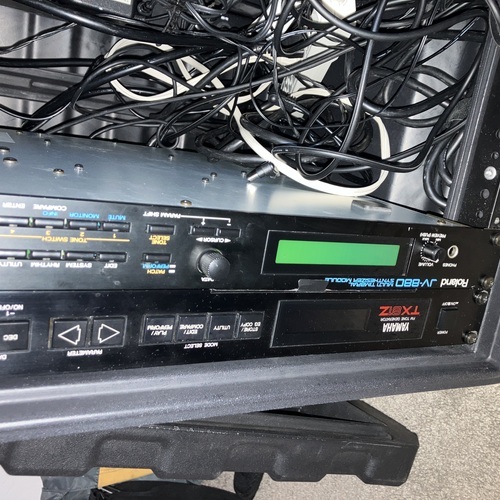


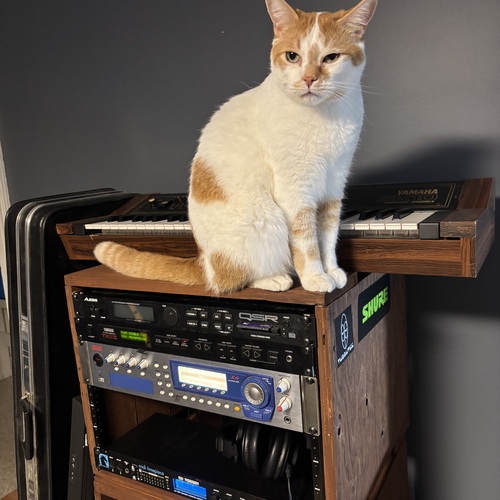
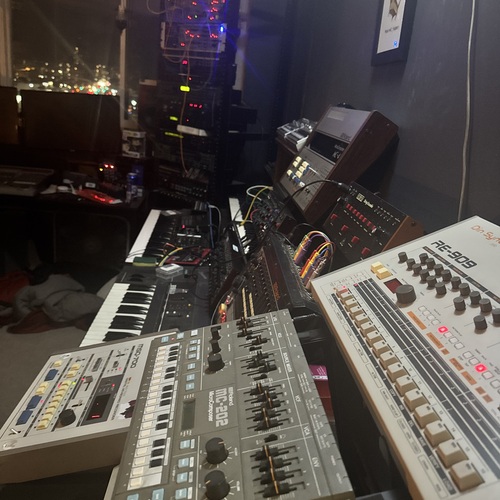


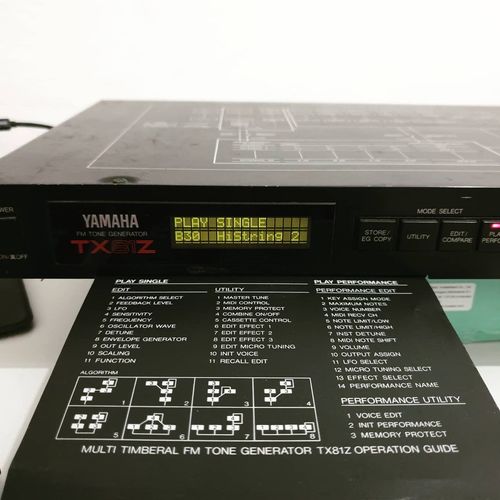



Similar
Add recommendation2 alternative and related items for Yamaha TX81Z, curated by the Equipboard community.
-m.webp?v=1783321212)
$63.00 - $99.00
FM8 is one of the very few soft synths on the market that can import and play back patch files from an original TX81z. Not every patch will convert perfectly, but it's pretty close in most cases.

More Yamaha Sound Modules

$65.55
in Sound Modules Rank


$2,099.00
in Sound Modules Rank


$400.00
in Sound Modules Rank


$400.00 - $1,299.99
in Sound Modules Rank


$629.10
in Sound Modules Rank


$600.00
in Sound Modules Rank


$154.76
in Sound Modules Rank


$629.10
in Sound Modules Rank




-m.webp?v=1783238222)
$350.00
in Sound Modules Rank


$1,200.00 - $1,999.99
in Sound Modules Rank


$1,350.00
in Sound Modules Rank


$875.00
in Sound Modules Rank


$298.54
in Sound Modules Rank


$2,299.00 - $2,330.00
in Sound Modules Rank


$630.00
in Sound Modules Rank


$119.00
in Sound Modules Rank


$261.00
in Sound Modules Rank


.jpg?v=1783346560)

$500.00
in Sound Modules Rank


$3,900.00
in Sound Modules Rank

$4,999.99
in Sound Modules Rank


$495.00
in Sound Modules Rank

Most Popular Sound Modules
Most Popular Brands
-
Added to Equipboard on by
Mmuzik4machinesGear IQ 359
-


