Plaid
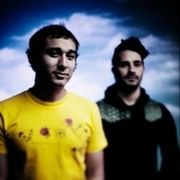
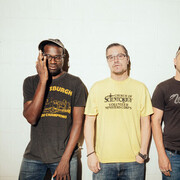
British electronic music duo
Plaid's Gear

-m.webp?v=1784818784)
"So if we jump forward to the present day, to inaugurate Elektron’s Grammofon label you’ve created a three-track EP using the Analog Rytm. How did that come about? Were you already using Elektron gear or did they approach you?
Andy: We’re friends with one of the Elektron guys and he suggested it.
Ed: We’d used Machinedrums years ago but the Analog range really appealed to offset our completely digital setup, especially live. We were honoured to be asked – they are incredible instruments."
Find it on:


"... and a synth sampler called Falcon."
"...Falcon has a lovely built in scripting language based on Lua which is very simple to code. You can write your own scripts that become sequencers or modulation sources adding randomisers, Markov chains and various probability based methods. It's one of the fun, unique aspects of electronic music that we almost feel obliged to explore."
Find it on:

"No, no, I'm just saying that would have been probably a FS1-R [Yamaha sound module], like a DX piano sound through a pedal or something..."
Find it on:

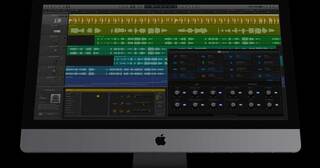
"Logic is still our main DAW. I think it’s just what we’ve got used to over the years, really.
"Some of the internal Logic plug-ins are pretty useful too. You sort of imagine that you like the sound of it but I don’t know if there’s anything in that as I’m sure they all use pretty similar algorithms. We do like the sound of Logic though and we’re mainly running it for the final mixes."
Find it on:

"We’ve got the MKS-80 Super Jupiter with the MPG-80 controller, which is lovely and we’ve used it a lot over the years although it doesn’t get used so much now unless we specifically want an analoguey sound."
Find it on:

"This time we've worked a lot with a synth called Loom..."
Find it on:


"What’s the hardware setup for the live show?
Andy: Probably two Analog Rytms, SH-101, DX100, computer, controllers and a Behringer XR18"
Find it on:

"“We’ve got a Nord Modular that’s lovely and it sometimes gets an outing despite the sound quality not being all that super on it. The capabilities on it are brilliant though, it’s like a massive modular with all it can do."
Find it on:

On page 8... "These are not particularly robust but they’re very light, which is quite important these days when you’re travelling around due to the ridiculous luggage restrictions. They’re pretty quick and easy to program up too."
Find it on:
-m.webp?v=1784785354)
"We use Reaktor a little bit, and any little interesting bits of software we can get our hands on, really. We're not that radical with our sound design... if we like an electric keyboard sound we'll just use an electric keyboard sound. But I like the fact that you can build a synth from the bottom up. You can actually design your own synth, say in Reaktor, which would obviously not be possible with hardware, well, it would take years to design and build it so... that's the ease of it, the customization of it, really."
Find it on:

"Yeah, you get a very particular effect. There are a few new types of vocoder that are out at the moment. There is one called Razor, which has a very particular and quite unique sound, and it uses a new method for vocoding, which is very nice."
Find it on:


-m.webp?v=1784559385)
"What do you remember of the hardware setup you had in the early days?
Andy: We had an 808, 303, 202 and 101, a monophonic digital synth, Akai 950 sampler and a few other analogue keyboards. We hired in an Akai S1000 to record the first EP.
Ed: Also the Oberheim Matrix 12 and Matrix 1000, which were pretty important. Sequencing was initially an Alesis MMT-8 then Dr T’s on Commodore."
Find it on:

"What do you remember of the hardware setup you had in the early days?
Andy: We had an 808, 303, 202 and 101, a monophonic digital synth, Akai 950 sampler and a few other analogue keyboards. We hired in an Akai S1000 to record the first EP.
Ed: Also the Oberheim Matrix 12 and Matrix 1000, which were pretty important. Sequencing was initially an Alesis MMT-8 then Dr T’s on Commodore."
Find it on:

"What do you remember of the hardware setup you had in the early days?
Andy: We had an 808, 303, 202 and 101, a monophonic digital synth, Akai 950 sampler and a few other analogue keyboards. We hired in an Akai S1000 to record the first EP.
Ed: Also the Oberheim Matrix 12 and Matrix 1000, which were pretty important. Sequencing was initially an Alesis MMT-8 then Dr T’s on Commodore."
Find it on:

"What do you remember of the hardware setup you had in the early days?
Andy: We had an 808, 303, 202 and 101, a monophonic digital synth, Akai 950 sampler and a few other analogue keyboards. We hired in an Akai S1000 to record the first EP.
Ed: Also the Oberheim Matrix 12 and Matrix 1000, which were pretty important. Sequencing was initially an Alesis MMT-8 then Dr T’s on Commodore."
Find it on:

"What do you remember of the hardware setup you had in the early days?
Andy: We had an 808, 303, 202 and 101, a monophonic digital synth, Akai 950 sampler and a few other analogue keyboards. We hired in an Akai S1000 to record the first EP.
Ed: Also the Oberheim Matrix 12 and Matrix 1000, which were pretty important. Sequencing was initially an Alesis MMT-8 then Dr T’s on Commodore."
Find it on:

"So if we jump forward to the present day, to inaugurate Elektron’s Grammofon label you’ve created a three-track EP using the Analog Rytm. How did that come about? Were you already using Elektron gear or did they approach you?
Andy: We’re friends with one of the Elektron guys and he suggested it.
Ed: We’d used Machinedrums years ago but the Analog range really appealed to offset our completely digital setup, especially live. We were honoured to be asked – they are incredible instruments."
Find it on:

"What’s the hardware setup for the live show?
Andy: Probably two Analog Rytms, SH-101, DX100, computer, controllers and a Behringer XR18"
Find it on:


"There’s a few little bits of software that we keep going back to. There’s DrumSpillage, which is like a drum synthesizer that we use quite a lot."
Find it on:

In an article on the Arturia website, Ed Handley of Plaid mentions using Arturia Pigments 3.5.
Find it on:

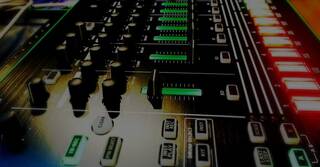
"It's a Soundtracs Quartz. It's a late '80s/early '90s desk but it's got very good EQ and a very nice patch bay on it. We run so much stuff through the computer now that it's good to have an analog in to it all. "
Find it on:

"What do you remember of the hardware setup you had in the early days?
Andy: We had an 808, 303, 202 and 101, a monophonic digital synth, Akai 950 sampler and a few other analogue keyboards. We hired in an Akai S1000 to record the first EP.
Ed: Also the Oberheim Matrix 12 and Matrix 1000, which were pretty important. Sequencing was initially an Alesis MMT-8 then Dr T’s on Commodore."
Find it on:
-m.webp?v=1784818708)
"What do you remember of the hardware setup you had in the early days?
Andy: We had an 808, 303, 202 and 101, a monophonic digital synth, Akai 950 sampler and a few other analogue keyboards. We hired in an Akai S1000 to record the first EP.
Ed: Also the Oberheim Matrix 12 and Matrix 1000, which were pretty important. Sequencing was initially an Alesis MMT-8 then Dr T’s on Commodore."
Find it on:

"What do you remember of the hardware setup you had in the early days?
Andy: We had an 808, 303, 202 and 101, a monophonic digital synth, Akai 950 sampler and a few other analogue keyboards. We hired in an Akai S1000 to record the first EP.
Ed: Also the Oberheim Matrix 12 and Matrix 1000, which were pretty important. Sequencing was initially an Alesis MMT-8 then Dr T’s on Commodore."
Find it on:

"What do you remember of the hardware setup you had in the early days?
Andy: We had an 808, 303, 202 and 101, a monophonic digital synth, Akai 950 sampler and a few other analogue keyboards. We hired in an Akai S1000 to record the first EP.
Ed: Also the Oberheim Matrix 12 and Matrix 1000, which were pretty important. Sequencing was initially an Alesis MMT-8 then Dr T’s on Commodore."
Find it on:

"The main acid lines are made with Audiorealism ABL3 and we also used their drums in part. The more original sounds perhaps were made with Tone2’s Icarus using the ‘3D Wavetable’ functionality and other layers using UVI’s Falcon synth which is incredibly versatile"
Find it on:

"The main acid lines are made with Audiorealism ABL3 and we also used their drums in part. The more original sounds perhaps were made with Tone2’s Icarus using the ‘3D Wavetable’ functionality and other layers using UVI’s Falcon synth which is incredibly versatile"
Find it on:


"ED HANDLEY We started off with Amiga and using a program called Dr. Tease (sic), which is quite famous for the Amiga Commodore. "
"ED HANDLEY Yeah, we still use the Amiga for some stuff. It’s got a very crude, dirty little sampler on it, which still sounds better than most samplers."
Find it on:

Visible in several of the photos, sitting on the desk.
Find it on:
This is a community-built gear list for Plaid.
- Find relevant music gear like Studio Equipment, Software Plugins and VSTs, Headphones, and other instruments and add it to Plaid.
- The best places to look for gear usage are typically on the artist's social media, YouTube, live performance images, and interviews.
- To receive email updates when Plaid is seen with new gear, follow the artist.
-
Added to Equipboard on by
 scarkord
GearIQ 941
-
Updated
Discography
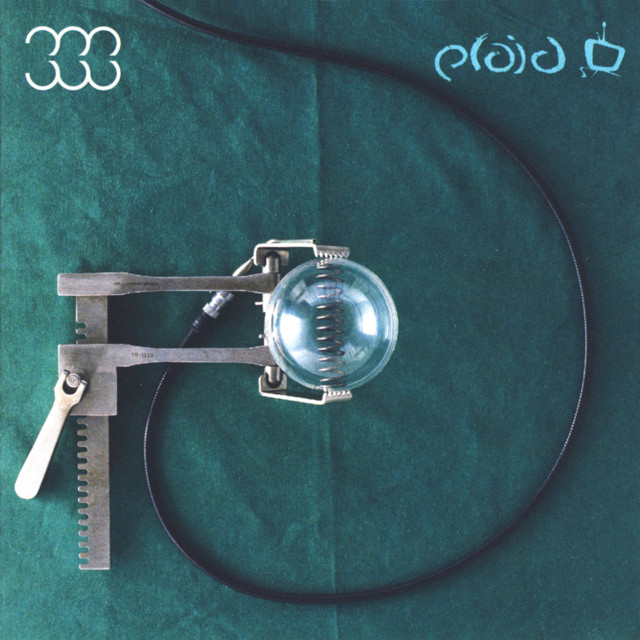
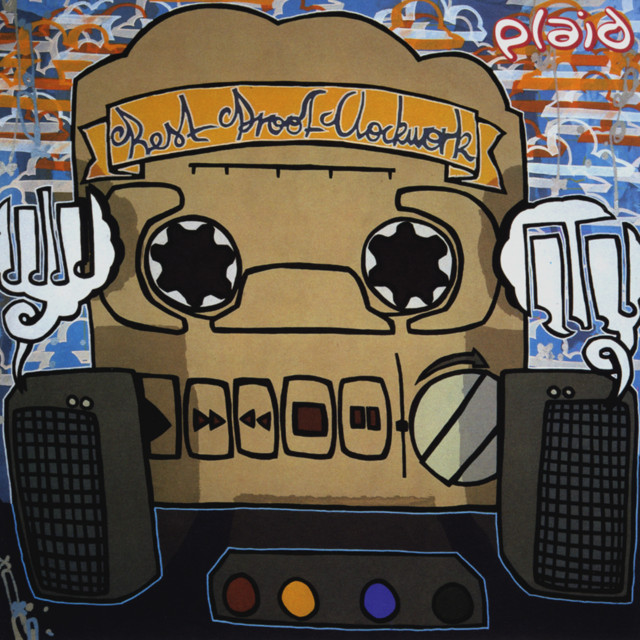

Album Credits
-
Plaid · 2016
Producer -
Plaid · 2014
Producer -
Plaid · 2003
Producer -
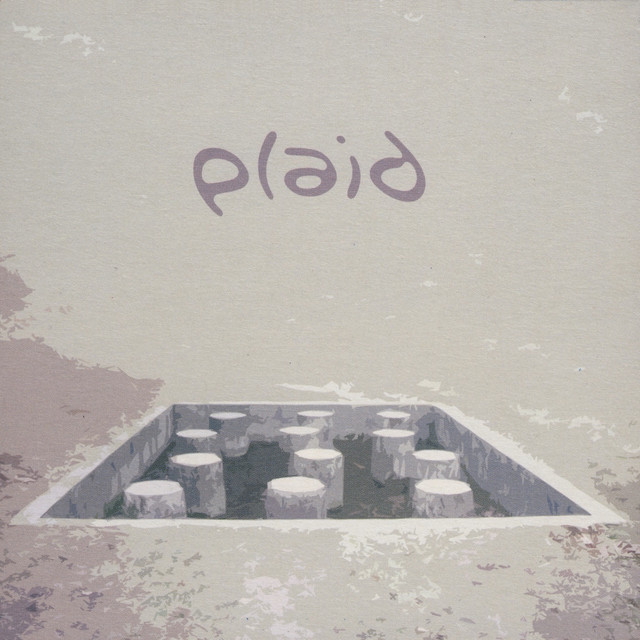
Plaid · 2000
Producer -
Plaid · 1999
Producer
.png?v=1784755332)