
Bernard Sumner
Role
Genre
Group
Credits
Role
Genre
Group
Credits
Bernard Sumner's Gear


In this video, at 0:30, there is a clear shot of Bernard Summer playing the Shergold Masquerader.
Find it on:


The Vox Phantom Special VI can be seen in Bernard's possession in this 1981 live show. It appears quite clearly at the 13:25 mark.
Find it on:

In this photo of New Order's Bernard Sumner playing live on stage for BT London Live at Hyde Park in central London (Sunday, Aug. 12, 2012), he can be seen playing a Gibson SG Standard.
Find it on:


In the bottom right hand corner of this video, right in the beginning you can see Bernard's Vox UL730.
Find it on:

At 0:25, it is clearly visible that Bernard is using a Tele Thinline Classic Series 69' Reissue
Find it on:


Bernard Sumner is seen here holding a Gibson SG Junior in Cherry Red.
Find it on:

This live video from a 2002 performance at Finsbury Park clearly shows Bernard's Vox AC-30 (possibly a pair of them, although one may belong to auxiliary guitarist Phil Cunningham) throughout the show. The first clear shot is a camera swoop from around 1:15 to 1:18.
Find it on:

In this live performance clip from 1981, we can see Barney's G-100 positioned at his feet, to his right. It looks like he may have been using it for synths, or as a kind of monitor.
Find it on:

This image from a live show depicts Bernard with a 330 12-string.
Find it on:


In this picture taken at a live performance by Joy Division, we can clearly see the Altair attenuator sitting atop Barney's Vox amplifier.
Find it on:

At 1:20, Sumner can be seen using a Stratocaster during "Elegia".
Find it on:

This article, on the making of New Order's singles True Faith and 1963, notes that "when New Order commenced working with Stephen Hague, they brought an interesting array of gear into the studio: a Yamaha QX1 sequencer, a rackmounted Octave Voyetra 8 polyphonic synth, a DX5 that provided most of the bass sounds and which Hague succinctly describes as 'Yamaha's attempt to put two DX7s under one roof — it weighed a ton'."
Find it on:
-m.webp?v=1780068476)
"the guitar on the recording was a 12-string Eko guitar played by Sumner.[12] Sumner recalls:
Ian didn't really want to play guitar, but for some reason we wanted him to play it. I can't remember the reason now ... I think Ian used to play only on "Love Will Tear Us Apart" ... no I'm wrong, there was another track too. Maybe "Heart and Soul"? I do remember Ian used to play just one chord, which was D. We showed him how to play D and we wrote a song. I wonder if that's why we wrote "Love Will Tear Us Apart", you could drone a D through it. I think he played it live because I was playing keyboards. On the record I played guitar, a twelve string Eko guitar, an Italian guitar that actually sounded pretty good"
Find it on:

Sumner can be seen playing a Hohner Soprano Melodica in this photo.
Find it on:

At 0:40, Sumner can be clearly seen playing this Fender Japan 12-String Stratocaster from the mid to late 1980s.
Find it on:


In this picture, Bernard Sumner and producer Martin Hannet stand over Sumner's ARP Omni-2, as well as his Transcendent 2000 placed on top. Sumner utilized the ARP during the later days of Joy Division through to the inception of New Order.
Find it on:

He's got the ebony color version with trapeze tailpiece. In his autobiography (a must read for all fans like me) he says that in 1981 during the first US tour and after being stolen all their gear, he went to a guitar shop in New York and bought an ES-335 (it's visible in many images of early new order gigs) that had an affordable price tag. Arrived in hotel he discovered it had a drilling hole in the body :)
Find it on:



Photographer Pat Graham took this picture of Bernard's M250 for his book, Instrument. According to the caption, it's Sumner's favorite mic.
Find it on:

According to this article, Bernard used a Moog Source for the synth bass on "Blue Monday."
Find it on:

BBC rock around the clock early 1980's, 24 hours of live music including a set from new order. Bernard is seen singing using the shure sm57
Find it on:

In the picture you can see Martin Hannett and Bernard with a Powertran Transcendant placed on top of Bern's Arp Omni.
Find it on:

In this interview from the March 1985 issue of Electronics & Music Maker, Bernard talks about acquiring the ARP Quadra after New Order's Omni was stolen in New York on their first US tour.
Find it on:

"We used S1000s; Korg T3; Juno 106; Prophet V; Voyetra Eight (best sounding poly analogue, but hard to program); DX5; Moog Source; MIDI Moog; Roland SH101 (red); Roland TR909; MT32; D110; Mac SE; Mac IIex; Sound Tools for stereo mastering, with Up Beat and Pro 4 for sequencing, though we have now changed to another sequencing package as neither of the two used previously worked correctly, a situation which I find extremely annoying."
Find it on:

In this article, producer Stephen Hague recalls that during the recording sessions that would yield the songs True Faith and 1963, "Barney recorded his vocals in the control room while singing into a hand-held Beyer M88."
Find it on:



In this interview, Bernard is asked, "Are you still using hardware synths, or have you begun using the virtual ones? What experiences have you had with them?" Showing a preference for hardware, he replies, "We used the Nord Modular on the new album... I think it's good to take your sounds from a lot of different sources - that way everything's not going through the same d-a. However some of the virtual ones make really interesting new sounds. I just can't stand doing everything with one hand and two eyeballs. Well, some things are alright!"
Find it on:
-m.webp?v=1783349880)
"We used S1000s; Korg T3; Juno 106; Prophet V; Voyetra Eight (best sounding poly analogue, but hard to program); DX5; Moog Source; MIDI Moog; Roland SH101 (red); Roland TR909; MT32; D110; Mac SE; Mac IIex; Sound Tools for stereo mastering, with Up Beat and Pro 4 for sequencing, though we have now changed to another sequencing package as neither of the two used previously worked correctly, a situation which I find extremely annoying."
Find it on:

"We used S1000s; Korg T3; Juno 106; Prophet V; Voyetra Eight (best sounding poly analogue, but hard to program); DX5; Moog Source; MIDI Moog; Roland SH101 (red); Roland TR909; MT32; D110; Mac SE; Mac IIex; Sound Tools for stereo mastering, with Up Beat and Pro 4 for sequencing, though we have now changed to another sequencing package as neither of the two used previously worked correctly, a situation which I find extremely annoying."
Find it on:
-m.webp?v=1783349877)
"We used S1000s; Korg T3; Juno 106; Prophet V; Voyetra Eight (best sounding poly analogue, but hard to program); DX5; Moog Source; MIDI Moog; Roland SH101 (red); Roland TR909; MT32; D110; Mac SE; Mac IIex; Sound Tools for stereo mastering, with Up Beat and Pro 4 for sequencing, though we have now changed to another sequencing package as neither of the two used previously worked correctly, a situation which I find extremely annoying."
Find it on:

In this interview, the AV Club asks Bernard, "You’re writing on Cubase—is that the program?" to which he replies, "Yes, we use Cubase... I know most people, probably professional musicians, use Logic and ProTools, but most people I worked with on this album just happened to use Cubase."
Find it on:


Bernard Sumner praises the Native Instruments MONARK for its fantastic bottom end, amazing clarity, and high-definition sound, as highlighted on the Native Instruments website.
Find it on:


This is a community-built gear list for Bernard Sumner.
- Find relevant music gear like Microphones, Guitars, Amplifiers, Effects Pedals, Pianos, Keyboards and Synthesizers, and other instruments and add it to Bernard Sumner.
- The best places to look for gear usage are typically on the artist's social media, YouTube, live performance images, and interviews.
- To receive email updates when Bernard Sumner is seen with new gear, follow the artist.
-
Added to Equipboard on by
.jpg?v=1783354992) gchiaren
gchiarenGear IQ 37552
-
Updated
Album Credits
-
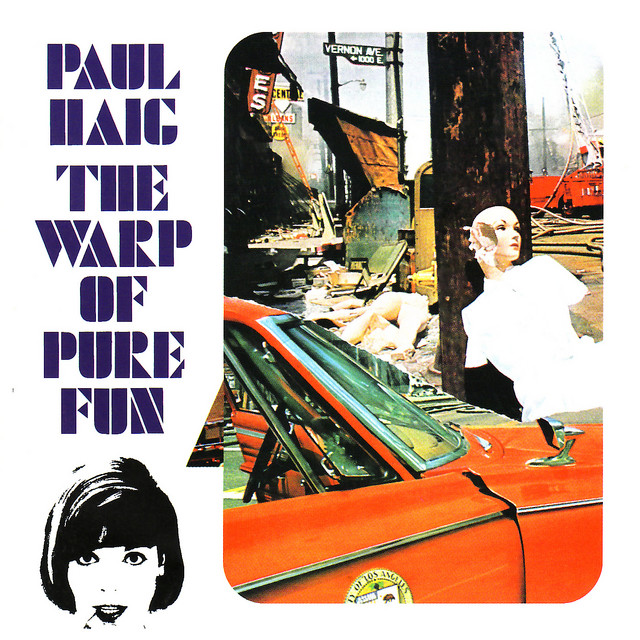
Paul Haig · 2008
Producer



.webp)


