This page about Crumar GDS is a stub. You can help improve it:


Pricing and availability




* Product prices and availability are updated by Equipboard every 24hrs and are subject to change. Equipboard may receive compensation for purchases made at participating retailers linked on this site. This compensation does not affect what products or prices are displayed, or the order of prices listed. For more information, please refer to our affiliate disclosure.
Description
The Crumar GDS is a vintage digital synthesizer that holds a special place in the history of electronic music. Originally developed in the early 1980s, this synthesizer is renowned for its unique digital synthesis capabilities based on phase modulation, a precursor to the FM synthesis popularized later. Designed to offer musicians a wide array of tonal possibilities, the GDS delivers a fascinating blend of digital precision with an analog-like warmth that has captivated sound designers and composers for decades.
The Crumar GDS stands out for its robust sound architecture and expressive control, making it an ideal tool for creating intricate textures and evolving soundscapes. With its comprehensive interface, musicians can dive deep into sound design, crafting everything from ethereal pads to sharp, cutting leads. The synthesizer also features a full-sized keyboard, offering a tactile experience that complements its intricate sound engine.
Key Features:
- Unique digital synthesis based on phase modulation
- Full-sized keyboard for expressive performance
- Comprehensive sound architecture for extensive sound design possibilities
- Renowned for its warm, analog-like tones despite being a digital synthesizer
- Historically significant in the evolution of electronic music synthesis
Videos

Lantertronics - Aaron Lanterman
DK Synergy: Origins of an Additive/FM Synthesis Powerhouse (Synergia softsynth + Synergize editor)
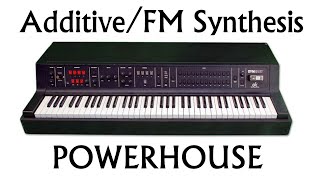
DK Synergy: Origins of an Additive/FM Synthesis Powerhouse (Synergia softsynth + Synergize editor)
Lantertronics - Aaron Lanterman
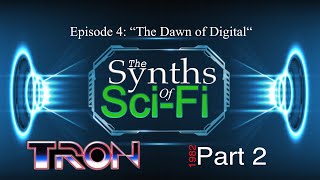
Synths of Sci-Fi Episode 04: Wendy Carlos, GDS Digital Additive Synthesizer & TRON (1982)

Koboto
Reviews
Based on 0 Reviews and 0 Ratings
Artist usage
Add artist

Restored by Hideaway Studio for buyer Brian Kehew, as documented in this September 24, 2014 Vintage Synth Explorer forum thread and this November 17, 2014 SoundCloud playlist of audio samples.


Mentioned in Totally Wired: Artists in Electronic Sound, as transcribed in the June 1984 issue of Polyphony. It was notably used for the Tron soundtrack.
Then there was the soundtrack to Tron, Disney's science-fiction computer epic. Here, Carlos alloyed electronic and acoustic sounds in a merger as complete as chromium. Using the digital synthesis of the GDS (General Development System) synthesizer, Carlos had the orchestra and synthesizer reinforcing each other. To the casual listener, it sounded orchestral; and in fact, many Carlos fans were disappointed that it wasn't an overtly electronic score. To be sure, the Tron soundtrack was not as striking musically as other works by Carlos, but it did open up the possibilities of electronic sound for her. She could make it sound electronic, acoustic, or like sounds you've never heard and she could do it with a full orchestra or the most advanced computer synthesis. As she showed on her Sonic Seasonings LP, the possibilities of music are as wide as nature permits.
Carlos employs the GDS synthesizer not only to make music but to create the basic sounds, the actual "clay" from which she forms her compositions. She eschews the pre-programmed approach of most synthesists, instead seeking out new sounds and forms that offer her the timbral richness and texture that she loves in acoustic instruments. Her modular Moog system, custom designed and modified by Robert Moog, still occupies a prominent spot in her multi-track recording studio; yet one suspects that it will occupy less space in her future work.
(...) JD: When I listen to your early works like "Music For Flute and Magnetic Tape" and "Dialogue For Piano and Two Loudspeakers", there's a clear distinction between the electronic sound and the live musician. But with the Tron soundtrack, the acoustic and electronic sounds are much more intermeshed.
WC: Yeah, they came out of different things. Are you aware that at that time it was a deadly thing to play a tape at a concert? We all had our four-track tapes and we thought we'd just dim the house lights and leave a little light on the stage, announce the piece, step back and hit the start button and play the tape. It was horrible. No audience was ever able to get through more than a couple of minutes with feeling uncomfortable and you could feel it for them if you sat out there. We had to find something to do to focus the attention, which you get automatically with a live performance. So we just put the two together.
With Tron, it didn't matter one wit how you obtained any particular sound. It was the final product that counted. I was looking for the gradation of color that you can get by going from the most synthesized sounding electronic effects to the most orchestral and everything in between. In those earlier pieces you'd play up the contrast between the two — the mechanistic portions of the rhythm that you would get from the tape, versus the live performer who could be more rhapsodic feeling and improvisatory. I simply wrote a score with two lines for the left loudspeaker, two lines for the right, two lines for the solo instrument or in a four channel piece, a few more lines as well. And then I'd tediously realize that portion on tape until I had all the notes and timbres and everything was specified on the score. The performer would practice and synchronize with the tape and invent techniques to allow some freedom between where the synchronization points were. It was experimental in the execution, but the music was less experimental than the pure electronic music.
(...) JD: Do you think that electronic instrument sounds are not as rich as acoustic ones?
WC: Yeah! If you look on a graph they look like a computer plot. Live instruments look like someone tied a pen to a kitty's tail and it scrawled this plot while playing with a ball or something. Acoustic instruments have a wealth of detail, some of which is unimportant to the ear, but a lot of it is subtle stuff that important to the ear and produces a little friction in the ear that spices up what you're hearing. To me, synthesizers are like eating bland food like most Americans eat. Once you get turned on to ethnic food it's like acoustic instruments. You start blending all kinds of exotic spices and herbs, and you miss that when suddenly you don't have it. It is important and it does make a difference.
Until the GDS came along there was nothing on the market to allow you to cook with exotic herbs and spices. The GDS is the only instrument built that allows you to do things with the subtlety, precision and nuance — and the complexity — that exists in acoustic instruments. But no one has been able to fully realize that yet, including me. It's a ton and ton of work and specification to get the instrument to be able to do that.
Again, this recalls my old rule that for every parameter you can control, you must control. A lot of people aren't willing to get into that amount of work.
(...) This interview with Wendy Carlos is taken from TOTALLY WIRED: ARTISTS IN ELECTRONIC SOUND, a 26-part radio documentary examining the artistic development of electronic music through interviews and music of the artists. The series is currently running in most major markets on public radio stations through the fall and winter of '83 - '84. TOTALLY WIRED was produced by John Diliberto and Kimberly Haas. It was funded by Sequential Circuits, Inc., Yamaha Corp., the Pennsylvania Humanities Council, and the Pennsylvania Council for the Arts. For more information about TOTALLY WIRED, or to obtain cassettes of the programs, write to: TOTALLY WIRED, Box 5426, Philadelphia, PA 19143.
Genre Usage
Based on how artists on Equipboard use this gear, it is most commonly found in the following genres.
More Crumar Synthesizers


$1,313.57


$3,283.92 - $3,499.99
in Synthesizers Rank


$469.00 - $699.99
in Synthesizers Rank


$19,535.25
in Synthesizers Rank


$999.00 - $1,084.00
in Synthesizers Rank


$3,216.54 - $3,499.99
in Synthesizers Rank


-m.webp?v=1783177119)
$1,200.00
in Synthesizers Rank


$439.00 - $543.00
in Synthesizers Rank
.jpg?v=1783265555)

-m.webp?v=1783377712)
$379.00 - $499.99
in Synthesizers Rank


$752.32 - $2,398.00
in Synthesizers Rank


$277.00 - $349.00
in Synthesizers Rank


$2,000.00
in Synthesizers Rank


$411.00 - $699.99
in Synthesizers Rank


$2,432.00 - $2,870.95
in Synthesizers Rank


$1,470.85 - $1,899.00
in Synthesizers Rank


$299.29 - $652.00
in Synthesizers Rank


$379.00 - $530.00
in Synthesizers Rank


$1,361.33 - $1,839.99
in Synthesizers Rank


$220.00 - $749.99
in Synthesizers Rank


$493.48 - $899.99
in Synthesizers Rank

$279.00 - $449.99
in Synthesizers Rank


$289.66 - $1,763.18
in Synthesizers Rank


$57.95 - $495.44
in Synthesizers Rank


$325.00 - $1,332.49
in Synthesizers Rank

-m.webp?v=1783350494)
$1,709.10 - $1,899.00
in Synthesizers Rank


$397.06 - $699.00
in Synthesizers Rank


Community setups


Similar


Gear Guides







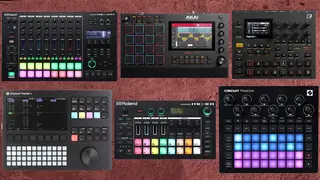

Most Popular Synthesizers
Most Popular Brands
-
Added to Equipboard on by
 eyeseeofficial
Gear IQ 161563
-


