This page about EMS Sequencer 256 is a stub. You can help improve it:


Pricing and availability




* Product prices and availability are updated by Equipboard every 24hrs and are subject to change. Equipboard may receive compensation for purchases made at participating retailers linked on this site. This compensation does not affect what products or prices are displayed, or the order of prices listed. For more information, please refer to our affiliate disclosure.
Description
The EMS Sequencer 256 is a dynamic tool for DJs and music producers looking to push the boundaries of their soundscapes. Designed for versatility and precision, this audio sequencer is a staple for both live performances and studio sessions. Its 256-step sequencing capabilities allow for complex pattern creation, giving you the freedom to explore intricate musical ideas. With intuitive controls and a user-friendly interface, the EMS Sequencer 256 ensures that you spend less time navigating menus and more time creating.
Whether you are crafting beats, arranging compositions, or experimenting with new sounds, this sequencer provides a solid platform for innovation. It features MIDI connectivity, making it compatible with a wide range of other gear, and syncs seamlessly to keep all your devices in perfect harmony. The EMS Sequencer 256 also supports multiple time signatures, letting you break free from traditional 4/4 constraints and explore diverse rhythmic structures.
Built with the modern musician in mind, the EMS Sequencer 256 offers robust build quality and reliable performance. Its compact design makes it an ideal travel companion for gigs or collaborations, while its powerful features ensure it remains an essential tool in your musical arsenal.
Key Features:
- 256-step sequencing for detailed pattern creation
- User-friendly interface for easy navigation
- MIDI connectivity for integration with other gear
- Supports multiple time signatures
- Compact design for portability
- Robust build quality for long-lasting use


Reviews
Owner Insights
We analyzed real musician discussions from forums and Reddit to find what players love, question, and tweak about EMS Sequencer 256.
Comparisons
-
The EMS Sequencer 256 is noted as a serious candidate among early electronic sequencers, distinguishing it from digital sequencers that appeared later.
Source
Use cases and applications
-
The sequencer is discussed in the context of recreating classic analog arp sounds, highlighting its relevance to vintage sound replication.
Source -
It's suggested that a quantized LFO could achieve similar arpeggiated effects as those created by the EMS Sequencer 256, showcasing potential alternative methods.
Source
Based on 0 Reviews and 0 Ratings
Artist usage
Add artist

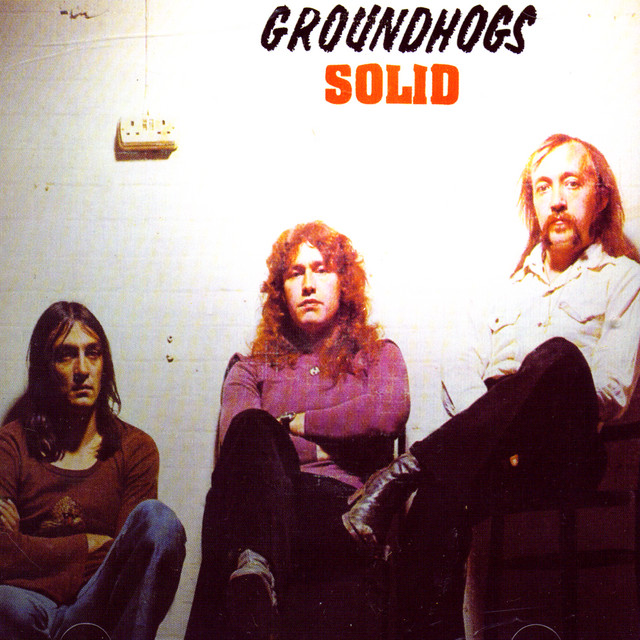
In the November 1974 issue of Beat Instrumental, a Sequencer 256 is pictured among the gear in Tony McPhee's home studio on page 28; it is discussed briefly on page 29. An "EMS Sequencer" had been listed a few months prior in McPhee's profile for the WWA press kit for Solid. It also appears on page 24 of the March 1976 issue of Beast Instrumental.
WWA press kit for Solid (1974), profile for McPhee
INSTRUMENTS: Gibson SG, Fender Stratocaster, Zemaitis, Yamaha, Harmony Acoustics, H/H Amplification, ARP 2600 synthesizer and EMS Sequencer
Beat Instrumental, November 1974, "Home Studios: Tony McPhee" by Del Robinson, pg. 28-29 (pictured)
Tony's also very interested in electronic music: 'I want to build an electronic music studio', and he enthusiastically demonstrated some gear in his present set-up. It includes a couple of ARP2600 synthesisers, a rhythm sequencer ('I found this unit invaluable'), and frequency shifter, a Compact piano and a Mellotron.
'I'm a guitarist, not a keyboards player,' commented Tony modestly. 'Though I find I'm really beginning to get into synthesisers now. They're very creative instruments and it's very much up to the individual musician what he gets out of them. I prefer the ARPs - not everyone can get along with EMS units. I know people have criticised the ARP because you have to patch across it, but I don't find this a problem.'
Beat Instrumental, March 1976, "Tony McPhee: The Hogs Return" by Chris Simmons, pg. 24 (pictured)


From what I heard in the clip, a Roland SH-2 was used in this song.

Karg used two Sequencer 256s (with at least one modified) for Elektronische Mythen, as described on the back cover of Elektronische Mythen, on the "Elektronisches Studio" page of his website and on his unit's Ocsidance listing page.
Elektronische Mythen back cover
4 EMS-Synthesizer mit Digitalspeicher (Sequencer 256) als zentraler steuereinheit. 5 Tonbandgeräte mit 2-, 4- und 8-känalen, zum teil mit variabler geschwindigkeit.
http://www.juergenkarg.de/, "Elektronisches Studio" (2021)
Die analogen VCS3 - Synthesizer von EMS, welche ich seinerzeit als einer der ersten mir zulegte, waren noch äußerst primitiv, und eigneten sich kaum für seriöse klangliche Hervorbringungen, da sie noch nicht einmal frequenzstabil waren. Lediglich ringmodulierte Klänge konnten mein Interesse wecken. Auch der Sequencer 256, der Einstieg in die Digitaltechnik, erweiterte die Möglichkeiten der Steuerungstechnik nur wenig. 256 speicherbare Events waren schnell durchgelaufen, und mussten wiederum in der Frequenz gesteuert werden, um überhaupt Abwechslung zuzulassen. Es war die Zeit der Anfänge der elektronischen Musik, als ich noch selber zum Lötkolben greifen musste, und der Kabelwirrwar mich oft an den Rand der Verzweiflung trieb. Ich wollte damals experimentieren, da ich an Kompositionstechnik nicht interessiert war, und mir die dazu nötige Begabung fehlte.
[...]
Elektronische Mythen
[...]
Produziert mit 4 EMS-Synthesizern mit Digitalspeicher (Sequencer 256) und 5 Tonbandgeräten mit 2-,4- und 8 Kanälen, zum Teil mit variabler Geschwindigkeit, und diverser Peripherie.
[...]
[...] Vier Synthesizereinheiten (VCS3 von EMS) produzierten die Töne und Klänge, gesteuert von einem Digitalspeicher (Sequencer EMS 256 erweitert auf 8 Ausgangskanäle).
Ocsidance, "EMS Sequencer 256" (2021)
Up for offer an ulta rare EMS Sequencer 256.
This is #10 of 24 ever built.
This specific one is even rarer as it was modified in order to add to layer 4, formerly designed to record a pulse only (mostly used to send the reset signal at the end of the sequence) CV outputs like layers 1 2 3 The mods were performed by the first owner, the German musician Juergen Karg, who used it on his ‘Elektronische Mythen’ album, recorded with 4 Synthis and 2 Sequencer 256’s. I know no other unit with these great extra features which makes it possible to control 4 synths at the same time. He also added 2 VC slew limiters (thus 3 in total), and made the original one related to CV A only patchable next to the 2 extra ones.
Album Usage
The EMS Sequencer 256 has been featured on the following albums:
Genre Usage
Based on how artists on Equipboard use this gear, it is most commonly found in the following genres.
Used With
Based on how musicians on Equipboard use EMS Sequencer 256, it is most commonly used with the following gear.


More EMS Audio Sequencers


$99.00 - $273.00
in Audio Sequencers Rank


$387.76 - $1,100.00
in Audio Sequencers Rank


$103.25 - $149.99
in Audio Sequencers Rank


$83.00 - $99.00
in Audio Sequencers Rank


$477.00 - $612.99
in Audio Sequencers Rank


$1,495.00
in Audio Sequencers Rank


$632.35
in Audio Sequencers Rank


$299.00
in Audio Sequencers Rank


$299.00
in Audio Sequencers Rank


$125.00
in Audio Sequencers Rank


$211.00 - $329.99
in Audio Sequencers Rank


$1,495.00
in Audio Sequencers Rank


$1,431.73
in Audio Sequencers Rank


-m.webp?v=1784455250)
$1,222.00 - $1,311.23
in Audio Sequencers Rank


$83.00 - $99.00
in Audio Sequencers Rank

$175.00 - $368.46
in Audio Sequencers Rank


$199.99 - $375.00
in Audio Sequencers Rank


$2,300.00
in Audio Sequencers Rank


$105.00
in Audio Sequencers Rank


$175.00
in Audio Sequencers Rank


$25.00 - $119.95
in Audio Sequencers Rank

$145.06
in Audio Sequencers Rank


$620.42 - $1,199.00
in Audio Sequencers Rank


$546.99
in Audio Sequencers Rank


$499.00 - $525.00
in Audio Sequencers Rank


$1,290.00
in Audio Sequencers Rank


-m.webp?v=1784332394)


$298.28
in Audio Sequencers Rank


$105.00
in Audio Sequencers Rank


$70.00
in Audio Sequencers Rank


$650.00
in Audio Sequencers Rank


$13.90
in Audio Sequencers Rank
.png?v=1784328024)


$65.00
in Audio Sequencers Rank


Community setups


Similar


Gear Guides





Most Popular Audio Sequencers
Most Popular Brands
-
Added to Equipboard on by
 eyeseeofficial
GearIQ 161592
-


