

Pricing and availability
We compare 600+ stores and found this item at 1 store. Prices updated .
Store
Reviews
Price




* Product prices and availability are updated by Equipboard every 24hrs and are subject to change. Equipboard may receive compensation for purchases made at participating retailers linked on this site. This compensation does not affect what products or prices are displayed, or the order of prices listed. For more information, please refer to our affiliate disclosure.
Description
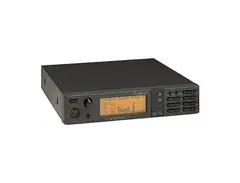
Step into a world of versatile soundscapes with the Kurzweil MicroPiano, a compact yet powerful addition to your musical arsenal. This sound module packs a robust collection of 256 sounds, ensuring you have a diverse palette of tones at your fingertips. Whether you're a touring musician needing a reliable backup or a studio wizard looking to expand your sound library, the MicroPiano offers a seamless blend of quality and convenience.
The MicroPiano is designed to integrate effortlessly with your existing setup. Its sturdy build and intuitive interface make it an ideal choice for musicians who value both performance and portability. With sounds ranging from lush grand pianos to rich orchestral textures, you’ll find it adaptable to a wide array of musical genres and styles. The 16-note polyphony ensures smooth and dynamic performances, allowing you to layer sounds without sacrificing quality.
This sound module isn’t just about quantity; it’s about delivering nuanced and expressive tones that can elevate your music to the next level. Whether you're triggering sounds via MIDI or using it as a standalone module, the Kurzweil MicroPiano is engineered to inspire creativity with every note.
Key Features:
- 256 high-quality sounds including pianos, strings, and orchestral instruments
- 16-note polyphony for dynamic and layered performances
- MIDI compatibility for seamless integration with keyboards and digital workstations
- Compact design for easy portability and integration into various setups
- User-friendly interface for quick access and sound selection
Product specs
| Brand | Kurzweil |
| Model | MicroPiano MIDI Sound Module |
| Finish | Black |
| Year | 1990s |
| Categories | Digital Synthesizers, Rackmount Synths |
| Analog / Digital | Digital |
| MIDI I/O | MIDI Input, MIDI Through |
| Polyphony | 32 Voices |
FAQs
-
What types of sounds are included in the Kurzweil MicroPiano?
-
The Kurzweil MicroPiano features a range of high-quality piano sounds, including acoustic grand pianos, electric pianos, and additional keyboard instruments, making it versatile for various musical styles.
-
How does the Kurzweil MicroPiano connect to my setup?
-
The Kurzweil MicroPiano connects via MIDI, offering MIDI Input and MIDI Through ports, which allow integration with keyboards, sequencers, or other MIDI-compatible devices.
-
Is the Kurzweil MicroPiano suitable for live performances?
-
Yes, the Kurzweil MicroPiano is suitable for live performances due to its compact rackmount design and high-quality sound output, providing reliable performance in various live settings.
-
How many voices of polyphony does the Kurzweil MicroPiano support?
-
The Kurzweil MicroPiano supports 32 voices of polyphony, allowing for complex arrangements and layered sounds without note dropouts.
-
What makes the Kurzweil MicroPiano different from other sound modules?
-
The Kurzweil MicroPiano is renowned for its realistic piano sounds and compact design, making it a popular choice for musicians seeking high-quality piano tones in a portable format.
Videos

Musicnectar
Kurzweil Micropiano
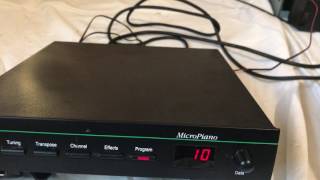
Kurzweil Micropiano
Musicnectar
Kurzweil MicroPiano sound demo

Paweł Mikołajczyk
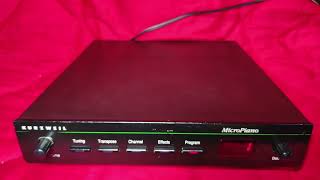
DEMO Kurzweil MicroPiano Pedrinsky

Pedro Castillo

Kurzweil MicroPiano - Demo

juan manuel
Kurzweil Micropiano (Preset Sounds)

Digithalis
Reviews
PROS
-
Exceptional portability and affordability compared to competitors
-
Maintains great piano sounds from the classic PC88MX
-
Offers a variety of sounds: acoustic piano, electric piano, B3, strings
-
Outperforms newer models in value for price
-
Compact size ideal for limited spaces
-
Durable; has lasted over 20 years for some users
-
Easy integration with controllers like the Privia 5s
-
32 unique patches with variations for customization
CONS
-
Some users find later Kurzweil models have better sound quality
-
Limited number of patches compared to newer models
-
May have sampled a smaller group of keys, affecting sound depth
Owner Insights
We analyzed real musician discussions from forums and Reddit to find what players love, question, and tweak about Kurzweil MicroPiano.
Comparisons
-
The Kurzweil MicroPiano is recommended for acoustic piano sounds but not electric, unlike the Korg SV1 which excels in electrics.
Source -
Yamaha Motif racks are noted for superior piano sounds compared to Roland XV series, which require SRX expansions for decent quality.
Source -
The Roland XV series is considered cheesy for pianos but can be improved with SRX-02, SRX-07, or SRX-11 expansion cards.
Source -
The Reface CP's hidden grand piano sound requires specific power-up settings, making it less convenient than the MicroPiano.
Source
Features and functionality
Use cases and applications
Value and pricing
-
Buyers find the Kurzweil MicroPiano a budget-friendly option for under $200, balancing cost and quality for traditional piano sounds.
Source
Critic Reviews
4.0 out of 5
Based on 3 Reviews and 5 Ratings

498
Great Sound Samples
I've used this compact little powerhouse for over 20 years with a Fatar Studio 900 monitor. It's been a very satisfying machine for several piano, organ and strings sounds. This setup is great for someone with very little space. I'm currently playing it through a small Fender Rumble 15 Bass amp I also use for Bass recording and practice.

Great piano patches
This synth module has 32 patches only. Some of them are variations of the "original patch" with different chorus and reverb levels. But still, It's maybe the best piano sounding synth I have ever encountered. There are strings, and organ patches too.

Artist usage
Add artist

In the YouTube video titled "Doña Oxford, Goddess of Soul - Full Show," Doña Oxford shares her preference for the Kurzweil MicroPiano, highlighting preset sounds such as 3 for piano, 5 for honky-tonk piano, and 14 for electric piano, indicating her use of the module in her music.

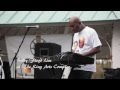
In the YouTube video titled "Bobby Floyd Live" by movado242, Bobby Floyd can be seen using the Kurzweil MicroPiano, showcasing its impressive sound quality.




Don Was has two recording studios. One is a 24‑track demo studio in his home in Beverley Hills, the other a larger, professional studio in a house adjacent to his residence. Was wrote the music and arrangements for Forever's A Long, Long Time in his demo studio, which comprises, he said, "a Mackie console, with a Tascam DA88 and a bunch of keyboards and samplers. The synth I use most is the Roland JX8P, but I also have an Oberheim OBX8, a Sequential Prophet 5, a Roland JD800, a MIDI Hammond organ, and an Emu Proteus World module. My master keyboard is a Roland RD1000, which Elton John bought for me. When I worked with him he used it himself as a piano. It had wooden keys and felt great when I tried it out. He noticed I liked it — and the next day one turned up in my garage! I also have some Akai samplers, S3000s, and an older Roland S550 sampler. I have a Kurzweil MicroPiano, which is a little half‑rack box with 30 piano sounds and a couple of string patches. It sounds great; better than any grand piano I can record, unless you're doing serious classical stuff."


List of synthesizers at Paul Robb's studio:
Casio VZ10M. "There's one little sound called Teardrops in there, and it's the only sound I've ever used out of that box." Emu Morpheus. Emu Orbit. "These Emu boxes are just kind of one‑trick ponies, and once you have that trick you can't really use it too much. Nine out of 10 times when I use the Orbit I put it through distortion." Emu Proteus 1, 2 & 3. "I, like almost everyone else who owns them, use these a lot but tend not to admit it! But some of the most expressive orchestral sounds I have come out of that Proteus 2, the oboe especially." Kurzweil Acoustic Expander (AX). "I mostly use this for string samples. In some ways some of its string samples are more effective than those on very expensive sample libraries. Even though it's less realistic when you listen to it by itself, in a mix it really makes things come alive. I often use it in collaboration with a sampled string section, and it sounds great." Kurzweil Micropiano. "I have vast numbers of giant sampled grand pianos, but generally in a mix or for one low note you don't need a sampled Bösendorfer. Something that's kind of close enough to a piano is going to work for that. If it's an exposed solo piano then I'll go to a sample from a sample CD." Oberheim DPX1. "When this first came out it was great because you could load samples from several different samplers into it. I have an orchestral cymbal sample from the old Emulator III library in there and every time I do orchestral music I use that sound. I've lugged that 20lb box around with me for years just for that one sound!" Oberheim Matrix 1000 (x4). "The Matrix 1000 is my favourite box of all time, which is why I have four of them. A lot of times I'll use all four on the same sound, just slightly detuned, and I pan all the way across the stereo field from hard left to hard right. The only thing is, they don't respond well to heat, so I always leave them switched off unless I'm actually using them." Roland BD1 (bass and drums). "This has some good snares in it, and some good acoustic basses. That's mostly all I use it for." Roland SE1 (strings). "The reason I have so many modules is because I'm very lazy. If a sound isn't right I'm more likely to continue looking for another sound than I am to tweak the sound. Especially with these menu‑driven rackmount things, I don't want to get involved with that." Roland D50. "I just use this as my controller. I don't use any of those sounds any more." Roland JP8000. "When I do need to program sounds, the JP8000 usually does the job." Roland MKS50 (x2). Roland MKS70. Roland Super Jupiter MKS80. "I bought this in 1987. Along with the SPX90, it's the oldest piece of gear in the studio." Roland U110. "This is one of those boxes that's so old and strange that sometimes it's good to just throw it into a mix. There's a couple of electric piano sounds on there which sound nothing like an electric piano, but for that very reason they sound great." Yamaha TX81Z. "This is my only member of the FM synthesis family — it comes in handy because it has its own sound."
Album Usage
The Kurzweil MicroPiano has been featured on the following albums:
Genre Usage
Based on how artists on Equipboard use this gear, it is most commonly found in the following genres.
Used With
Based on how musicians on Equipboard use Kurzweil MicroPiano, it is most commonly used with the following gear.


More Kurzweil Sound Modules

$434.12
in Sound Modules Rank


-m.webp?v=1783238222)
$350.00
in Sound Modules Rank


$194.73
in Sound Modules Rank


$1,200.00 - $1,999.99
in Sound Modules Rank


$1,350.00
in Sound Modules Rank


$875.00
in Sound Modules Rank


$298.54
in Sound Modules Rank


$2,299.00 - $2,330.00
in Sound Modules Rank


$630.00
in Sound Modules Rank


$119.00
in Sound Modules Rank


$261.00
in Sound Modules Rank


.jpg?v=1783346560)

$500.00
in Sound Modules Rank


$3,900.00
in Sound Modules Rank

$4,999.99
in Sound Modules Rank


$495.00
in Sound Modules Rank


$1,250.00
in Sound Modules Rank


$65.55
in Sound Modules Rank


$75.00
in Sound Modules Rank


$175.00 - $289.00
in Sound Modules Rank


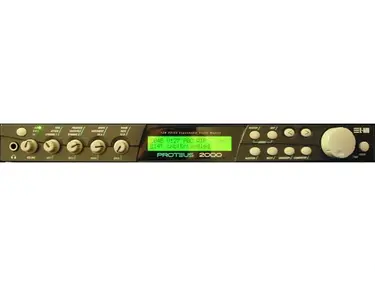
$49.99
in Sound Modules Rank


$139.00 - $1,500.00
in Sound Modules Rank


$4.76
in Sound Modules Rank


$500.00
in Sound Modules Rank


$669.24
in Sound Modules Rank

$199.99
in Sound Modules Rank


$2,099.00
in Sound Modules Rank


$999.00
in Sound Modules Rank


$626.93
in Sound Modules Rank


$400.00
in Sound Modules Rank


$41.20
in Sound Modules Rank


$292.57
in Sound Modules Rank


$200.00
in Sound Modules Rank


Accessories & Related Items




Community setups


Similar


Most Popular Sound Modules
Most Popular Brands
-
Added to Equipboard on by
gjorgji_taskovskiGear IQ 159
-


