This page about Maestro Boomerang BG-1 Wah Pedal is a stub. You can help improve it:


Pricing and availability




* Product prices and availability are updated by Equipboard every 24hrs and are subject to change. Equipboard may receive compensation for purchases made at participating retailers linked on this site. This compensation does not affect what products or prices are displayed, or the order of prices listed. For more information, please refer to our affiliate disclosure.
Description
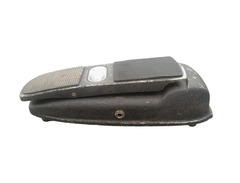
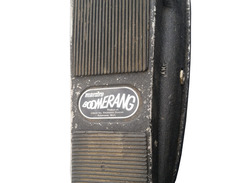
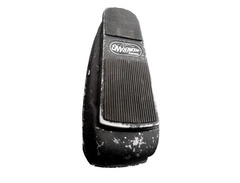
The legendary Boomerang BG-1 Wah Pedal by Maestro Introduced in 1967.
Guitar tintype aficionados and collectors praise the BG‑1 for its uniquely smooth sweep, harmonic complexity, and expressive dynamics , traits rarely captured in later commercial wah pedals. One tester ranked it among the “top two or three” of over 70 vintage wah pedals tested.
Year: Introduced in 1967, produced for a very limited time.
Manufacturer: Initially by Gibson and likely assembled at the Lowrey factory; later models (BG-2) were reworked by All Test Devices Corp.
Rarity: Considered one of the rarest wahs ever made and highly prized for its unique sound.
Inductor: Early BG‑1 units feature a large white inductor marked 500 mH with a date code, e.g., 6719 (indicating the 19th week of 1967).
Potentiometer: Uses a 25 kΩ reverse-log taper sealed CTS pot (chrome-backed).
This specific taper is crucial to achieving the expressivity and sweet sweep unique to the Boomerang’s tonal character.
Tone Profile: Famous for a focused gain "hump" in the low-mid frequency , referred to as the "wow" effect , which provides highly expressive control, especially notable on tracks like J.J. Cale’s “Crazy Mama.”
Sweeping Character: Offers a squishy, wide sweep with rich harmonic detail , often described as warmer, more resonant, and smoother than later models.
Volume Mode: Some BG‑1s feature a mild volume-swelling function (heel-down position), delivering a subtle mid boost while retaining high frequencies.
Comparison with BG‑2 (Orange Label)
The BG‑2, introduced around 1968, replaced internal components like the inductor (to EL‑RAD) and pot (Centralab 25k). Its design removed the volume function but widely increased production.
While the BG‑2 shares a similar architecture and voice, the BG‑1 is generally considered sonically richer and more expressive.
Specs:
• Summary of BG‑1 Specs
• Feature Details
• Year 1967
• Inductor White 500 mH, dated (~19th week of 1967)
• Potentiometer 25 kΩ reverse-log CTS (chrome)
• Tone Character Rich, expressive low-mid hump (the “wow” effect)
• Volume Mode Optional volume swell function present in BG‑1
• Comparison BG‑1 considered tonally superior to later BG‑2 models
Product specs
| Bypass | true bypass |
| Power | 9V |
Videos

Joe Gagan
maestro boomerang BG-1 vs. vox wah modded
maestro boomerang BG-1 vs. vox wah modded
Joe Gagan
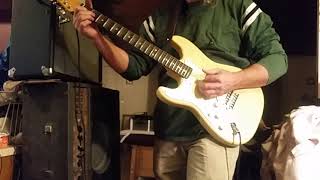
1967 boomerang wah bg1 for sale
Joe Gagan
Reviews
Based on 0 Reviews and 0 Ratings
Artist usage
Add artist
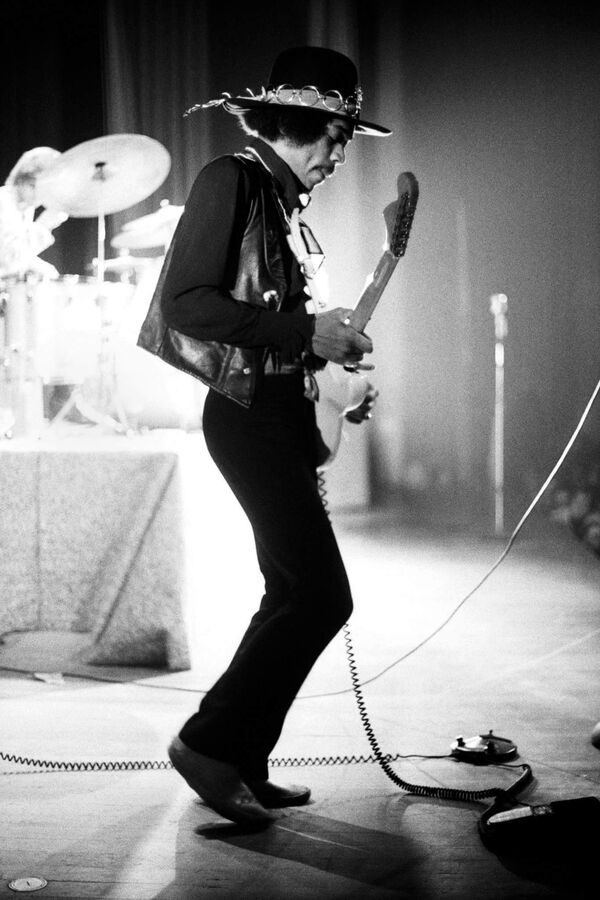
Jimi Hendrix is confirmed to have used the Maestro Boomerang BG-1 Wah Pedal during a performance at the Ackerman Union Ballroom at UCLA, Los Angeles on February 13, 1968. This is evidenced by an image where the pedal's input is visibly connected on the left side, with the output leading directly into a Fuzz Face, and subsequently to the amplifier.
Genre Usage
Based on how artists on Equipboard use this gear, it is most commonly found in the following genres.
More Wah Pedals
-m.webp?v=1785152514)
$89.00 - $99.99
in Wah Pedals Rank


$147.38 - $220.00
in Wah Pedals Rank


$209.99 - $234.78
in Wah Pedals Rank


.jpeg?v=1785065168)

$129.00 - $209.99
in Wah Pedals Rank


$93.88 - $125.99
in Wah Pedals Rank


-m.webp?v=1785163629)
$89.00 - $109.99
in Wah Pedals Rank


$169.00 - $179.99
in Wah Pedals Rank


$74.00 - $215.00
in Wah Pedals Rank


$86.65 - $149.99
in Wah Pedals Rank


$154.00 - $315.00
in Wah Pedals Rank


$81.00 - $179.99
in Wah Pedals Rank


$154.00 - $159.99
in Wah Pedals Rank
.jpeg?v=1785150215)


$266.00 - $329.00
in Wah Pedals Rank


$129.00 - $139.99
in Wah Pedals Rank


$209.99 - $258.00
in Wah Pedals Rank


$188.85 - $219.00
in Wah Pedals Rank


$112.05 - $153.99
in Wah Pedals Rank


$209.99
in Wah Pedals Rank


$59.00 - $190.00
in Wah Pedals Rank

.jpeg?v=1785158600)


$59.00 - $149.99
in Wah Pedals Rank


$96.00
in Wah Pedals Rank


$199.00 - $219.00
in Wah Pedals Rank


$112.75 - $185.00
in Wah Pedals Rank


$198.87 - $229.00
in Wah Pedals Rank


$169.99 - $299.99
in Wah Pedals Rank


$115.00 - $315.00
in Wah Pedals Rank


.png?v=1785150215)

$80.00
in Wah Pedals Rank


$209.99 - $257.00
in Wah Pedals Rank


$10.00 - $99.99
in Wah Pedals Rank


$115.00
in Wah Pedals Rank


$196.96 - $209.99
in Wah Pedals Rank


$163.93 - $190.00
in Wah Pedals Rank

.jpg?v=1785038939)

$55.55 - $154.79
in Wah Pedals Rank


$354.98
in Wah Pedals Rank
.jpg?v=1785137500)


$70.03
in Wah Pedals Rank


$73.32 - $199.00
in Wah Pedals Rank


$113.10 - $130.78
in Wah Pedals Rank


.jpeg?v=1784985221)

$77.20
in Wah Pedals Rank


$33.33 - $103.76
in Wah Pedals Rank


$235.00 - $275.00
in Wah Pedals Rank


Community setups


Similar


Gear Guides



.jpg)



Most Popular Wah Pedals
Most Popular Brands
-
Added to Equipboard on by
 hashimoto
GearIQ 14974
-


