


Pricing and availability
We compare 600+ stores and found this item at 3 stores. Prices updated .
Store
Reviews
Price




Average Price: $136
Standard/Professional
$75
$251+
Price Tier
Budget
Standard
High-end
Price History
Based on price data from 1 merchant for "Morley VAI-1 Steve Vai Bad Horsie Wah". Prices shown reflect NEW condition. Tracking began Apr 2, 2026.
* Product prices and availability are updated by Equipboard every 24hrs and are subject to change. Equipboard may receive compensation for purchases made at participating retailers linked on this site. This compensation does not affect what products or prices are displayed, or the order of prices listed. For more information, please refer to our affiliate disclosure.
Description
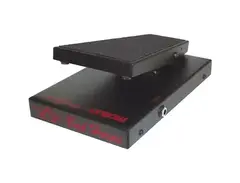
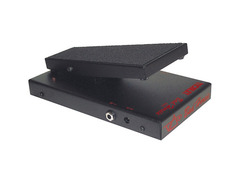
Unleash the iconic wah tones that have powered legendary solos with the Morley VAI-1 Steve Vai Bad Horsie Wah pedal. Crafted in collaboration with virtuoso Steve Vai, this pedal ensures your wah sound stands out with its expressive sweep and distinctive voice, all without the need for a footswitch. Engage the effect simply by stepping on the pedal, and let it automatically disengage when you step off, offering unparalleled convenience and precision. It's not just a pedal; it's your fast track to sonic brilliance, capturing the essence of Vai's dynamic playing style.
Key Features:
- Switchless operation for ease of use; engage the effect by stepping on the pedal
- Auto-return function automatically disengages the wah when not in use
- Custom Vai-inspired sweep for a unique sound signature
- Rugged build designed to withstand the rigors of touring
- True Tone Bypass buffer circuit ensures pure guitar tone and maintains signal in bypass and effect modes
Product specs
| Brand | Morley |
| Model | VAI-1 Steve Vai Bad Horsie Wah |
| Finish | Black |
| Year | 1996 - 2010 |
| Made In | United States |
| Categories | Filter and Wah Pedals |
FAQs
-
What makes the Morley VAI-1 Steve Vai Bad Horsie Wah unique compared to other wah pedals?
-
The Morley VAI-1 features switchless activation, allowing for seamless operation by simply stepping on the pedal. It also offers two wah modes, including a contour mode that lets you adjust the frequency and tone for personalized sound shaping.
-
How does the contour mode on the Morley VAI-1 Wah pedal work?
-
The contour mode on the Morley VAI-1 allows you to adjust the frequency and tone of the wah effect, providing more versatility and customization for your sound. This feature is ideal for players who want to tailor their wah tone to specific musical styles or preferences.
-
Is the Morley VAI-1 suitable for live performances?
-
Yes, the Morley VAI-1 is well-suited for live performances thanks to its switchless activation, which enables quick and effortless use on stage. Its robust build and adjustable settings also make it reliable for gigging musicians.
-
Can the Morley VAI-1 Wah pedal be used with bass guitars?
-
While primarily designed for electric guitars, the Morley VAI-1 can be used with bass guitars. However, the tonal response may vary, so it's advisable to test it with your specific setup to ensure it meets your sound requirements.
-
Does the Morley VAI-1 require a specific power supply?
-
The Morley VAI-1 Steve Vai Bad Horsie Wah typically requires a standard 9V power supply. It's important to use the correct power source to ensure optimal performance and avoid damage to the pedal.
Videos

Music Force Official
Morley Bad Horsie 1 VAI-1

Morley Bad Horsie 1 VAI-1
Music Force Official
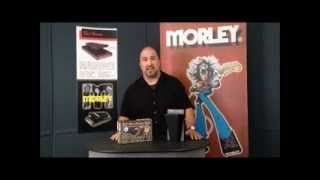
Morley Steve Vai Bad Horsie Wah

Morley
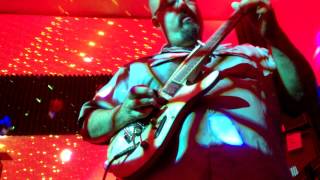
Morley Steve Vai Bad Horsie Wah

Easy Music Center
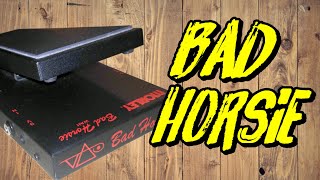
The Morley Bad Horsie Steve Vai’s Signature Wah Pedal

DansGuitarMusic
Reviews
PROS
-
True bypass preserves original tone
-
Extended pedal travel for nuanced control
-
Optimal for aggressive playing styles
-
Durable build suitable for gigging
-
Switchless operation for ease of use
-
Adjustable delay time for effect disengagement
-
Offers a distinctive, bright wah sound
-
No internal potentiometer, reducing wear
-
Spring-loaded for automatic return to neutral
-
Adds a high-mid boost for clarity in mix
CONS
-
Limited tone variation and sweep range
-
Dominant effect might overpower other pedals
-
Not universally preferred among all guitarists
Owner Insights
We analyzed real musician discussions from forums and Reddit to find what players love, question, and tweak about Morley VAI-1 Steve Vai Bad Horsie Wah.
Features and functionality
-
The spring-loaded, switchless design of the Morley VAI-1 caters to players with wide feet, providing a natural feel during use.
Source -
The Morley Bad Horsie is an automatic wah, eliminating the need for activation like most traditional wah pedals.
Source -
Unlike Vox wahs, the Morley Bad Horsie II is specifically tailored for metal, offering a distinctive sound that stands out in heavier music genres.
Source
Comparisons
User experience
4.0 out of 5
Based on 5 Reviews and 21 Ratings

1201
A "Wah Wah" for build a "Lead Tone"
The "Bad Horsey" [from my musical bubble] is one of the most fabulous devices that Morley has launched. From my point of view, it has great advantages over other mechanisms that emulate this same effect. "The wah" is not a noise or sound filter, but "it’s a frequency filter of those sound or noise produced by our instrument signal". And the game between the lowest range and the highest range that our pedal can offer is part of the key to being satisfied with its sound projection.
In this case, the Bad Horsey is a pedal that has a good dynamic range of action. You can play quite well with the medium frequencies [which are the ones that usually give us notoriety and distinction at the time of the main arrangements].
Apparently, this particular effect, was designed to preserve the feelness contained in the amazing tone of "Steve Vai", and so, what I try to highlight is that, specifically, it is not a stuffing stompbox.
So, the character of the "Bad Horsey" is absolutely leading: then, once you crush it, nobody will ignore what comes out of it, good or bad sea. And this aspect protagonic could represent a disadvantage at some point if you still have doubts about the configurations prior to this stompbox [especially: overdrives, distortion, fuzz, and booster].
This "Wah" is not dark, it is not clean, it is not environmental, I mean it is not an additional element that improves or worsens the original signal of your instrument. Only the project merged with the range game that we control with the foot, resulting in the sound we all know as "Wah Wah".
This "Wah" is especially bright, crispy, vibrant. And once you press it the original signal of your guitar merges almost completely, although in a very interesting and attractive way, highlighting the loudness of the "Wha": even above other sounds in the chain of effects.
There is no need to press an on or off switch. There is no signal loss in the chain. It is not exactly "true by pass", but it behaves as such. It is not damaged easily. It is a battle tank. There is no internal potentiometer to take care of. There is no potentiometer wear.

216
The perfect wah
As much as I like the cry-baby, I always hated how you had to manually re-set it, and the number of times I'd leave it on by accident and not notice thanks to crap monitoring. I love this thing, spring loaded so it returns to neutral after use, no clicky buttons to accidentally turn on, just wah. Construction is rock solid, this thing isn't going to break any time soon. It also adds a bit of a high-mid boost as you wah to really cut through, which I personally love the sound of. I'm not swapping it out any time soon.

145
Great WAH
My 1st ever Wah and I got to try almost all of the Wahs you can find in the market at a store before getting this. It won simply because of the switch-less feature. It is very convenient especially when you have 20 other pedals (which i don't) and one less tap dance move is always a good thing right?
740
It wa and again stays a famous one in the quality of the sound
No switch ... very useful , electro-optical one, buffer is set to Steve's precise specs and equipped with Morley's superior electro-optical circuitry to handle the heavy wah, true bypass, and built like a tank , light for signal battery indication
Artist usage
Add artist

In 1997, Steve Vai endorsed the Morley VAI-1 Steve Vai Bad Horsie Wah as his signature pedal before transitioning to the Bad Horsie 2 model. This is evidenced by a user-uploaded photo showing Vai with the pedal.


"Part of Ed’s setup in the late 90’s. It was used on the recording of Airbag during the bridge, and for live performances of the track from 1996 to 1998."


In this video, Devin Townsend of Vai, Front Line Assembly, The Wild Hearts, and Strapping Young Lad talks about his effect units and other equipment, mentioning the Bad Horsie Wah pedal at 1:33.


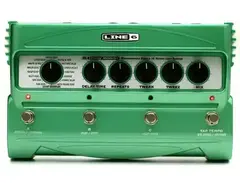
That’s pretty much it. I’ll run through an effects pedal board, but I’m not really even using a whole lot there ? just a few delay pedals. There’s an Ibanez analog delay AD9, Line 6 delay modeler and a Bad Horsie Wah, that’s pretty much it. It’s not a massive pedal board. Basically I just rely on the guitar, the tone and the amps.

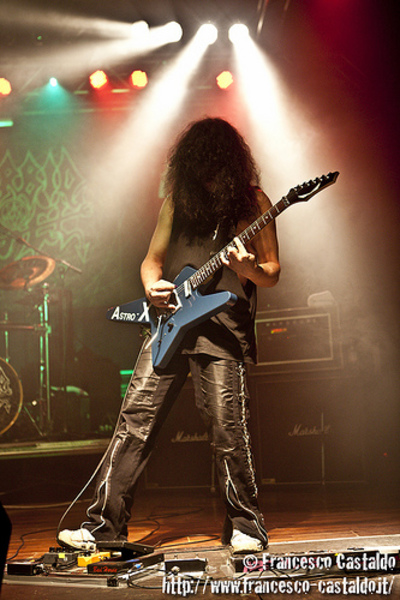
Trey operating his pedalboard which includes a Morley Bad Horsie Wah pedal.


At 3:02, Ben talks about why he used this pedal live

.gif)
You can see in this diagram from Guitar geek's, that Greg was using a morley bad horsie wah.

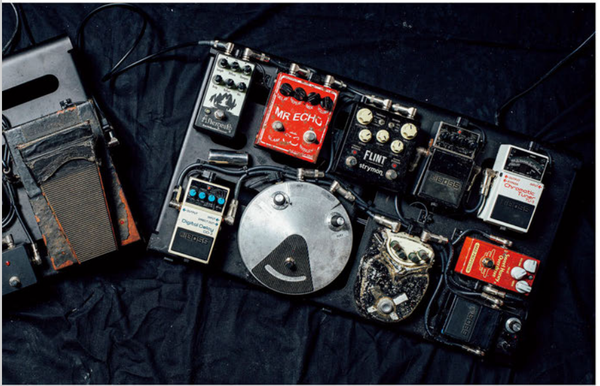
A picture on Guitar Magazine, March 2019 issue, shows Goto's pedalboard circa 2018.


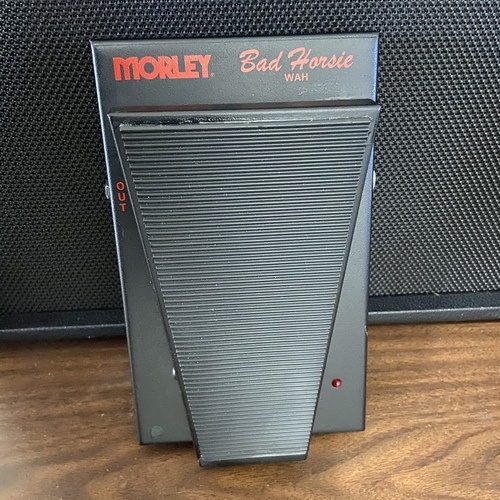
The Morley VAI-1 Steve Vai Bad Horsie Wah pedal, identifiable by its large horizontal Morley logo and lack of controls on the lower left-hand side, is utilized by guitarist Yoshiaki Manabe. This specific model's usage by Manabe is confirmed through visible evidence in a video lesson, demonstrating the pedal's distinctive features and confirming its application by the artist. https://youtu.be/6dmnSwgIFHg?t=47


The switcher controls a Fuchs Royal Plush compressor, a Morley Steve Vai Bad Horsie Wah, a Radial Engineering Tonebone Classic, a Marion Henry Electric Fuzz Bucket, a Moogerfooger MF-104M analog delay, a BBE MB-2 Mind Bender vibrato/chorus, Boss PS-5 Super Shifter and PH-3 Phase Shifter pedals, a Source Audio Soundblox 2 Orbital Modulator, a Malekko Omicron Fuzz, a Guyatone MD2 Micro Digital Delay, and a Banzai Cold Fusion Overdrive that he compares to a Klon Centaur and says is key to his sound.

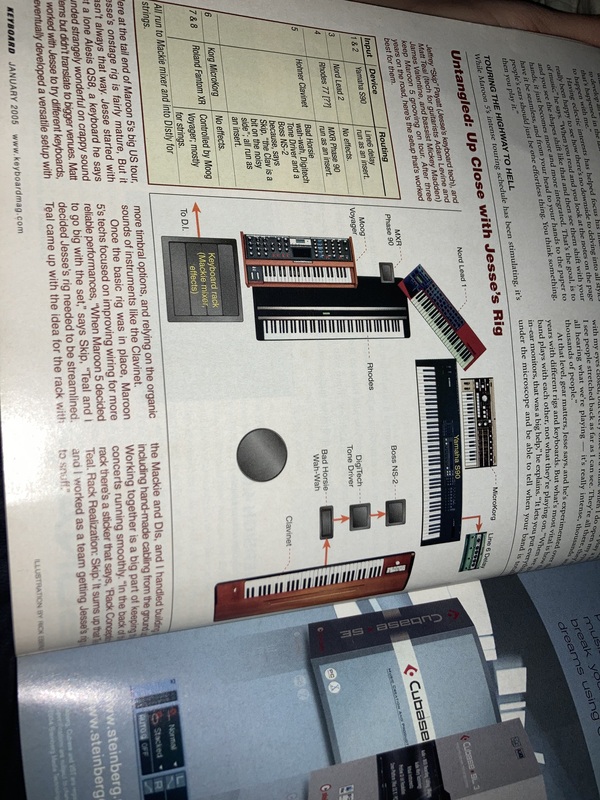
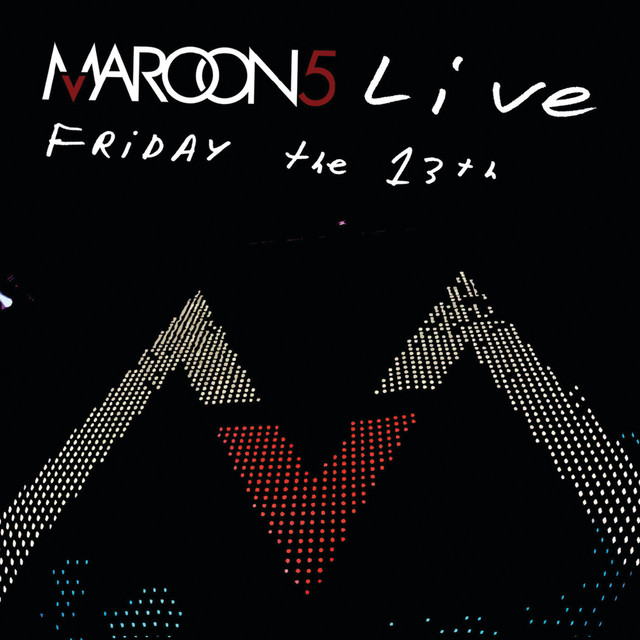
Jesse Carmichael used a Bad Horsie wah-wah with his Clavinet on Maroon 5’s 2005 US Headlining tour as seen in the January 2005 issue of Keyboard Magazine.


The "Equipment" section of this article sourced by the World Heritage Encyclopedia™ states that "Simpson's pedal-board consists of a Boss DD7, a Morley Bad Horsie Wah, a Dunlop Dime Signature Wah, an Ibanez TS9, an MXR Noise Gate, a Boss TU2, as well as a Boss BF3 and a Boss DD-6 delay pedal."
Album Usage
The Morley VAI-1 Steve Vai Bad Horsie Wah has been featured on the following albums:
Genre Usage
Based on how artists on Equipboard use this gear, it is most commonly found in the following genres.
Used With
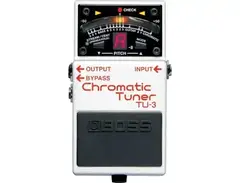
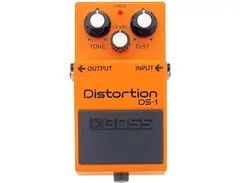
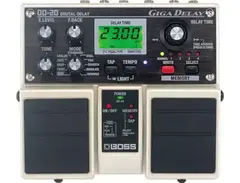
Based on how musicians on Equipboard use Morley VAI-1 Steve Vai Bad Horsie Wah, it is most commonly used with the following gear.



-s.webp?v=1785136009)

-s.webp?v=1785077958)
Community setups
Show yours


Similar
Add recommendation4 alternative and related items for Morley VAI-1 Steve Vai Bad Horsie Wah, curated by the Equipboard community.


$74.00 - $215.00

More Morley Wah Pedals
$74.00 - $215.00
in Wah Pedals Rank


$354.98
in Wah Pedals Rank
.jpg?v=1785137500)


$113.10 - $130.78
in Wah Pedals Rank


.jpeg?v=1784985221)

$69.00 - $209.00
in Wah Pedals Rank


$128.16 - $139.00
in Wah Pedals Rank


$200.00
in Wah Pedals Rank


$169.00 - $210.00
in Wah Pedals Rank


$100.00 - $163.00
in Wah Pedals Rank


$184.42 - $199.00
in Wah Pedals Rank


-m.webp?v=1785137741)


.jpg?v=1784985167)


-m.webp?v=1784336007)


Accessories & Related Items


Gear Guides



.jpg)



Most Popular Wah Pedals
Most Popular Brands
-
Added to Equipboard on by
 shaunwinston
GearIQ 645
-


