

Pricing and availability
We compare 600+ stores and found this item at 1 store. Prices updated .
Store
Reviews
Price




Average Price: $145
Standard/Professional
$100
$276+
Price Tier
Budget
Standard
High-end
* Product prices and availability are updated by Equipboard every 24hrs and are subject to change. Equipboard may receive compensation for purchases made at participating retailers linked on this site. This compensation does not affect what products or prices are displayed, or the order of prices listed. For more information, please refer to our affiliate disclosure.
Description
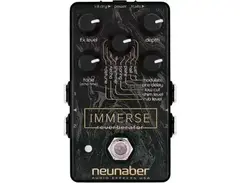
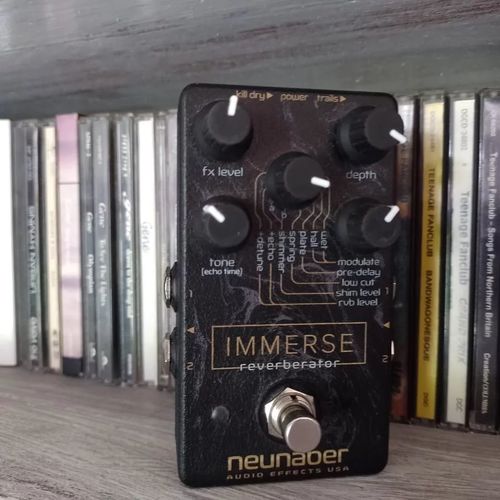
The Neunaber Immerse Reverberator is more than just a reverb pedal; it's a gateway to sonic landscapes. Introduced in 2016, this pedal quickly made waves in the guitarist community. It is meticulously crafted with eight diverse reverb modes, offering endless possibilities for your sound. In addition, seven forms of modulation make it a total powerhouse, providing you with 42 possible modes to explore. It’s the perfect creative tool for guitarists seeking depth and versatility. With controls for effect level, depth, and tone, the Immerse Reverberator puts you in the driver's seat, allowing you to shape your sound with precision.
Key Features:
- Eight distinct reverb modes
- Seven forms of modulation for a total of 42 possible modes
- Controls for effect level, depth, and tone
- Introduced in 2016
- Perfect for guitarists seeking depth and versatility
Product specs
| Brand | Neunaber Audio |
| Model | Immerse Reverberator |
| Finish | Black |
| Year | 2010s |
| Made In | United States |
| Categories | Reverb Pedals |
FAQs
-
What types of reverb effects are available on the Neunaber Immerse Reverberator?
-
The Neunaber Immerse Reverberator offers a wide range of reverb effects, including Wet, Hall, Plate, Spring, and Shimmer, among others. This variety allows guitarists to explore different ambient textures and sonic landscapes.
-
How does the Neunaber Immerse Reverberator handle stereo output?
-
The Neunaber Immerse Reverberator features stereo outputs, allowing you to create immersive soundscapes with a true stereo spread, ideal for both live performances and studio recordings.
-
Is the Neunaber Immerse Reverberator suitable for live performances?
-
Yes, the Neunaber Immerse Reverberator is designed for both studio and live use, offering a robust build and intuitive controls that make it easy to adjust settings on the fly during performances.
-
Does the Neunaber Immerse Reverberator require a specific power supply?
-
The Neunaber Immerse Reverberator requires a standard 9V DC power supply, ensuring compatibility with most pedalboard power solutions.
-
Can the Neunaber Immerse Reverberator be used with other instruments besides guitar?
-
Yes, while primarily designed for guitar, the Neunaber Immerse Reverberator can also be used with other instruments, such as keyboards, to add rich reverb effects to your sound.
Videos

Chords Of Orion
Ambient Guitar Gear Review - Neunaber Immerse Reverberator (Stereo Reverb)
Ambient Guitar Gear Review - Neunaber Immerse Reverberator (Stereo Reverb)
Chords Of Orion
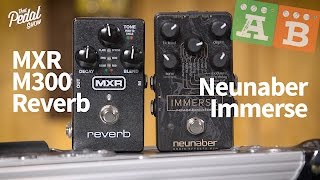
TPS AB Comparisons – MXR M300 Reverb & Neunaber Immerse Reverberator

That Pedal Show
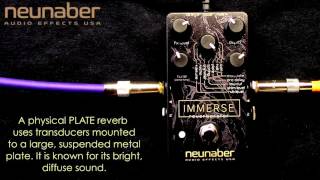
Neunaber Immerse Reverberator

Mike Hermans
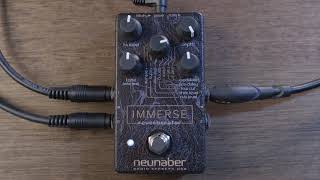
Immerse Reverberator

Neunaber Audio
Reviews
PROS
-
Simple interface, easy to use in live settings
-
Pristine, articulate reverb with adjustable depth
-
Offers a wide range of high-quality tones (Wet, Hall, Plate, etc.)
-
Maintains clarity of the dry signal even at high reverb depths
-
Versatile for both studio and live performances
-
Features unique reverbs like Wet and Shimmer for expansive soundscapes
-
Stereo in and out for rich sound
-
External Kill Dry and Trails switches for enhanced control
-
Works well with both clean and high gain amps
-
Made in California, USA, ensuring quality craftsmanship
CONS
-
Lacks a blend knob for direct wet/dry mix control
-
Some reverbs perceived as less deep compared to competitors like Strymon Flint
-
Delay feature may overshadow other dedicated delay pedals, adding complexity
Owner Insights
We analyzed real musician discussions from forums and Reddit to find what players love, question, and tweak about Neunaber Immerse Reverberator.
Use cases and applications
-
Users find the pedal excels in loop layer ambience and textures, contributing effectively to both subtle and large-scale atmospheric settings.
Source -
The Mk2 can be used effectively for sound manipulation in ambient music settings, often in combination with other high-end effects units.
Source -
The Mk2 is used effectively in complex chains with other reverbs like the Mercury 7, enhancing deep and atmospheric soundscapes.
Source -
It's highlighted that the Immerse performs well with both ambient music and high-gain tones, providing versatility across genres.
Source
Setup and maintenance
-
Specific signal chains include using the Immerse Mk2 in aux send setups, allowing for versatile routing and sound manipulation.
Source
User experience
-
Some prefer the aesthetic of the Mk1 but acknowledge the Mk2's improved wet/dry ratio for more expansive reverb effects.
Source -
Some users note the Neunaber Immerse MKii may sound quieter at higher mix settings, as it does not exceed unity gain, affecting perception in ambient settings.
Source -
Some owners prefer the Immerse for its simplicity over more complex pedals like the Ventris, which may have too many tweaking options.
Source
Comparisons
-
Users find the Mk2 sonically comparable to the Ventris, with the latter offering more features but no significant difference in sound quality.
Source -
While the Immerse MKii lacks MIDI and dual-engine capabilities, it's preferred by some over larger units like the BigSky for ease of use and essential sound quality.
Source -
The Spring reverb on the MKii is considered significantly better than the MKI, while the Wet and Hall settings remain popular among users.
Source -
The Immerse is favored for its compact size and high-quality sound, though it lacks a "drippy" spring reverb compared to some Source Audio models.
Source -
The Neunaber Immerse's Wet reverb is patented, indicating unique design and performance elements that are noted for their atmospheric quality.
Source
Features and functionality
-
The Mk2 allows for a full 100% wet/dry mix, whereas the Mk1 maxes out at a 50:50 ratio, impacting reverb depth.
Source -
The Neunaber Immerse excels in stereo setups, enhancing its atmospheric effects significantly.
Source -
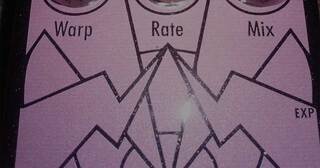
The pedal's paint job is mentioned as surprisingly user-friendly despite its unusual look, aiding quick and effective sound adjustments.
Source -
Despite its limited presets, the Immerse's selection of reverb options is praised for being perfectly curated for versatile use.
Source
Critic Reviews
5.0 out of 5
Based on 6 Reviews and 34 Ratings

Top Quality For The Masses
Summary:
An absolute monster of a reverb. Will take you to places you've never played. I've played it for nearly 3 months and it has changed everything for me.
Tone(s):
There are numerous tones on this standard size stomp box. Wet (a signature Neunaber tone), Hall, Plate, Spring, Shimmer (a), Shimmer (b), Reverb + Echo (delay), and Reverb + Detune (chorus like). All of these are top quality tones. I originally fell in love with Neunaber when a friend loaned me the Wet Stereo V2 and a Strymon Blue Sky. I played the Strymon for about a half hour and then I plugged in the Wet and played it for the rest of the weekend. I certainly think Strymon is top quality but Neunaber is really something special… something unlike anything else I’ve ever played.
The Wet gives a tone that's simply hard to explain. It's comparable to a hall but more ethereal. For home use and for my minor/darker stylistic playing, the Wet takes me to another world of stories in my mind. I expand the depth to a physically impossible length and keep the level at about 2 o’clock. From here, you can add shape to the room/structure with the modulation and I keep the tone dark, about 10 o’clock. It’s is an ominous pad of dark matter that fills your room while your guitar continues to morph the soundscape.
The Hall is what the standard norm of hall is but just so realistic it is transporting. I use this more in live environments as it is more natural. Take the tone knob up to ¾’s and you really get a special psuedo-shimmer compliment without being as overwhelming as most shimmers.
Plate is where I take the high gain. If you play high gain, this is the reverb for you. It’s very thickening of what you play versus diluting. I’ve used many reverbs that really thin out my tone when high gain is pushed through it. This Plate does a great job of allowing the high gain and additional harmonics ring throughout while adding a spatial expanse.
Spring is not a type I used much before as they just sounded too digital on other pedals to me. However, Neunaber has made it a prominent tone for me. I’ll move into single coil territory with a tiny bit of dirt while I add a spring reverb on it to create a very vintage tone.
Shimmers are fun and being that I play in a worship band, I can put this to use at times by filling the room with a pad. A is more orchestral and epic and B is breathier and more heavenly. I’ve no preference between the two as they are quite different when playing with a full band. You’ll find that the song will lend itself to one or the other fairly quickly.
Echo is a blending type delay. You can control how much delay you want in your signal or how much reverb. It’s more of an either or while blending between the two. To be honest, the delay was frustrating at first because it sounded better than my other delay pedals. What a good problem to have though.
Detune is a very 80’s chorus-y vibe. Fortunately for me, I’m fine with that. A lot of people don’t care much for chorus but this is subtler than most. It is really more of the wet signal that is altered and your dry stays more intact than most chorus pedals which, to me, makes it more useful.
Control:
There’s a lot to go over here but I’ll keep it simple and focus on the more advanced features. Volume (how loud the wet signal is), Depth (how long the wet signal lasts), Type (which of the above reverbs to use), and Tone or Echo Time (Brightness or darkness of the wet signal or delay time of the echo setting).
That’s four of the five knobs. The 5th knob is a variable knob that changes its purpose depending on the reverb type you use.
Wet and Hall – Modulate (not like typical warble modulation but more of how “bumpy” or “rocky” the shape of the space creating the reverb is)
Plate – Pre Delay
Spring – Low Cut
Shimmer (a) and (b) – Shim level. Controls how many “voices” are mimicking your guitar playing.
+Echo and +Detune – Reverb Level. Controls how much of your wet signal is reverb or delay/detune.
Other misc features are: Stereo in and out, Kill Dry Switch (externally accessible), Trails Switch (externally accessible). The Kill Dry is much more helpful than I anticipated. While it does have more practical uses for how you wire up your rig, I use it mainly to shape my reverb tone. The fact that this is external is brilliant. There are no favorite switches or taps and this will never plug into your PC for updates like their Expanse series.
Final Words:
If you’re in the market, do yourself a major favor and give this a whirl before making your decision. I’d recommend this for any guitar player looking to add a high quality reverb. This, or some variation of it, will be on my board for a long time to come.

183
I don't know if anyone could add something to this, you are totally right!

1536
Mind-blowing reverb
Neunaber had something special in their hands when they released the Stereo Wet. They totally outdid themselves when the Immerse dropped. Rather than having to load all their reverbs one at a time as with the Wet, they threw all of their reverbs into one pedal (wet, hall, spring, plate, etc.), with extensive modulation and tone-shaping controls. Best reverb I have ever owned, and I owned both a Stereo Wet AND a Strymon BlueSky prior to this! My only complaint is that there is no blend knob, but the work-around I devised is to flip on the "kill dry" switch and use a splitter cable out of the original sound source (guitar, synth, etc.) and plug the two signals into a mixer and blend it that way. A little cumbersome, but it works!

41031
please tell me you are using a good quality DI box for at least your dry guitar signal...
1536
jimmarchi1 - Using a Tech 21 Para Driver DI for both bass, guitar and synth (not enough room in my studio for an amp). And my audio interface is a Focusrite Forte, which is very good!
41031
whew, a DI... I was like "holy impedance issues" when you said you were using a line mixer
1536
The exact way I have it set up right now is: Guitar/bass/synth -> volume pedal -> D.I. -> gain/distortion effects -> noise gate. Then the signal splits, with one output going to the mixer, and the other going into modulation/time effects before it hits the mixer. Then I go out of the mixer using balanced cables into the Focusrite interface. I am self-taught with this stuff, but from what I understand I have it set up correctly. Do you think there would be any reason to bump the D.I. up in the signal chain?
41031
the DI should technically be the LAST thing before the low Z mixer input for optimal impedance matching (the vast majority of guitar pedals already present anything plugged into them with a HUGE 1megohm load, but only some wills end a sufficiently low impedance and high voltage signal to ideally drive a line level input)... it literally serves no purpose between a volume pedal and dirt box. I can explain later if you are interested..
41031
I just read what I said and I gotta clarify and amend....
If it sounds good do it, just to be clear about that. Its RULE 1`of music and electronics takes a bak seat to music in my book, even if you are blowing up a vintage supro amp worth over a grand.
But yeah, from an electronics standpoint shits all fucked up in your signal chain... your DI is just acting as a line-driver where it is and the dirt box following it is getting a much lower impedance and more voltage peak to peakthan it was probably designed to get, additionally the transformer in the DI is balancing your unbalanced signal only for the dirt box to un-balance it again... and from there things get weirder viz-a-viz the impedances all of this different gear is designed to present and see to and from other gear. Little of it is working as intended and probably doesn't sound the way it was designed to in your application. But don't let that stop you. If it sounds good in your music to you, then its right. Or does the Tech21 have a 1/4" jacka s well as XLR? if so and you are using the 1/4" and not the the XLR then you are just using it as a dirt box, bypassing the passive DI section withits balancing transformer and the only thing you need to worry about is a DI at the mixer input (definitely for dry guitar, maybe for reverb, get your manuals for the reverb and the mixer and check the impedance out of the reverb and into the mixer. the reverb's out should be well lower than the 1/4" line input of your mixer channels.....)
I probably woulda set this up with all my effects up to the splitter like I am running into an amp, then I would reverb one side and DI each side, a stereo unit would work well
honestly the mixer adds a lot of unnescasarry circuitry when you could build a simple blend control into an altoids box with a handful of jacks and a potentiometer
I keep adding to this response, god, you probably want to get a book about studio electronics and an electronics for guitarists book and read both of them twice...
1536
I mainly got the D.I. as an amp simulator. I have been vaguely aware that electronically the arrangement doesn't make tons of sense, but the sound I get is still very good so it hasn't really been an issue. I may make some changes along the lines of what you just described.
Appreciate your thoughts, btw! =)
41031
sure... like I said, there's no right or wrong way with guitar sounds, but you may wish to configure your effects and DIs in a way that allows everything to work as designed just to hear the difference

114
Freakin' Awesome!
I just got this pedal for Fathers Day, and I love this one. I haven't used anything else since. This one is my favorite by far. I use it on a high gain amp, it would probably sound even better on a brighter clean fender type amp.

713
The best sounding stereo reverberator for it size and price!
Huge and rich stereo sound in a small single switch stompbox. Eight different reverbs-all brilliant.I use mostly well-dosed Echo reverb almost non stop turned on during my performances.Other favourites are Shimmer A and Wet reverbs.


Artist usage
Add artist

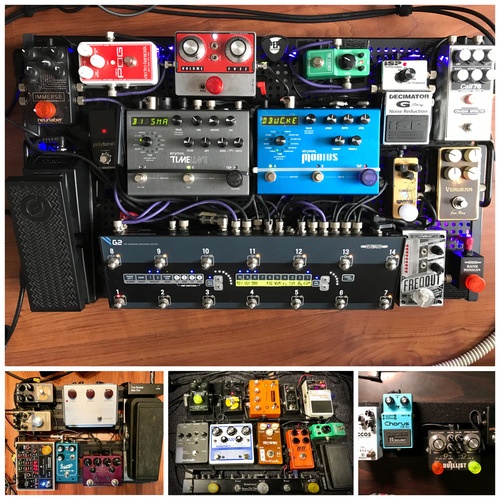
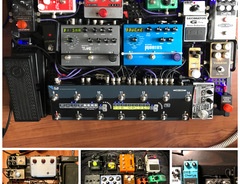
On September 29, 2016, Mateus posted in his Instagram some information about his pedalboard. The Neunaber Immerse is among his pedalboard number 2.

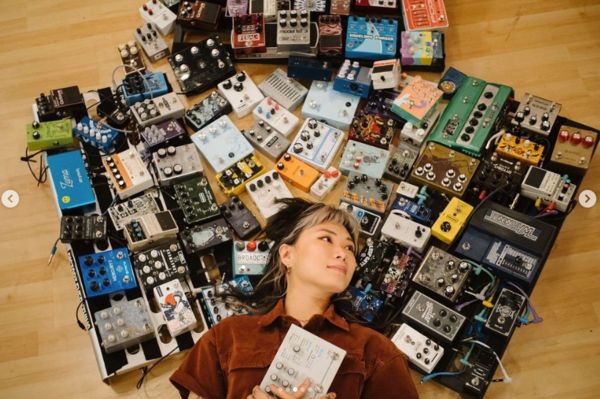
In this photo, featuring Yvette Young and the pedals she used for her latest album, the Neunaber Immerse Reverberator can be spotted on her board.


You can see him using one in this video for Neunaber.


In this youtube video at 1m24s we can see the neunaber Immerse pedal being used on his pedalboard

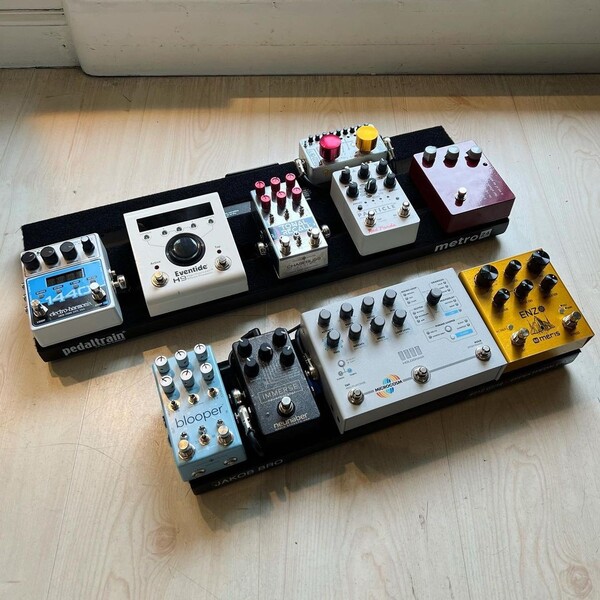
In a photo shared by Jazz Pedalboards on Facebook, Jakob Bro's Pedaltrain is shown to include the Neunaber Immerse Reverberator.

Bill uses his Neunaber Immerse Reverberator in almost all of his recent videos, including his Reverse Delay shootout, as shown in the link.

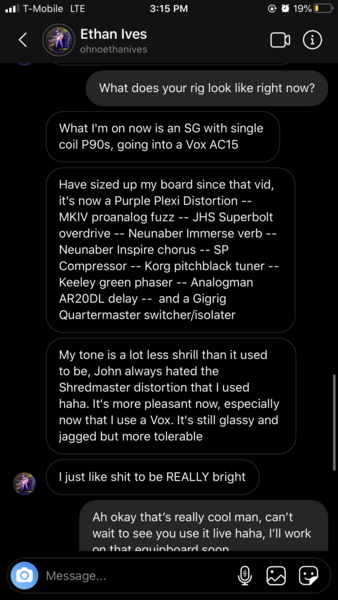
Ethan Ives uses the Neunaber Immerse Reverberator, as evidenced by a direct Instagram DM photo.

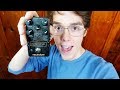
En el video se puede ver que tiene el pedal y lo esta sorteando


In a rig rundown featured by Premier Guitar, Charlie Worsham's pedalboard setup is detailed to include a Neunaber Immerse Reverberator (among other effects).


One of Bryan's two reverb pedals is the Neunaber Immerse.
Photo taken at Copeland's show on 11/23/16 in Seattle.

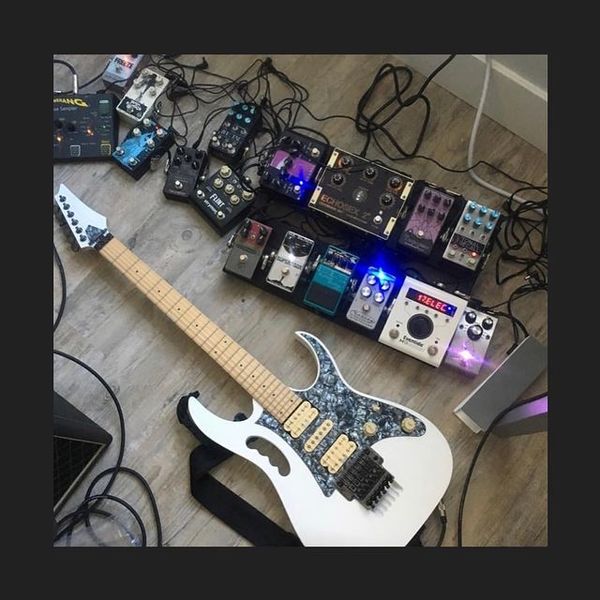
in this ig photo ferrari's immerse reverberator is visible to the left of the pedalboard just below the chase bliss spectre blue knob mod.


Genre Usage
Based on how artists on Equipboard use this gear, it is most commonly found in the following genres.
Used With
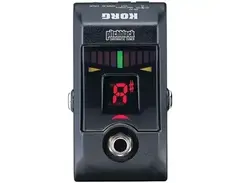
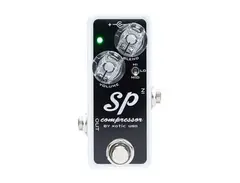
Based on how musicians on Equipboard use Neunaber Immerse Reverberator, it is most commonly used with the following gear.





Community setups
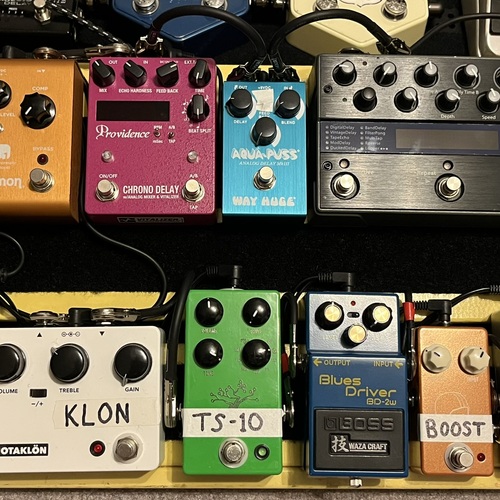
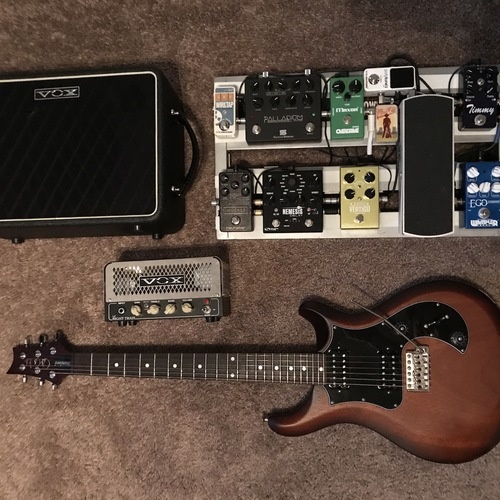
Show yours




Similar
Add recommendation1 alternative for Neunaber Immerse Reverberator, curated by the Equipboard community.

$266.00 - $269.00
More Neunaber Reverb Effects Pedals
$266.00 - $269.00
in Reverb Effects Pedals Rank


in Reverb Effects Pedals Rank




-m.webp?v=1784906463)




$18.48 - $80.00
in Reverb Effects Pedals Rank


-m.webp?v=1784905131)
$325.00 - $379.00
in Reverb Effects Pedals Rank


$153.62
in Reverb Effects Pedals Rank


-m.webp?v=1784958058)
$439.00 - $479.00
in Reverb Effects Pedals Rank


$209.00 - $235.99
in Reverb Effects Pedals Rank
.jpeg?v=1784935806)

-m.webp?v=1784818688)
$137.00
in Reverb Effects Pedals Rank


$399.00 - $499.00
in Reverb Effects Pedals Rank


$69.99 - $149.99
in Reverb Effects Pedals Rank


$48.00
in Reverb Effects Pedals Rank


$182.00 - $219.99
in Reverb Effects Pedals Rank


$122.00 - $129.99
in Reverb Effects Pedals Rank

$140.81 - $163.50
in Reverb Effects Pedals Rank


$219.00
in Reverb Effects Pedals Rank


$189.00
in Reverb Effects Pedals Rank


$105.00 - $149.99
in Reverb Effects Pedals Rank


$95.00
in Reverb Effects Pedals Rank


Accessories & Related Items




-s.webp?v=1784958156)
Gear Guides





.jpg)
Most Popular Reverb Effects Pedals
Most Popular Brands
-
Added to Equipboard on by
 jordon_king
GearIQ 99
-


