


Pricing and availability
We compare 600+ stores and found this item at 1 store. Prices updated .
Store
Reviews
Price




Average Price: $906
High-end/Boutique
$200
$801+
Price Tier
Budget
Standard
High-end
* Product prices and availability are updated by Equipboard every 24hrs and are subject to change. Equipboard may receive compensation for purchases made at participating retailers linked on this site. This compensation does not affect what products or prices are displayed, or the order of prices listed. For more information, please refer to our affiliate disclosure.
Description
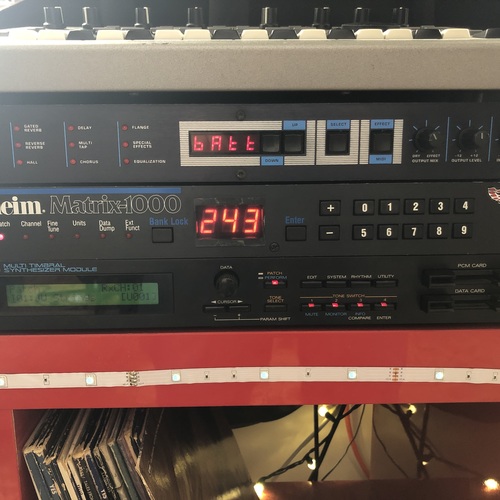
The Oberheim Matrix 1000 is a classic sound module that remains a staple in the world of synthesizers. Revered for its distinctive CEM3396 voice chip, this module offers a palette of rich, analog sounds that have captivated musicians since its release. Ideal for both studio use and live performances, the Matrix 1000 is equipped with six-voice polyphony and a vast library of 1,000 presets, providing a diverse array of tones suitable for any musical genre.
This sound module is renowned for its flexibility and depth, making it a favorite among sound designers and electronic music producers. Its architecture allows for intricate modulation and layering, bringing an unparalleled expressiveness to your music. While the Matrix 1000's interface is simple, it is highly intuitive, making it accessible to both newcomers and seasoned professionals.
The unit is MIDI-compatible, ensuring seamless integration with modern setups. Its compact design allows it to fit comfortably in any rack, making it a versatile addition to any studio or live rig. Whether you're crafting lush pads, punchy basslines, or soaring leads, the Oberheim Matrix 1000 delivers legendary analog warmth and character.
Key Features:
- Six-voice polyphony for rich, layered sounds
- CEM3396 voice chip offering a classic analog tone
- 1,000 presets for a wide range of sound options
- Comprehensive modulation capabilities
- MIDI-compatible for easy integration with modern equipment
- Compact design for convenient rack mounting
- Ideal for both live performances and studio production
Product specs
| Brand | Oberheim |
| Model | Matrix 1000 Rackmount 6-Voice Synthesizer |
| Finish | Black, White |
| Year | 1987 |
| Categories | Analog Synths, Rackmount Synths |
| Analog / Digital | Analog |
| MIDI I/O | MIDI Input, MIDI Output, MIDI Through |
| Polyphony | 6 Voices |
FAQs
-
Is the Oberheim Matrix 1000 an analog synthesizer?
-
Yes, the Oberheim Matrix 1000 is an analog synthesizer, featuring a hybrid design with analog signal paths and digital control.
-
How many voices does the Oberheim Matrix 1000 have?
-
The Oberheim Matrix 1000 is a 6-voice polyphonic synthesizer, allowing for rich, layered sound creation.
-
What kind of presets does the Oberheim Matrix 1000 offer?
-
The Oberheim Matrix 1000 includes 1,000 presets, providing a wide range of sounds for various musical styles and applications.
-
Can the Oberheim Matrix 1000 be controlled via MIDI?
-
Yes, the Oberheim Matrix 1000 features MIDI input, output, and through connections, allowing for integration with other MIDI-compatible gear.
-
What is the filter type on the Oberheim Matrix 1000?
-
The Oberheim Matrix 1000 features a resonant 24dB low-pass filter, contributing to its classic analog sound character.
Videos

Gregory Cox
Oberheim Matrix 1000 Sound Demonstration
Oberheim Matrix 1000 Sound Demonstration
Gregory Cox
OBERHEIM MATRIX-1000 / MATRIX-6 | NEW CUSTOM PATCHES | Analog Synthesizer HD DEMO

AnalogAudio1
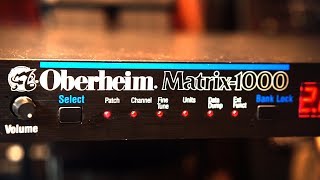
Oberheim Matrix-1000 | Analog Rack Power

Espen Kraft
Bad Gear - Oberheim Matrix-1000

AudioPilz
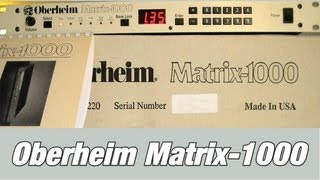
Oberheim Matrix-1000 Vintage Analog Synthesizer (1987)

RetroSound

Oberheim Matrix 1000 vs OB-X8 // A Vintage Gem that deserves a closer look

Starsky Carr
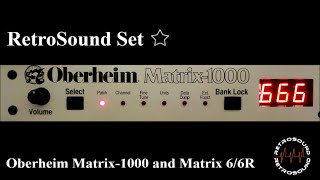
Maybe the most underrated Analog Synthesizer - Oberheim Matrix-1000
RetroSound
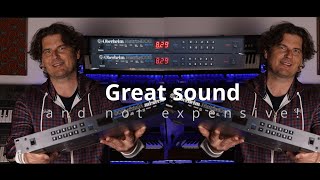
The Oberheim Matrix 1000 Analog Synthesizer by Franz Kreimer Keys (with english subtitles)

Franz Kreimer Keys
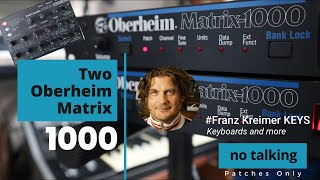
Two Oberheim Matrix 1000 played by Franz Kreimer Keys (Patches only; no talking)
Franz Kreimer Keys
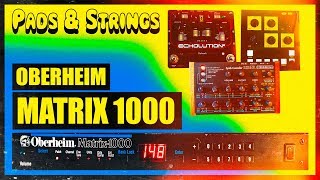
Oberheim MATRIX 1000 Demo AMBIENT PADS & STRINGS / 1.20 /

Rob World
Reviews
PROS
-
Rich, full analog sounds that are unmatched
-
1,000 patches offer extensive sound variety
-
Modulation matrix provides deep sound design possibilities
-
Can be poly-chained for increased polyphony and sonic richness
-
Special poly mode allows for advanced MIDI channel assignments
-
Firmware upgrades offer improved MIDI CC control and detune features
-
Compatible with external controllers for live tweaking
-
Unique flavor that cuts through a mix well
-
Compact size compared to other Oberheim synths
-
Some models are relatively affordable for vintage analog gear
CONS
-
Overheats easily with variable loading times
-
Initial lack of front-face editing capabilities
-
Requires external programmer or software for in-depth sound editing
-
Envelopes not very snappy, affecting certain sound types
-
Only one model has a low pass filter per voice
-
Built-in presets may require external manipulation for customization
-
MIDI CC support can be unresponsive without firmware updates
Owner Insights
We analyzed real musician discussions from forums and Reddit to find what players love, question, and tweak about Oberheim Matrix 1000.
Features and functionality
-
The Matrix 1000 is noted for its low-note priority in unison/mono mode, affecting bass-line and lead performance approach.
Source -
The Matrix 1000 offers 200 RAM slots for user-created sounds and 800 ROM presets, providing extensive sound storage options despite lacking patch editing capabilities from the front panel.
Source
Comparisons
-
Matrix 1000 shares the CEM3396 chip with Matrix 6 and Cheetah MS6, similar to Prophet 08's rebranded CEM3397.
Source -
Notable difference between Matrix 1000's 4-pole 24dB low-pass filter and OB6's state variable filter contributes to distinct sound genres.
Source -
Cheetah MS6, similar to the Matrix 1000, is known for its multitimbral capabilities and distinct sound, comparable to a Prophet 08, but offers unique voice stacking for complex sound creation.
Source -
The Prophet Rev2 is noted to have similar modulation capabilities to the Matrix 1000, but users find its sound distinct, suggesting careful consideration for those seeking the Matrix's specific tone.
Source
Use cases and applications
-
Matrix 1000 is ideal for fattening up other synths but is cumbersome for parameter tweaking without additional equipment.
Source -
The 666 patch paired with reverb and a Typhon synthesizer creates an impressive solo performance setup, highlighting the Matrix 1000's versatility in creative sound design.
Source -
The Matrix 1000's unique modulation options allow for versatile sound design, making it suitable for users who prioritize expansive modulation over traditional knob-per-function interfaces.
Source
User experience
-
Owners often rely on external units like BCR2000 or MIDI-sysex utilities for effective patch editing on the Matrix 1000.
Source -
Owners report that patch editing on a stock Matrix 1000 is cumbersome due to its sysex architecture and outdated OS, prompting frequent recommendations for an OS upgrade.
Source
Setup and maintenance
-
Owners indicate that remembering patch numbers can be challenging, suggesting a systematic approach or notation to manage favorite patches effectively.
Source -
The Cheetah MS6, akin to the Matrix 1000, may require careful handling due to power supply vulnerabilities and potential battery corrosion issues, necessitating regular maintenance checks.
Source
Mods and upgrades
-
Upgrading the Matrix 1000’s OS is recommended for easier parameter editing via MIDI CC, although the mod matrix still requires sysex commands.
Source
Software and compatibility
-
Edisyn is praised as a superior software controller for the Matrix 1000, offering intuitive interface options compared to other CTLR editors, enhancing user interaction.
Source
Critic Reviews
4.5 out of 5
Based on 10 Reviews and 39 Ratings

4041
perfect sounding analog poly @ budget price
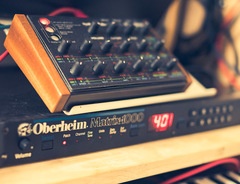
I bought my Black Matrix 1000 as a counterpart to my beloved Juno 60 a week ago. The 6-voice polyphonic rack synthesizer sounds incredibly large, analog and wide, even without FX. I love the overall warm sound. It is the opposite of some harsh-sounding modern synths (I sent the Korg Minilogue back).
Adding delay, reverb or modulation effects turns the matrix into an epic analog pad, brass & string machine. For that I mainly use it. But it's also great for bass, leads, FM, FX and all other kinda analog sounds. Especially with the MOD matrix it is so easy to create very organic sounds. And even if the attack time and the LFOs are not the fastest, they are fast enough for me.
When I bought it, firmware was 1.11, so I did an Eprom upgrade to 1.20 (Tauntek / Rob Grieb), where many bugfixes were fixed and the matrix can now be easily used with a MIDI controller. The Eprom also includes the important global detune of Gigli v. 1.6. With this upgrade, the Matrix 1000 no longer sounds static, the DCOs behave more like VCO.
Without an external controller, the matrix 1000 is more or less an analog preset machine because no editing is possible. the real fun begins with controllers. I tweak the Obeheim Matrix 1000 with my stereoping controller. Of course, you can also use software to tweak, but I prefer real buttons.
For me it is the perfect sounding analog poly! for 500 euros / 570 USD it is still relatively cheap for a vintage analog 6-voice polyphonic. And I already think about a second one for stereo operations or 12-voice polyphony :-)

41029
I miss my matrix 1k, good synth, grossly underrated because of the lack of knobs
4041
totally agree! The good thing is, that we can choose now between very powerful hardware controllers from Stereoping and Alpes Machines

205
many sounds
There are so many sounds, and if you have a decent patch librarian that understands its sysex format it's actually not bad for creating sounds, and if you have something with a lot of spare knobs it's not bad for performance. The minimal UI is incredibly intimidating, though.
41029
stereoping synth controller
41029
Not bad as a MIDI module.
Another 1RU analoger in the Roland MKS camp. The Matrix rack does a lot if you can stand the menus, but I give Roland's juno-in-a-rack the edge because its easier to program due to a simpler feature set and it has a certain timbrality my ear seems to prefer to the oberheim.
269
Unique Preset Machine
There's not much you can do to program a Matrix 1000 unless you get a computer program to help, but with 1000 presets there's good chance you'll find something you like anyway. The Oberheim sounds really cut through a mix and can ad a unique flavor to a track.

3582
Classic analog (pre-set) polysynth.
Classic analog polysynth. Sounds great, even the pre-sets sound great. Extensive control matrix and quite affordable. The only downside is that you need an editor to create/change sounds. And while it does supports MIDI CC extensively, it is not always fluent when doing so. There are some aftermarket firmware updates which make it slightly better but I wouldn't do that live. This is however not really an issue when you're just playing it pre-sets and you can still keep the sounds interesting by using the extensive control matrix.
It will get it's 5th star when someone fixes the response to MIDI CC's.
41029
yeh, the MIDI implementation sucks.... I made multiple samples of the best patches I made on mine and then sold her last year. Its no Xpander, but who can afford the Xpander these days?

62
Many good sounds, but get the free editor to unock its potential!
The guts of this synth is the same as the Matrix 6 but without the ability to edit anything on the front face of the unit. Oddly, the first 200 patch banks may be overwritten while the remaining 800 are ROM sounds. There is a free program for Mac called ObieEditor that gives you full access to the DCO's, LFO, ENV's, Filter, and more. You can copy a patch from the unit into the software, tweak and edit, then send it to one of the User banks on the Matrix 1000 and save it. You now have an amazing, full editable Matrix 1000.

270
Top analog classic Synth!
Top analog classic Synth, controlled over midi by an Stereoping 1016R Midi Cotroller
41029
I miss mine, not a synth I sold lightly :-(

1U of big analog sound
The most compact Oberheim synth there is. Everything else is a huge keyboard or module, not to mention super pricy and/or rare.

41029
and yet the 1000 does all the Oberheim sounds you could need, what a great little synthesizer, love it


Artist usage
Add artist

Per "Rock This Town" publication, special issue 1991:
In 1991, the setup was as follows: [Rock This Town special issue 1991]
Sound studio: Analog Synths: Roland System 100/100M/101 (+Roland Midi interface MPU-101);YAMAHA CS-40M (in the Take One video); Oberheim Matrix 1000; Digital Synths: Yamaha DX-7 (2); Ensonic VFX; Roland DDR30; Yamaha tg77; Korg Wavestation; Sequencer: Atari 1040 (Sequ. Cubase 2.0); Samplers: AkaiS9000 (2); AkaiS1000 (8Mg + Hard Drive Mfile 44); AkaiS1000PB (4Mg); Emulator II; akai 1100, e-mu Procussion, roland s-10 for live use @ the mixing desk; Effects: Lexicon 480L; Yamaha SPX90 II (2); Roland SRV-2000; Roland SDE-3000; Alesis Midiverb II; Alesis Quadraverb; ART DRX; spx 1000 (x2); Eventide h3000 se; Mixing: Table TAC Scorpion 32/16; Recorder TASCAM MS16 tracks; Recorder DAT Luxman; Speakers Yamaha NS 10M pro ATC SCM50; QUAD ampli (for NS-10M); Diverse: compressor/limiter, noise gate, parametric eq. Live: Backline: Akai S9000; Roland DDR30; Simons & Roland Pads; Emulator II; TASCAM238 8
Graphic Studio: Commodore Amiga 2500 (6Mg + Hard Drive 40Mg); Commodore Amiga 500; Digitizer SNAPSHOT; Camera Sony CCD V-200E; Laserprint NEC Silentwriter LC890; Monitor NEC Multisync 2A.


Accessit: RIAA amp Akai: S900, S1000, S1100, S1100EX samplers Alesis: ADAT digital multitrack (x2), BRC remote controller, AI-2 audio/video synchroniser, MIDIverb II (x2), Quadraverb (x2) Apple: Quadra 950 computer Atari: 1040ST computer running Emagic Creator sequencing software Audio Logic: 20001 digital sampler BBE: Sonic Maximiser 422A bel: BD-80 digital delay Digidesign: ProTools disk-based recording system (4-track version) Drawmer: DS201 Dual Gate E-mu Systems: Proteus/1 XR module, Vintage Keys module EMS: Synthi AKS synth Fostex: Model 3070 compressor/limiter Ibanez: DM1100 digital delay Jen: SX1000 synth Korg: DRV-1000 digital reverb, Wavestation A/D synth module LA Audio: MIDI gate Oberheim: Matrix 1000 synth module, OB8 synth OSC: Oscar monosynth Roland: D110 module, JX3P synth, MKS50 module, SH101 monosynth, TB303 bass synth, TR909 drum machine Tascam: 103 cassette deck Sony: CDP-770 CD player, DTC-1000ES DAT machine Soundtracs: IL3632 36-input mixing desk Tannoy: Little Gold monitors Technics: SL1210 Mk2 record deck Urei: monitors Yamaha: DS55 synth, NS10M monitors, Q2031 graphic EQ, SPX90 multi-FX unit, TX81Z synth module
Sony: BKE-9500 Editing Control Disk Unit Edit Desk PCM-7050 Digital Audio Recorder PVW-2650P Betacam SP Videocassette Player PVW-2800P Betacam SP Videocassette Recorder Monitors (x4)


For Very they used: Korg M1Rs Akai S1000s Akai S3000s Roland S770 E-mu Systems Proteuses Oberheim Matrix 1000 Roland MKS80s Roland MKS50s PPG Waveterm Roland JD800 Roland Juno 106 Sequential Circuits Prophet V Roland R70 Fairlight CMI Macintosh running Notator Logic Dynaudio monitors This is according to Music Technology magazine (Dec 1993)


You’ve joined the Philip Glass Ensemble in 1974. I guess the live rig has changed a few times over all these years. Could you share with us how your setup has evolved until the latest pre-Bidule setup?
When I joined, the keyboards consisted of 3 Farfisa Mini-Compact organs. That was it. [...] Finally, the last pre-Bidule rig, initially set up in 2004, ended up consisting of a TX-816 rack, 2 TX-802s, 2 Matrix 6Rs, 5 Matrix 1000s, and a PC hosting Synthogy Ivory for piano sounds, all fed into a Pro Tools 5 system running on a Mac G4 4-slot computer housing 2 Pro Tools cards, 2 Samplecell II cards, and an instance of Soft Samplecell. The Pro Tools rig was just for mixing (no sequences or other virtual instruments or audio playback), with the hardware fed into 3 888 interfaces and the Samplecells fed directly into the TDM bus and showing up as inputs (cards) or Rewire instruments (Soft Samplecell) in Pro Tools. Performer 5.5 was used as the front end for MIDI, because Pro Tools had a problem with our Aphex trigger-to-MIDI converters, which did not (by default) send any note offs. In Pro Tools, the MIDI buffer would eventually fill up and crash Pro Tools because it was keeping track of all the note-ons without note-offs. This drove me nuts in rehearsal until I finally figured out what was going on and took Pro Tools out of the MIDI equation and all was well. I still to this day don’t use Pro Tools for any MIDI.


On his Facebook page, Dominik Eulberg posted this picture, in which an Oberheim Matrix 1000 can be seen.

.jpg)
In this Instagram post, Clark was using an Oberheim Matrix 1000, seen in the bottom left corner of the photo. The set-up seemed to be ad-hoc, and I believe he is currently touring for his new Sus Dog Album.

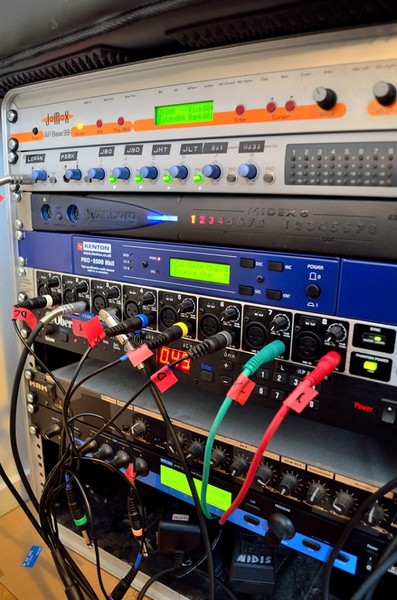
In this photo, provided by I Heart Synths, the Oberheim Matrix 100 is visible.

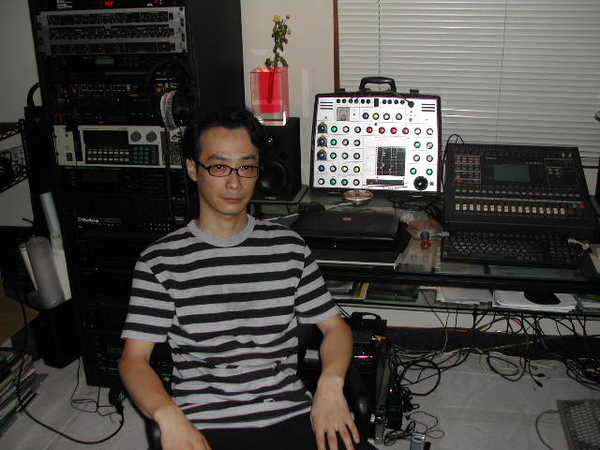
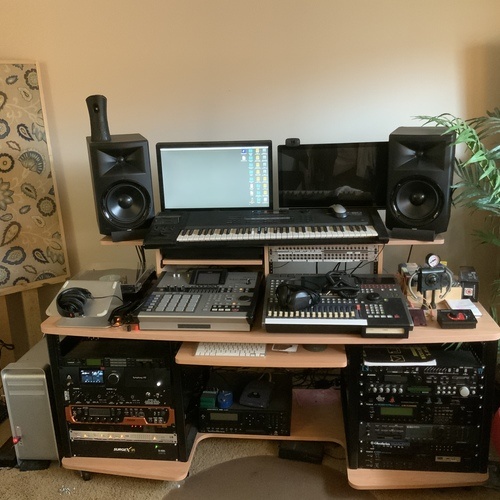
there is an Oberheim Matrix 1000 in the rack to the left.... (from "gearslutz.com")

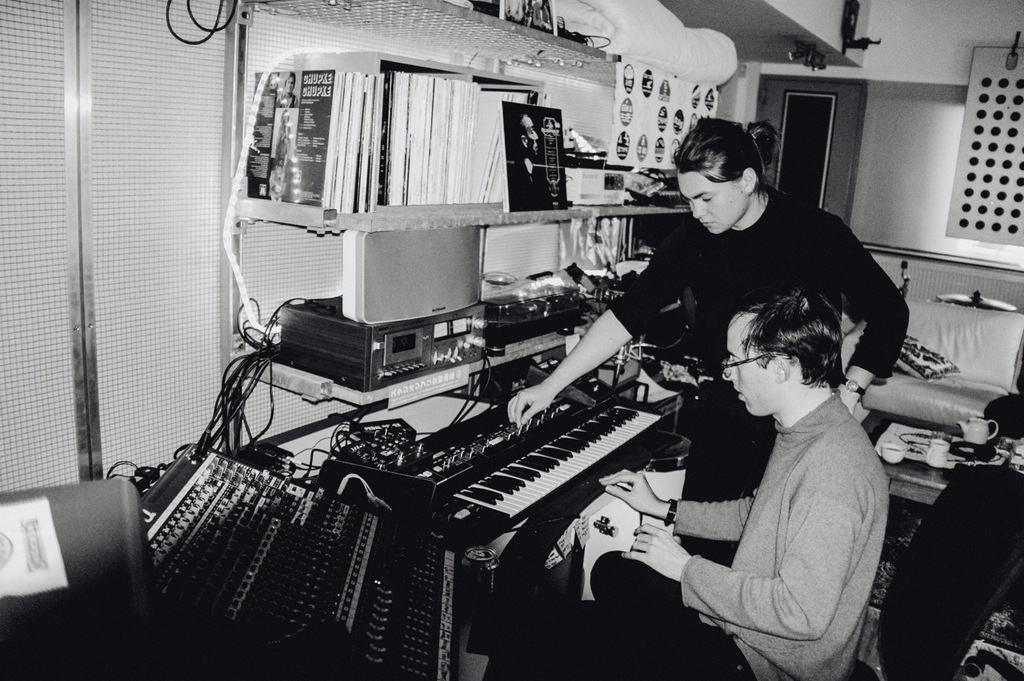
I have a Studio Electronics ATC-1 synth for bass and both a Juno-6 and a Matrix 1000 for pads/leads.


"What do you remember of the hardware setup you had in the early days?
Andy: We had an 808, 303, 202 and 101, a monophonic digital synth, Akai 950 sampler and a few other analogue keyboards. We hired in an Akai S1000 to record the first EP.
Ed: Also the Oberheim Matrix 12 and Matrix 1000, which were pretty important. Sequencing was initially an Alesis MMT-8 then Dr T’s on Commodore."


In the interview "Watermark recording process". The Music Magazine (Australia) July/August 1989
THE SET UP:
They use a variety of keyboards but the mainstays are a Yamaha KX88master Yamaha DX7 Emulator 111 Oberheim Matrix synths and Akai S900 but particularly Roland's D50 and Juno 60.
Enya: "The Juno is one of our favorites. We had intended to replace its parts with better sounds but we couldn't find better substitutes so we left them in. It's not always possible to have all the sounds I want for a song at the time of composing .I'd usually start with the D50. But most often, sounds suggest parts and the ones I use then are usually used on the final recording. Like on Storms in Africa... that arpeggiated line on the Juno 60 was the basis of the piece."


Album Usage
The Oberheim Matrix 1000 has been featured on the following albums:

Sus Dog
Clark (2023)
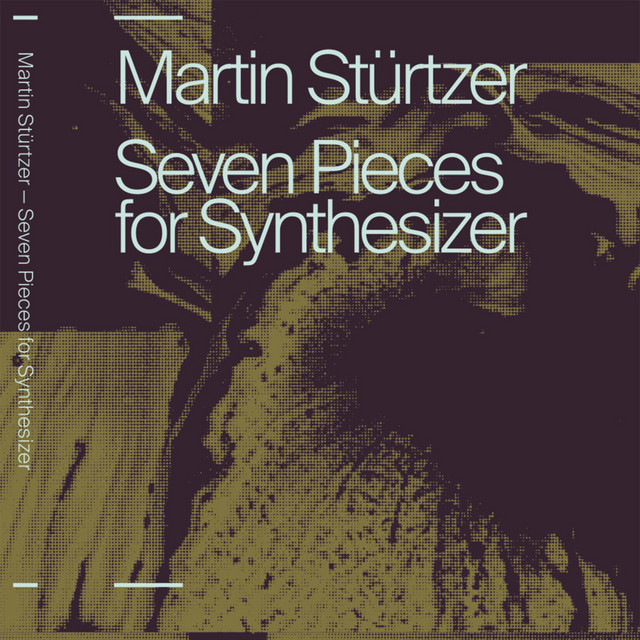
Seven Pieces for Synthesizer
Martin Stürtzer (2019)
Visions (Remastered Edition Sampler)
John B (2016)

Beyond The Sun
Firechild (2012)

Very (2018 Remaster)
Pet Shop Boys (1993)
![Oberheim Matrix 1000 as heard on Storms in Africa (Pt. II) [2009 Remaster] by Enya (1989)](https://images.equipboard.com/uploads/album/image/539384/storms-in-africa-pt-ii-2009-remaster.jpg)
Storms in Africa (Pt. II) [2009 Remaster]
Enya (1989)
Doctor Who: Ghost Light (Original Television Soundtrack)
Mark Ayres & Keff McCulloch (1989)
The Celts
Enya (1987)
Genre Usage
Based on how artists on Equipboard use this gear, it is most commonly found in the following genres.
Used With
Based on how musicians on Equipboard use Oberheim Matrix 1000, it is most commonly used with the following gear.

-s.webp?v=1783263541)


-s.webp?v=1783238222)




Community setups
Show yours

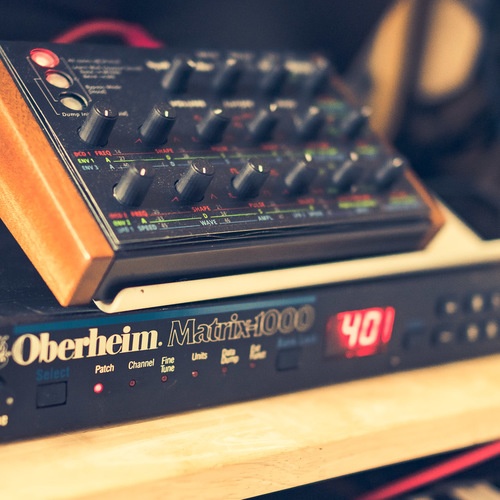

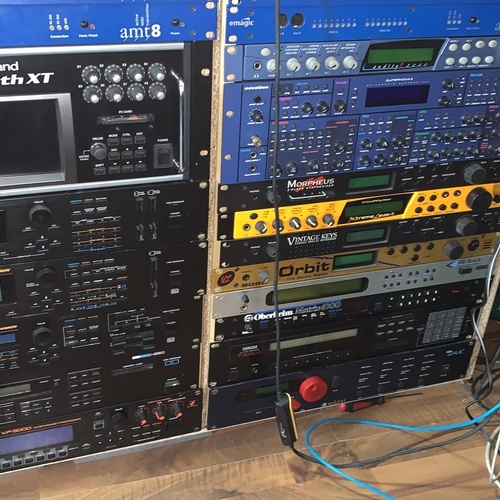

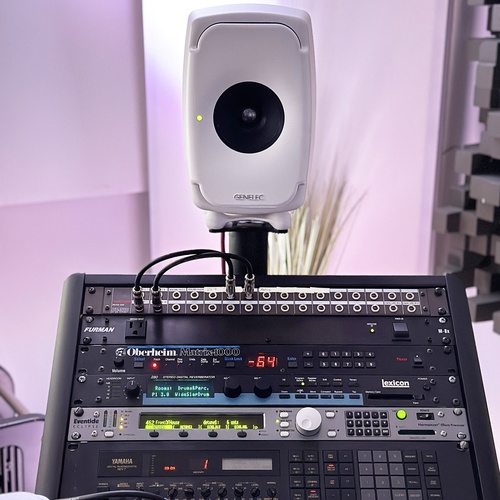

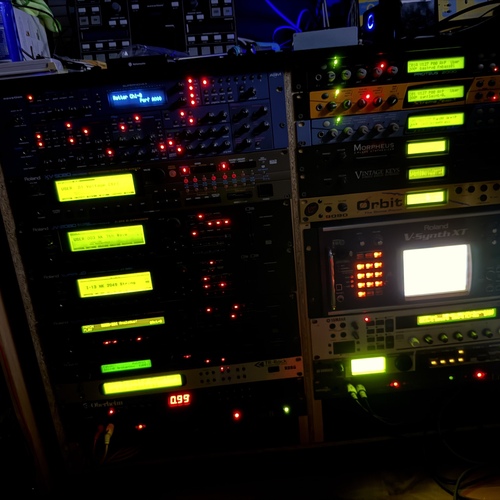



Similar
Add recommendation1 alternative for Oberheim Matrix 1000, curated by the Equipboard community.

$664.05
More Oberheim Sound Modules

$999.00
in Sound Modules Rank


$1,900.00
in Sound Modules Rank


-m.webp?v=1783238222)
$350.00
in Sound Modules Rank


$194.73
in Sound Modules Rank


$1,250.00 - $1,999.99
in Sound Modules Rank


$1,350.00
in Sound Modules Rank


$298.54
in Sound Modules Rank


$2,299.00 - $2,333.00
in Sound Modules Rank


$550.00
in Sound Modules Rank


$119.00
in Sound Modules Rank


$261.00
in Sound Modules Rank


.jpg?v=1783200117)

$500.00
in Sound Modules Rank


$3,900.00
in Sound Modules Rank

$4,999.99
in Sound Modules Rank


$495.00
in Sound Modules Rank


$1,250.00
in Sound Modules Rank


$65.55
in Sound Modules Rank


$75.00
in Sound Modules Rank


$175.00 - $289.00
in Sound Modules Rank


$49.99
in Sound Modules Rank


$139.00 - $1,500.00
in Sound Modules Rank


$4.76
in Sound Modules Rank


$500.00
in Sound Modules Rank


$697.13
in Sound Modules Rank

$199.99
in Sound Modules Rank


$2,099.00
in Sound Modules Rank


$626.93
in Sound Modules Rank

$400.00
in Sound Modules Rank

$41.20
in Sound Modules Rank


$292.57
in Sound Modules Rank


$200.00
in Sound Modules Rank


$400.00 - $1,299.99
in Sound Modules Rank


$118.22
in Sound Modules Rank


$30.00
in Sound Modules Rank


Accessories & Related Items




Most Popular Sound Modules
Most Popular Brands


