


Pricing and availability
We compare 600+ stores and found this item at 1 store. Prices updated .
Store
Reviews
Price




Average Price: $5,750
High-end/Boutique
$500
$1501+
Price Tier
Budget
Standard
High-end
* Product prices and availability are updated by Equipboard every 24hrs and are subject to change. Equipboard may receive compensation for purchases made at participating retailers linked on this site. This compensation does not affect what products or prices are displayed, or the order of prices listed. For more information, please refer to our affiliate disclosure.
Description
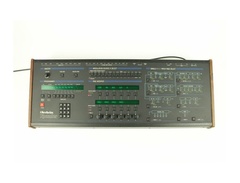
Launched in 1984 and discontinued in 1988, the Oberheim Xpander is essentially the keyboardless, six-voice predecessor of the Oberheim Matrix-12 (released a year later, in 1985). Utilizing Oberheim's Matrix Modulation technology, the Xpander combined analog audio generation (VCOs, VCF and VCAs) with the flexibility of digital controls logic.
Product specs
| Brand | Oberheim |
| Model | Xpander Desktop 6-Voice Synthesizer |
| Finish | Black |
| Year | 1984 |
| Categories | Analog Synths, Desktop Synths |
| Analog / Digital | Analog |
| MIDI I/O | MIDI Input, MIDI Output, MIDI Through |
| Polyphony | 6 Voices |
FAQs
-
Is the Oberheim Xpander polyphonic?
-
Yes, the Oberheim Xpander is a polyphonic synthesizer with 6 voices, allowing for complex and rich sound layering.
-
What type of synthesis does the Oberheim Xpander use?
-
The Oberheim Xpander uses analog synthesis, providing warm, classic tones characteristic of vintage synthesizers.
-
Does the Oberheim Xpander have MIDI connectivity?
-
Yes, the Oberheim Xpander features MIDI Input, MIDI Output, and MIDI Through, making it compatible with various MIDI devices and setups.
-
What are the standout features of the Oberheim Xpander's sound engine?
-
The Oberheim Xpander's sound engine is notable for its extensive modulation capabilities and customizable signal paths, offering a wide range of sound design possibilities.
-
Is the Oberheim Xpander suitable for live performances?
-
While the Oberheim Xpander is a desktop synthesizer, its robust sound design features and MIDI capabilities make it suitable for both studio use and live performances with proper setup.
Videos

Alex Ball
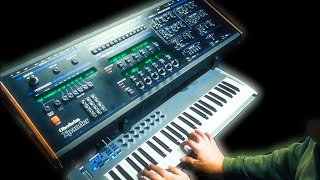
The Oberheim Xpander from 1984
The Oberheim Xpander from 1984
Alex Ball
Oberheim Xpander | Living in the Matrix
Alex Ball
Oberheim Xpander Demo & Review

musictrackjp
Oberheim Xpander Ambient Live Looping

Martin Stürtzer
Oberheim Xpander Demo

Paper Street Audio Company
Oberheim Xpander Single Sounds Demo

tom noise
Oberheim Xpander Review

K’s Music Lounge
Oberheim Xpander pure, dry and raw

synthlegends
The Secret Sounds of Oberheim Xpander Revealed

Andy Whitmore
Oberheim OB-Xa vs Xpander
synthlegends
Reviews
PROS
-
Warm and bassy oscillators
-
High versatility with up to 6 mono synths or 1 polysynth
-
Sophisticated modulation matrix for near-infinite sound possibilities
-
15 filter modes including low pass, band pass, and high pass
-
Can act like 6 computer-controlled modulars in one box
-
CV Gates in for each voice for external modular control
-
Legendary analog synth from the 80's era
CONS
-
Rare and expensive chips prone to failure
-
Filters may not satisfy all preferences
-
Programming can be long-winded and confusing
-
Slow envelopes limit snappy or funky sound production
-
Delicate machine; US version preferred for durability
-
Display and rotary knobs prone to wear out
-
Parts are difficult to find, making repairs a challenge
-
Pricey, especially given potential for costly repairs
4.5 out of 5
Based on 2 Reviews and 11 Ratings

186
Without doubt, one of the best synthesizers ever made.
The Oberheim Xpander is legendary for being one of the greatest analog synths of the 80's era. It represents the pinnacle of achievement in the era in terms of programmability. It is essentially a modular synth that is configured through a sophisticated modulation matrix. it can be used in poly mode, but each of its six voices are also independently configurable. Combined with its individual outputs, the Xpander is sort of like having 6 computer controlled modulars in one box.
No mention of the Xpander would be complete with a discussion of its filter; a multimode filter that provides no fewer than 15 (!) configurations, including low pass, band pass, high pass, and various combinations. There are few, if any analog synths other than the Xpander and its keyboard cousin, the Matrix 12, that have a filter this flexible. (Notable exception: the Mutable Instruments 4-Pole Mission filter offers a similar design.)
All of this comes at a cost: the Xpander is not cheap. At the time of this writing, they are generally around $4000. Additionally, the Xpander's use of rare filter chips and VFD displays makes it a risk in some ways: parts are difficult, if not impossible to find. Those interested in achieving something close to its sound without making such a serious investment might check out a Mutable Instruments Ambika with the 4-Pole Mission filter boards.
Lastly, those dying to own an Xpander should be on the lookout for the American-made version. Perhaps paradoxically, the Japanese-made units were not as well made, and the modern VFD display replacement that is made for the Xpander will NOT work with Japanese models. for this reason, Japanese Xpanders should be avoided as they will be harder to future-proof. Japanese Xpanders can be identified by looking at the back panel. On Japanese models, the legends describing the purpose of the various jacks are below the jacks, as opposed to the U.S. made versions, where the lettering appears above the jacks.

26907
awesome.

Artist usage
Add artist
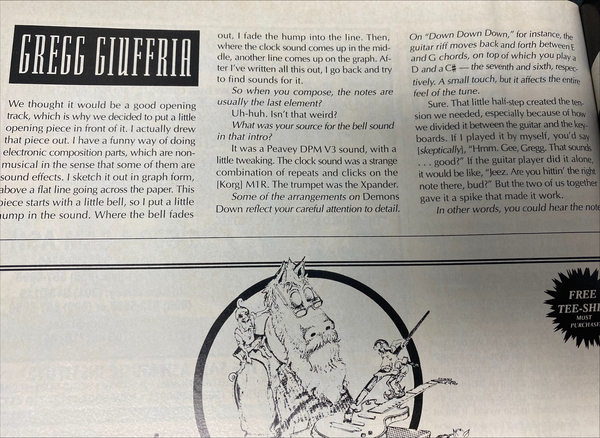
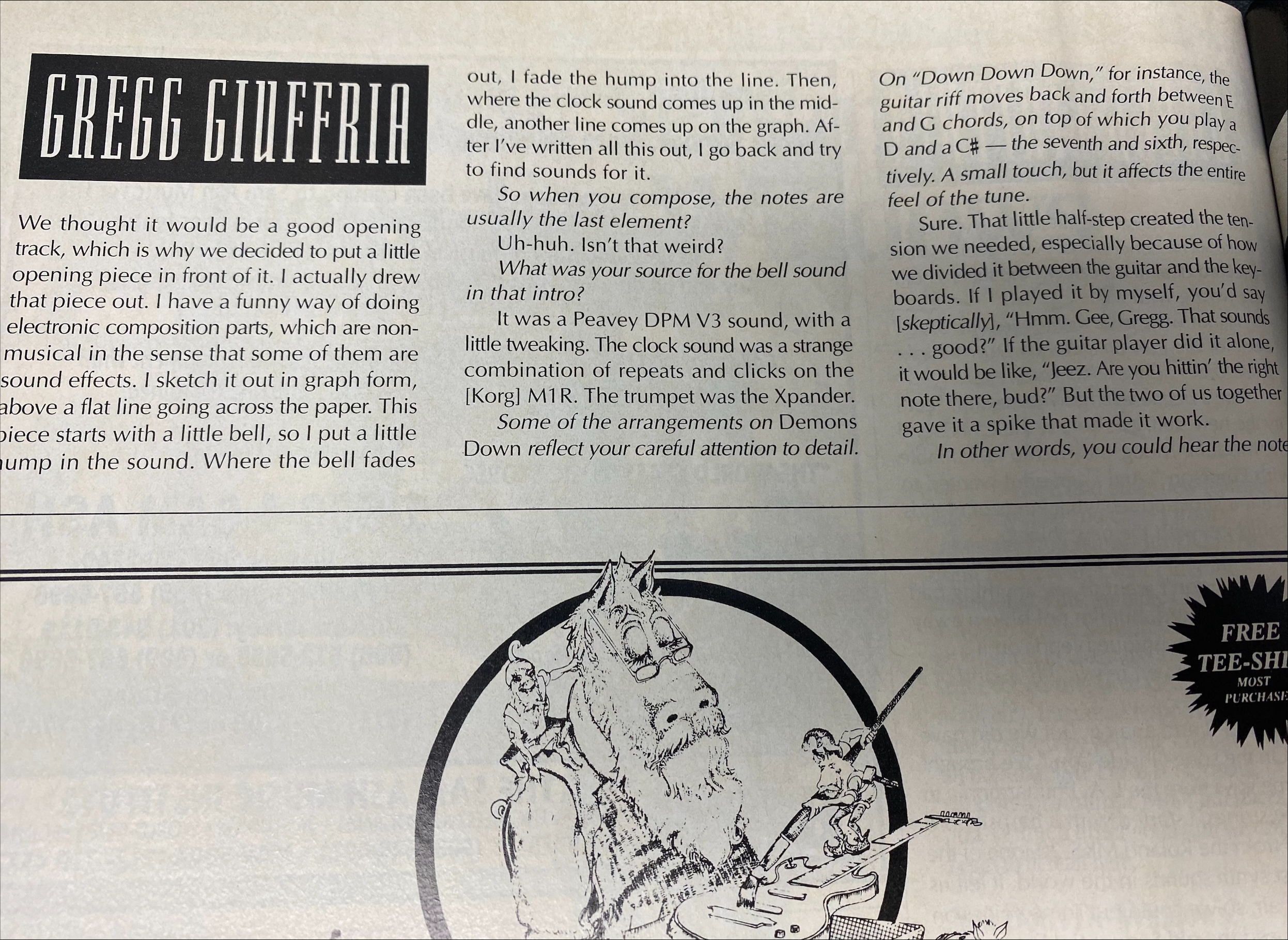
Gregg Giuffria used the Oberheim Xpander for the trumpet sound in the intro of the song "O Father" from the "Demons Down" album. This usage is confirmed by an article in Keyboard Magazine, November 1992, page 108, written by Robert L. Doerschuk. An image of the article can be viewed here.


In this interview, Mark's use of the Oberheim Xpander is mentioned.


In a YouTube video of Deine Lakaien performing at the M'era Luna Festival 2004, Ernst Horn is seen using the Oberheim Xpander, which is set up on one of the racks and appears to be controlled via the Kurzweil K2500X. This performance was captured by ARTE Concert.


Source: Interview with Michael Münzing and Luca Anzilotti about SNAP! mu:zines.co.uk - 1994: https://www.muzines.co.uk/articles/snap-to-tomorrow/8245

According to an article in Sound On Sound, Pete Namlook purchased an Oberheim Xpander near the end of the 1980s.

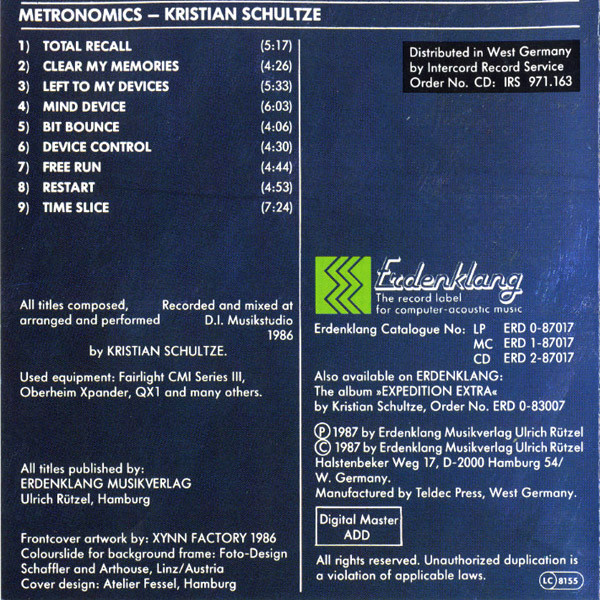
In the booklet of the album, Kristian Schultze is noted for using the Oberheim Xpander synthesizer.

In a YouTube video titled "da new location for my DBS lab," Dynamik Bass System showcases their use of the Oberheim Xpander synthesizer. The video, posted by Dynamik Bass System, provides a glimpse into their setup and creative process.


C.J. Vanston uses an Oberheim Xpander in his studio, as confirmed by his Instagram post captioned, "Setting up a new wing of the vintage room at my studio."

At 3:18 in the linked video the Oberhiem Xpander is seen.

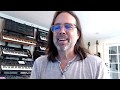
In the YouTube video titled "Paul Mirkovich shout out for the big 3-0 of After The Rain" by NELSON, an Oberheim Xpander can be seen directly behind Paul Mirkovich on his keyboard tier stand.
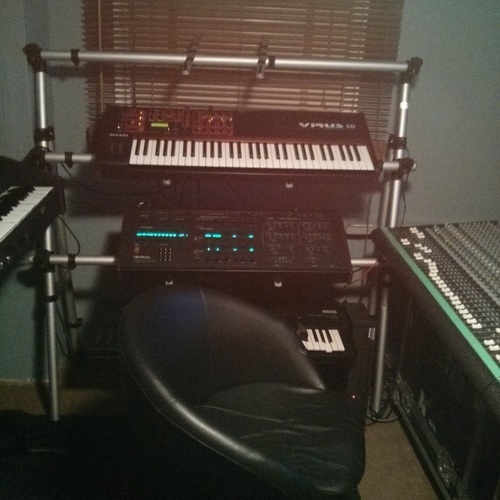
Ralf Hildenbeutel has an Oberheim Xpander in his Studio setup. Source: Ralfs soundcloud page https://soundcloud.com/ralfhildenbeutel/old-friends Image: https://i1.sndcdn.com/artworks-000053441162-cbp9xv-t500x500.jpg
Album Usage
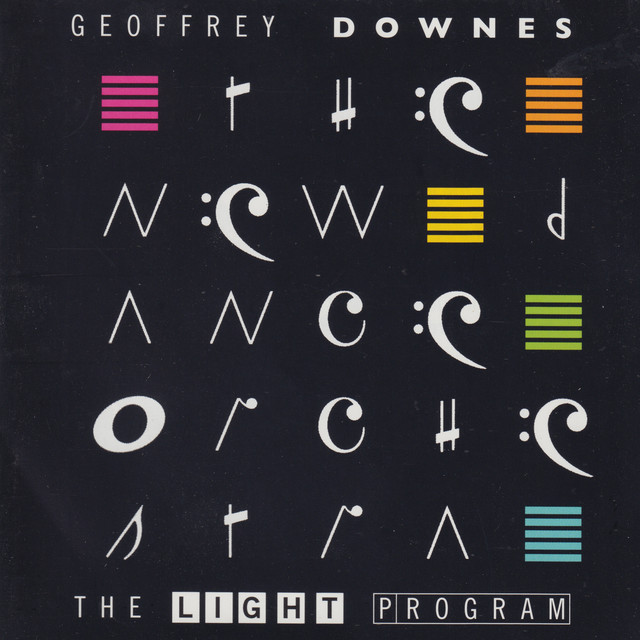
The Oberheim Xpander has been featured on the following albums:


Genre Usage
Based on how artists on Equipboard use this gear, it is most commonly found in the following genres.
Used With
Based on how musicians on Equipboard use Oberheim Xpander, it is most commonly used with the following gear.
-s.webp?v=1782917887)


-s.webp?v=1783263558)

-s.webp?v=1783263541)
-s.webp?v=1783263546)


Community setups
Show yours
Similar
Add recommendation1 alternative for Oberheim Xpander, curated by the Equipboard community.

More Oberheim Synthesizers


.jpeg?v=1783200117)


.jpeg?v=1783244343)


$1,199.99 - $1,849.99


$3,333.00 - $3,499.99


$1,199.99 - $1,399.00


$3,283.92 - $3,499.99
in Synthesizers Rank


$469.00 - $699.99
in Synthesizers Rank


$19,535.25
in Synthesizers Rank


$999.00 - $1,084.00
in Synthesizers Rank


$3,216.54 - $3,590.00
in Synthesizers Rank


-m.webp?v=1783177119)
$1,200.00
in Synthesizers Rank


$439.00 - $549.00
in Synthesizers Rank
.jpg?v=1783110493)

-m.webp?v=1783263595)
$388.00 - $579.99
in Synthesizers Rank


$752.32 - $2,398.00
in Synthesizers Rank


$279.00 - $349.00
in Synthesizers Rank


$2,000.00
in Synthesizers Rank


$411.00 - $699.99
in Synthesizers Rank


$2,432.00 - $2,870.95
in Synthesizers Rank


$1,470.85 - $1,899.00
in Synthesizers Rank


$299.29 - $652.00
in Synthesizers Rank


Accessories & Related Items


Gear Guides









Most Popular Synthesizers
Most Popular Brands
-
Added to Equipboard on by
 theweekendwarrior
Gear IQ 552
-


