This page about SAL-MAR Construction is a stub. You can help improve it:


Pricing and availability




* Product prices and availability are updated by Equipboard every 24hrs and are subject to change. Equipboard may receive compensation for purchases made at participating retailers linked on this site. This compensation does not affect what products or prices are displayed, or the order of prices listed. For more information, please refer to our affiliate disclosure.
Description
In 1969, Salvatore Martirano, along with a group of engineers and musicians at the University of Illinois, began work on the design and construction of a musical electronic instrument. The instrument, named the Sal-Mar Construction, is a hybrid system (both analog and digital) that the player can use interactively to produce real-time composition using up to 24 spatialized audio channels. It was created using parts from the aging ILLIAC II supercomputer.
The Sal-Mar is considered to be the world’s first composing machine and according to Composers’ Forum President Joel Chadabe, “The Sal-Mar Construction is an historically important musical event and a stunning and classical display of individual American invention. It must be seen and heard!”
[The image used, photographed by C.E. Crane, was originally posted to Flickr by IllinoisLibrary at https://flickr.com/photos/45214447@N07/13433085173 and is available under a CC-by-2.0 license.]
Videos

Mark Zanter
Sal Mar Performance 1

Sal Mar Performance 1
Mark Zanter

The Sal Mar Project - University of Illinois

Chris Sabo
Reviews
Based on 0 Reviews and 0 Ratings
Artist usage
Add artist
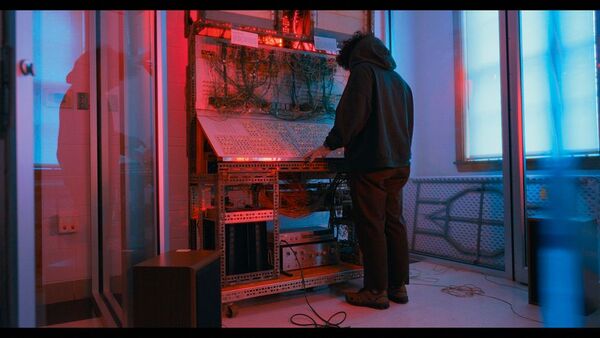
Used for Phasor, as related in the following interviews:
Rolling Stone, "Helado Negro: un encuentro catártico con lo elemental" by Karla León (November 21, 2023)
“Phasor es una energía que se desprende, que abre puertas. Es un abrazo que te va a sostener por mucho tiempo y te va a dar mucha fuerza”, dice Helado Negro a Rolling Stone en Español. La base de este disco tomó forma en 2019, durante el cumpleaños número 39 del productor, quien visitó durante cinco horas la Universidad de Illinois, para experimentar con SAL MAR, un sintetizador complejo que crea música a partir de osciladores analógicos y una computadora antigua, y cuyo objetivo principal es ofrecer una cantidad infinita de posibles secuencias de sonido.
“Fue un regalo que me di a mí mismo. Descubrí la máquina en 2015, pero no fue hasta el 2019 que pude visitarla y utilizarla. La inventó Salvatore Matirano, un profesor, músico y compositor italiano-americano, y lo que logró fue construir un sintetizador que hace canciones que siempre están cambiando; no se repite el mismo sonido. Esto fue en la década de los años setenta, en esa época no había muchas computadoras y aunque ahora es más fácil lograrlo, es algo único. Experimenté con algunos sonidos y esas fueron las semillas que iniciaron el proceso para escribir, grabar y construir algunas texturas de este disco”, explica.
Pronto, SAL MAR se convirtió en un estímulo y en el elemento central de Phasor. A lo largo de nueve tracks, el músico apuesta por los sonidos minimalistas y una producción artesanal, misma que revela atmósferas oníricas meticulosamente articuladas, algunos trazos psicodélicos y mantras líricos. De esta forma, mientras Far In evoca la vida en pandemia, Phasor es un homenaje a la vida, a la felicidad que provoca regresar a las calles y cómo se siente nuestra piel bajo el calor del sol.
Reddit, "Hello this is Helado Negro, Ask Me Anything!" by u/heladonegro (February 12, 2024), reply to Inevitable_Ad661
Inevitable_Ad661 Hey! Love the new record! I take it this is your boldest electronics yet. Where did you draw the inspiration for that musically? [...]
heladonegro [...] I recorded some of the initial ideas with a synthesizer called the SAL MAR which is this beautiful one of a kind Synthesizer.
Flood, "Helado Negro on Exploring New Territory with PHASOR" by Will Schube (April 1, 2024)
I wasn’t doing the things that I was doing in New York when I was making This Is How You Smile. It was about rediscovering or discovering something that I had touched on a little bit. I was exploring these recordings that I’d made in 2019 of the synthesizer called the Salmar in Champaign, Illinois. It’s this giant synthesizer that Salvatore Martirano created, and it’s this generative synthesizer that you essentially give directions to based on how you understand it to operate, and it continually generates sounds. I took a lot of those recordings and used loops and patterns and textures and would use them throughout either building the songs or putting moments in songs. That was part of the process as well, making sure I was taking things that didn’t feel so specifically musical, not some kind of commercial synthesizer that you buy at a store. I wanted something that felt very unique as an instrument and not necessarily inhabiting anything that I was familiar with.
Was the spontaneity of that a big driver of this record?
I wanted to find things that didn’t feel like, “Well, there are some sounds here, let me just try to find some loops in this.” I was seeing how far I could travel down roads, what they could reveal. And some days the road goes nowhere, and that’s fine.
It’s OK to not be successful for the day. It’s allowed.
Yeah. Well, it was successful. I think that’s the cool part. There are so many moments where you’re just like, “I love this—it’ll never be anything, but this is dope.”
Music Radar, "Helado Negro on working with the SAL-MAR Construction, a one-of-a-kind analogue synth and 'self-generating compositional machine' from 1969: 'This wasn’t parallel to developments from Moog and ARP… this was so much in its own world'" by Kate Puttick (May 28, 2024) (source of image)
Lange takes a stab at explaining Martirano’s proposition: “He was like, ‘oh, I have an idea to make this really weird machine that makes sounds. It’s going to be a self-generating compositional machine controlling analogue oscillators with this digital supercomputer brain’. And then somebody said yes, and they built it.“
“Obviously that kind of thing is really common now. But I think it was just so brilliant that it was actually done, and it was thought of and it was supported, and that he was able to create this very unique instrument to perform with and to record with. So there’s that essence and that history of it.”
Corresponding with the archivist who takes care of the Sal-Mar from 2015 to 2019, Lange finally arranged to visit it. “And then when I did,” he explains, “it was such an enlightening experience. It is a one-of-a-kind synthesiser.”
How was his experience, after so much buildup and such a long journey across the US to see it, of actually using the instrument? Not to mention given that he only had one day to master what looks like an incredibly complex workflow! “So the archivist has a good understanding of getting you going and getting you started and getting you restarted,” Lange explains. “If things get messed up and then you’re on your own and then you’re like, ‘I have no idea what I’m doing’.
“You can read the words and understand what those words mean on the panels, meaning like clock or sequence or oscillation or whatever dividers, stuff like that. I’m like, ‘oh, I guess this does this’. But it was like walking in the dark and slivers of light would pop in and you’d be like, ‘okay, I’m going to keep going this way’. That was exciting as there’s no expectation, and everything was a surprise.”
When asked if it lived up to his expectations, Lange said: “When I was recording with it, it was just so disorienting because it’s so idiosyncratic to someone’s process and work style. This wasn’t parallel to developments from the likes of Moog and ARP and people or companies like that making these synths that were more commercial; more for studios or more for musicians, specifically, to create musical formats or themes or ideas that were already kind of existing. But this was just, like, so much in its own world. So falling into someone’s process like that was really fun.”
Job done, you might think: historic synth, rich backstory, concept album in the bag. But it was not as simple as that, explains Lange. The initial joy at the sounds he produced during his day with the Sal-Mar soon, became complicated as he contemplated how to ultimately do them justice on record.
“I was kind of a little headstrong about what I wanted to do with them. I was being very special with them and protective of them. I was like, ‘no, they have to exist in some kind of very specific format of creation’ or whatever, something that was like… It was starting to become more about the idea than it was about the sounds. And I was kind of removing the intention. And so then I said, let’s just use these sounds. I had some song ideas, and I started inserting some of the Sal-Mar idea sounds in there. It was inspiring, for sure. And whether you hear it a lot or you hear it not at all, it’s still part of the process.”


Martirano was the leader of the team that built the SAL-MAR Construction (as well as its namesake), as summarized in this Illinois Distributed Museum article. Besides touring with it, he recorded at least one performance as The SalMar Construction.
He became interested in how to use technology for composition, and he and his team were able to construct one of the first musical electronic instruments, named the Sal-Mar Construction, using parts from the ILLIAC II. Martirano had greatly enjoyed the improvisational components during his time travelling with the Marine Corps band and this influenced his enjoyment of playing the SAL-MAR Construction, which was largely improvisational. He would travel around the world playing concerts with the SAL-MAR construction and would often title his performances, “Let’s Look at the Back of My Head for Awhile.” Throughout his career, he would continue to compose multimedia works and enjoyed learning the newest technologies and thinking about how they could be used in music composition. Martirano would later create the YahaSALmaMAC, another electronic instrument.
Album Usage
The SAL-MAR Construction has been featured on the following albums:
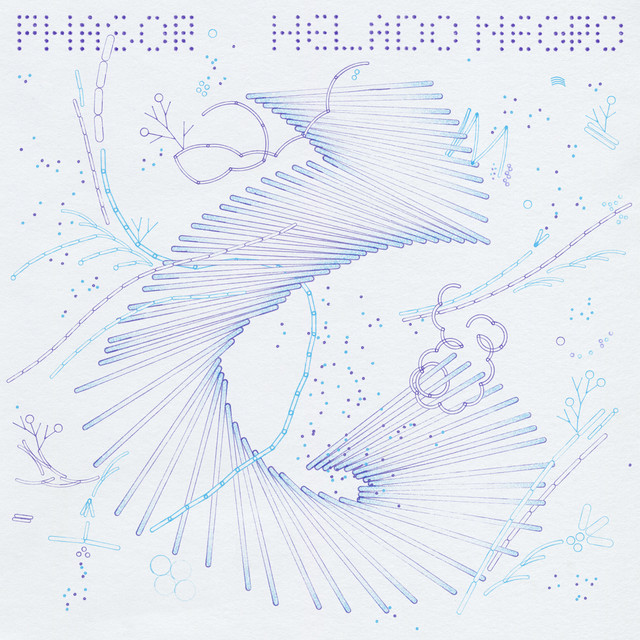
Genre Usage
Based on how artists on Equipboard use this gear, it is most commonly found in the following genres.
More Modular Synthesizers

$290.00 - $315.00
in Modular Synthesizers Rank


$119.00
in Modular Synthesizers Rank


$1.29 - $3,421.95
in Modular Synthesizers Rank


$599.00
in Modular Synthesizers Rank


$489.00 - $499.00
in Modular Synthesizers Rank

$580.31
in Modular Synthesizers Rank


$62.00 - $98.00
in Modular Synthesizers Rank


$132.00 - $179.99
in Modular Synthesizers Rank


$84.00 - $110.00
in Modular Synthesizers Rank


$225.00
in Modular Synthesizers Rank


$95.97 - $225.00
in Modular Synthesizers Rank


$223.31
in Modular Synthesizers Rank
.jpg?v=1784640202)


$383.00 - $399.00
in Modular Synthesizers Rank


$66.00 - $87.00
in Modular Synthesizers Rank


$95.97 - $236.00
in Modular Synthesizers Rank


$39.99 - $269.00
in Modular Synthesizers Rank

$50.56 - $177.00
in Modular Synthesizers Rank


$210.00 - $249.99
in Modular Synthesizers Rank


$300.00 - $565.00
in Modular Synthesizers Rank

$290.00
in Modular Synthesizers Rank

$114.31 - $161.00
in Modular Synthesizers Rank


$199.00 - $216.00
in Modular Synthesizers Rank

$379.00 - $399.00
in Modular Synthesizers Rank

$333.00 - $359.00
in Modular Synthesizers Rank


$66.00 - $92.00
in Modular Synthesizers Rank

$64.00 - $81.00
in Modular Synthesizers Rank

$399.00 - $431.00
in Modular Synthesizers Rank


$381.70
in Modular Synthesizers Rank


$189.00 - $3,421.95
in Modular Synthesizers Rank

$259.00 - $276.00
in Modular Synthesizers Rank

$72.00 - $98.00
in Modular Synthesizers Rank


$8.78
in Modular Synthesizers Rank

.jpg?v=1784473994)

$379.00 - $528.00
in Modular Synthesizers Rank


$273.00
in Modular Synthesizers Rank


$200.00 - $215.00
in Modular Synthesizers Rank

$250.00
in Modular Synthesizers Rank


$512.00 - $599.00
in Modular Synthesizers Rank


$449.99
in Modular Synthesizers Rank


$279.90 - $469.00
in Modular Synthesizers Rank


Community setups


Similar


Gear Guides
.jpg)









Most Popular Brands
-
Added to Equipboard on by
 eyeseeofficial
GearIQ 161592
-


