

Pricing and availability
We compare 600+ stores and found this item at 8 stores. Prices updated .
Store
Reviews
Price









Average Price: $413
High-end/Boutique
$149
$350+
Price Tier
Budget
Standard
High-end
Price History
Based on price data from 4 merchants for "Behringer 2600". Prices shown reflect NEW condition. Tracking began Apr 2, 2026.
* Product prices and availability are updated by Equipboard every 24hrs and are subject to change. Equipboard may receive compensation for purchases made at participating retailers linked on this site. This compensation does not affect what products or prices are displayed, or the order of prices listed. For more information, please refer to our affiliate disclosure.
Description
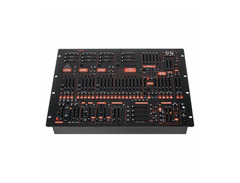
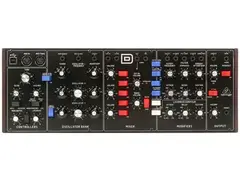
Step into a realm where vintage charm meets modern versatility with the Behringer 2600, a semi-modular synthesizer that bridges the gap between the past and the present. This instrument pays homage to the iconic sounds of yesteryear while offering features that cater to the needs of today's musicians. Whether you're seeking to recreate timeless synth tones or forge new musical pathways, the Behringer 2600 stands ready as your sonic canvas. With its robust build and intuitive design, it invites players of all levels to explore the depths of analog synthesis without breaking the bank. Perfect for studio wizards and live performers alike, this synthesizer promises to be an inspiring addition to any musical arsenal.
Key Features:
- Authentic mono semi-modular synthesizer with 3 analog oscillators offering 4 waveforms
- Normalled signal flow complemented by 93 patch points for extensive sonic exploration
- Pure analog signal path inspired by legendary designs from the 1970s
- Oscillators 2 and 3 feature pulse width modulation (PWM) for rich, dynamic sounds
- Mono and duophonic voice modes to adapt to your creative needs
- Dual VCF modes: the growling 4-pole 4012 and the smoother 4-pole 7072
- Dedicated LFO with square and triangle waveshapes for modulating sonic textures
- Includes a variety of sound-shaping tools: white/pink/low-frequency noise generator, sample & hold, and ring modulation
- ADSR and AR envelope generators, with a unique time factor control for adjusting the envelope’s duration
- Onboard digital spring reverb emulation adds depth and space to your patches
- Comprehensive connectivity options including USB/MIDI and CV for integration into modern setups
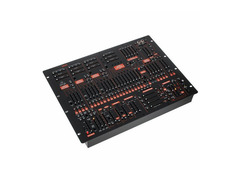
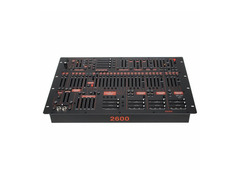
- Equipped with 63 faders featuring dimmable color-coded LED and 15 switches for hands-on control
- Additional features like portamento, interval latch, 1/4-inch and 3.5mm stereo outputs, preamp input, and headphones out with level control
- Housed in a roadworthy all-metal 8U rackmountable chassis for durability
Product specs
| Type | Semi-modular Desktop/Rackmount Synthesizer |
| Analog/Digital | Analog |
| Polyphony | Monophonic/Duophonic Mode |
| Oscillators | 3 x VCO |
| Waveforms | Sawtooth, Pulse, Triangle, Sine, Pulse Width Modulation, Frequency Modulation |
| Noise Generator | White Noise, Pink Noise, Low Frequency Noise |
| Envelope Generator | 2 x EG (attack, release / attack, decay, sustain, release) |
| LFO | 1 x LFO (triangle, square, sine) |
| VCA | Yes |
| Filter | 2-mode 4-pole Resonant Filter: 4012 circuitry (16kHz cutoff), 4072 circuitry (11kHz cutoff) |
| Sample and Hold | Yes |
| Effects Types | Digital Spring Reverb |
| Analog Outputs | 2 x 1/4" TS (L/R), 2 x 1/8" TS (L/R) |
| Headphones | 1 x 1/8" TRS |
| MIDI I/O | In/Thru/USB |
| Other I/O | 93 x Patch Points |
| Pedal Inputs | 2 x 1/4" TRS (interval latch, portamento) |
| USB | 1 x Type B |
| Software | Synthtribe |
| OS Requirements - Mac | OS X 10.6.8 or later |
| OS Requirements - PC | Windows 7 SP1 or later |
| Power Supply | 12V DC power supply (included) |
| Height | 4.3" |
| Width | 19" |
| Depth | 14" |
| Weight | 11.22 lbs. |
FAQs
-
What is the Behringer 2600 based on?
-
The Behringer 2600 is based on the classic ARP 2600 circuitry from the 1970s, featuring a pure analog signal path with matched transistors and JFETs, allowing you to recreate vintage sounds or craft new ones.
-
Is the Behringer 2600 suitable for beginners in synthesis?
-
Yes, the Behringer 2600 is suitable for beginners as it can be operated without patch cords, while still offering flexibility for experienced sound designers who wish to use them.
-
Does the Behringer 2600 support polyphony?
-
The Behringer 2600 operates in monophonic mode but offers a duophonic mode, allowing for two-note polyphony, which is great for creating more complex sounds.
-
What are the main waveforms available on the Behringer 2600?
-
The Behringer 2600 offers a variety of waveforms including sawtooth, pulse, triangle, sine, pulse width modulation, and frequency modulation, providing a wide range of sound design possibilities.
-
What kind of reverb does the Behringer 2600 include?
-
The Behringer 2600 features a digital spring reverb, which adds classic reverb effects to your sound, enhancing the depth and space of your patches.
-
Can the Behringer 2600 be integrated with modern DAWs?
-
Yes, the Behringer 2600 can be integrated with modern DAWs via MIDI In/Thru/USB, and it is compatible with software like Synthtribe for further sound manipulation and control.
Videos

Behringer
Behringer 2600 First Demos and Overview
Behringer 2600 First Demos and Overview
Behringer
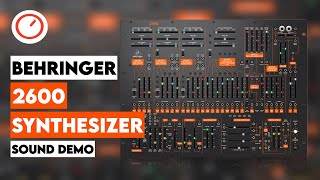
Behringer 2600 Analog Synthesizer Sound Demo (No Talking)

SYNTH ANATOMY
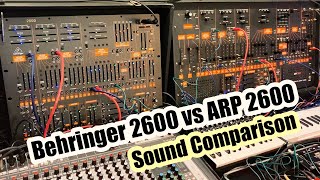
Behringer 2600 vs ARP 2600 Sound Comparison

Ralph Baumgartl
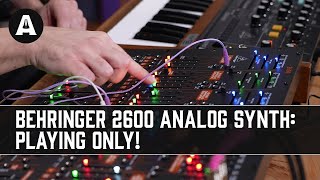
Behringer 2600 Analog Synthesizer | Playing Only!

Andertons Synths, Keys and Tech
![Video thumbnail for The Behringer 2600 just blew me away [sound demo] by Soundology](https://img.youtube.com/vi/BcvaDc7nqyo/mqdefault.jpg)
The Behringer 2600 just blew me away [sound demo]

Soundology
Reviews
PROS
-
Perfect for beginners and experts, easy to learn on
-
Replicates the original 2600 sound accurately
-
Integrates well with Eurorack Modular systems
-
Limitless sound possibilities, excellent build quality
-
USB MIDI functionality for easy computer integration
-
Offers unique, flexible design like a modular system
-
Clean, friendly sound that fits well in mixes
-
High-quality oscillators and filter with good character
-
Warm, full spring reverb
-
Information and tutorials readily available
CONS
-
Complex for newcomers without modular synth experience
-
Sound may not be as gritty or unique as the original
-
Envelopes can't achieve short or snappy sounds effectively
-
Tuning can be challenging compared to other analogs
Owner Insights
We analyzed real musician discussions from forums and Reddit to find what players love, question, and tweak about Behringer 2600.
Use cases and applications
-
The 2600 is described as ideal for sound exploration and learning synthesis, but less suitable for playing like a traditional keyboard due to its monophonic nature.
Source -
The 2600 can be used creatively by tuning its three oscillators to different intervals, allowing for dynamic chord changes through mixing.
Source -
The Behringer 2600 excels in producing FM sounds and offers very snappy envelopes, which are beneficial for creating a wide variety of textures and sounds.
Source
User experience
Setup and maintenance
-
Owners recommend using rubber washers with rack mount screws to prevent paint scuffing when mounting the Behringer 2600 on a stand.
Source -
Owners recommend using an audio interface to integrate the 2600 with DAWs like Ableton or Logic for optimal recording and monitoring.
Source -
Users found the VCOs may require tuning adjustments across the note range, which can be corrected with a screwdriver.
Source
Comparisons
-
Enthusiasts prefer the Behringer 2600 over the Korg 2600M due to the comprehensive functionality similar to the original ARP 2600, making it a more faithful replica.
Source -
Some users suggest starting with a Korg Minilogue XD or Arturia Minifreak as they offer polyphony and easier learning curves compared to the 2600.
Source -
The Korg 2600 M is an alternative but significantly more expensive, making the Behringer a more budget-friendly option for the 2600 sound.
Source
Features and functionality
-
Users suggest using the "Sample and Hold" feature for creating unique sound patterns, particularly effective in sound exploration.
Source -
The Behringer 2600 allows for manual PWM on OSC1 and added triangle and sine waves to OSC3, enhancing waveform modulation flexibility.
Source -
The Behringer 2600 offers oscillator sync, a delayable LFO, and extra waveforms on VCO 3, enhancing modulation possibilities.
Source -
The Behringer 2600 lacks preset memory, requiring users to photograph settings to replicate sounds.
Source
Value and pricing
-
The Behringer 2600 is highlighted as a budget-friendly option despite its complexity, making it a low-risk choice for those exploring modular synthesis.
Source -
At a discounted price, the Behringer 2600 is considered a steal, especially compared to other semi-modular options, despite some users not finding it compelling.
Source
Critic Reviews
5.0 out of 5
Based on 0 Reviews and 2 Ratings
Artist usage
Add artist

Masonna is confirmed to use the Behringer 2600, as evidenced by an Instagram reel posted by Maso Yamazaki, where he is seen recording with the Behringer 2600 for the first time. The post is captioned, "ベリンガー2600で初レコ," which translates to "First recording with Behringer 2600."


Genre Usage
Based on how artists on Equipboard use this gear, it is most commonly found in the following genres.
Used With
Based on how musicians on Equipboard use Behringer 2600, it is most commonly used with the following gear.


-s.webp?v=1784818702)



Community setups
Show yours




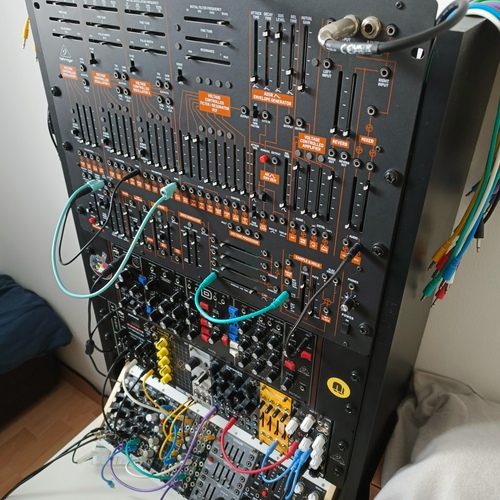
Similar
Add recommendation3 alternative and related items for Behringer 2600, curated by the Equipboard community.


$355.00 - $489.00
-m.webp?v=1784871436)
$323.00 - $489.00
More Behringer Modular Synthesizers

$77.00 - $85.00
in Modular Synthesizers Rank


$74.00 - $123.49
in Modular Synthesizers Rank


$1,175.00 - $1,899.00

$47.00 - $62.90

$81.00 - $109.00

$155.00 - $350.00

-m.webp?v=1784811262)


Accessories & Related Items
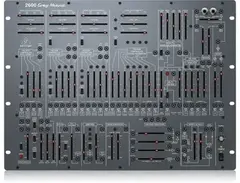


-s.webp?v=1784871436)
-s.webp?v=1784871379)


-s.webp?v=1784871300)

Gear Guides





Most Popular Modular Synthesizers
Most Popular Brands
-
Added to Equipboard on by
 cobaltorder
GearIQ 1021
-


