
Pricing and availability
We compare 600+ stores and found this item at 3 stores. Prices updated .
Store
Reviews
Price




Average Price: $1,322
High-end/Boutique
$100
$501+
Price Tier
Budget
Standard
High-end
Price History
Based on price data from 3 merchants for "SPL Transient Designer 4". Prices shown reflect NEW condition. Tracking began Apr 7, 2026.
* Product prices and availability are updated by Equipboard every 24hrs and are subject to change. Equipboard may receive compensation for purchases made at participating retailers linked on this site. This compensation does not affect what products or prices are displayed, or the order of prices listed. For more information, please refer to our affiliate disclosure.
Description
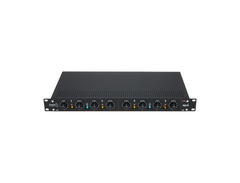
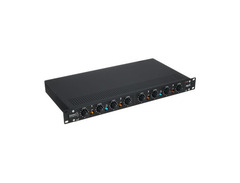
Introducing the SPL Transient Designer 4, a versatile tool for both professionals and hobbyists alike that's designed to enhance your mix like no other. With a simplistic but powerful approach, it gives you the keys to unlock a new level of control over your sound.
If you're looking to add punch to your kick drum or perhaps soften the attack of a rhythm guitar, the SPL Transient Designer 4 is your go-to helper. It allows you to control the sustain to add thickness and weight to thinner tracks, or decrease it to help additional elements cut through the mix without causing any clutter. The SPL Transient Designer 4 operates independently of the level, providing control over the dynamics of your audio without resorting to compression. This makes it a fantastic tool for managing dynamics without affecting the loudness.
The device is simple to use and intuitive, with an attack knob to either sharpen or soften transients and a sustain control to fine-tune how quickly sounds decay. It's been the first choice for many engineers for enhancing the power of drums, adding weight to bass parts, and helping individual mix elements find their ideal spot in the soundstage.
Key Features:
- Precise transient control offers a new way to approach your mix
- Manage dynamics without affecting loudness
- Suitable for use on individual tracks and full mixes
- 4-channel level-independent dynamics processor
- Attack control to add punch or soften hard sounds
- Sustain control to add thickness or remove weight
- Allows elements to cut through or sit back in a mix, without altering loudness
- Can be used in mono mode for individual mono tracks, or in linked stereo mode for stereo mixes
In short, the SPL Transient Designer 4 is a secret weapon for creating next-level mixes. It's a tool that provides the flexibility and control you need to take your mixes to the next level, all while maintaining a natural and dynamic sound.
Owner's manual
SPL Transient Designer 4 User ManualProduct specs
| Type | Dynamic Exciter |
| Number of Channels | 4 |
| Signal Processing | Attack (dynamic filter), Sustain (dynamic envelope) |
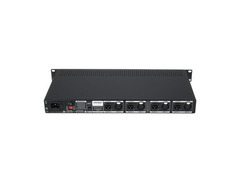
| Inputs | 4 x XLR |
| Outputs | 4 x XLR |
| Power Source | Standard IEC AC cable |
| Rackspaces | 1U |
| Depth | 9.3" |
| Weight | 7.27 lbs. |
FAQs
-
How many channels does the SPL Transient Designer 4 have?
-
The SPL Transient Designer 4 features four channels, allowing you to process multiple audio signals simultaneously.
-
What type of inputs and outputs does the SPL Transient Designer 4 use?
-
The SPL Transient Designer 4 uses 4 XLR inputs and 4 XLR outputs, ensuring professional-grade connectivity for studio setups.
-
What is the primary function of the SPL Transient Designer 4?
-
The SPL Transient Designer 4 is a dynamic exciter that controls the attack and sustain of audio signals, providing precise shaping of transients for enhanced sound clarity.
-
Is the SPL Transient Designer 4 suitable for both live and studio environments?
-
Yes, the SPL Transient Designer 4 is designed for use in both live and studio environments, offering versatile transient shaping capabilities.
-
How does the SPL Transient Designer 4 affect the dynamics of a sound?
-
The SPL Transient Designer 4 uses dynamic filters to adjust the attack and sustain of a sound, allowing you to enhance or reduce the presence of transients without altering the overall level.
Videos

Universal Audio
UAD SPL Transient Designer Demo
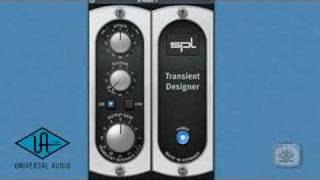
UAD SPL Transient Designer Demo
Universal Audio
videotest SPL Transient Designer TD4 - bass drum

Jacek Miłaszewski 5dB Ride
Reviews
Owner Insights
We analyzed real musician discussions from forums and Reddit to find what players love, question, and tweak about SPL Transient Designer 4.
Use cases and applications
-
Transient Designers are particularly effective on toms and kick drums for high-impact rock styles; less effective on overheads according to some users.
Source -
For creative recording approaches, using Transient Designers on DI tracks for guitars and bass before amplifiers is suggested as a "secret sauce."
Source -
Owners report that the SPL Transient Designer excels on room mics, producing a distinctive sound that stands out in recordings.
Source -
SPL Transient Designer is particularly effective on snare and toms, delivering noticeable improvements over software versions.
Source
Features and functionality
-
The SPL Transient Designer offers compression-like control with a single knob, allowing effortless adjustments without negative side effects.
Source -
Despite being seen as a gimmick by some, the SPL Transient Designer is noted for achieving its effects through phase manipulation.
Source -
SPL Transient Designer hardware units are available in 500 series format for modular setups.
Source
User experience
-
Owner feedback suggests using one Transient Designer on a mono room mic, possibly an omni on the floor, for unique sound shaping.
Source -
Users mention having multiple SPL units, possibly due to purchasing during sales or seeking a less CPU-intensive option.
Source -
Owners who prefer tactile experiences over digital find hardware units like the SPL Transient Designer beneficial for intuitive adjustments.
Source
Comparisons
-
The hardware SPL Transient Designer is praised for achieving a unique sound that plugins haven't replicated, noted for room mic applications.
Source -
Elysia nvelope is another option, developed by the original designer of the SPL Transient Processor, providing an alternative transient shaping tool.
Source
Value and pricing
Based on 0 Reviews and 0 Ratings
Artist usage
Add artist
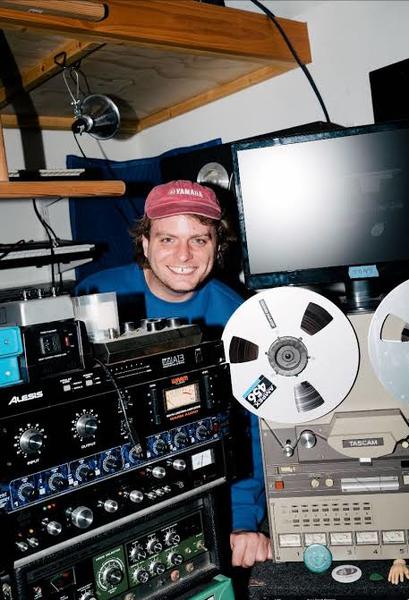
SPL Transient Designer 4 is in the rack of his studio in this photo.


Used for the toms on Echoes, Silence, Patience & Grace, as stated by mix engineer Rich Costey in this March 2008 Sound on Sound interview. It can be seen in the background of this photo of Costey's production setup.
Drums: Quad 8 310, Pultec EQP1, API 550a, Neve 33609, API 2500, Lexicon 960, Urei 1176, Smart C2, SPL Transient Designer, room mics
"I had just gotten some Quad 8 310 EQs before I began the Foo Fighters project, and I found that cranking the s[**]t out of the mid-range with the Quads helped the drums quite a lot. On most of the album the bass and snare drum went through the Quad 8s, with severe amounts of mid-range added. Quad 8 grew out of Electrodyne and was very popular in the 1970s, particularly with film companies. I obtained some channels that came out of the Motown Sunrise console and they're basically three bands of EQ and a mic pre and output level, and the Q gets tighter as you push it up. The Quad 8s are a little bit rounder and warmer-sounding than similar API modules. I also used the Pultec EQP1 and API 550a on the bass drum.
"I had a bunch of different side-chain compressors on the drums that would change from song to song. On some songs it would be the Smart C2, medium ratio and fast recovery, on others the Neve 33609, the Urei 1176, the API 2500 or the Empirical Labs Distressor, and the SPL Transient Designer on toms. You can use the SPL to lengthen the sound of the toms. I don't compress all the drums at the same time, I'll compress individual parts and mix the compressed sound in with the natural sound of the drums. There was relatively little compression implemented on the drums in this song, because the band didn't care for it. They wanted the drums to sound more raw.
"Throughout the album mix I might have used a bit of Lexicon 960 on the drums for reverb, but the room mics — amongst them a heavily compressed foldback microphone — were so good that I tended to use those. I tend to like room mics that are on the darker side. If they're too bright, you can't turn them up very loud because you then also get all kinds of messy cymbal noises. One other thing to note is the drums that come in after the intro of the song. When the whole band is slamming accents like that, you want to make the drums sound very aggressive, and this meant pushing room mics, pushing compression mics and so forth. As I said, there were a lot of rides."

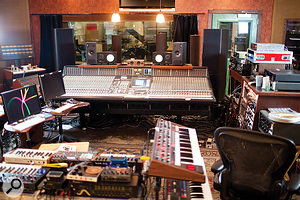
Mix engineer Tommaso Colliva on recording Drones : "Most of the microphones went through the Neve desk, and we also had some EQs and compressors in the chain. [We] used compressors and the [SPL] Transient Designer on the room mics."


Used for tracking when other session drummers record with Tommy Lee and don't hit the Kick, Snare and Tom's with as much force as Tommy Lee does normally.


"As you would expect, the studio contains some of the finest processors in the world, including an SPL Transient Designer, two Empirical Labs Distressors, an Audio & Design F760XRS compressor/limiter/expander, a Focusrite Platinum Compounder, a Drawmer LX20 dual expander/compressor and two DS201 dual gates, Fairman and Smart Research C2 compressors, a Mutronics Mutator filter bank, an Electrix Filter Factory, a Teletronix LA2A compressor, a Massenburg Model 8000 EQ, a Tubetech LCA2B compressor, a Drawmer 1960 valve compressor/preamp, a Focusrite Red 7 mic preamp/dynamics processor, and a Joemeek stereo compressor."


4:04 in the video. It's the Transient Designer 2


Shape the summed image using a combination of an SPL transient designer and the Apple audio units graphic eq- the one that you get with garageband -Render out a mixed recording of the whole piece through a Manley pultec and then delete all the original material from existence


He use it for shaping the snare drum and bass drum sound's attack and release

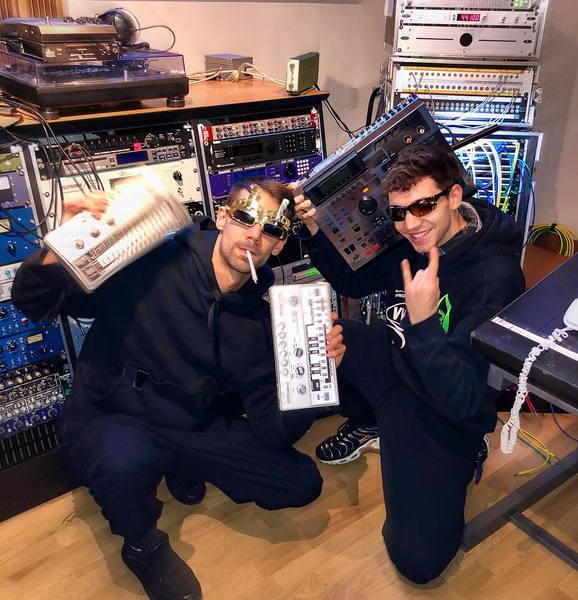


Plastikman (richie Hawtin) talks to future music about his live stage setup in bestival 2010

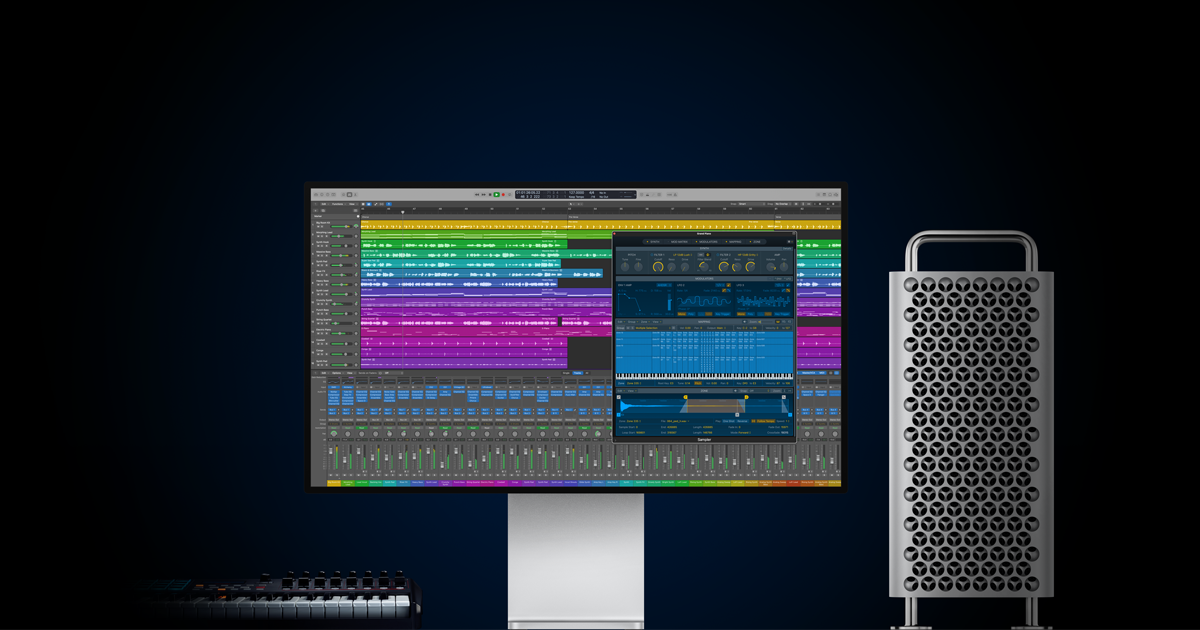
In a feature on Apple's website, Greg Kurstin is mentioned using the SPL Transient Designer 4 in his work with Adele, highlighting its role in his production process.

Album Usage
The SPL Transient Designer 4 has been featured on the following albums:


Genre Usage
Based on how artists on Equipboard use this gear, it is most commonly found in the following genres.
Used With
Based on how musicians on Equipboard use SPL Transient Designer 4, it is most commonly used with the following gear.


More SPL Effects Processors


$5,899.00 - $7,699.00


$6,990.00 - $7,299.00


$1,099.99 - $1,600.00


$2,698.00 - $4,399.00


$1,600.00
in Effects Processors Rank


.jpeg?v=1781105850)
-m.webp?v=1780930613)
$700.00
in Effects Processors Rank


$168.79
in Effects Processors Rank


$1,799.00 - $1,855.00
in Effects Processors Rank


$1,549.00
in Effects Processors Rank


$1,999.00
in Effects Processors Rank


$749.99 - $849.00
in Effects Processors Rank


$150.00
in Effects Processors Rank


Community setups


Similar


Most Popular Effects Processors
Most Popular Brands
-
Added to Equipboard on by
 lesmaisondeux
Gear IQ 3294
-