


Pricing and availability
We compare 600+ stores and found this item at 4 stores. Prices updated .
Store
Reviews
Price




Average Price: $4,367
High-end/Boutique
$100
$501+
Price Tier
Budget
Standard
High-end
Price History
Based on price data from 3 merchants for "Bricasti Design M7". Prices shown reflect NEW condition. Tracking began Apr 2, 2026.
* Product prices and availability are updated by Equipboard every 24hrs and are subject to change. Equipboard may receive compensation for purchases made at participating retailers linked on this site. This compensation does not affect what products or prices are displayed, or the order of prices listed. For more information, please refer to our affiliate disclosure.
Description
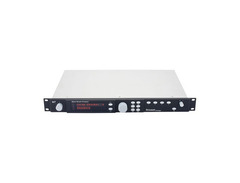
Step into a new dimension of sonic excellence with the Bricasti Design M7, a genuine stereo reverb processor renowned for its pristine sound quality and versatility. Crafted for discerning musicians and audio engineers, this effects processor offers an expansive palette of reverbs, with more than 200 meticulously crafted presets ready to enhance your mixes. The M7's intuitive interface features 12 program parameters and 100 user registers, allowing you to tailor each effect to your sonic vision effortlessly.
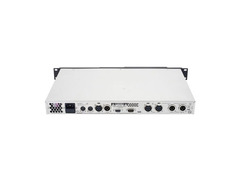
The M7's 6 Analogue device DSP chips ensure that every nuance of your sound is captured with precision and clarity. Whether you're recording in a professional studio or a home setup, the M7’s AES 24-bit digital I/O and AES single wire 192 kHz capabilities provide seamless integration into any environment. The symmetrical XLR analogue I/O offers a robust connection, while the MIDI I/O expands your control options for a more dynamic workflow.
A standout feature of the M7 is its "Front panel favourites," allowing quick access to your most-used settings. This, combined with a specially developed linear transformer power supply, ensures reliability and consistency in performance. In a 19" 1U rackmount form factor, the Bricasti Design M7 fits effortlessly into any studio setup, making it a discreet yet powerful addition to your audio arsenal.
Key Features:
- More than 200 reverb presets
- Genuine stereo reverb processor
- 12 Program parameters
- 100 User registers
- 4 "Front panel favourites"
- MIDI I/O
- AES 24-Bit digital I/O
- AES single wire 192 kHz
- 6 Analogue device DSP chips
- Analogue I/O symmetrical XLR
- Specially developed linear transformer power supply
Owner's manual
Bricasti Design M7 User ManualProduct specs
| Processor Type | Reverb Effects |
| Number of Channels | Stereo / Dual Mono in |
| Presets - Factory | 100 Reverb Presets |
| Presets - User | 100 User |
| Analog Inputs | 2 x XLR |
| Analog Outputs | 2 x XLR |
| Digital Inputs | 1 x XLR (AES/EBU) |
| Digital Outputs | 1 x XLR (AES/EBU) |
| Other I/O | 2 x DB-9 (RS-422 remote, loop thru) |
| MIDI I/O | In/Out (future features) |
| Rack Spaces | 1U |
| Power Source | Standard IEC ACcable |
| Height | 1.75" |
| Width | 19" |
| Depth | 11" |
| Weight | 9 lbs. |
FAQs
-
What distinguishes the Bricasti Design M7 from other reverb processors?
-
The Bricasti Design M7 is renowned for its high-quality simulations of real acoustic spaces, offering unparalleled musicality and ease of control, making it a top choice for professional recording and mastering environments.
-
How many presets are available on the Bricasti Design M7?
-
The Bricasti Design M7 comes with 100 factory reverb presets and allows for 100 user presets, providing extensive options for customization and creativity.
-
What are the connectivity options for the Bricasti Design M7?
-
The Bricasti Design M7 features 2 x XLR analog inputs and outputs, 1 x XLR digital input and output (AES/EBU), and 2 x DB-9 for remote and loop thru, making it versatile for various studio setups.
-
Can the Bricasti Design M7 be used in a dual mono configuration?
-
Yes, the Bricasti Design M7 supports stereo and dual mono configurations, offering flexibility in how you can integrate it into your studio workflow.
-
Is the Bricasti Design M7 suitable for live performances?
-
While primarily designed for studio use, the Bricasti Design M7's robust build and high-quality reverb effects make it a viable option for live performances where top-tier reverb is desired.
Videos

soundpurestudios
Vocal Reverb - Bricasti M7 Demo Video
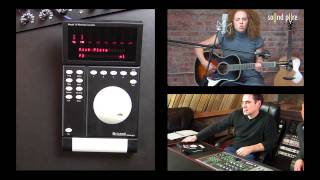
Vocal Reverb - Bricasti M7 Demo Video
soundpurestudios
![Video thumbnail for Bricasti M7 Review [Specially For You] by Consordini](https://img.youtube.com/vi/UYgudumeRlA/mqdefault.jpg)
Bricasti M7 Review [Specially For You]

Consordini

Bricasti M7 - Sweetwater

Sweetwater
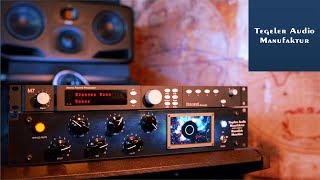
Raumzeitmaschine and Bricasti M7 Vocals (no talking)

Tegeler
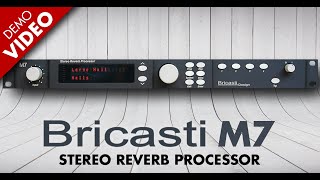
Bricasti - M7 - KMR Demo Room

KMR Audio
$70 vs. $4750 Reverb - Bricasti M7, Verbsuite Classics, Seventh Heaven

Weiss Advice
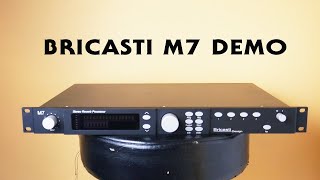
Bricasti M7

Max Bauhof
Bricasti Design M7 Stereo Reverb Processor In Broken Radio Studio, San Fransisco

gearwire
Reviews
PROS
-
Unmatched realistic sounding reverbs for contemporary/classic music
-
Intuitive and easy to program
-
Gorgeous design and build quality
-
Provides unparalleled detail and clean reverb tails
-
Neutral sound character, distinct from Lexicons and Eventides
-
Presets accurately simulate various spaces
-
Enhances mixes by adding realistic spaces and ambiance
-
Analog outputs offer superior sound quality
-
Can dramatically improve master tracks
CONS
-
High price point
-
Minor build quality issue with the volume/gain button
-
Loud and cheap laptop-like fan noise during operation
-
Fan noise can be disruptive in quieter studio settings
Owner Insights
We analyzed real musician discussions from forums and Reddit to find what players love, question, and tweak about Bricasti Design M7.
Comparisons
-
The Bricasti M7 is praised over the tc 6000 and Lexicon 960L for its natural reverb quality, although certain genres may still require specific units like the PCM60 or SPX90.
Source
Use cases and applications
-
The M7 excels in adding a sense of 'space' in live settings, particularly effective for in-ear monitor (IEM) vocals, providing a unique character not found in onboard console reverbs.
Source
Features and functionality
-
The M7 is considered a 'one trick pony' but performs its reverb function exceptionally well, offering superb plate, room, and hall effects with an airy quality.
Source
Critic Reviews
5.0 out of 5
Based on 1 Review and 9 Ratings

121
BEST REVERB PERIOD
MORE NATURAL AND 3D THAN ANY PLUG IN. THE ANALOG OUTS ARE BETTER THAN THE DIGITAL IMHO. CREATE SPACE EASIER.
Artist usage
Add artist


A pair of Bricasti M7 reverb units are used, one each for vocal and guitar

In the MK Tour '08 Documentary, Mr. Saggers demonstrates that Mark Knopfler uses the Bricasti Design M7 for processing guitars and vocals.


Pete Townshend uses the Bricasti Design M7 effects processor for his outboard monitor mix, as noted in MMR Magazine.


Mentioned by FOH engineer Dan Green in this AudioTechnology magazine article about the Ghost Stories Tour.
AT: Could you run me through Chris Martin’s vocal chain?
DG: It starts with a Shure SM58 radio mic which he just loves singing into — the sound and the weight is just right for him. It goes to the Neve 1073 500 series module, and into a channel on the SD7. Then I just use a little bit of channel EQ to clean up the low end, to avoid pumping the compressor unnecessarily — the stage volume is blisteringly loud up there from PA spill, so there’s always going to be some low-end filtering. And then it goes into one of the Waves Puigchild 660 plug-ins. From there, into a Waves H EQ for some general EQ’ing. I really like that EQ for its visual feedback — the spectrum analyser is really handy to quickly pinpoint any frequencies that are poking out or not quite right. Then it finishes with the Waves C6 multiband compressor, which is the most incredible plug-in. I really rely on the C6 for the sound of Chris’s voice because when he’s getting into his low register, his voice is very bassy. But I find if I take some of those overpowering low frequencies out with a regular EQ, when he goes up to his falsetto voice, it sounds a bit thin. With the C6, because it’s a dynamic EQ, as soon as he hits his falsetto voice, all of those rich lows return. Effects-wise, I’ve got an old TC 2290 delay which is MIDI’d up to be part of my snapshot automation. I really like it because it’s hands-on. Saying that, after it’s set up the only control I touch is the tap tempo button. Finally, I have a Bricasti M7 reverb, which I prefer to a Lexicon for its character.

In this live masterclass from Mix with the Masters, Xavier explains how the M7 is his favourite hardware reverb.


In this article it says Justin Vernon (Bon Iver) used a Bricasti M7 reverb when recording his last album, 22, A Million

seen at 2:39. "Joe wanted studio quality reverb. He wanted beautiful reverb, did not want any reverb pedals or anything. He wanted what he's used to hearing in the studio when he's standing in front of the full range monitors and playing. In that regard, we're using a Bricasti M7. This is a very high quality studio reverb that is quite popular and used in studios all over the world. It's a great unit." --Bob Bradshaw

can be seen at 1:09 in the video
.jpg?v=1784733415)
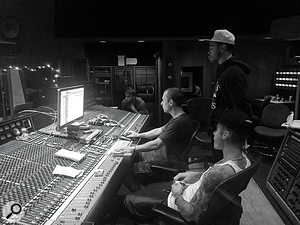
Used on Purpose, as stated by mix engineers Josh Gudwin and Andrew Wuepper in this May 2016 Sound on Sound interview about the mixing of the title track and others.
Wuepper: “Josh asked me if I could make the bass sound bigger and fatter, with some more sub as well. So I inserted UAD’s Voice Of God, which really is a subharmonic synth, and I used an outboard Fairchild 670 to control the sub, to make sure that lowest octave would not blow up your speakers! The 670 was one of the few pieces of outboard that we used, the other one being a Bricasti M7, which supplied reverb to every mix we did for the album. At the beginning of ‘Sorry’ you can hear these big percussion hits with a big reverb tail, which came from a ‘London Plate’ reverb on the Bricasti.
(...) Gudwin picks out a few other interesting tracks, beginning with a vocal track named ‘vcls’. “That track contains a vocal sample that Blood made of Justin’s vocal. I’m just touching that with the LFO Tool for a bit of pumping, I take out some high frequencies with the Pro-Q 2, and then use the SoundToys Microshift for a slight pitch-shift/chorusing effect. ‘Sry1V’ below that is the vinyl sound in the track. ‘$JBU’ is the main lead vocal bus, on which I have the UAD 1176, Waves De-Esser, Manley Massive Passive, Metric Halo Channel Strip. The sends are to the generic aux tracks at the bottom of the sesion: verb, ping-pong delay, Dimension D. Below the lead vocal bus is the print track of a Bricasti outboard.”
Wuepper: “There are two tracks called ‘Bric’ around the main vocal bus; the one above is the print from the Bricasti effect that was used on the percussion, and the one below is the print of the Bricasti reverb on the vocal. Next are Josh’s vocal delays. Putting delays on audio snippets [ie. copying short vocal clips to new tracks and applying delays as inserts, rather than automating a send from the main vocal track] is a pretty interesting way of doing things. I’ve not seen anyone else do this, but it makes it easier for Josh to manipulate these delays and to go deeper into the effect. He can really fine tune the delay times and decay lengths and so on. Sometimes the feedback you get with plug-ins can act a little weird, and this approach allows him to have more control.”
Gudwin: “The five green tracks are all vocal throws and delays. I don’t like to automate delay throws via aux tracks. The top green track is the master track for the delays, ‘JB Throw All’, and it has a compressor and an SPL Vitalizer. The ‘1147’ delay track has the UAD Cooper Time Cube, with a quick ping-pong-y flutter delay that I use to widen, and the track called ‘1167’ has a basic eighth-note delay from the Echo Boy. The ‘A’ insert is Auto-Tune, but it’s not working on these tracks. When needed, our vocal tuning is normally done by Chris ‘Tek’ O’Ryan in Melodyne. I sometimes do it myself, if I have the time do it, in the stand-alone version.
“The blue vocal tracks below the vocal delay tracks are the main lead vocal comp tracks, and on many of them I have the UAD SSL Channel Strip, UAD LA-2A, and the Waves C6 multiband compressor, and sometimes also the Pro-Q 2 EQ. The ‘DLYP’ track has a delay pan effect, with the SoundToys Primal Tap delay and Panman auto-panner, SSL Channel Strip and the P&M Vinylizer. ‘White’ and ‘Master’ are printed reverbs recorded in two rooms at Henson. They are my main plug-in vocal reverbs, and the green tracks below are pitched with the Elastic Audio X-Form [in Pro Tools] and effected with the Waves H-Compressor for a pumping effect. I pitched the reverbs up an octave or two, and I mixed them in very low. The ‘PCM’ and ‘PC1’ tracks are prints from ping-pong delays from the Lexicon PCM42 outboard.
“Justin’s backing vocal tracks all go to the group track called ‘JBG1’, on which I have a Waves De-esser, an SSL Channel and the C6 multiband compressor, plus there are a number of delays and reverbs via the sends. Trevon’s backing vocals all go to ‘JBTR’, which has similar effects. I wanted to fill the song up a bit more, and sometimes it’s not the most enjoyable process for an artist to sing all these background parts. Plus a different vocalist will add a different texture to the song, as long as it complements the lead vocal and the record. As I mentioned, Julia added her vocals during the final mix in New York, and her group track also has the De-esser, SSl Channel and C6. Right at the bottom are some effects tracks, with the Dimension D and group delay throws, and so on.
(...) 'Love Yourself'
(...) Next are Justin’s vocals, with I overdubbed in New York. Almost all the regular vocal tracks have the UAD SSL Channel, LA2 and the Waves C6 multiband compressor. These three plug-ins work great on his vocals, so I tend to stick with them. Each of the vocal tracks has slightly different settings from them. They all go to Justin’s lead vocal bus above them, which has the FabFilter Pro-DS de-esser and the Pro-2 EQ. Justin’s lead vocals also go through the Bricasti, and the effect is printed. My own four backing vocals went through a vocal bus on which I had the SSL Channel, and a compressor, but they didn’t do much, nor did the sends. These vocals are very much in the background, I just wanted to add some texture really quickly. Finally, at the top of the session everything went through a Master track, on which I had the UAD SSL channel, mainly for compression set to mid-attack and auto-release — without drums you don’t need the slow attack and quick release — a Massey EQ, boosting 100Hz and 16kHz, a FabFilter Pro-L for level, and the Sonnox Oxford Inflator to add some sheen.”
'What Do You Mean?'
(...) “There were a few more complicated vocal effects, like the ‘JG FX’ track, on which I used the Vitalizer doing some spatial expanding, a UAD Fatso to thicken it up, and I then cut some low mids with an EQ, and used a de-esser. This effect track gave more depth to the vocal and made him sound more like an angel! Underneath that are two ‘Radio’ tracks [which sound like they could have come straight from Peter Gabriel’s ’80s Fairlight experiments]. I used Auto-Tune to pitch the vocals up, and then put on a SoundToys AlterBoy, which changed the formant, and then I’m filtering 350Hz and below.
“Below the ‘radio’ tracks are all my vocal delay tracks, in green as usual, with the bus for all delay throws at the top. One delay track, ‘Splaater’, is a flutter delay with Auto-Tune and the Cooper Time Cube, and the other two have the Waves H-Delay and SoundToys Echo Boy. They’re both quarter-note delays, but with different feels. Below the delay tracks are some ad lib tracks, and all the actual lead vocals, pulled out over several tracks. Most of them have my regular trio of UAD SSL Channel, LA2 and Waves C6 plug-ins, and all vocals are sent to the ‘JB Buss’, on which I have the FabFilter DS de-esser, a Manley EQ doing light cuts at 330Hz, 560Hz and 3kHz, and then a whole bunch of sends to my regular aux tracks at the bottom: a hall reverb, a plate reverb, a light quarter-inch delay, a light ping-pong delay and a Dimension D.
“Further down are four Justin backing vocal tracks, which go to a bus above them, ‘JBG1’, on which I have the SSL Channel, boosting highs and cutting lows and doing some heavy compression, a UAD 33609 compressor, and then the Waves Enigma [phaser/flanger] on a Mutron setting, adding some sweeping sounds. The sends are once again hall and plate reverbs, a quarter-note and a ping-pong delay and a UAD Roland Dimension D. Once Justin had decided to go with my rough mix, I spent another half hour on it, doing some EQ adjustments, and that was it.”


Album Usage
The Bricasti Design M7 has been featured on the following albums:
Genre Usage
Based on how artists on Equipboard use this gear, it is most commonly found in the following genres.
Used With
Based on how musicians on Equipboard use Bricasti Design M7, it is most commonly used with the following gear.




More Bricasti Design Effects Processors


$1,500.00
in Effects Processors Rank


-m.webp?v=1784559394)
$640.00
in Effects Processors Rank


$189.00
in Effects Processors Rank


$1,799.00
in Effects Processors Rank


$1,549.00
in Effects Processors Rank


$1,999.00
in Effects Processors Rank


$749.99 - $833.00
in Effects Processors Rank


$136.00
in Effects Processors Rank


$1,450.00
in Effects Processors Rank


$3,799.00 - $4,985.00
in Effects Processors Rank


-m.webp?v=1784815383)
$40.00 - $2,999.00
in Effects Processors Rank

$5,777.00 - $6,999.00
in Effects Processors Rank
.jpg?v=1784733415)


$1,153.00 - $2,635.00
in Effects Processors Rank


.jpg?v=1784637724)

$892.41 - $1,799.95
in Effects Processors Rank


$220.00
in Effects Processors Rank


$850.00
in Effects Processors Rank


$69.95
in Effects Processors Rank


$199.99 - $300.00
in Effects Processors Rank


-m.webp?v=1784818739)
$320.00
in Effects Processors Rank


$419.99 - $1,179.99
in Effects Processors Rank


$749.99 - $4,999.00
in Effects Processors Rank


$1,650.00
in Effects Processors Rank

$2,999.00 - $3,250.00
in Effects Processors Rank


$629.99 - $849.00
in Effects Processors Rank


$35.70 - $199.00
in Effects Processors Rank


-m.webp?v=1784818824)
$309.37 - $936.00
in Effects Processors Rank

$2,555.00 - $3,225.00
in Effects Processors Rank

-m.webp?v=1784818777)
$450.00 - $699.00
in Effects Processors Rank


$4,999.00 - $8,037.96
in Effects Processors Rank


$999.00
in Effects Processors Rank

.jpg?v=1784792382)


$138.00
in Effects Processors Rank


$1,338.62
in Effects Processors Rank


$202.50 - $599.99
in Effects Processors Rank


$361.46
in Effects Processors Rank


$66.00
in Effects Processors Rank


$175.00
in Effects Processors Rank

$475.00
in Effects Processors Rank


$1,135.25 - $1,199.00
in Effects Processors Rank

Accessories & Related Items


-s.webp?v=1784815445)




Community setups


Similar


Gear Guides







Most Popular Effects Processors
Most Popular Brands
-
Added to Equipboard on by
 sel_roman
GearIQ 69
-


