This page about Voice-o-graph is a stub. You can help improve it:


Pricing and availability




* Product prices and availability are updated by Equipboard every 24hrs and are subject to change. Equipboard may receive compensation for purchases made at participating retailers linked on this site. This compensation does not affect what products or prices are displayed, or the order of prices listed. For more information, please refer to our affiliate disclosure.


Videos

The Tonight Show Starring Jimmy Fallon
Neil Young and Jack White Demonstrate a Voice-O-Graph Machine
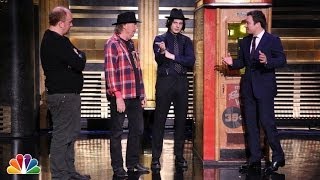
Neil Young and Jack White Demonstrate a Voice-O-Graph Machine
The Tonight Show Starring Jimmy Fallon
Reviews
Critic Reviews
Based on 0 Reviews and 0 Ratings
Artist usage
Add artist
Used to record A Letter Home, as featured in this May 13, 2014 YouTube video by The Tonight Show Starring Jimmy Fallon.
Jack White walks Jimmy through operating the 1947 Voice-O-Graph recording booth where Neil Young recorded his album, A Letter Home.
The unit is futher discussed by producer Jack White and recording engineer Joshua V. Smith in this October 2014 Sound on Sound interview.
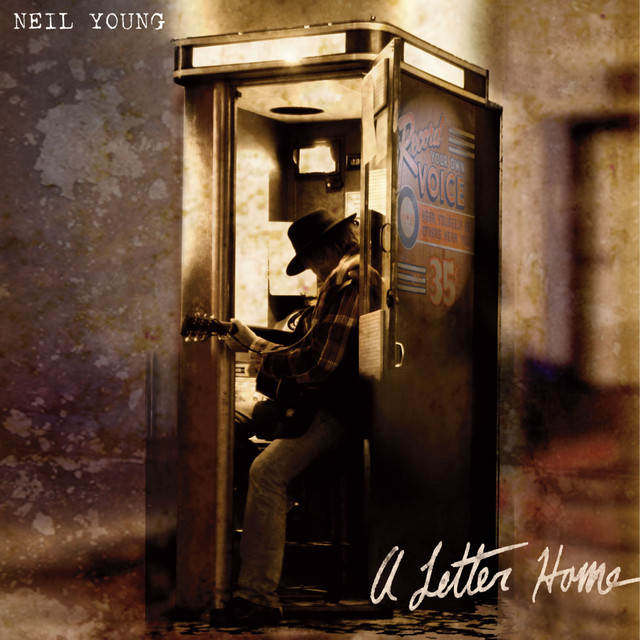
“Some people get caught up in emulating albums or artists from the past, and trying to make what they are doing sound exactly the same. I have never done that. I have never tried to make something sound like a record from 1962,” says Jack White, and his music certainly is forward– as much as backward–looking. There is, arguably, one exception in his oeuvre, which is Neil Young’s recent album A Letter Home. Recorded at Third Man, A Letter Home is marked down as Young’s 34th ‘studio album’, but it barely deserves to be called this, because it was not recorded in a studio but in a Voice–O–Graph.
Also called the ‘Third Man Recording Booth’, the Voice–O–Graph looks very much like a telephone booth from the outside, and it was widely in use in the US from the 1940s to the 1960s. The coin–operated machine allowed people to record up to two minutes of extremely lo–fi audio, full of crackles, scratches and wow–and–flutter, onto a six–inch phonograph disc. White says that he’d been “looking for one for 15 years” and he finally managed to acquire a Voice–O–Graph a couple of years ago. “We spent a year and half restoring it and getting it in tiptop shape. It sounds really incredible now. People used it to send audio letters to each other. People in the army, in wars, sending messages home, it was pretty amazing."
The Third Man Recording Booth was officially opened on April 20th, 2013, and the Third Man web site states that it is “the only machine of its kind in the world that is both operational and open to the public”. Neil Young recorded 11 cover songs in it, and one spoken message to his deceased mother. Because the message and the music sound like they’re coming straight from the 1940s, they are strangely affecting and emotional — which, explains White, was exactly the point. “If, say, his message to his mother had been recorded on Pro Tools, it would have been like, ‘So what?’ There would have been no beauty in it. Recording Neil in the booth gave us a certain vibe. It’s what Neil would have sounded like in the 1940s, recording himself.”
The recordings, lo–fi and scratchy as they are, posed significant challenges for the engineers, as Joshua V Smith explains. “Kevin Carrico, a wizard from Detroit, and I worked on getting Jack’s Voice–O–Graph to function properly between February to August 2013. It’s still a work in progress, but as long as it’s working, we’re scared to touch it! Kevin and I thought of ourselves as ‘electro–mechanically’ engineering the Neil Young album. We had less than a week to modify the booth to Jack’s instructions for Neil’s album project. Some of the modifications included converting it from 45rpm to 33rpm to get more recording time, adding a Nixie tube countdown timer, installing fans in the ceiling, installing a camera and monitor inside of the booth so Neil could watch the disc–cutting process and knew when to start and stop, and installing controls on the back of the booth, so Kevin and I could remotely start and stop it without getting in the way.
“All the records we cut were made of polycarbonate. The original records were made of plastic or a cardboard composite sprayed with acetate or covered in some kind of plastic, and they had grooves cut into them with a steel needle. The grooves in our discs were embossed in them with a tungsten carbide needle. We tried cutting into the polycarbonate but all we got was noise, so embossing was the way to go. We also originally used steel needles and actual acetate master discs cut down to six–inch, but they were $10 per disc! The polycarbonate discs sounded better for our applications and were way cheaper.
“After the discs were cut, we transferred them to one–inch two–track with a 1953 Scully lathe at Third Man that was previously used by Cincinnati’s legendary King Records. We later found that the lathe had induced some noise into the transfer, but by the time we realised this, there was no time to do something about it. Because each disc could only hold 2:27 of audio, I had to do some splices on tape. The tricky part was having to varispeed the two takes before editing them so they were roughly in the same pitch. I did this with discs on which the pitch jumped dramatically in the middle of the take. I ended up having two varispeed boxes, and Richard Ealey at Blackbird Studios made me a switching unit to go between the two boxes. For something that was done with one mic in a phone booth, this project ended up being pretty complicated!”
Album Usage
The Voice-o-graph has been featured on the following albums:
Genre Usage
Based on how artists on Equipboard use this gear, it is most commonly found in the following genres.
More Analog

$300.00
in Analog Rank


-m.webp?v=1782745203)
$650.00
in Analog Rank


$4,250.00
in Analog Rank


.jpeg?v=1783116669)


$823.50
in Analog Rank


$339.99
in Analog Rank


$823.50
in Analog Rank


$217.97
in Analog Rank


$167.35
in Analog Rank


$730.00 - $899.00
in Analog Rank

$440.00
in Analog Rank


$350.00
in Analog Rank


$250.00
in Analog Rank


$350.00
in Analog Rank


$600.00
in Analog Rank


$400.00
in Analog Rank


$300.00
in Analog Rank


$440.00
in Analog Rank


$7,171.17
in Analog Rank
Community setups


Similar


Most Popular Brands
-
Added to Equipboard on by
 eyeseeofficial
Gear IQ 161522
-


