

By Gear Experts
Table of Contents

Equipboard
Equipboard is the world's largest community of artists and their gear. Read our review process.
We are reader-supported. When you buy through links on our site, we may earn an affiliate commission. Learn more.
Our Picks
-l.webp?v=1784977216)
Used by more guitarists than any other noise gate, the NS-2's versatility, Boss reliability, and attractive price make it a no brainer for our Best of the Best.
Read more


With a single threshold knob as the only control, the well-built ISP Decimator II works extremely well to fix a noisy rig, with little tone degradation at all but the highest settings. This is the premium option, and perhaps not well-suited for budget-minded guitarists.
Read more

-l.webp?v=1784977824)
The MXR Smart Gate is truly smart, and offers granular control over the amount of gating. The noise gate pedal of choice for pros like Slash, Eddie Van Halen, and Jerry Cantrell.
Read more
This Boss NS-2 clone is perfect for the guitarist on a budget, or someone just wanting to explore noise gates. While not the most solidly built pedal, it's effective at reducing noise despite sacrificing a little tone. The price is almost too low to believe, making it the Best Bang for Your Buck.
Read more
Perhaps better suited to reducing pickup hum than it is for silencing other noisy pedals, the EHX Hum Debugger does its job very well, with the added benefit of being true bypass.
Read moreA noise gate’s purpose is simple; to eliminate unwanted noise, such as the 60hz hum from single coil pickups from an audio signal. Noise gates work by silencing or reducing the levels of an audio signal once the signal drops below a certain amplitude, which can be set by the user. Most gate pedals will have a control that will change the threshold, or the amplitude at which a signal needs to drop below for the pedal to take effect, and a control that will change the aggressiveness of the attenuation. These two controls allow the noise gate to be used both as a convenience and as an actual sound effect. These two types of settings are very different.
A Subtle Effect
When used to simply eliminate hum from a guitar’s signal, noise gates are set subtly with the threshold very low. When the player stops playing, there will be no audible buzz coming through the amplifier. When the player is playing, the buzz may be noticeable in the background of the guitar signal. This is important to remember. Noise gates only take effect when the entirety of the audio signal drops below a specific volume. Some noise gates will not cut the buzz out of the signal when the guitar is playing because such an effect would have a negative effect on both a guitar’s sustain and the subtlety of the tone. Luckily, when the guitar is being played, the buzz will not be the primary center of attention. When used to tame noisy pickups, the gate should be placed at the beginning of the signal chain. This way, the noise will be reduced before it can be amplified by overdrive, distortion, or compressor pedals.
Noisy Pedals
Noise gates can also be used to reduce the noise that can be generated by pedals. Overdrive, distortion, and compressor pedals (especially those of either the vintage or cheap variety) can generate noise due to cheap manufacturing, improper shielding, old components, or bad grounding. While the first step in eliminating pedal-generated hum should be to use a fully isolated power supply for each pedal, sometimes a noise gate is necessary. Usually, pedal-generated hum will be louder than guitar-generated hum. In these cases, the pedal should be set more aggressively, with a higher threshold. The gate should be switched on when the noisy pedal is switched on. The reason for this is that if a noise gate is affecting a signal chain that is not generating buzz, all that it is doing is cutting longer sustaining clean notes abruptly short, because the clean notes may be quieter than the level of the buzz from the pedal.
The Metal Effect
Sometimes a gate is not used simply to clean up a problematic, noisy rig. Modern metal players using extended-range guitars will tell you that noise gates are a necessity. The levels of gain used in metal will amplify unwanted string-sliding noise. This noise can ruin the abrupt nature of djent riffs or heavily palm-muted sections. The clean silence between pick strikes can be the key to a heavy-sounding riff. In these cases, the noise gate should be set with a high threshold and with an aggressive mute setting. It should be placed after all gain has been added to the signal. This may put the gate in the effects loop, before the modulation and ambient effects. If the gate is placed after time-based effects like reverb and delay, the long reverb trails and quieter repeats may be simply erased from the sound. In fact, this was a popular effect for drums in the 1980s to give them a massive, booming tone.
There are many options available for players interested in noise gates. Here are the best ones.
Boss NS-2 Noise Suppressor
4.5 (460)
-s.webp?v=1784977216)









Average Price: $106
Standard/Professional
$75
$151+
Budget
Standard
High-end
- + Eliminates feedback and unwanted noise effectively
- + Does not affect natural guitar tone
- + Easy to set up and use
- + Dual modes for noise reduction or mute functionality
- See 6 more
- Some tone loss reported with heavy noise reduction settings
- Requires careful manual reading for optimal setup
- Can be considered pricey for a utility pedal
- May not completely eliminate noise in all setups
- See 1 more
| Power | 9V |
The Boss NS-2 Noise Suppressor is probably the most popular noise gate on the market. As we hunted down forum threads talking about the best noise gate pedals, the NS-2 was mentioned and recommended more often than any other noise gate pedal by a landslide. It’s also used by more pro guitarists and bassists than any other noise gate out there. The NS-2 graces the pedalboards of U2’s The Edge, James Hetfield, Yngwie Malmsteen, and Jim Root, who calls it "one of the best Noise Suppressors ever made." Let’s talk about why this pedal became so popular.
For one, it’s very versatile and can be used either as an effect on a heavy guitar signal or just to clean up a buzzy rig. There is also something to be said for the peace of mind of owning a Boss pedal. You get the amazingly reliable Boss build quality, good customer service, and the NS-2 will hold its value well in case you decide to sell it for any reason.
The great thing about the NS-2 is that it just works! There are two ways to hook it up in your rig. One way is to put it right between your guitar and amp. Your guitar goes into the Input of the NS-2, and the NS-2’s Output goes to the amp. The recommended way is to do an effects loop, where you only apply the NS-2 to the noisy pedals. In this case, your guitar goes into the Input, the Send goes out to your noisy pedals that you need to tame (think distortion, fuzz, etc), the effects loop comes back into the NS-2’s Return, and then the output goes to the rest of your effects pedals (the ones you do not want to noise-reduce, like delay and reverb).
The Boss NS-2 is one of the more full-featured noise gate pedals, in terms of knobs you can play with. It has a handy “Reduction” light which lets you know when the reduction is actually working. The Threshold control (common to all noise gate pedals) sets how much noise you want to filter out. The Decay knob is a nice feature, which lets you adjust how sharply the sound fades out when the input signal becomes lower than the set threshold. When you set the Decay all the way down, the signal gets cut off abruptly. All the way up, and the note decays gently for a more natural feel. You’ll want to play with these two parameters to get the right balance and maintain the integrity of the notes you’re playing.
The “Mode” switch is something people appreciate about the NS-2, particularly if you play live. When set to “Reduction” mode, the pedal does its normal noise gate thing when turned on, and nothing when turned off. When set to “Mute” mode, turning the pedal on completely kills your signal. When the pedal is off, it’s simply a noise gate. Mute mode is handy for guitarists who play live since in between songs you might like a pedal which lets you silence your whole rig with a simple tap of your foot.
In typical boss fashion, you can run this pedal with a 9V battery (which is included), but trust us it doesn’t last long. We highly recommend using it with a Boss PSA-120 power adapter, which you’ll have to buy separately.
We tried the Boss NS-2 with a noisy metal rig as well as a simple hum/buzz from single coil pickups, and we love how well it just works! The concern with noise gate pedals is usually that they rob your tone of its integrity. Different pedals do this in varying degrees, and we found the Boss NS-2 did not affect our precious tone very much at all. Using the Threshold and Decay knobs, we were able to dial in a setting that did just enough noise reduction without sacrificing tone.
Bottom Line: While there are several other noise gate pedals out there for your consideration, the Boss NS-2 has certainly risen to the top in terms of popularity. If you’ve got problems with a noisy rig, this thing is a problem solver. Considering the Boss build quality, we think this thing is a bargain given its affordable price. It’s not the cheapest noise gate pedal, nor the most expensive. Other options like the Decimator II offer slightly simpler controls, but it’s hard to recommend other noise gates since Boss really nailed it with this one. For that, we award it Best of the Best.
See how artists use this









ISP Technologies Decimator II
4.5 (58)


Average Price: $171
High-end/Boutique
$75
$151+
Budget
Standard
High-end
- Doesn't degrade signal or tone
- Simple one-knob operation
- Effective with high-gain setups
- Works well in combination with other pedals
- See 6 more
- Reflective surface can make text hard to read
- May require adjustment when switching from high-gain to clean channels
- Price point slightly higher due to build and aesthetics
- Can make sound overly digital if not used sparingly
- See 1 more
| Power | 9V |
| Current Draw | 35ma |
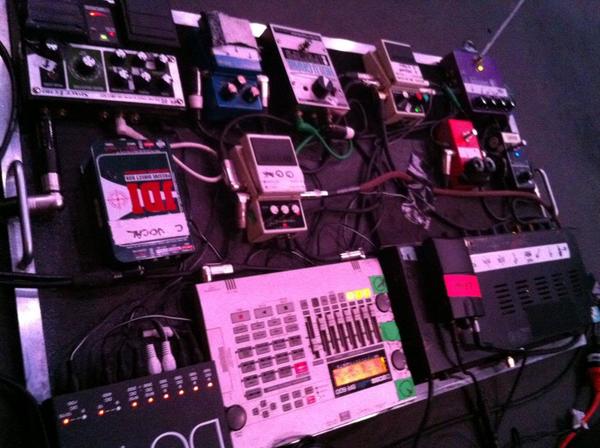
The ISP Decimator II is the premium noise gate pedal, coming in priced higher than our other recommendations on this list. No doubt this is one of the best gates on the market. Let’s explore why.
The first thing you’ll notice is this is one hefty pedal. It’s solidly built, and weighs a good bit. It’s an on-off Boss-style footswitch. The next thing you’ll notice is its simplicity; just one knob, and nothing else. Definitely a simpler operation than the NS-2. On the front panel there are two 1/8th inch jacks for linking more than one Decimator together at a time. A practical use of that would be one Decimator at the end of your pedal chain, and another in the fx loop of your amp.
Let’s get down to the important question - how well does the Decimator II work? The answer is very well. Operating the pedal could not be simpler. Starting with the Threshold knob fully rotated to the left, begin turning it to the right until you’ve achieved the level of noise reduction you need. Hum, buzz, and noise vanishes. It’s kind of magical, because without a knob to adjust the decay, the Decimator II is smart enough to figure out the right gating “dynamics” to keep your sound intact and natural.
From the reviews we gathered, the results are somewhat mixed when it comes to tone degradation. At moderate levels of noise gating, your tone integrity will not be affected much. As you dial the threshold way past 12 o’clock to completely suppress noise, you might be sacrificing harmonics and other interesting artifacts. We like this tip from someone’s review of the Decimator II:
You can still hear the hiss and hum behind the notes as you are playing (because then everything goes through the gate), but it kills any noise when no notes are produced. You do have to turn it down when you play at lesser gain, otherwise your note decay is affected.
Bottom Line: When a pedal is this well-built, this simple to operate, this effective, and just kind of magical, we’re impressed. The price is a tad high for budget-minded guitarists, so make sure a noise gate is essential to your rig before you put down this amount of cash on a pedal. If you buy it, know that you own one of the best noise gate pedals out there and a very well-made piece of gear.
See how artists use this








MXR M135 Smart Gate
4.5 (71)
-s.webp?v=1784977824)
Average Price: $138
Standard/Professional
$75
$151+
Budget
Standard
High-end
- Smoothly gates sound without cutting off sustained notes
- Effective across a range of settings, from high gain to general hiss reduction
- Versatile with three settings and an adjustable knob for precise control
- Maintains tone quality better than some competing noise gates
- See 6 more
- May require adjustment when switching between different types of guitars or effects
- Some users find the various switches and settings less useful than expected
- At extreme settings, can affect tone quality and natural decay of notes
- Not as universally impactful on all guitar types, less effective with single coils
- See 2 more
| Power | 9V |
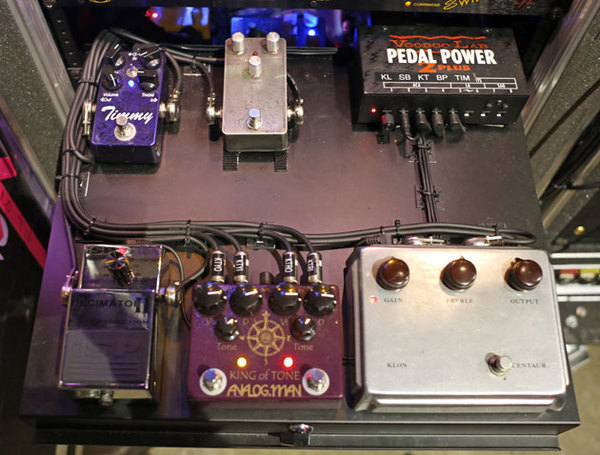
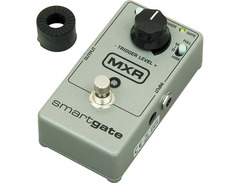
The MXR M135 Smart Gate is easy to use and reliable, as are most MXR products. Different from other noise gates, the Smart Gate has multiple settings that are made for specific types of noise. It also features dual high and low filters which allow the guitar signal through while getting rid of the noise.
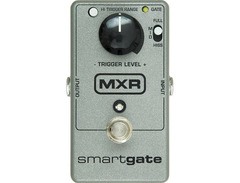
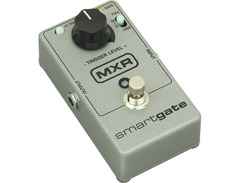
The pedal’s design and functionality is more akin to the ISP Decimator II than to the Boss NS-2. It’s smaller than the other noise gate pedals on this list, so if room on your pedalboard is at a premium, as it often is, you’ll want to look closely at this pedal. It also feels well-built, which is no surprise given MXR makes it. One thing we love about it is true hardwire bypass, which makes sure your signal does not pass through the Smart Gate’s circuitry when the pedal is turned off. You have 3 selectable noise reduction settings:
- Hiss: Hiss just cuts out the extraneous hiss.
- Mid: Mid is noise reduction halfway between Hiss and Full.
- Full: Full is the full-on noise gate effect.
Pretty simple, basically you just have more granular control over how “noise gaty-y” you want this thing to be. There’s a handy light in the upper right of the pedal to indicate the amount of noise reduction that’s going on. The big central knob is called Trigger Level, which is the same thing as threshold and simply sets the amount of gate you’re using.
The MXR Smart Gate is aptly named, it truly is smart! It senses if it need to cut the noise immediately, or transition it off smoothly and slowly, depending on your playing dynamics. In our test, we found the results to almost mirror the Decimator II, and in fact lots of reviewers compare the two pedals. We noted that when on the Full setting, it somewhat diminishes your sustain. We agree with this user’s comments:
I found that the medium setting at about 40-50% trigger was sufficient to clean up 99% of my noise issues. That being said, if I go really crunchy, I set the puppy on full.
Bottom Line: Similarly priced as the ISP Decimator II, the MXR M135 Smart Gate is a very good and versatile noise gate pedal. It’s nearly impossible to pick a clear winner between the two. If you like the Decimator’s one-knob simplicity, go for that one. For more granular control over the amount of gating, we say go with the MXR Smart Gate. And in case you need more convincing, the MXR is the noise gate of choice for Slash, Eddie Van Halen, and Jerry Cantrell.
See how artists use this


.jpeg?v=1784935806)
.jpeg?v=1784935806)


Behringer NR300 Noise Reducer
3.5 (52)

Average Price: $29
Budget/Beginner
$75
$151+
Budget
Standard
High-end
- Effectively eliminates noise without tone loss
- Great for high gain and metal setups
- Useful send/return loop for selective signal processing
- Mimics the performance of more expensive noise gates
- See 5 more
- Plastic construction feels cheap and fragile
- Size could be more compact to save pedalboard space
- Slow decay setting may not suit fast, staccato playing styles
- On/off switch and connectors feel flimsy
- See 3 more
| Power | 9V |
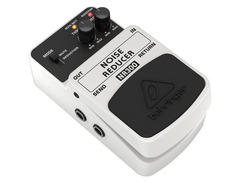
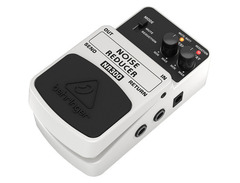
The Behringer NR300 Noise Reducer is a great option if you need a budget-priced noise gate pedal. You can’t get a guitar pedal much cheaper than what this one costs!
From the looks of it when you take it out of the box, it’s strikingly similar to the Boss NS-2. In fact, it’s meant to compete head to head with it, for about 1/4 to 1/5 the price! The NR300 is a white stompbox-style pedal like pedals from Boss, it has a Threshold knob and a Decay knob, along with a small switch to select between “Mute” and “Reduction” mode. Sounding familiar??
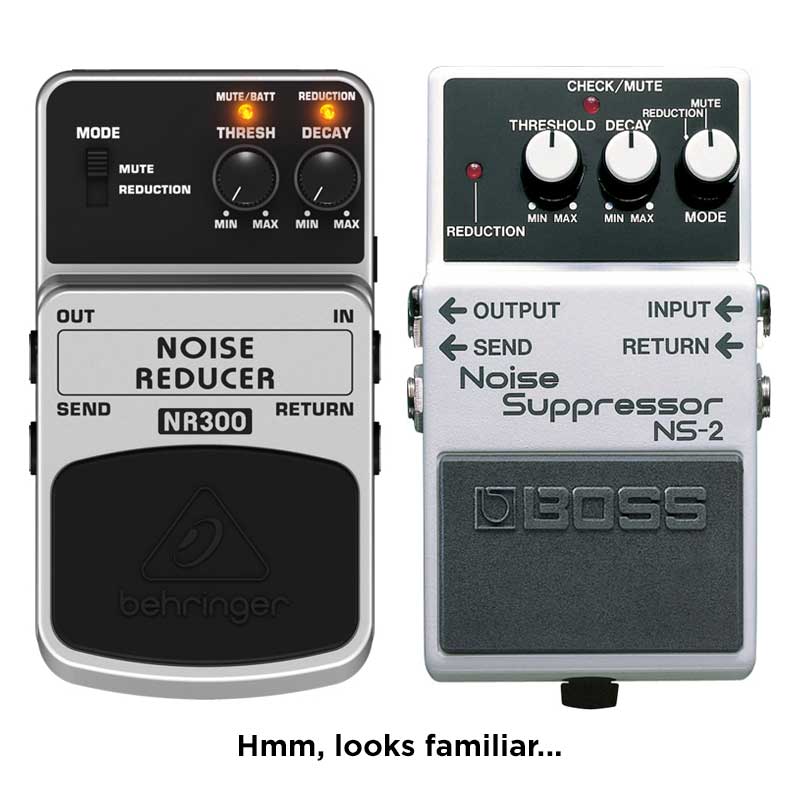
In terms of build quality, this pedal is mostly plastic, and admittedly feels a little flimsy. If you’re going to be keeping this in a home or recording studio, the build quality is not as important. If you gig or treat your gear harshly, we would be concerned that the enclosure and footswitch would not hold up to heavy abuse.
There’s really not that much to say that we didn’t already cover in our review of the Boss NS-2. Several reviewers of the Behringer NR300 complain about tone degradation. We found this to be true in our testing, though it’s not so terrible as to make this pedal unusable. Just make sure you know (or are willing to learn) where in your effects chain the noise reduction pedal should go. No matter if you get the cheapest one or the most expensive, spend some time and do your homework to discover how to get the best results. You can achieve some perfectly good noise gating with the NR300 when you dial in the right settings.
Bottom Line: The Behringer NR300 Noise Reducer is perfect for your first noise gate pedal if you’re on a budget. If you can swing it, we would recommend the Boss NS-2 over this one, simply because with Boss you’re paying for superior circuitry, build quality, and reliability. Having said that, we wouldn’t include a pedal in this guide that we wouldn’t use ourselves. Some of the guitar players on our staff simply wanted to save their money so they could spend it on fun pedals - a noise gate simply wasn’t a priority for them. This thing is a steal. If you skip out on buying five coffees, you’ll have enough cash set aside to get yourself one! Best Bang for your Buck.
See how artists use this



.jpg)
.JPG?v=1784934260)

Electro-Harmonix Hum Debugger
4.5 (15)



Average Price: $155
High-end/Boutique
$75
$151+
Budget
Standard
High-end
- Eliminates hum without affecting natural tone or sustain
- Transparent sound quality, doesn’t color tone
- Effective on single coil pickups and high drive settings
- Offers immediate silence with a single kick
- See 5 more
- Requires its own power supply, cannot be daisy-chained
- Some users report a slight nasal effect or loss of top-end
- May add a subtle reverb or metallic texture when used with certain effects
- Exterior design considered cheap-looking for its price
- See 1 more
| Power | 9V |
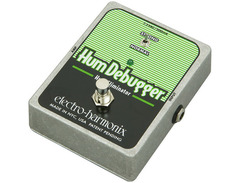
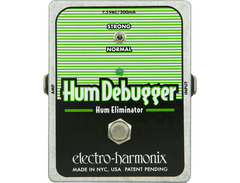
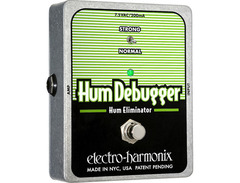
EHX has long been known for making strange or even bizarre effects pedals, and the Electro-Harmonix Hum Debugger noise gate is no different. It features no knobs, only a single switch which has two settings; Normal and Strong. The Debugger is very effective at eliminating hum, but has been known to mildly affect the tone of the guitar.
The name of the game here is simplicity. The Hum Debugger is extremely simple to operate, with no knobs to turn. The only thing you can play with is a switch to go from NORMAL mode to STRONG mode. As you might imagine, these are settings for the amount of noise gating you want. Normal reduces but does not completely eliminate the hum produced by your pickups. The sound is mostly uncompromised, you might just notice some missing harmonics. On Strong, any hum is completely eliminated, but you’ll notice more of an adverse effect on your tone. As one reviewer put it, it sounds a bit “stripped” and “a little bit wobbly.” The higher the output of your pickup, the more you notice the sound is altered a little bit.
It’s our understanding that this pedal takes your analog signal, digitizes it, and runs an algorithm on it to remove the 60Hz hum. Like magic, when you press on the footswitch to activate the pedal, the hum from your pickup vanishes.
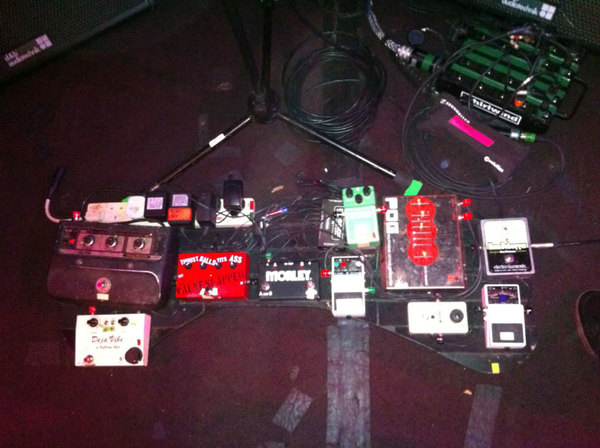
Bottom Line: It’s worth noting that the Electro-Harmonix Hum Debugger works much more effectively to get rid of hum caused by unruly pickups. For a more traditional noise gate effect, the other pedals on this list would be better options. Having said that, if what you’re after is eliminating hum, this is a great pedal from a great company. The EHX Hum Debugger was at one point on the pedalboard by Alex Turner of Arctic Monkeys. The fact that it’s true bypass and includes a power supply sweetens the deal.
See how artists use this








Top Ranked Noise Gate Effects Pedals on Equipboard
-m.webp?v=1784905109)

-m.webp?v=1784977216)

-m.webp?v=1784977824)
About the authors
Michael R. Pierce is the co-founder of Equipboard and a lifelong musician with over 25 years of experience as a guitarist and gear enthusiast. He blends solid music theory chops (thanks to formal training in guitar, piano, and trumpet) with real-world experience, always exploring and experimenting across genres like rock, blues, and hip-hop. Michael launched Equipboard in 2013 after graduating from The University of Texas at Austin, leveraging his unique blend of musical passion, technological acumen, and community building. His current go-to rig features a Fender American Original ‘50s Telecaster, Analogman King of Tone, Strymon Flint, and a Fender ‘57 Custom Champ. Read more
Giulio Chiarenza is the co-founder of Equipboard and a lifelong multi-instrumentalist with a deep passion for music gear. Born in Italy and raised in the U.S., he holds a Computer Science degree from The University of Texas at Austin and blends technical acumen with decades of hands-on experience across guitar, piano, drums, and electronic production. Early in his career, Giulio was signed to a San Francisco-based EDM label, releasing both remixes and original tracks. These days, he helps steer Equipboard’s vision while personally testing and reviewing gear. He's never too far from his go-to guitar: a vintage 1978 Fender Telecaster Custom. Read more
Comments
Sign Up or Log In to add comments

838
What do people think about the Electro-harmonix silencer? Thinking of buying it, but is it actually good???
New in Noise Gate Effects Pedals

$233.42 - $236.42
in Noise Gate Effects Pedals Rank
.jpg)



.jpg)

.jpg)