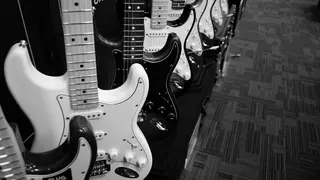
John Fogerty
Genre
Credits
Genre
Credits
John Fogerty's Guitars



According to John Fogerty's guitar tech, this is one of Fogerty's favorites - a 1971 Goldtop Les Paul 54’ reissue with P90 pickups. He has 3 or 4 of these in rotation. He has been using these as his main guitar for E standard tuning since 1995.
Find it on:


In this photo, Fogerty is photographed with Rickenbacker 325 back in 1969.
However, Fogerty possibly owns more of those guitars. Back in 1969, he used the 325 as his main instrument during the Creedence Clearwater Revival's heyday. The guitar had an "ACME" inscription on it, and he gave the guitar away (or sold it, there are different accounts of it) to a 12-year-old boy named Louie back in 1970. Rolling Stone wrote an article back in 2017, where it reported that this particular guitar has been bought back by John's wife, Julie Fogerty and presented to Fogerty as a Christmas gift in 2016.
Find it on:


Seen in this Premier guitar Rig Rundown at (11:16), this Phil Kubicki designed baseball bat guitar is one of a kind and sports Strat-style electronics.
Fogerty also mentions this guitar in the Vintage Guitar interview.
I should also mention that Phillip Kubicki built my baseball-bat guitar. It’s called “Slugger,” and it only knows one song – “Centerfield.” It’s nearly 20 years old, so I suppose it qualifies as vintage [laughs].
Find it on:
-m.webp?v=1782327089)
Around 15:26, John's technician shows Premier Guitar John's custom Fender Telecaster
Find it on:


In the first photo of this rig rundown, John Fogerty's Gibson Les Paul Custom Black Beauty, from 1974, can be seen.
He owns several of these guitars, as Billboard reports.
...and beside him rests a highly coveted Les Paul Custom “Black Beauty” that was used to record “Bad Moon Rising” and “Lodi” in 1969 (“I don’t tour with that one; it’s iconic to me”). With time the wood has dried, the glue has hardened, and the value has increased substantially: the Les Paul that retailed for $545 is now likely worth an estimated $10,000. “I still take them out because they sound better with age,”
Find it on:

Here, John can be seen posing with a Fender Stratocaster. He can also be seen playing this guitar in other settings as well.
Find it on:


Having logged more than 50 years on the guitar, starting with a Stella acoustic and then a single-pickup Danelectro Silvertone (the first electric for countless young players in the late ’50s), Fogerty has never given up his passion to get better—or to explore new gear. He still owns a few vintage axes from his Creedence days, but he’s also become a bit of a shredder on his Music Man Axis and a recently acquired Ibanez RG920." - excerpt from Premier Guitar report. (...) At the same time, he’s been refocusing on his Telecaster chicken-pickin’ technique, turning to the work of Johnny Hiland for guidance. “Usually I just put my Ibanez [920] on the bridge pickup and play all my Tele riffs on that,” he admits.
From a Premier Guitar article. I changed the source to show him with the actual guitar.
Find it on:

Your choice of guitars has changed quite a bit since Creedence. You started with the Rickenbacker, a Gibson ES-175, and a Les Paul Custom. You picked up a Telecaster to record 1973’s Blue Ridge Rangers, and then a Washburn Falcon for Centerfield? What drew you to the Falcon?
Well, it was some time during the “hot rod” days in the middle to late ’70s, and you were seeing pickups without covers everywhere. DiMarzio and Seymour Duncan were getting popular, and in my own fumbling way I was intrigued with all that. I’m pretty sure it was Leo’s Music in Oakland where I went and tried a bunch of different guitars, and I remember picking up the Washburn in that store. The pickups sounded really hot, especially on the bridge pickup. I think I was intrigued too because it had a through-the-body neck. That was very culturally correct at that time—you know, it gives you more sustain. I think it had brass hardware on it, and it had those pickups, but the neck and everything else was perfect. You could get a lot of different sounds out of it. At the time, I really thought that was gonna be my guitar for the rest of my life—at least for the Centerfield album, and certainly on “The Old Man Down the Road.” When I toured in ’86, I played it quite a bit.
Another Gibson ES-175 was stolen out of Fogerty's car, as he reports in the Vintage Guitar magazine. He also discusses this guitar briefly in an interview.
I’ve got a wonderful old Gibson ES-175 with a single P-90, but it’s right in the middle; it’s not neck, it’s not bridge. When I first picked it up, I had a thumbpick on, and the strap was adjusted just right, and it just fell into my hands. I started doing kind of a rockabilly thing, and I plugged it in, and it made you go there, of course. I had a 175 I recorded “Proud Mary” on, and had every intent of doing “Bad Moon Rising” on it, too. But it got stolen out of my car, and I quickly went down to the guitar shop, and said, “Now’s my chance; I’m getting a Les Paul.”
Find it on:


On John Fogerty's official website, it can be seen clearly that John is playing a blue Music Man Axis.
Find it on:

Here John can be clarly seen strumming on a 210.
Find it on:

Here, John is playing a Crook Custom Telecaster-style guitar at a performance.
Find it on:

At 7:58, Fogerty's guitar tech shows Fogerty's 1968 Gibson Les Paul Custom. It has original pickups and this is one of his main, go-to guitars.
Find it on:

John Fogerty has used the DeArmond by Guild M-75 Semi-Hollow Guitar on notable occasions, including a performance on the Ed Sullivan Show and during the CCR/Booker T & The MGs Jam Session in Oakland in 1970.
Find it on:

Here, John can be see holding a SJ with a pickup in the neck position.
Find it on:

Then there’s a 1952 Gibson Southern Jumbo – the one with the P-90 on it. I actually acquired that one early on in my vintage collecting. It’s kind of a skinny P-90, but that’s what it is – which I don’t use at all. I used that guitar a lot on Blue Moon Swamp. It’s on “Southern Streamline,” a little bit on “110 In The Shade” – whenever I was using the kind of country-rhythm acoustic sound, I was using that guitar. It’s kind of dark and big sounding; it just sounded like a train to me. When I first strummed a chord, I went, “Oh, my God.” It just does that spooky, woody thing.
Find it on:

..."I got a black version of this guitar, I'd heard about all those guys in England Eric and Jimmy, and that other guy...Jeff, of course...the best of all of us...the guitar was black, I tuned it down because i'd learned a lesson from Lead Belly and all the old fashioned blues guys...The other night my wife surprised me again, on stage, and she said, " Well sweetheart, I've got one more guitar for ya'" and she came out and gave me* THIS THING!* It was made special for me...THANK YOU HONEY!! And I do believe its probably the only one like it... IN THE WHOLE WIDE WORLD!!
Find it on:

Here, in a small but distinguishable picture, John is holding an LP Sunburst Junior.
With his interview with the Vintage Guitar, it is revealed that he has four Gibson Les Paul Juniors.
I used the ’57 Junior on the solo of “Blue Boy” on Blue Moon Swamp. I always think of Steve Cropper when I pick one up – with just a little bit more slinkiness, and a little darker. In fact, there was an old R&B record when I was a kid, called “Slummer The Slum” by the “5” Royales. I didn’t know who it was then, but the guy’s name in Lowman Pauling. The flipside was “Don’t Let It Be In Vain.” But on “Slummer The Slum,” he sounds like he’s got rubber bands on there or something. The tone is that Steve Cropper-ish sound. So every time I pick up the Junior, that’s what I picture myself playing.
Find it on:

Here, at a live performance, John can be seen using a PRS CE 24 standard
Find it on:


Here, John is seen with a Custom Singlecut PRS in a shimmery blue
Find it on:

In, his interview with Vintage Guitar Magazine, John stated that his first Les Paul Custom was damaged by the airlines while touring with Creedence Clearwater Revival, as the neck broke in March of 1969. He took it to Oakland luthier Hideo Kamamoto, and had the neck converted to 3/4 scale and added a Bigsby B5, during the recording sessions for the “Green River” album in early April 1969, he then bought a second Les Paul Custom to leave stock for D-Standard tuning. Fogerty immediately stopped using his Rickenbacker 325 in the studio for standard tuning following the release of the Green River, replaced the Rickenbacker with his newly Modified 3/4 scale Gibson Les Paul Custom with the Bigsby B5 vibrato bar, for E Standard tuning. From Willy & The Poor Boys and onwards he recorded exclusively with his two Les Paul Customs, as he grew extremely frustrated with Rickenbacker’s poor tuning stability with the Bigsby.
Find it on:

Is your Buck Owens model one of the red, white, and blue acoustics? Yeah. I treasure it. It’s a later one, I believe made by Sears. Buck gave it to me as a gift, around ’96. The early ones that he had were made by Gibson.
Find it on:

I bought a J-200 right around the early Creedence days, and that’s on “Green River” and some of the other ones where I’m strumming an acoustic. (...) I’m not a big fan of J-200s. They’re not mellow. I love Taylors. The strummy guitar on “Déjà Vu” is a Taylor.
According to an interview with Russ Gary, sound engineer of the studio where CCR recorded "Green River" in, he double-tracked this guitar.
Find it on:

I actually made a couple of my little recordings in those days with that guitar. And at some point I had the Val-Trol wooden model, basically like a Les Paul Custom. We were starting to tour as the Golliwogs, and Tom went somewhere and traded in two or three of those Supros and got me a 3/4-size Rickenbacker – the John Lennon model – with Rickenbacker’s whammy, which gave me two or three years of headaches [laughs].
Find it on:

My first guitar was a Sears Roebuck Silvertone, with the single lipstick-tube pickup – you know, a Danelectro – and I bought a cheap Supro with one bridge pickup. I believe the model was later called an Ozark – kind of a small-scale thing. Eventually I had the Res-O-Glas Supro, made out of fiberglass – white, with two pickups and some kind of bridge pickup.
Find it on:

In this photo, John is seen using the MS500 backstage at a concert. The guitar was given to him by The Wiggles, whose 2004 video "Santa's Rockin'!" John was a guest star in. It has a custom inlay of "The Wiggles" word mark written on the neck and is in a sparkle blue color.
Find it on:

My first guitar was a Sears Roebuck Silvertone, with the single lipstick-tube pickup – you know, a Danelectro – and I bought a cheap Supro with one bridge pickup. I believe the model was later called an Ozark – kind of a small-scale thing. Eventually I had the Res-O-Glas Supro, made out of fiberglass – white, with two pickups and some kind of bridge pickup.
Find it on:

John Fogerty has recently incorporated the Gibson Les Paul Custom Axcess (Ebony) with a Floyd Rose into his musical repertoire, a custom request he made to Gibson for use in performances requiring a whammy bar. This addition to his gear was showcased during his appearance at the Beach Life Festival, as documented in a video available on YouTube.
Find it on:

John Fogerty, renowned for his contributions to rock and folk music, revealed in an interview with Vintage Guitar Magazine that he customized his Gibson Les Paul Custom with a Bigsby whammy bar and a 3/4 scale neck after the original was damaged by airlines in February 1969. He also purchased a second Les Paul Custom for D-Standard and Drop D tuning in April of the same year. This modified Les Paul Custom, equipped with a Bigsby, became his primary guitar for E Standard tuning, replacing the Rickenbacker “ACME” 325 due to its poor tuning stability and unreliable wiring, from the "Willy & The Poor Boys" album onwards.
Find it on:

Gibson Custom 1954 Les Paul Goldtop Reissue Electric Guitar
Solid Body Electric GuitarsJohn Fogerty uses the Gibson Custom 1954 Les Paul Goldtop Reissue Electric Guitar as his main instrument for standard tuning, employing three or four of these since 1995. This information is detailed in his Premier Guitar Rig Rundown interview.
Find it on:

In John Fogerty’s interview with Vintage Guitar Magazine, he mentioned that he recorded his self-titled 1975 solo album and his unreleased 1976 album “Hoodoo” with a newer 1974 Gibson Les Paul in tobacco Sunburst(as he retired both of his original CCR 1968 Les Paul Custom Black Beauties after the bands breakup) and a Sunburst 1973 Fender Telecaster(that he picked up for his 1973 first solo album “The Blue Ridge Rangers” and it can be seen on the unreleased 1976 “Hoodoo” album cover photo).
Find it on:
This is a community-built gear list for John Fogerty.
- Find relevant music gear like Microphones, Guitars, Amplifiers, Effects Pedals, and other instruments and add it to John Fogerty.
- The best places to look for gear usage are typically on the artist's social media, YouTube, live performance images, and interviews.
- To receive email updates when John Fogerty is seen with new gear, follow the artist.
Discography
The Blue Ridge Rangers
1973
John Fogerty
1975
Centerfield (25th Anniversary)
1985
Eye Of The Zombie
1986
Blue Moon Swamp
1997
Premonition (Live 1997)
1998
Deja Vu (All Over Again)
2004
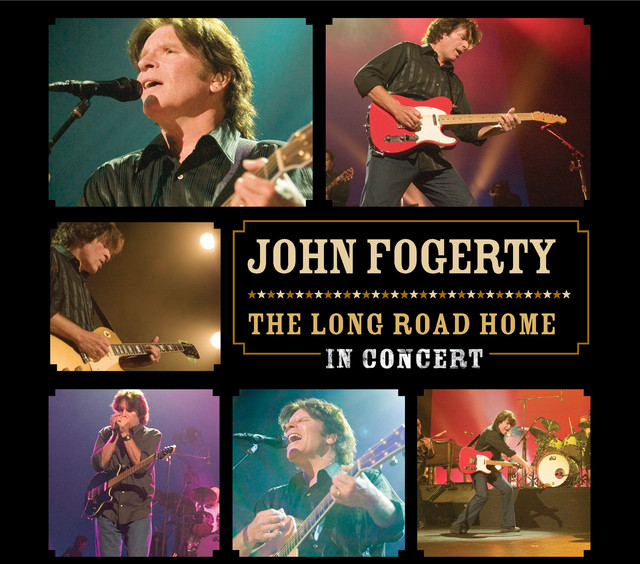
The Long Road Home - In Concert
2006
Revival
2007
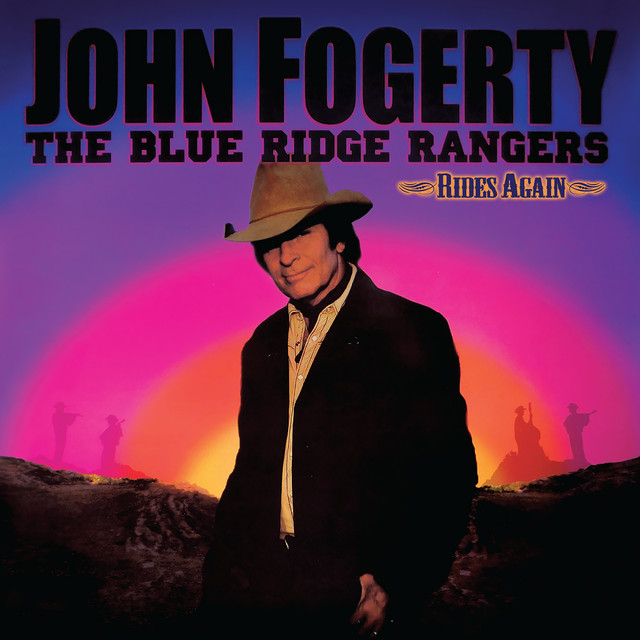
The Blue Ridge Rangers Rides Again
2009

Wrote A Song For Everyone
2013
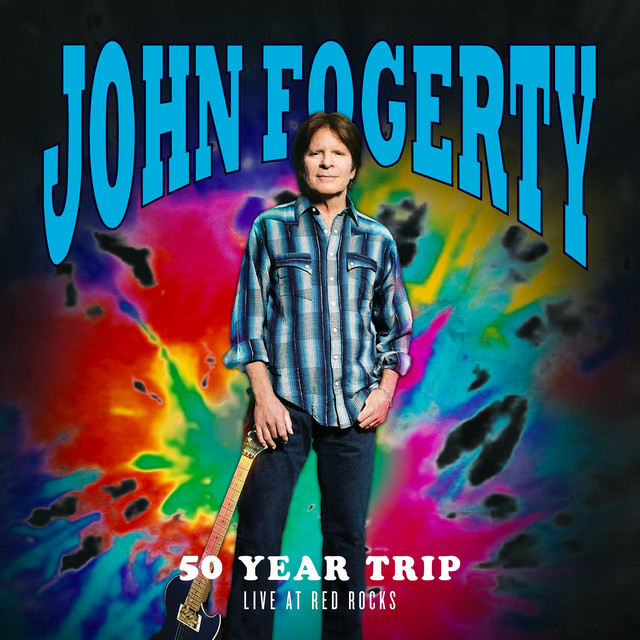
50 Year Trip: Live at Red Rocks
2019
Album Credits
-
John Fogerty · 2021
Mixing Engineer Producer -
John Fogerty · 2021
Producer -
John Fogerty · 2020
Producer -
50 Year Trip: Live at Red Rocks
John Fogerty · 2019
Producer -
John Fogerty · 2013
Producer -
The Blue Ridge Rangers Rides Again
John Fogerty · 2009
Producer -
John Fogerty · 2007
Mixing Engineer Producer -
The Long Road Home - In Concert
John Fogerty · 2006
Mixing Engineer Producer -
John Fogerty · 2004
Producer -
John Fogerty · 1997
Producer -
John Fogerty · 1986
Producer -
John Fogerty · 1975
Producer




.webp)