Peter Buck
R.E.M. guitarist
Role
Genre
Group
Role
Genre
Group
Peter Buck's Gear


This image from a 2018 interview posted to KEXP's website shows Buck playing a TV yellow LP Jr model, with a cherry DC model on a stand behind him.
Find it on:


This image from a 2018 interview posted to KEXP's website shows Buck playing a TV yellow LP Jr model, with a cherry DC model on a stand behind him.
Find it on:


Peter Buck used an Ebow throughout his 31-year tenure with R.E.M., both live and in the studio. Peter can be seen using an Ebow at 2:57 of this 2004/05 live version of "Electron Blue" from the band's "Around the Sun" world tour.
Find it on:


Peter Buck frequently used the Guild F-412 acoustic guitar during the late 1980s. This is evident in the YouTube video titled "REM - Losing My Religion Acoustic #1" by heidigretel.
Find it on:

Line 6 DL4 can be seen in this picture of his board
Find it on:


Fulldrive 2 can be seen in this picture of his board
Find it on:

Peter Buck uses Dunlop Nylon Standard 0.73mm guitar picks, as mentioned in the Premier Guitar article "Joseph Arthur and Peter Buck: Hecho en Mexico."
Find it on:
-m.webp?v=1782480431)
Buck can be seen playing the guitar live with Joseph Arthur, as confirmed on Premier Guitar’s website. He has also used the guitar with R.E.M.
R.E.M.’s Peter Buck, shown here playing a Gretsch 6120
Find it on:

Katana pre-amp can bee seen in this image of his board
Find it on:

This image, posted to Satellite's Facebook page shows Buck rehearsing with his Coronet.
Find it on:

In this image taken from REM's appearance on 2003's AOL Sessions, Buck's then-current effects rig is shown housed in what appears to be a monitor cabinet. The footswitch for the Snarling Dog wah is visible in the middle of the board.
Find it on:
-m.webp?v=1783177207)
Peter Buck is listed as a user of the Mastery Bridge on the Mastery Bridge website.
Find it on:

V1 Fatboost can be seen in this image of his board
Find it on:

In this image taken from REM's appearance on 2003's AOL Sessions, Buck's then-current effects rig is shown housed in what appears to be a monitor cabinet. The footswitch for the UE400 is visible on the left side of the board.
At this website you can spot the UE400 and Peter's settings (https://guitarpeterbuck.wordpress.com/about/)
Find it on:

Used "for some overdubs" on Murmur, as recalled by producer Mitch Easter in this November 2009 Sound on Sound interview.
Standing on the left side of the studio, Peter Buck used Easter's own Ampeg, wide open without gobos and miked with an EV 635 or, for some overdubs, a compressed Neumann U47 FET.
Find it on:

Mentioned in this January 20, 2016 Reverb.com interview.
What about Mandolins? I assume you have a pretty large collection.
I've got a Flat Iron I've been using since '89; somebody gave me an Ovation; it's a really nice sounding mandolin; a 1936 Electro Mandolin Rickenbacker with a whammy bar. I'm not sure why you're supposed to have a whammy bar on a mandolin!
Find it on:

In this image, Buck is seen playing a Rickenbacker 4001.
Find it on:

On the official website of Placid Audio in the section Users, Peter Buck is on the list
Find it on:


Used for the guitar on Reckoning, as recalled by producer Mitch Easter in this February 1, 2009 Mix Online interview.
Buck’s beautiful guitar work, which so memorably opens “So. Central Rain,” was captured pretty dry, according to Easter, but did feature the effect of a Scholtz Rockman. “These days, that’s as uncool a piece of gear as you could possibly have,” Easter says with a laugh, “but it was so great for Pete Buck, especially back when he had that really clean tone. We would build up these guitar washes with different sounds. We would start with his amp, then do a direct box with some studio effect, and then we also used that Rockman a lot because it had that built-in, weird compressed sound that is really great for 12-strings or on top of one section.” Easter recalls primarily using Shure SM7 mics on guitars.
Find it on:

Used on Murmur, as recalled by producer Mitch Easter in this November 2009 Sound on Sound interview.
Standing on the left side of the studio, Peter Buck used Easter's own Ampeg, wide open without gobos and miked with an EV 635 or, for some overdubs, a compressed Neumann U47 FET.
Find it on:
-m.webp?v=1783164314)
Producer Mitch Easter's Danelectro sitar was used for the Chronic Town EP and Murmur, as recalled by Easter in R.E.M.'s Murmur (2005) by J. Niimi.
Easter brought along his white Fender Electric XII twelve-string guitar (a gift from his father when he turned thirteen; Peter Buck did not own an electric Rickenbacker twelve-string at this point, contrary to fan myth), as well as his trusty Danelectro electric sitar (which Buck had used in the Chronic Town session, most prominently on "Gardening at Night"). Easter's Electric XII can also be heard on many of Let's Active's early recordings.
Find it on:

Used to record the Chronic Town EP, as recalled by producer Mitch Easter in this November 2009 Sound on Sound interview.
"After buying all of this used equipment, the bare minimum you could make records with, I just started up shop. I didn't have any training or professional experience, but having already made tons of four‑track recordings at home on a TEAC 2340 with my friend Chris Stamey — using only an Echoplex and a TEAC device that would switch the four outputs to left, right or centre — I figured, 'Well what's the difference?' It really wasn't all that different. The four‑track had been fantastic in terms of learning how things worked, and I was right in figuring the pro stuff would be the same, except I had to start all over again because it was much more clean‑sounding. This great fur that the old four‑track had put on everything made it all hang together, and so now I had to re‑learn what I was doing.
"I had two 3M tape machines — a classic M56 two‑inch 16‑track and the equivalent M64 two‑track machine — along with a pair of ADS 810 monitors and a Quantum Audio board manufactured in California by one of the very few companies that were still making humble pro‑level consoles. It was a 12‑channel board with an eight‑channel sidecar, bolted together at the factory to custom order. With 20 inputs, 16 tracks of monitoring, three‑band EQ on every channel, a couple of aux sends and a couple of echo sends I thought I was really living. It was an unbelievable leap from anything I had ever used before. Everything worked pretty well and I also bought a couple thousand dollars of good microphones, the showpieces being two AKG 414s.
"Everything was learned as I went along. With the TEAC, Chris and I had originally put two microphones on the drums, which was a good introduction to moving the mics around until everything sounds good, and then later, when we had four or five microphones, we started messing around with individually recording more parts of the kit, and from that I learned a lot about just tuning the drums. The fact that we had no EQ and no nothing made us get the sounds totally with drum tone and mic placement.”
Find it on:

Used to record Murmur and Reckoning, as recalled by producers Mitch Easter and Don Dixon.
Mix Online, February 1, 2009
Reflection certainly had plenty of tracks to offer. Easter recalls that studio owner Wayne Jernigan was also a pro audio dealer at that time and, in particular, an MCI rep. So the main recording gear at the studio included MCI JH24 and JH110 tape machines, and an MCI JH600 console.
(...) Recording to the JH-24 machine at 30 ips, Dixon and Easter tracked every song live, with the other three (gobo’d) bandmembers arranged around Berry’s kit in the main room, though Stipe’s vocals and some guitar solos would be replaced later.
When the band signed to IRS Records, the label insisted that they record in a 'proper studio,' which to them meant a studio with a 24-track tape machine. I only had 16. So we went to this place called Reflection, which was this really nice studio in Charlotte, North Carolina. Reflection had an MCI 600 console, an MCI JH24 tape machine, and a lot of great microphones.
Find it on:

The specifications of a custom string set "w[ere] posted to the alt.guitar.rickenbacker Newsgroup in April 1999", as reported and preserved by RickResource. "Nickel Steel Electric" is also listed on REM's official Dean Markley artist page from 2005, while a heavy gauge is noted by REM bandmate Mike Mills in a Bass Player interview published to Guitar World's website on November 11, 2023.
RickResource
There was a question awhile back about what type and gauge strings Peter Buck uses on his Rickenbacker 360 Jetglo. This response was posted to the alt.guitar.rickenbacker Newsgroup in April 1999. It's a rather heavy set consisting of:
1st - .013 Plain- Swedish Steel
2nd - .017 Plain- Swedish Steel
3rd - .026 Wound- Nickel Steel
4th - .036 Wound- Nickel Steel
5th - .046 Wound- Nickel Steel
6th - .056 Wound- Nickel Steel
These are Dean Markley individual strings. His guitar was at the factory so that he could have a new instrument set up exactly like his old one, using the string set listed above.
Dean Markley Artist Page
REM uses Nickel Steel Bass Med. Lt, Nickel Steel Electric, and Vintage Bronze Med. Lt.
Karl Coryat, "'Early on I discovered that the bass player decides the chord – not the guitar player': R.E.M.’s Mike Mills on finding the perfect bass part and becoming a 'one-bass guy'", Bass Player via Guitar World, November 21, 2023
When you play guitar do you think of Peter's style?
“I try not to, because that would defeat the purpose. For one thing, he uses very heavy guitar strings, which I can't really handle. I could never even begin to play like Peter, so there's no point in trying – although his guitar playing has influenced mine to an extent. It’s more subconscious than conscious.”
Find it on:

In this image of Buck's pedalboard from the later REM days, an AD-900 unit is visible in the middle of the first row.
Find it on:

In this pic you can spot two Avalon U5's next to the Vox amp (underneath the Ibanez effects)
Find it on:



In this pic you can spot the Voodoo Vibe
From this website: https://guitarpeterbuck.wordpress.com/about/
Find it on:

In this tweet from @LoneLadyHQ the FB-2 is clearly seen on Peter Buck's minimalist pedal board, along with his faithful RAT, Tuner, and a Phase 90
Find it on:

In this tweet from @LoneLadyHQ the Boss TU-2 is clearly seen on Peter Buck's four pedal board, along with his faithful Proco RAT, an FB-2 Feedbacker Booster and a Phase 90.
Find it on:
This is a community-built gear list for Peter Buck.
- Find relevant music gear like Guitars, Amplifiers, Effects Pedals, and other instruments and add it to Peter Buck.
- The best places to look for gear usage are typically on the artist's social media, YouTube, live performance images, and interviews.
- To receive email updates when Peter Buck is seen with new gear, follow the artist.
Discography

Rondo Violoncello (Live)
1997
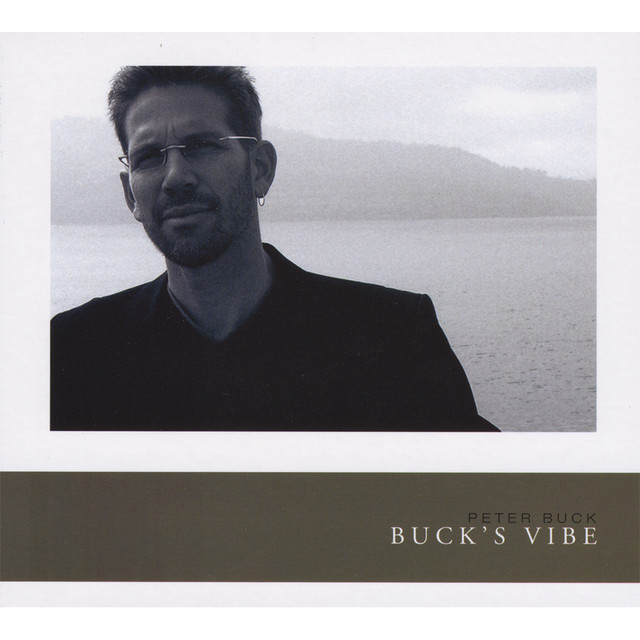
Buck's Vibe
2008

Brahms: String Quintet No. 1 & String Sextet No. 2
2008

Brahms: String Sextet No. 1, Op. 18 & String Quintet No. 2, Op. 111
2009

Buck's Vibe 2
2011

Beat Poetry For Survivalists
2020

All The Kids Are Super Bummed Out
2022

Going Down To The River... To Blow My Mind
2025

Arthur Buck 2
2025
Album Credits
-
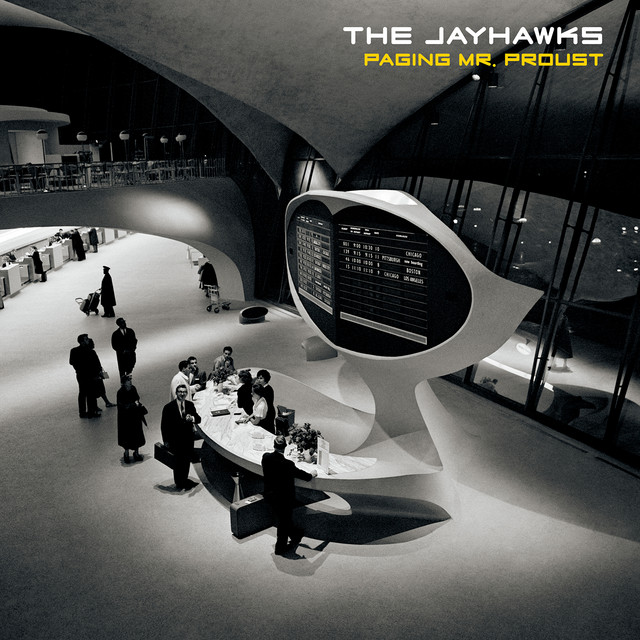
Jayhawks · 2016
Producer -

Jayhawks · 2016
Producer -

Alejandro Escovedo · 2016
Producer -
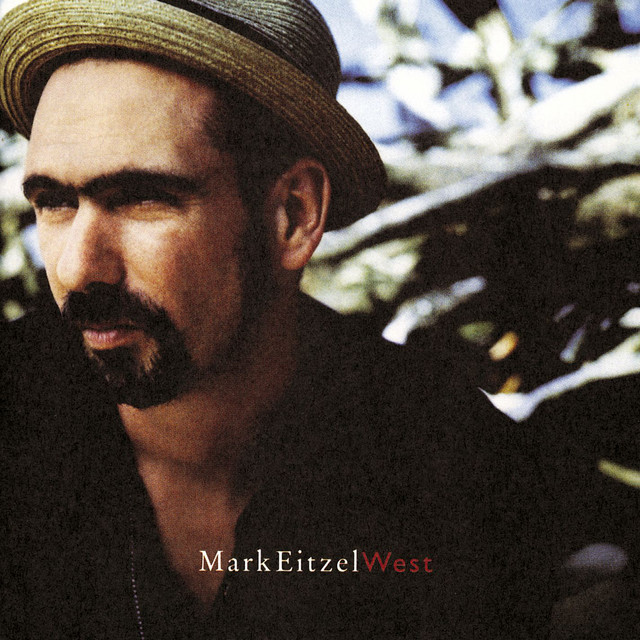
Mark Eitzel · 1997
Producer -

Nanci Griffith · 1994
Producer -

Uncle Tupelo · 1992
Producer