
Pricing and availability




* Product prices and availability are updated by Equipboard every 24hrs and are subject to change. Equipboard may receive compensation for purchases made at participating retailers linked on this site. This compensation does not affect what products or prices are displayed, or the order of prices listed. For more information, please refer to our affiliate disclosure.
Description
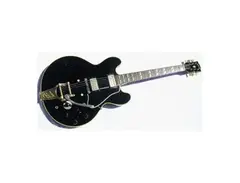
Step back in time with the iconic 1963 Gibson ES-345, a seminal piece of music history that continues to captivate musicians and collectors alike. This semi-hollowbody electric guitar is renowned for its stereo output capability, delivering a versatile range of tones that can accommodate any musical genre. The ES-345's craftsmanship is a testament to Gibson's legendary quality, featuring a laminated maple body that offers a warm, resonant sound, beautifully balancing depth and clarity.
The guitar's rosewood fingerboard is adorned with split parallelogram inlays, providing a distinctive aesthetic that complements its rich tonal palette. Equipped with two original humbucker pickups, the ES-345 produces a smooth, creamy sound with excellent sustain, making it a favorite among blues and jazz guitarists. The inclusion of a Varitone switch adds another layer of tonal possibilities, allowing players to explore a variety of soundscapes with ease.
Whether you're an experienced musician or a passionate collector, the 1963 Gibson ES-345 offers a unique blend of vintage charm and modern playability, ensuring it remains a cherished addition to any guitar arsenal.
Key Features:
- Semi-hollowbody design with laminated maple top, back, and sides
- Rosewood fingerboard with split parallelogram inlays
- Two original humbucker pickups for rich, creamy tones
- Stereo output for versatile sound possibilities
- Varitone switch for expanded tonal options
- Classic Gibson craftsmanship and design
Product specs
| Brand | Gibson |
| Model | ES-345TD |
| Finish | Cherry, Natural, Sunburst |
| Year | 1960 - 1964 |
| Made In | United States |
| Categories | Semi-Hollowbody Electric Guitars |
| Body Material | Maple |
| Body Shape | Double Cutaway |
| Body Type | Semi-Hollow Body |
| Bridge/Tailpiece Type | Stop-Bar |
| Color Family | Brown, Red, Tan |
| Finish Pattern | Sunburst |
| Finish Style | Gloss |
| Fretboard Material | Rosewood |
| Model Family | Gibson ES-345 |
| Model Sub-Family | Gibson ES-345 TD |
| Neck Construction | Set-Neck |
| Neck Material | Mahogany |
| Number of Frets | 22 |
| Number of Strings | 6-String |
| Pickup Configuration | HH |
| Right / Left Handed | Right Handed |
| Scale Length | 24.75" |
| Wood Top Style | Plain |
FAQs
-
What is the neck profile of the 1963 Gibson ES-345 Black?
-
The 1963 Gibson ES-345 Black typically features a comfortable medium C-shaped neck profile, which is well-suited for both rhythm and lead playing, offering a balanced feel that appeals to many guitarists.
-
What kind of tones can I expect from the pickups on the 1963 Gibson ES-345 Black?
-
The 1963 Gibson ES-345 Black is equipped with dual humbucking pickups, delivering a warm, rich tone with excellent sustain, making it versatile for genres ranging from blues and jazz to rock.
-
Is the 1963 Gibson ES-345 Black suitable for live performances?
-
Yes, the 1963 Gibson ES-345 Black is well-suited for live performances due to its semi-hollow body design, which provides a resonant sound and feedback control, ideal for stage use.
-
How does the 1963 Gibson ES-345 Black compare to the ES-335?
-
While both models share a similar semi-hollow body design, the ES-345 often includes a stereo output and a Varitone switch for more tonal options, offering greater versatility than the ES-335.
-
Does the 1963 Gibson ES-345 Black have a Varitone switch?
-
Yes, the 1963 Gibson ES-345 Black includes a Varitone switch, which allows players to access a range of tonal variations by altering the frequencies, making it a versatile choice for various styles.
Videos

Carter Vintage Guitars
1963 Gibson ES-345 played by Mike Seal
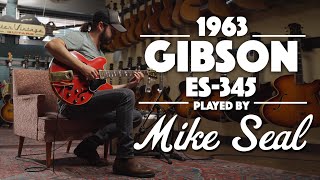
1963 Gibson ES-345 played by Mike Seal
Carter Vintage Guitars
Reviews
Owner Insights
We analyzed real musician discussions from forums and Reddit to find what players love, question, and tweak about Gibson 1963 ES-345.
Features and functionality
-
The T-type pickups excel in both clean and overdriven tones, particularly when blending volume and tone in the middle position.
Source -
The neck of the ES-345 is characterized as thick, similar in feel to a Standard '50s Les Paul, appealing to those who prefer substantial neck profiles.
Source -
The ES-345 features a rotary switch housing a stereo notch filter, not a stereo/mono switch, distinguishing it from other models.
Source
Comparisons
User experience
-
Initial impressions highlight the unique appeal of the split parallelogram inlays and chrome hardware, enhancing the guitar's aesthetic.
Source -
The guitar’s aesthetic is enhanced when paired with gold hardware, which complements the Dark Walnut finish beautifully, creating a visually striking combination.
Source -
Some owners report that premium guitars like this one are easier to play than cheaper beginner models, enhancing the learning experience.
Source
Build quality
Setup and maintenance
Mods and upgrades
-
Users suggest installing strap locks to prevent accidental drops, recommending plastic ones that don’t require drilling the guitar.
Source
Use cases and applications
-
A right angle cable is advised to prevent the top from cracking due to accidental pulls, highlighting the guitar's specific vulnerability.
Source
Critic Reviews
5.0 out of 5
Based on 1 Review and 1 Rating

16
1963 Gibson ES-345 Stereo (Ultra Rare Black)
1963 Gibson ES-345 Stereo in extremely rare factory black. 100% Authenticated.
Is this guitar for sale
Artist usage
Add artist

When it came to laying down the guitar parts, Barrie turned to his black 1963 Gibson ES-345 that’s also seen plenty of action in his other role as guitarist in Primal Scream, with whom he’s performed since 2006. “First, I wanted to use my old ES-330, but it’s a little bit noisy. The ES-345 isn’t as noisy and it’s kind of similar, so I just went for that one. I always wanted a black Gibson.
“I was out with a friend and we said, ‘let’s go and have a look in Chandler’s.’ We were having a conversation about how we bothhad too many guitars and shouldn’t buy any more, and I walked in and saw this and I was like, ‘oh fuck! I always wanted a black Gibson.’
“Apparently, the guy who owned it before had it for about 30 years. The black refinish has worn away off the back of the neck and you can see the sunburst on the corner of the body, but it meant that the guitar was affordable. It’s a ’63, so it’s transitional, but the bridge pickup is a PAF.”
Screen Shot 2015-07-29 at 09.28.47
Barrie “just cranked up the treble” on his custom-built JPF Regent 25 combo and plugged the guitar straight in, sans effects. It was a fortuitous decision, as drummer/engineer Virgil Howe – son of Yes guitarist Steve – recalls: “It was lucky we didn’t put reverb on. We used a Lexicon plugin, it’s really good. Then they asked for less reverb on the guitar, so it was a good thing we’d recorded it dry and were able to give them a version with less reverb, otherwise we’d have had to re-record it. It was really lucky.”
Screen Shot 2015-07-29 at 09.33.54 Screen Shot 2015-07-29 at 09.29.12
The guitar sound was captured by a Sennheiser MD421-II microphone that Virgil likes because he can “get a lot more bass out of it,” and although he acknowledges that their studio approach wasn’t exactly scientific, the band have learned a thing or two about getting great guitar sounds: “We just stuck the mic up against the grille, there were no measurements going on,” Virgil reveals.
“No ambient mics, it was just straight in. At the time, we were just demoing, so we weren’t paying that much mind to it, but I suppose over the years we’ve found it’s important to record things as well as possible at all stages. If you record it well enough, there’s going to be a use for it down the line somewhere.
“It’s nice, it’s kind of an epitaph for this place – recording something that’s been used on something that’s gone global. It’s a nice way to wave goodbye to the eight or nine years that we’ve been here. I was here before I joined Little Barrie, so it’s been a long time. Barrie’s always said that the guitars sound good in here, there’s something about it. It’s a bit dead for drums, but we’ve found our way around that…”
Room for manoeuvre “It’s really good for guitars,” Barrie agrees. “You just get a lot of weight out of the guitar, without being muddy.
“We’ve found ways to create more of a room sound, sometimes by using reverbs to treat the master mix rather than the individual parts to create the illusion that you’re all in the same space. That’s what we’re trying to do sometimes; trying to get as much performance as we can into the recording and not have things sounding too separate or too fractured.”
When it came to recording bassist Lewis Wharton’s parts, the band again leaned on Barrie’s JPF amplifier. “Everything was the same,” Barrie remembers. “I might not even have changed the setting on the amp, we just left it.”
Recording bass through electric guitar amps is, of course, nothing new. However, it’s a studio trick that is often overlooked these days in favour of the massive bottom-end offered by modern bass rigs, which is something that Barrie laments: “Classic bass players from the past, like Carol Kaye, used to play through Fender Concert amps with 10-inch speakers. 12s are great for bass, too. A friend of ours from Nottingham plays that plectrum-style with flatwound strings, and he uses a Fender Twin a lot for recording.
“We’ve also used slapback echo on bass. There’s a lot of extra frequencies in modern recordings, which for some styles of music seems quite unnecessary.
“For dance music and stuff, you want all that super-low bass, it’s part of it, and people want to hear that and feel that when they’re in a club; but it’s like sometimes when we are on tour, you get to a gig and they’ve got all these sub speakers under the stage, and if you are a guitar band you don’t need all that super-low frequency.
“We’ve found that with mixing as well; taking a lot of the super-low frequencies out of kick drums, guitars and bass guitars, because they’re kind of irrelevant for the sort of music that we’re doing.”
Screen Shot 2015-07-29 at 09.36.16
Lo-fi fans It’s clear that Little Barrie are a band who aren’t afraid to use lo-fidelity equipment in pursuit of a sound that excites them. Given Barrie’s earlier comments about his four-track sounding better than GarageBand and the fact that the band routinely use a Tascam Porta 02 that was a £40 eBay score as a preamp on one of the mics when recording drums, we delve further into his love of tape.
“Cassette’s got a sound,” Barrie insists. “It’s different to one- or two-inch analogue multitrack tape, it’s got a thing of its own. I really love the cassette sound. It’s the old Keith Richards thing, the old Phillips cassette recorder on Street Fighting Man. When you haven’t got the luxury of lots of equipment, you try to find ways to create sounds that are more interesting.
“We’ve got a little amp that’s covered in paint, a little transistor thing; it’s great with fuzzboxes. It’s a Peavey amp that someone’s used as a painting stool while they were decorating. But with fuzzboxes it’s really dry, like a buzzsaw.
“We’ve even done bass through it. You can end up with absolute paralysis in the studio – you can EQ your guitar in an infinite number of ways. But if you think, ‘all we’ve got is this’, you start to work within that and you start to think, ‘well how much can we get out of this?’ Rather than, ‘let’s try plugin number 72’, you know?”
So how does it feel for the band, knowing that the recording they made within limitations in a small North London studio is now, thanks to the limitless viral potential of the internet, being appreciated worldwide? “It’s mad seeing all the little clips of people playing it on YouTube,” Barrie smiles.
“There’s even a big guy with a shaved head on the ukulele. It’s quite mad thinking there are people all around the world playing it.
We’ve had that with some of our other songs as well. There’s lots of people playing Surf Hell because it was on Rocksmith, the computer game.
“There was a guy from Minnesota with a cigarette in his mouth, and a tiny Japanese girl playing it on bass – the bass looked massive. I had a go on it on Rocksmith and I got a really low score because apparently I wasn’t playing it right!”
Visit Little Barrie’s official website for more.
Comments
0 comments
Tags: Interviews Related
Share1
DIY Workshop: Rift Amp Modifications Part 1
Test Pilots: Fender DeVille vs Bassbreaker
Interview: Johnny Marr – The melodic genius speaks to G&B
Orange Rocker 15 & 32 Review
Newsletter Sign-Up
Email address Subscribe
Repost montysguitars with repostappThank you theguitarmagazine for the kind words in the latest instalment of Guitar Classics You guys rock This editions a killer Who doesnt love a redstrat This fabulous fender is part of a stack of vintage guitar gear up for grabs at the next Gardiner Houlgate guitarauctions on March knowyourtone vintagefender candyapplered Heres another one for gibsunday featuring the excellent orangeamplifiers Rocker For plenty more where this came from subscribe to youtubecomtheguitarmagazine knowyourtone gibson orangeamps guitarvideo Happy gibsunday heres bernardbutlerofficial rocking out with an ES and lazyjprojects Jgibson es bernardbutler lazyj knowyourtone Coming soon from the makers of GB infopacked pages of guitar geek heaven knowyourtone guitar guitarmagazine Does your gibsonguitar LesPaul need tweaking Click the link in our profile for killer mods upgrades and tone tips knowyourtone guitar guitarandbassmagazine lespaulcustom gibsonlespaul gibson Repost chrisvinnicombe with repostappIts a tough job etc tworock stratocaster pardon Repost novoguitars with repostappGreat shot of a Sonic Blue Serus J from our good friends at theguitarmagazine sonicblue novoguitars dennisfano masterybridge Show us your pedal boards for a chance to be featured in Guitar Bass magazine using the hashtag readerboards This one belongs to Luke Wassell of OfKingsAndCaptains The March issue of GB is out now Including legendary instruments that changed rock history Read more via the link in our bio guitarandbass guitar tonefordays


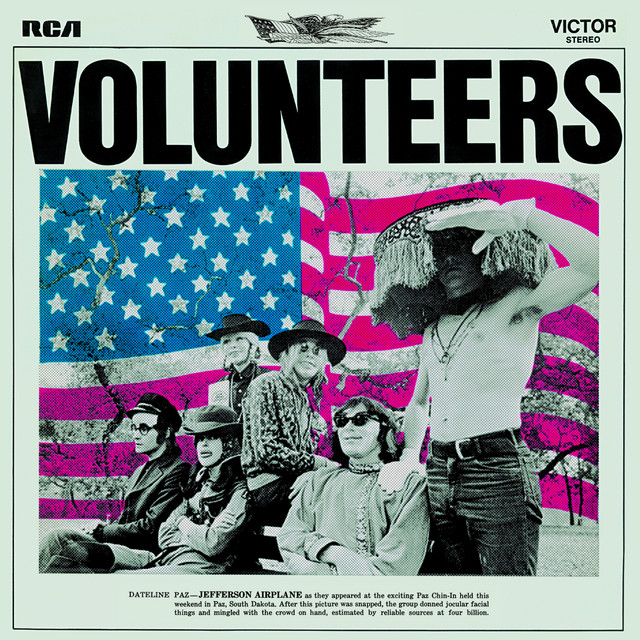
At Woodstock, Paul Kantner played the song volunters with a Gibson ES-345

Album Usage
The Gibson 1963 ES-345 has been featured on the following albums:
Genre Usage
Based on how artists on Equipboard use this gear, it is most commonly found in the following genres.
More Gibson Semi-Hollowbody Electric Guitars

$2,555.00 - $3,499.00
in Semi-Hollowbody Electric Guitars Rank


$1,829.49 - $2,999.00
in Semi-Hollowbody Electric Guitars Rank


$2,555.00 - $3,499.00
in Semi-Hollowbody Electric Guitars Rank


-m.webp?v=1784905291)
$2,869.00 - $3,499.00
in Semi-Hollowbody Electric Guitars Rank


$1,499.99
in Semi-Hollowbody Electric Guitars Rank

-m.webp?v=1784905149)
$2,938.00 - $3,799.00
in Semi-Hollowbody Electric Guitars Rank
.png?v=1784874534)


$4,999.39 - $6,499.00
in Semi-Hollowbody Electric Guitars Rank


$2,800.00 - $3,499.00
in Semi-Hollowbody Electric Guitars Rank
.jpg?v=1784890825)

-m.webp?v=1784905097)
$3,250.00
in Semi-Hollowbody Electric Guitars Rank


$3,499.00 - $7,999.00
in Semi-Hollowbody Electric Guitars Rank


$2,750.00
in Semi-Hollowbody Electric Guitars Rank


$2,149.00 - $2,999.00
in Semi-Hollowbody Electric Guitars Rank


$1,599.00
in Semi-Hollowbody Electric Guitars Rank


$2,299.00 - $4,834.20
in Semi-Hollowbody Electric Guitars Rank


$2,742.18 - $3,999.00
in Semi-Hollowbody Electric Guitars Rank


-m.webp?v=1784332934)
$2,400.00
in Semi-Hollowbody Electric Guitars Rank


$1,750.00
in Semi-Hollowbody Electric Guitars Rank


$8,577.21
in Semi-Hollowbody Electric Guitars Rank


$1,649.00
in Semi-Hollowbody Electric Guitars Rank


$2,000.00
in Semi-Hollowbody Electric Guitars Rank


$2,299.00 - $5,752.20
in Semi-Hollowbody Electric Guitars Rank


$2,299.00 - $4,834.20
in Semi-Hollowbody Electric Guitars Rank
.jpg?v=1784863480)


$1,900.00
in Semi-Hollowbody Electric Guitars Rank


$1,599.00
in Semi-Hollowbody Electric Guitars Rank


$2,591.39
in Semi-Hollowbody Electric Guitars Rank


$1,829.49 - $5,640.17


$1,750.00


$2,415.93 - $4,844.00


$2,938.00 - $4,400.00


$3,250.00


$2,687.00 - $52,000.00


Accessories & Related Items


Community setups


Similar


Gear Guides






Most Popular Semi-Hollowbody Electric Guitars
Most Popular Brands
-
Added to Equipboard on by
 elia_tele
GearIQ 178
-


