This page about Digidesign Digirack EQ III is a stub. You can help improve it:


Pricing and availability


* Product prices and availability are updated by Equipboard every 24hrs and are subject to change. Equipboard may receive compensation for purchases made at participating retailers linked on this site. This compensation does not affect what products or prices are displayed, or the order of prices listed. For more information, please refer to our affiliate disclosure.
Description
Unlock the full potential of your sound with the Digidesign Digirack EQ III, a versatile 7-band parametric EQ plugin designed to meet the demands of professional audio engineers and musicians alike. Known for its precision and clarity, this plugin integrates seamlessly with Pro Tools, offering unparalleled control over your audio frequencies. Whether you're fine-tuning a live recording or crafting the perfect mix in the studio, Digirack EQ III provides a comprehensive suite of features that allow you to sculpt your sound with surgical accuracy.
This EQ plugin is engineered to deliver high-quality audio processing, ensuring that your tracks maintain their integrity and depth. With a user-friendly interface, Digirack EQ III makes it easy to navigate between bands, adjust gain, and tweak frequencies, providing you with the tools you need to shape your sound effortlessly. Experience the difference in your mixes as this plugin enhances clarity and brings out the best in your recordings.
Perfect for both beginners and seasoned professionals, Digidesign Digirack EQ III adapts to your workflow with its intuitive design and responsive controls. Its compatibility with multiple sample rates and formats makes it a versatile choice for any project, big or small.
Key Features:
- 7-band parametric EQ for precise sound shaping
- Seamless integration with Pro Tools software
- User-friendly interface for easy navigation and control
- High-quality audio processing for maintaining sound integrity
- Compatible with various sample rates and formats
- Designed for both live and studio environments
Videos

The CTRL Room
AVID DigiRack EQ III vs WAVES Q8 EQ
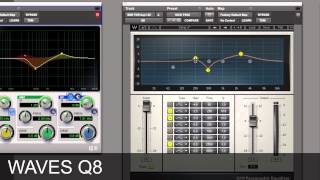
AVID DigiRack EQ III vs WAVES Q8 EQ
The CTRL Room
Reviews
Critic Reviews
Based on 0 Reviews and 0 Ratings
Artist usage
Add artist

Used for No Line On the Horizon, particularly "Get On Your Boots".
The Edge's guitar sound is usually shaped through pedals rather than at the mixing stage. An exception was the 'James Bond guitar' part, which was radically thinned with EQ.
An image of the settings can be found here.


Used on Lamar's vocals for "All the Stars" as stated by producer Matt Schaeffer in this May 2018 Sound on Sound interview.
Kendrick Lamar’s vocal audio tracks, named after his teenage stage name K.Dot, consist of his first verse rap track, ‘VS 1 LD’, and 10 tracks for three moments in the track where he sings the pre-hook in a robotic voice. The verse rap track only has the AIR Flanger on it, and is sent to the ‘Dot VS LD’ aux track, which has eight inserts and five sends. Nine of the 10 pre-hook tracks have Auto?Tune, while the top four have a number of plug-ins on the inserts, including the EQ3 seven-band, Waves RVox, UAD Galaxy Tape Echo, SoundToys Little AlterBoy, SoundToys MicroShift and Valhalla Vintage Verb. These four are sent to a ‘Hook Ref’ aux track higher up in the session with another four plug-ins on the inserts and five sends. The other six are backing vocals to the four other pre-hook tracks and have no other plug-ins, other than a Trim, and are sent to a ‘Hook Background’ aux, just below them, which itself also is sent to the ‘Hoof Ref’ track. It’s a pretty complicated vocal signal chain, as Schaeffer admits.
“The ‘Dot VS LD’ aux indeed has a lot of stuff on it! I did most of the processing on that bus. On the inserts there are the SSL E-Channel, Waves RComp, Waves Q10 EQ, Waves DeEsser, UAD LA2A, UAD Pultec EQP1A, SoundToys Decapitator and Pro?Q2. The SSL channel strip, Q10 and RCompressor remain from the tracking, and maybe the DeEsser as well, but I most likely messed with the settings more during mixing. The Q10 has a high-pass at 50Hz and I notched out a frequency that was bothering me around 8.5kHz with the Q2. I added the other plug-ins during mixing, and they all add something a bit different. I’m boosting 100Hz and 16kHz with the EQP1A. As I said, I like using several EQs on one thing.
“The sends go to a ‘FlangeVerb’ track, on which I put the RVerb and the UAD MXR Flanger, then the ‘Huge Verb’ with the [Audio Ease] Altiverb and EQ3, ‘Hook Valhalla’ with the Vintage Verb, and the SoundToys EchoBoy, the ‘EMT250’ aux with the UAD EMT250, Valhalla Plate and MicroShift, and then finally a send to the ‘Dot VS Delay’ track, with the EchoBoy, set to quarter note, the Reel Tape Flanger and the RCompressor. The EchoBoy is the main delay you can hear in the verse. The EMT250 is not set to a reverb, but to a phaser effect, which gives a cool stereo effect. The Valhalla adds a bit of reverb here, though it’s set to -12, so it only gives a tiny bit of ambience, and the MicroShift makes the whole thing a little wider. It probably still sounded a bit dry, which is why I sent the track to the ‘Huge Verb’ aux with the Altiverb, again taking out low end with the EQ3.
“In the pre-hook, Kendrick wanted that robotic sound with tons of effects. The main robotic effect comes from the iZotope VocalSynth, which gives it a vocoder-like sound. There also are some instances of the Little AlterBoy on the lead vocals in the pre-hook, with some formant adjusting and pitch-shifting. I think one of them is set to +12, so that’s an octave up, and another has a lower formant so it sounds pitched down, even though it remains in the same key. All that adds up to make the vocals sound robotic.”
Adding all inserts on audio and aux tracks together, Lamar’s verse rap is treated with a whopping 22 plug-ins! The ‘Hook Background’ aux, meanwhile, has the EQ3 seven-band, RCompressor, SoundToys Panman, a chorus, the MicroShift, the UAD MXR Flanger and the Valhalla Plate on the inserts and has sends to an aux track with the Waves Kramer Tape plug-in as well as the aforementioned ‘Hook Valhalla’ aux with the Vintage Verb, and Echoboy, and it then is routed to the ‘Hook Ref’ track, which has another four inserts and five sends. Phew.

Used for No Line On the Horizon, particularly "Get On Your Boots".
Declan Gaffney's go-to processing for Adam Clayton's bass involves Digidesign's Digirack EQ, Cranesong's Phoenix Dark Essence (both top) and the Massey L2007 limiter (below). The Sansamp plug-in was used to dirty up the sound for four bars.
An image of the settings can be found here.

As stated by producer Declan Gaffney, the Digirack EQ III was used for "Get On Your Boots".
"There's also a seven-band Digirack EQ that notches out around 245Hz and adds some top end above 10k for some sparkle."
Based on images from the rest of the source, it is version three.


Used on "Apeshit", as stated by producer Stuart White in this September 2018 Sound on Sound interview.
The first four aux tracks feature SoundToys effects, namely Little Microshift, two EchoBoy delays, and a delay from the Little PrimalTap. Next are a Hall Reverb aux and a Church Reverb aux, both using Waves’ RVerb, an EMT plate from Audio Ease’s Altiverb, four aux tracks with the Waves H-Delay and various other plug-ins on them as well, and four more reverb auxes with the Avid Revibe II, two Avid D-Verbs and another RVerb.
White: “I use the Little Microshift in pretty much every mix, with the left-right micro pitch-shift effect that’s similar to the classic effect in the Eventide H3000 shift where you pitch one side down six cents and one side up six cents to create width. It’s a good way to get your vocals wider without them being out of phase. It thickens up vocals, and is kind of like a doubler. I do quite a lot of filtering on some of the EchoBoy delays, for example with the Waves REQ, and I am adding colour with the SoundToys Devil-Loc, which is great if you want to colour the delay so it is separate from the main vocal, and compress it with the UAD LA3A and mix that in to taste.”
(...) Beyoncé’s lead vocal tracks consist of three aux tracks, four ‘dirty’ and eight ‘clean’ audio tracks. The audio tracks only have the EQ3 on the inserts and a few of them have a send to the Church Reverb. All White’s processing is done on the three aux tracks. “All lead vocals are sent to the ‘B Aux’ track and the ‘B Parra Aux’ tracks. On the former I have the McDSP DS 555 de-esser. I use the Waves de-esser the most, but in this particular track, because I wanted to compress her voice really hard, I felt that the 555 would work the best. I am rolling off until 6144Hz into what it is detecting; it’s like a side-chain filter. The FabFilter Pro-DS is doing a little more gentle look-ahead de-essing.
“After that there’s some pretty heavy EQ from the EQ3, with a high-pass at 142Hz, a 9dB cut at 244Hz and a 2dB cut at 3kHz. My cut at 244Hz is because she is singing in this husky, low voice, so there’s not a lot of energy in that. I get the energy from the RComp compression, and the EQs, including from the SSL E-Channel, are there to make her sit in the track, rather than making it sound filtered. I love the RComp, mainly because it doesn’t sound like compression to me. The SSL E-Channel adds a bit more compression, and the [Crane Song] Phoenix II Tape Emulation is really cool because while it doesn’t actually sound like tape, it smoothes out transients in a signal just like much analogue equipment does. It enables me to get a fatter vocal sound that again makes the vocal sit in the mix. The final EQ3 has a notch at 3.2kHz to take out some harshness. I also have sends to the Verb aux track, which are the D-Verb and [Waves] H-Reverb, and the Delay 1-4 aux, with the EchoBoy.
The other aux track, ‘B Parra Aux’, is a parallel compression track, with the RCompressor and the CLA 76, which I mixed in low. Both these aux tracks then go to the ‘LD ALL Aux’, on which I’m doing some more surgery with the McDSP AE400 [dynamic EQ], which allows you to set a threshold, just like on a compressor. It’s like turning a volume knob down on a frequency the moment it gets out of control. Finally, there’s the Waves C4, for some control, to keep the vocal even. This track has a lot of energy, so this is an example of using compression for energy, mood and attitude. I also worked a long time to get the compression on Bey’s breaths to pump on the beat. I wanted her breaths to be another percussive element in the track, and getting the attack and release on the compressor right was key to getting that feel and pumping effect.”
Five of the 22 Beyoncé ad lib, backing and harmony vocals below her lead vocals also go to the above-mentioned aux tracks, while the rest have their own signal chains. These audio tracks are sent to several aux tracks, often with tons of plug-ins, and all aux vocal tracks in the end get sent to the ‘Voc All’ group aux right at the top of the session, which has an RCompressor, with ratio at 10:1. There are more group aux tracks, like ‘TrackAux’, ‘FX Voc Aux’, ‘FX’ and ‘Music Aux’, which all get sent to the ‘All Aux’. This in turn gets sent to the ‘no limiter’ mix print track, and finally there’s a Stereo Master track.


Rihanna uses the Digidesign Digirack EQ III, as confirmed by her engineer, who stated, "The Digirack EQIII is a very simple and helpful plug-in. It's seen working here on a sound called 'Zap', which is a space raygun kind of synth sound that had a bottom end that got in the way a little bit." (Source: Soundonsound, Inside Track: Rihanna 'SOS' & 'Unfaithful')

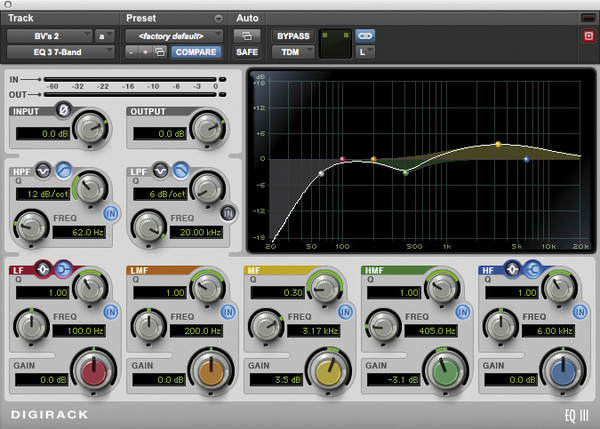
Used for the backing vocals on "Rolling in the Deep", as stated by mix engineer Tom Elmhirst in this September 2011 Sound on Sound interview. An image of the settings for "BV's 2" (the second backing vocals track) can be found here.
Vocals: Waves Q6 & De‑esser, Digirack EQIII, Lo‑Fi & Trim, Pultec EQ, Urei 1176, Tube‑Tech CL1B, various spring reverbs and delays.
"I had the Q6 on the chorus vocal, notching out 930, 1634 and 3175 Hz very, very heavily: ‑18dB, ‑18dB and ‑12.1dB respectively, with very narrow Q. I also had the EQIII on the lead‑vocal sub, notching something out again. Something obviously needed to be taken out. The vocal is the most important thing in the track, and taking those frequencies out allowed me to keep it up front in the mix, particularly in the chorus. You can never account for what mic the vocals were recorded on, and whatever it is that bugs me, I can take it out. 'T' on the lead vocal bus is the [Massey] Tapehead plug‑in, which wasn't used, but I did use two Waves De‑essers, one taking out at 5449Hz and the other at 11004Hz. Rather than use one to try to cover all the sibilance I used two. I do that quite often.
"Regarding the outboard, I had the Pultec EQ, Urei 1176 and the Tube‑Tech CL1B on the lead vocal sub insert (desk channel 25). The Pultec boosted around 100Hz and 12k. It's colourful, but not drastic. There was not a lot of gain. The blackface Urei had fast attack and fast release, whereas the Tube‑Tech had slow attack and slow release, it was more evening out the level. You can use compression as an effect, but on the vocal you mainly want control. You want to set it up right so you're not constantly moving the channel fader to fit the vocal in the mix. If you're constantly moving the fader, rather than just doing the occasional ride, you know that you need to look at your compression. There's also Paul's Roland Space Echo track, which I used throughout, and which was the only lead vocal effect in the first chorus. On the backing vocals I had the Digirack Trim, again the Lo‑Fi, and the EQIII, cutting a bit around 405Hz and boosting a little around 3.17k. I used quite a few spring reverbs on the backing vocals, because I wanted them to have a lot more ambience. In the choruses I would also have added several delays. The delays make the backing vocals swing a bit, and they also fill up the space and make sure that they fit in the mix.”


Used on SZA's vocals for "All the Stars", as stated by producer Matt Schaeffer in this May 2018 Sound on Sound interview. An image of the settings can be found here.
There are 12 SZA vocal audio tracks in total: two for the main hook, one second verse lead track, and nine verse backing tracks, which in fact provide emphasis and overdubs of single words. All SZA audio tracks have the Antares Auto?Tune 8.1 plug-in, the two hook tracks each also have the FabFilter Pro?Q2 equaliser, and the main SZA verse track also has a de-esser, while the backing vocals have two instances of the Waves RVerb and one of the same company’s H-Delay. Apart from Auto?Tune, most of the processing is done on the ‘SZA ?’ aux, to which all SZA audio tracks are sent.
Schaeffer: “The inserts of the sum track for SZA’s vocals consist of the EQ3 seven-band, Waves RComp, UAD Pultec EQP1A, UAD 1176E, Waves De-Esser, UAD LA2A, another Waves De-Esser, the Pro?Q2, yet another Waves De-Esser and the SoundToys MicroShift. The De-Essers affect 11400Hz, 15032Hz and 2000Hz respectively. I like stacking de-essers set to different frequencies. It works like narrow multiband compression. Sometimes I will in fact use a multiband compressor, like the Waves C4, but if the vocals have very specific harsh frequencies, I prefer to use several de-essers. They also are helpful as I like boosting high frequencies in vocals; here, the EQP1A boosts 16kHz. The EQ3 has a high-pass at 216Hz and cuts at 695Hz, and the Q2 lowers the high end to some degree. When a frequency bothers me, I usually sweep through [with a band set temporarily to boost] to find the frequency and then I cut. The MicroShift provides a little extra width and a slight ambience with the delay parameter, without actually making the vocal sound too stereo.
“The sends go to auxes called ‘SZA Verb’ and ‘DVerb’, both of which have the DVerb and EQ3 seven-band, two ‘SZA Delays’ with the Waves H-Delay, and the ‘SZA Chamber’, which has the Waves RVerb and again the EQ3 seven-band. I put an EQ after the reverb, because I don’t like too much low end in reverb. You get a cleaner sound by taking it out, and you make space for actual instruments to take up that spectrum. The delays are both set to eighth note, and one of them is set to ping-pong delay and also is automated to only come in on certain places.”

Used for Quavo and Offest's features on Beyoncé and Jay-Z's "Apeshit", as stated by producer Stuart White in this September 2018 Sound on Sound interview.
The first four aux tracks feature SoundToys effects, namely Little Microshift, two EchoBoy delays, and a delay from the Little PrimalTap. Next are a Hall Reverb aux and a Church Reverb aux, both using Waves’ RVerb, an EMT plate from Audio Ease’s Altiverb, four aux tracks with the Waves H-Delay and various other plug-ins on them as well, and four more reverb auxes with the Avid Revibe II, two Avid D-Verbs and another RVerb.
White: “I use the Little Microshift in pretty much every mix, with the left-right micro pitch-shift effect that’s similar to the classic effect in the Eventide H3000 shift where you pitch one side down six cents and one side up six cents to create width. It’s a good way to get your vocals wider without them being out of phase. It thickens up vocals, and is kind of like a doubler. I do quite a lot of filtering on some of the EchoBoy delays, for example with the Waves REQ, and I am adding colour with the SoundToys Devil-Loc, which is great if you want to colour the delay so it is separate from the main vocal, and compress it with the UAD LA3A and mix that in to taste.”
(...) “The Migos vocals came in as seven audio tracks, with the Avid D-Verb on each of them. Putting a D-Verb on a track before EQ is not something I normally do, but it sounded great. So I adjusted them a bit, but otherwise left them as they were. The tracks also came in with the Aux track above, and the EQ3, with a high pass at 60Hz and notches at 430Hz and 1.41kHz and a high boost, the Waves API 2500 compressor, the RComp, the Waves Q10 EQ, following a slightly similar curve to the EQ3, the Waves De-esser, the Waves Aphex Aural Exciter, and the Avid Dyn3 expander/gate. I added the EQ3, with another high-pass filter at 144Hz, and the RComp, with a ratio of 10:1.”


Used on Jean's vocals for Shakira's "Hips Don't Lie".

Used for Quavo and Offest's features on Beyoncé and Jay-Z's "Apeshit", as stated by producer Stuart White in this September 2018 Sound on Sound interview.
The first four aux tracks feature SoundToys effects, namely Little Microshift, two EchoBoy delays, and a delay from the Little PrimalTap. Next are a Hall Reverb aux and a Church Reverb aux, both using Waves’ RVerb, an EMT plate from Audio Ease’s Altiverb, four aux tracks with the Waves H-Delay and various other plug-ins on them as well, and four more reverb auxes with the Avid Revibe II, two Avid D-Verbs and another RVerb.
White: “I use the Little Microshift in pretty much every mix, with the left-right micro pitch-shift effect that’s similar to the classic effect in the Eventide H3000 shift where you pitch one side down six cents and one side up six cents to create width. It’s a good way to get your vocals wider without them being out of phase. It thickens up vocals, and is kind of like a doubler. I do quite a lot of filtering on some of the EchoBoy delays, for example with the Waves REQ, and I am adding colour with the SoundToys Devil-Loc, which is great if you want to colour the delay so it is separate from the main vocal, and compress it with the UAD LA3A and mix that in to taste.”
(...) “The Migos vocals came in as seven audio tracks, with the Avid D-Verb on each of them. Putting a D-Verb on a track before EQ is not something I normally do, but it sounded great. So I adjusted them a bit, but otherwise left them as they were. The tracks also came in with the Aux track above, and the EQ3, with a high pass at 60Hz and notches at 430Hz and 1.41kHz and a high boost, the Waves API 2500 compressor, the RComp, the Waves Q10 EQ, following a slightly similar curve to the EQ3, the Waves De-esser, the Waves Aphex Aural Exciter, and the Avid Dyn3 expander/gate. I added the EQ3, with another high-pass filter at 144Hz, and the RComp, with a ratio of 10:1.”
Album Usage
The Digidesign Digirack EQ III has been featured on the following albums:
Black Panther The Album Music From And Inspired By
Kendrick Lamar & SZA (2018)
All The Stars (with SZA)
Kendrick Lamar & SZA (2018)

Get Out Of Your Own Way
U2 (2017)
Rolling in the Deep
Adele (2011)
No Line On The Horizon
U2 (2009)
Unfaithful
Rihanna (2006)
![Digidesign Digirack EQ III as heard on SOS [Nevins Electrotek (Club)] by Rihanna (2006)](https://images.equipboard.com/uploads/album/image/293608/sos-nevins-electrotek-club.jpg)
SOS [Nevins Electrotek (Club)]
Rihanna (2006)
Genre Usage
Based on how artists on Equipboard use this gear, it is most commonly found in the following genres.
Used With
Based on how musicians on Equipboard use Digidesign Digirack EQ III, it is most commonly used with the following gear.


-s.webp?v=1784728913)


-s.webp?v=1784728936)
More Digidesign EQ Plugins


$169.00 - $199.00
in EQ Plugins Rank


$63.00 - $271.00
in EQ Plugins Rank


-m.webp?v=1784728942)
$37.00 - $39.99
in EQ Plugins Rank


$1,015.75 - $1,195.00
in EQ Plugins Rank


$34.99 - $49.99
in EQ Plugins Rank


$29.99 - $30.00
in EQ Plugins Rank


$24.50 - $49.00
in EQ Plugins Rank

$33.00 - $34.99
in EQ Plugins Rank


$33.00 - $34.99
in EQ Plugins Rank

.jpg?v=1784328016)


$80.00 - $99.00
in EQ Plugins Rank


$33.00 - $35.99
in EQ Plugins Rank


$34.99 - $85.00
in EQ Plugins Rank


$95.00 - $109.00
in EQ Plugins Rank


$33.00 - $34.99
in EQ Plugins Rank


$0.00
in EQ Plugins Rank


$33.00 - $35.99
in EQ Plugins Rank


$33.00 - $34.99
in EQ Plugins Rank


$39.00
in EQ Plugins Rank


$49.00 - $124.00
in EQ Plugins Rank

$39.00 - $49.00
in EQ Plugins Rank
.jpeg?v=1784574735)

$179.00 - $199.00
in EQ Plugins Rank

$33.00 - $34.99
in EQ Plugins Rank


$95.00 - $129.00
in EQ Plugins Rank

$29.99 - $30.00
in EQ Plugins Rank


$29.99 - $34.99
in EQ Plugins Rank


$0.00
in EQ Plugins Rank


$37.00
in EQ Plugins Rank


$22.00 - $99.00
in EQ Plugins Rank


$33.00 - $249.00
in EQ Plugins Rank

Community setups


Similar


Gear Guides





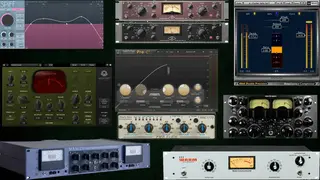
Most Popular EQ Plugins
Most Popular Brands
-
Added to Equipboard on by
 eyeseeofficial
GearIQ 161592
-


