This page about C-Lab Notator is a stub. You can help improve it:


Pricing and availability




* Product prices and availability are updated by Equipboard every 24hrs and are subject to change. Equipboard may receive compensation for purchases made at participating retailers linked on this site. This compensation does not affect what products or prices are displayed, or the order of prices listed. For more information, please refer to our affiliate disclosure.
Description
The C-Lab Notator is a classic audio sequencer revered by both vintage enthusiasts and modern DJs for its robust functionality and innovative design. Originally introduced in the late 80s, this sequencer became a staple in music production, offering a comprehensive range of features that cater to both live performances and studio environments. At its core, the Notator provides a user-friendly interface that allows musicians to effortlessly compose, arrange, and edit complex musical sequences.
One of its standout features is the powerful MIDI compatibility, which enables seamless integration with various MIDI-equipped instruments and devices. This allows for an incredibly versatile setup, whether you're syncing up multiple synthesizers or incorporating digital audio workstations. The C-Lab Notator also boasts a highly intuitive scoring interface, enabling precise notation editing and efficient management of multi-track compositions.
Designed with a focus on flexibility, the Notator supports extensive track and pattern manipulation, making it easy to experiment with different musical ideas. Its real-time recording capability ensures that you capture every nuance of your performance with precision. Perfect for the studio or the stage, the C-Lab Notator combines vintage charm with modern adaptability, making it an ideal choice for musicians seeking a reliable and comprehensive sequencer.
Key Features:
- Powerful MIDI compatibility for versatile setups
- Intuitive scoring interface for precise notation editing
- Supports extensive track and pattern manipulation
- Real-time recording capability
- Comprehensive range of features for both live and studio use
Videos

Architecture
Detroit Techno Atari ST 1040 Notator Action.
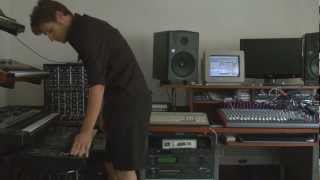
Detroit Techno Atari ST 1040 Notator Action.
Architecture
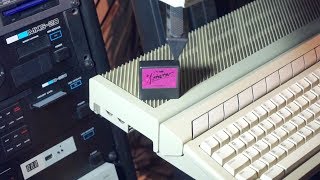
Atari 1040ST & Notator Sequencer | The Perfect Combo | Tutorial & Workflow |

Espen Kraft
Reviews
Owner Insights
We analyzed real musician discussions from forums and Reddit to find what players love, question, and tweak about C-Lab Notator.
Software and compatibility
-
Atari ST's MIDI ports are directly connected to the processor, offering superior timing compared to modern USB MIDI interfaces which have latency issues.
Source -
The C-Lab Notator was initially run on an Atari 1024, with the operating system and program loaded from separate floppy disks.
Source -
Despite its age, Performer 4 files can still open seamlessly in the latest Digital Performer software, showcasing impressive backward compatibility not shared by Cubase.
Source
Features and functionality
-
C-Lab Notator's interface allows right and left clicking to adjust values, a feature some users miss after switching to other software.
Source
Build quality
-
Owners mention discoloration over time, requiring retro-brite treatment to restore the original look of the Atari ST casing.
Source
Comparisons
-
Piano roll sequencers like C-Lab Notator have remained largely unchanged for 30 years and offer a less bloated experience compared to modern software.
Source -
Notator Logic on the Atari STe was a step up from its predecessor, offering more advanced features than earlier versions like Emagic’s Pro24.
Source
Use cases and applications
-
Notator was used in professional studios for creating backing tracks quickly, eliminating the need for session musicians during commercial and demo recordings.
Source
Critic Reviews
5.0 out of 5
Based on 0 Reviews and 1 Rating
Artist usage
Add artist

De Vries first cut his programming teeth on an Roland MSQ700, and then moved on to the Atari, initially running Hybrid Arts' Midi Track software, and then C‑Lab's Notator. A few years ago he finally switched to Macintosh and Digidesign, on which he still runs C‑Lab/Emagic software, namely Logic Audio: "I was quite slow switching from the Atari to the Mac, because I had experiences of working alongside people with Macs that appeared to be crashing all the time. But things are a lot better now, and I am really happy with my Macintosh, although admittedly the timing could be better on it. The timing of the Atari was probably more stable, but then, are you going to spend your whole life worrying about the fact that there is a millisecond delay on the bass drum, or are you going to listen to the music and try to make that sound good? The '80s ethic seemed very much to make sure that everything was very precise and glued to a grid, but there's room for things to be much sloppier now, and better for it."

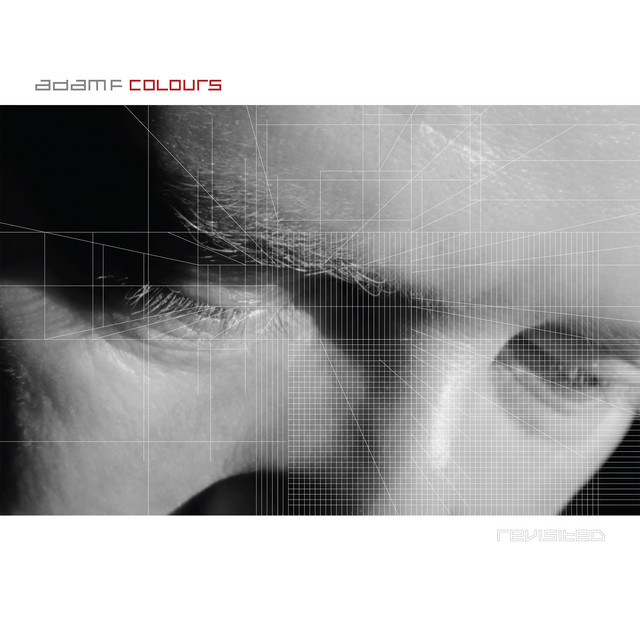
In the video titled "Adam F on how he made ‘90s classic Colours… and why he’s re-recording it for 2025 - In the studio" by MusicRadar Tech, at 0:51, Adam F mentions using C-Lab Notator software on his Atari ST computer.


“As a limited-ability musician, it’s enabled me to get ideas down relatively quickly. That said, they’ve driven me mad over the three or four decades I’ve tried to use them. They are always right. Initially with the UMI, it was all step-time inputting.
"Eventually I moved on to an Atari with the E-magic Notator. Then the early Logic programs on PC, integrating it with the Soundscape digital recorder, which was fab for film work. Then later and up until now I’ve used a Mac with Logic Pro and Ableton.”


Most of the album was recorded and mixed in Brook's flat, the guitarist having turned a spacious living room into a home studio centred around a 24-channel Allen & Heath Sabre mixing desk and a Fostex E16 multitrack, with monitoring via Yamaha NS1000s. Along with footpedals and rack-mount effects units, the studio includes an Atari 1040ST, C-Lab's Notator software, a Digital Music MX8 MIDI patchbay, a Yamaha DX7 synth with TX802 synth module, a Roland R8M drum module and (recently-acquired) S770 sampler.


List of equipment at his studio:
KEYBOARDS F Kaim & Son grand piano Korg SG1D master keyboard
SAMPLERS Akai S1000HD Akai CD3000
SOUND MODULES Emu Proteus 1 Emu Proteus 2 Orchestral Emu Proteus 3XR World Emu Morpheus Sequential Circuits Prophet 2002
DRUM MACHINE Roland R8
COMPUTING & SOFTWARE Atari 1040ST Emagic Notator Time + Space sample CD‑ROMs
RECORDING Alesis ADAT (x5) Alesis BRC remote control Soundtracs Jade mixer Drawmer dual gate TC Electronic M5000 digital effects Lexicon PCM70 digital effects


The C-Lab Notator was Momus's main sequencing tool during the 1990s.

"I also have a regular old Atari running C-Lab Notator version 3.1, which is very common, very useful. When I'm sequencing I basically just go into record, put down a complete idea, and then go through and clean it up, and build it from there. I'm not supposed to be intelligent enough to use a computer, but I look at it this way: if they can work for me, they can work for anybody. It's not that I can't understand how to access all the programs, it's whether I want to. If I go too far, then I lose the playing side of it, which is the feeling that comes naturally to me. If I became an engineer in my free time, and spent so much time doing it that I stopped playing, then obviously I will have changed my abilities, and eventually it would make it harder for me to play - something you've got to keep doing."
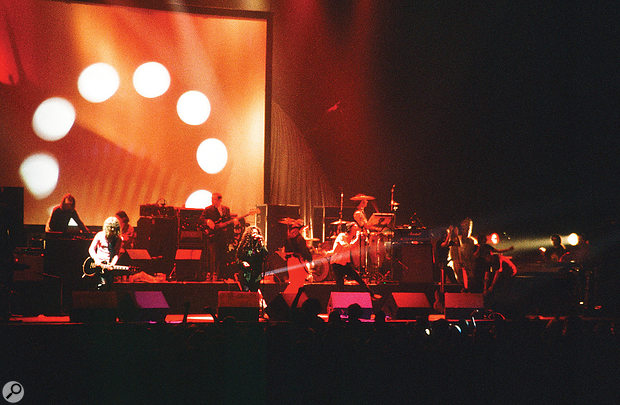
As was typical in the early ’90s, the sequencing setup was based around an Atari 1040 ST computer running C-Lab Notator, MIDI-triggering a bank of Akai S1000 samplers and a Korg M1 synth. Additionally, on a recent trip to Japan, Nicolson had bought himself an Akai MPC60 sequencer-sampler that was to prove central to the beats on ‘Come Together’, not least because when he worked with US producer Jeff Lorber on sessions for UK boy band Brother Beyond in 1989, he had managed to come away with a library of drum samples.
“There was this timbale that I used on every single remix, which became a bit of signature,” Nicolson remembers. “I had all these pretty cool samples to use. They weren’t just 909 and 808. I had quite a good library, so the MPC was really helping me with a good base of sounds to work with.”

David's a Mac user, running Emagic's Logic Platinum sequencer on a G3 266 computer. He graduated to Mac Logic in the same way as many musicians — via Notator on the Atari — and still has a lingering fondness for a program that progress tells us is outdated. "I adored Notator. Now I'm reasonably quick with Logic, but I don't think its front window is as good. They felt they had to follow the Cubase line, and I think that was a mistake."

"I worked as an employee twice for Elite, the 1st time 1985-1986 and the 2nd time around 1989-1990. The 1st time I was removed as an employee and taken on as a freelance musician earning a fixed fee per project, this cost them less but gave me the freedom to work for other people as well. I was taken on again in 1989 or there abouts, and things were much better, they got me some decent kit including an AKAI S950 sampler and a Korg M1 keyboard a long with Notator on the Atari ST. I produced music for Amiga, PC, Atari ST and NES machines. Later on Elite decided they were going to start publishing their own games and this required a lot of money. To this end they streamlined the company and made redundant a large portion of the staff, including me." - Mark Cooksey
Album Usage
The C-Lab Notator has been featured on the following albums:
Genre Usage
Based on how artists on Equipboard use this gear, it is most commonly found in the following genres.
Used With
Based on how musicians on Equipboard use C-Lab Notator, it is most commonly used with the following gear.


More C-Lab Audio Sequencers

$99.00 - $273.00
in Audio Sequencers Rank


$427.51 - $1,100.00
in Audio Sequencers Rank


$103.25 - $149.99
in Audio Sequencers Rank


$85.00 - $99.00
in Audio Sequencers Rank


$479.00 - $612.99
in Audio Sequencers Rank


$1,395.00
in Audio Sequencers Rank


$299.00
in Audio Sequencers Rank


$299.00
in Audio Sequencers Rank


$140.00
in Audio Sequencers Rank


$222.00 - $329.99
in Audio Sequencers Rank


$1,395.00
in Audio Sequencers Rank


$1,432.98
in Audio Sequencers Rank


-m.webp?v=1783264744)
$1,245.00 - $1,288.49
in Audio Sequencers Rank


$85.00 - $99.00
in Audio Sequencers Rank

$298.00 - $368.46
in Audio Sequencers Rank


$199.99 - $426.02
in Audio Sequencers Rank


$105.00
in Audio Sequencers Rank


$2,300.00
in Audio Sequencers Rank


$25.00 - $119.95
in Audio Sequencers Rank


$175.00
in Audio Sequencers Rank


$143.48
in Audio Sequencers Rank


$931.44 - $1,199.00
in Audio Sequencers Rank


$546.99
in Audio Sequencers Rank


$499.00 - $533.00
in Audio Sequencers Rank


$1,299.00
in Audio Sequencers Rank


-m.webp?v=1756884721)


$322.42
in Audio Sequencers Rank


$105.00
in Audio Sequencers Rank


$70.00
in Audio Sequencers Rank


$650.00
in Audio Sequencers Rank


$13.90
in Audio Sequencers Rank


$65.00
in Audio Sequencers Rank


$235.00
in Audio Sequencers Rank

Community setups


Similar


Gear Guides



Most Popular Audio Sequencers
Most Popular Brands


