

Pricing and availability
We compare 600+ stores and found this item at 1 store. Prices updated .
Store
Reviews
Price




Average Price: $1,200
High-end/Boutique
$200
$801+
Price Tier
Budget
Standard
High-end
* Product prices and availability are updated by Equipboard every 24hrs and are subject to change. Equipboard may receive compensation for purchases made at participating retailers linked on this site. This compensation does not affect what products or prices are displayed, or the order of prices listed. For more information, please refer to our affiliate disclosure.
Description
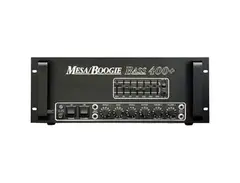
Discover the power and precision of the Mesa/Boogie Bass 400, a legendary bass amplifier head known for its robust performance and exceptional tonal versatility. Crafted for the discerning bassist, this amplifier head is engineered to deliver 400 watts of pure tube power, making it ideal for both intimate gigs and larger venues. With its all-tube design, the Bass 400 offers a warm, rich sound that can be fine-tuned to suit any style, from punchy rock lines to smooth jazz grooves.
The Mesa/Boogie Bass 400 is equipped with a comprehensive EQ section, allowing players to sculpt their sound with precision. The three-band EQ and additional parametric mid control provide deep customization, ensuring your bass tones cut through the mix with clarity and presence. Built to endure the rigors of the road, this amplifier head boasts a rugged construction, combining durability with a sleek aesthetic that will complement any stage setup.
Whether you're laying down a groove in the studio or commanding the stage, the Mesa/Boogie Bass 400 stands as a testament to uncompromising quality and innovation in bass amplification.
Key Features:
- 400 watts of all-tube power for dynamic sound
- Three-band EQ with parametric mid control for versatile tone shaping
- Rugged construction ideal for touring and stage use
- Renowned for its warm, rich tonal quality
- Reliable and durable design tailored for professional musicians
Product specs
| Brand | Mesa Boogie |
| Model | Bass 400 2-Channel 400-Watt Rackmount Bass Amp Head |
| Finish | Black |
| Year | 1985 - 1989 |
| Made In | United States |
| Categories | Bass Heads |
| Built-In Effects | No Built-In Effects |
| Color Family | Black |
| Electronics | Tube |
| Impedance | 4 ohms, 8 ohms |
| Number of Channels | 2 Channels |
| Number of Inputs | 1 Input |
| Output Power (Watts) | 400 |
| Power Tube Type | None |
| Reverb | None |
FAQs
-
What are the core tonal characteristics of the Mesa/Boogie Bass 400?
-
The Mesa/Boogie Bass 400 is known for its powerful, warm tube tone with a robust low end, making it ideal for rock and metal genres. Its dual-channel design allows for versatile sound shaping, from clean to gritty overdrive.
-
Is the Mesa/Boogie Bass 400 suitable for live performances?
-
Yes, with its 400-watt output, the Mesa/Boogie Bass 400 provides ample power for live performances, ensuring your bass cuts through the mix effectively, even in larger venues.
-
Does the Mesa/Boogie Bass 400 have built-in effects?
-
No, the Mesa/Boogie Bass 400 does not include built-in effects, allowing you to use external pedals or processors to customize your sound.
-
What kind of tubes does the Mesa/Boogie Bass 400 use?
-
The Mesa/Boogie Bass 400 is a tube amplifier, but it does not specify a particular power tube type, focusing instead on delivering a classic tube-driven sound.
-
How many channels does the Mesa/Boogie Bass 400 have?
-
The Mesa/Boogie Bass 400 features two channels, providing flexibility in switching between different tones or settings during a performance.
Videos

The Guitologist
Another DOOZY! - Mesa Boogie Tube Bass 400 Head Repair
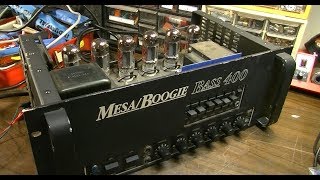
Another DOOZY! - Mesa Boogie Tube Bass 400 Head Repair
The Guitologist
Reviews
Owner Insights
We analyzed real musician discussions from forums and Reddit to find what players love, question, and tweak about Mesa/Boogie Bass 400.
Setup and maintenance
-
The amp's stock biasing keeps tubes cold, extending tube life but requiring costly retubing with 12 6L6GC tubes when necessary.
Source -
It's advised not to run the amp without a matched speaker load due to potential damage.
Source -
Inspect for visible damage and ensure supply voltages are stable before powering up without tubes.
Source -
Recapping the amp is necessary as it ages, costing a few hundred dollars for quality parts.
Source -
The 400+ features many caps, but board-mounted ones simplify maintenance compared to models like the D-180.
Source -
The PCB in some Mesa Bass 400 models may have mislabeled power supply caps, requiring verification of original orientation during repairs to avoid incorrect polarity.
Source -
Owners often find issues like broken solder joints on screen resistors and shorting input jacks, necessitating detailed inspections and adjustments.
Source -
Power tube sockets may need cleaning and re-tensioning to ensure proper function, especially in older or pre-owned units.
Source
Features and functionality
-
Known for its bass-heavy and aggressive sound, ideal for rock, but some find the EQ overly complex and difficult to dial in precisely.
Source
Use cases and applications
-
Best suited for large venues with 200+ capacity due to its power and presence; less practical for smaller settings.
Source
Comparisons
-
Preferred over by some for its specific sound profile, yet compared to Ampeg SVT for those favoring a defined tonal direction.
Source
User experience
Mods and upgrades
-
Replacing the fixed power cord with an IEC connector requires cutting into the chassis, which is not trivial.
Source
Build quality
5.0 out of 5
Based on 1 Review and 1 Rating
Artist usage
Add artist
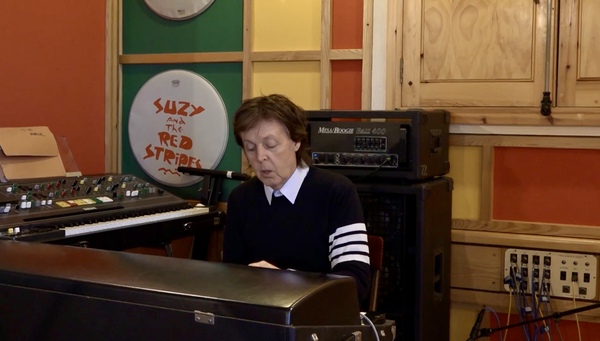
A Mesa/Boogie 400 is seen behind Paul in his studio.


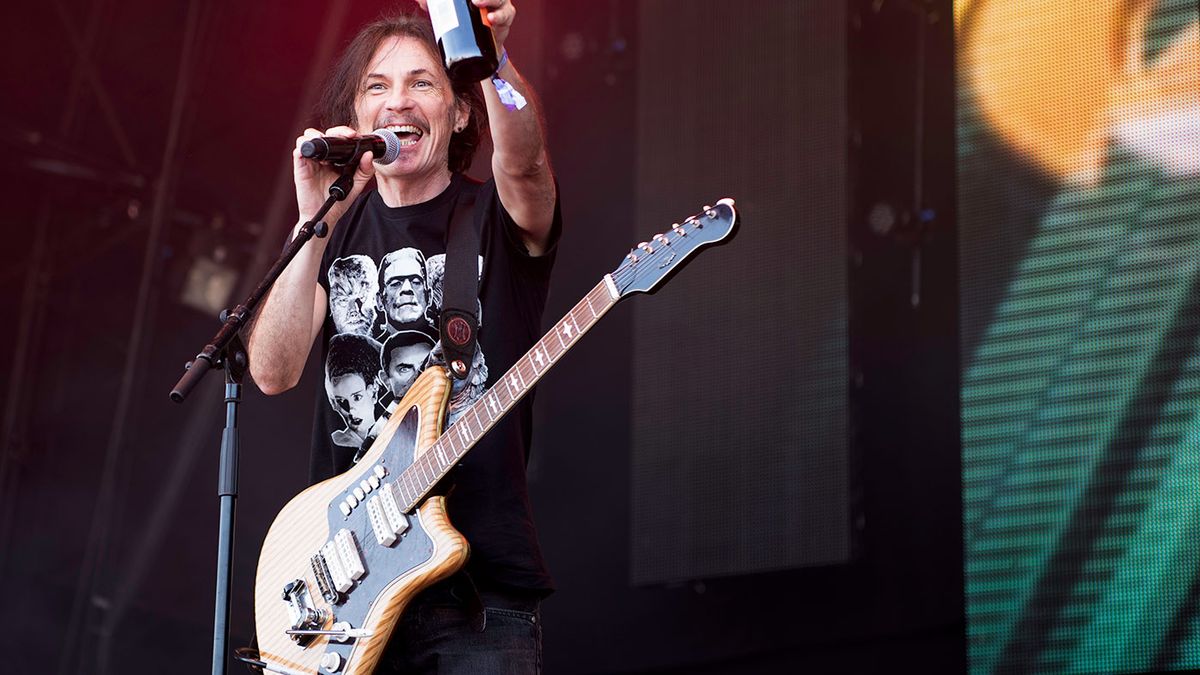
In the video "Pearl Jam - 1991-08-23 Seattle, WA (Full Concert)" by pjvideoguy on YouTube, at 1:11 and throughout, a Mesa/Boogie Bass 400 head can be seen in the backline, confirming its use by bassist Jeff Ament during this performance.


From the January 1993 issue of Sound on Sound:
BASS Mesa Boogie Bass 400 head cabinet Korg DTI Pro Digital Tuner

Album Usage
The Mesa/Boogie Bass 400 has been featured on the following albums:
Genre Usage
Based on how artists on Equipboard use this gear, it is most commonly found in the following genres.
Used With
Based on how musicians on Equipboard use Mesa/Boogie Bass 400, it is most commonly used with the following gear.
-s.webp?v=1784871579)

More Mesa/Boogie Bass Amplifier Heads

$999.00 - $1,150.00
in Bass Amplifier Heads Rank


$989.99 - $1,199.00
in Bass Amplifier Heads Rank


$1,196.99 - $1,629.00
in Bass Amplifier Heads Rank


.jpg?v=1784637724)

$4,500.00
in Bass Amplifier Heads Rank


$1,450.00
in Bass Amplifier Heads Rank


$749.95
in Bass Amplifier Heads Rank


$749.95
in Bass Amplifier Heads Rank


$649.99
in Bass Amplifier Heads Rank


$1,199.00 - $1,333.00


-m.webp?v=1784905166)
$2,199.00 - $2,499.99
in Bass Amplifier Heads Rank


$849.99 - $999.00
in Bass Amplifier Heads Rank


$584.00 - $899.00
in Bass Amplifier Heads Rank


$1,699.99 - $1,999.99
in Bass Amplifier Heads Rank

.jpeg?v=1784860561)

$800.00 - $1,899.99
in Bass Amplifier Heads Rank


$1,026.00
in Bass Amplifier Heads Rank


$1,498.49 - $1,499.99
in Bass Amplifier Heads Rank
-m.webp?v=1784905115)
$2,099.00 - $2,799.00
in Bass Amplifier Heads Rank


$666.00 - $2,621.97
in Bass Amplifier Heads Rank


$899.99
in Bass Amplifier Heads Rank


$1,399.99
in Bass Amplifier Heads Rank


$1,699.99 - $2,999.00
in Bass Amplifier Heads Rank


Accessories & Related Items


Community setups


Similar


Gear Guides




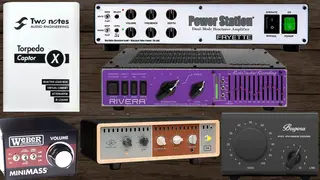


Most Popular Bass Amplifier Heads
Most Popular Brands
-
Added to Equipboard on by
 fc_bass
GearIQ 373
-


