
Pricing and availability
We compare 600+ stores and found this item at 4 stores. Prices updated .
Store
Reviews
Price




Average Price: $48
Budget/Beginner
$50
$176+
Price Tier
Budget
Standard
High-end
Price History
Based on price data from 1 merchant for "Mooer Solo". Prices shown reflect NEW condition. Tracking began Apr 19, 2026.
* Product prices and availability are updated by Equipboard every 24hrs and are subject to change. Equipboard may receive compensation for purchases made at participating retailers linked on this site. This compensation does not affect what products or prices are displayed, or the order of prices listed. For more information, please refer to our affiliate disclosure.
Description
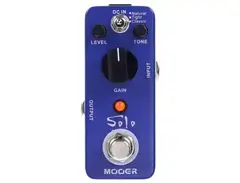
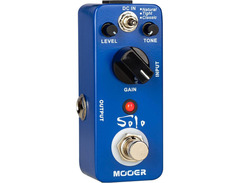
Unleash your guitar's true potential with the Mooer Solo Overdrive Effects Pedal, your ultimate companion for those face-melting solos and rich, harmonic riffs. Whether you're channeling the screaming highs of a Mesa Boogie or the classic British warmth of a Marshall, this compact powerhouse offers unparalleled versatility with its three distinct distortion modes: Natural, Tight, and Classic. Perfect for cutting through the mix and making your presence known, the Mooer Solo stands as a testament to superior tone and performance without the bulk.
Key Features:
- Three Distortion Modes: Natural, Tight, and Classic, catering to a wide range of musical styles and preferences.
- Emulates high-gain tones reminiscent of iconic amps for versatile sound shaping.
- Compact size for easy integration into any pedalboard setup.
- True bypass circuitry to preserve the original tone when the pedal is disengaged.
- Robust construction and reliable performance, ensuring longevity and consistent quality.
Product specs
| Available since | August 2013 |
| Overdrive | No |
| Distortion | Yes |
| Fuzz | No |
| Metal | No |
FAQs
-
What type of distortion does the Mooer Solo pedal offer?
-
The Mooer Solo pedal provides a high-gain distortion, ideal for achieving a saturated, aggressive sound suitable for rock and metal genres.
-
Can the Mooer Solo pedal be used with a bass guitar?
-
While primarily designed for electric guitars, the Mooer Solo pedal can be used with a bass guitar, but it may result in a loss of low-end frequencies.
-
What power supply is required for the Mooer Solo pedal?
-
The Mooer Solo pedal requires a standard 9V DC power supply with a negative center, commonly used for most guitar pedals.
-
How does the Mooer Solo compare to other distortion pedals in terms of size?
-
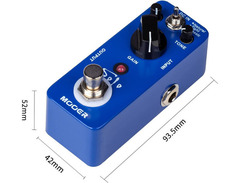
The Mooer Solo is a compact, micro-sized pedal, making it ideal for pedalboards with limited space while still delivering powerful distortion tones.
-
Is the Mooer Solo pedal true bypass?
-
Yes, the Mooer Solo pedal features true bypass, ensuring that your guitar signal remains unaffected when the pedal is turned off.
Videos

Prymaxe
Mooer Audio Cruncher Distortion
Mooer Audio Cruncher Distortion
Prymaxe
Mooer Audio Solo
Prymaxe
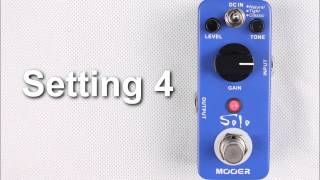
Mooer Solo Distortion Micro Pedal

MooerAudio
Mooer Audio Micro Pedals

ProGuitarShopDemos
Mooer Rage Machine Metal Distortion
Prymaxe
Suhr Riot vs Mooer Solo - Pedal Comparison

ChoptonesOfficial
REVIEW MOOER SOLO DISTORTION PEDAL - MUSIX BOX DEMO

Musix Box
Mooer Solo Distortion | Pedal Review | No Talking

Fabian Lopes
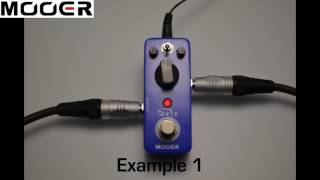
Mooer "Solo" Demo w/settings

Haiko Heinz
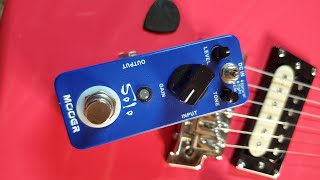
(Blind) Review & Demo: Mooer Solo Distortion/Overdrive Pedal!!

Beers N Gears
Reviews
PROS
-
Offers a range of distortion types with very good tone
-
Controls are easy to adjust, from slight grit to full blast
-
Small footprint, fits well on pedalboards
-
High-gain with excellent dynamic response, suitable for solos
-
Versatile, can deliver sounds from hard rock to classic metal
-
Three clipping modes (normal, tight, classic) for tonal variety
-
Maintains string definition and clarity, even with high gain
-
Does not "pop" the signal chain when engaged
-
Great value for the price, especially as a Suhr Riot clone
-
Provides thick, organic, and punchy distortion suitable for heavy genres
CONS
-
Loses lower notes in a chord, slightly compromising clarity
-
Level and tone knobs hard to track on stage
-
Three tonality options (tight, natural, classic) have limited impact on sound
-
May not perfectly handle metal tone without additional support
-
Some users find it lacking compared to other pedals they own
Owner Insights
We analyzed real musician discussions from forums and Reddit to find what players love, question, and tweak about Mooer Solo.
Comparisons
-
The Mooer Solo is described as darker than the Cruncher, with a more scooped sound, making it less suitable for those seeking a fuller tone.
Source -
The Mooer Cruncher, based on the MI Audio Super Crunch Box V2, lacks the original's three-band EQ, affecting its tonal flexibility.
Source -
It's noted that the Solo can be perceived as "really dark," suggesting it might not suit players seeking a more articulate and clear high-gain sound.
Source -
The Mooer Solo is compared to the Suhr Riot, excelling in 80s metal solos and offering solid rhythm distortion for Van Halen-esque sounds in classic mode.
Source
Use cases and applications
-
The Solo pedal is seen as more of an overdrive boost rather than providing a "filthy" high-gain distortion, which may not satisfy high-gain seekers.
Source -
Owners find it effective for 80s metal solos and rhythm distortion, highlighting its versatility beyond just a high-gain pedal.
Source -
Successfully used in a signal chain with pedals like the Xotic EP booster and King of Tone, indicating compatibility with other gear for complex setups.
Source
User experience
4.0 out of 5
Based on 2 Reviews and 8 Ratings

171
The Blue pedal aspiring to be a purple one
The Mooer solo is quite the unapologetic clone of the revered Suhr Riot, a boutique-grade distortion box known to be the go-to pedal of many professionals (including the incredible Mr. Guthrie Govan!). However, I, unfortunately, do not own a Suhr Riot in my arsenal and therefore cannot make a comparison between the clone and the original. This review shall discuss the Mooer Solo based only on the Mooer Solo.
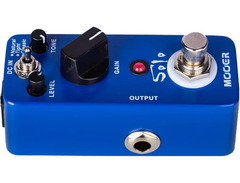
The pedal has a very typical setting as seen on countless other distortion and overdrive units: Gain, Volume, Tone. It should be noted that this pedal is of a high-gain nature and should not be treated as one that sings the blues or does the crunchy punk tone. Although the Gain knob retains tonal integrity throughout its rotation (Low gain setting can also be nicely utilized), what fun is there if a high gain pedal's gain is not turned up? At above 12 o'clock, the pedal truly shines (particularly if given a boost in front) and delivers not only what its name "solo" suggests, but also beefy, thick rhythm tone that goes great with humbucking guitars. The sound is very organic and punchy, having just the right amount of growl and wildness for hard rock and metal rhythms.
The distortion of this pedal is rather "dark". It comes with a certain quality that heavier genres would appreciate.
As a solo tone, as its name suggests, this pedal offers generous amounts of gain (as previously noted) and consequently great sustain. String definition and clarity is maintained - the pedal hardly gets too muddy or muffled. Even distorted let-ring passages are not a challenge for this pedal.
A feature that distinguishes this pedal from other dirt boxes in the market is its three-way toggle switch which conveniently switches between three clipping modes, or simply "modes". These are normal, tight, and classic. While the "normal" setting, as its name suggests, doesn't strike remarkably, the other two are noticeably more dynamic and interesting to the ears. The "classic" mode is similar to the "normal" mode, which has a rather flat EQ and bland character, the "classic" mode offers more bite and crunch than its counterpart. It has an "open" character that is reminiscent to amp distortions of Randall and Peavey heads alike, a very promising sound to use. The "tight" mode, when engaged, is noticeably louder in volume (changing the mode withing a song would mess the balance up) and has slightly less gain. But the sacrifice of gain brings about a worthwhile twist in the pedal's tone. This mode covers very modern distortion sounds, even approaching (but not reaching) the much coveted "djent" sound used by many these days. The tone is, well, nicely captured by the name of the mode. There isn't much to describe, really.
All in all, this is a great pedal if you want a formidable heavy rhythm tone featured in heavier genres. This pedal also works if you wish to have a soaring solo tone with lots of sustain and gain.

41013
just a heads up, I've tried a Riot, its nothing to write home about at the price Suhr charges. At half that its a pretty cool marshallesque distortion, but its a real one trick pony. Great for 80s type british sounds.
61
Powerful distortion with little customisability.
The solo drive can be used to play lead riffs beautifully and very well. It can handle being played for a metal tone if it has to but not perfectly. The three tonality options it has (Tight, Natural and Classic) don't change the sound enough for it to be a selling point.
If you need a distortion on a budget, you can get this if you want massive power for lead riffs. But if you want something that gives you lots of versatility, rather get the Hustle Drive.
Artist usage
Add artist
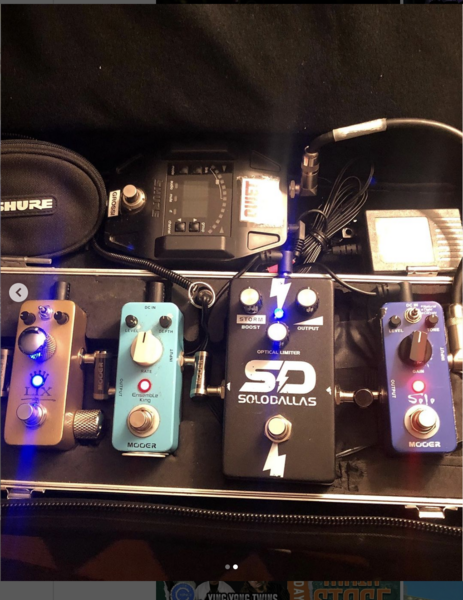
Shown in this instagram post. https://www.instagram.com/p/CwX_MCFuYnE/?img_index=2
Genre Usage
Based on how artists on Equipboard use this gear, it is most commonly found in the following genres.
Used With
Based on how musicians on Equipboard use Mooer Solo, it is most commonly used with the following gear.

Similar
Add recommendation1 alternative for Mooer Solo, curated by the Equipboard community.

More Mooer Overdrive Effects Pedals

$45.00 - $56.00
in Overdrive Effects Pedals Rank


$49.98 - $56.00
in Overdrive Effects Pedals Rank


$51.00 - $56.77


$62.63 - $88.17


$48.93 - $56.00


$48.93 - $59.00


-m.webp?v=1784127421)
$100.00 - $179.00
in Overdrive Effects Pedals Rank


$100.75 - $120.99
in Overdrive Effects Pedals Rank


-m.webp?v=1784127427)
$699.95
in Overdrive Effects Pedals Rank


$180.00 - $217.91
in Overdrive Effects Pedals Rank


$139.00 - $999.99
in Overdrive Effects Pedals Rank


$74.00
in Overdrive Effects Pedals Rank


-m.webp?v=1784155511)
$149.00 - $186.99
in Overdrive Effects Pedals Rank


$198.00 - $229.99
in Overdrive Effects Pedals Rank


.jpg?v=1784159850)

$102.50 - $179.98
in Overdrive Effects Pedals Rank


$99.00 - $142.00
in Overdrive Effects Pedals Rank


$120.82 - $179.00
in Overdrive Effects Pedals Rank


$183.99 - $229.99
in Overdrive Effects Pedals Rank

-m.webp?v=1784155149)
$84.99 - $125.00
in Overdrive Effects Pedals Rank


$266.97
in Overdrive Effects Pedals Rank


$185.00
in Overdrive Effects Pedals Rank


$272.24
in Overdrive Effects Pedals Rank


$124.99 - $315.00
in Overdrive Effects Pedals Rank


$179.00 - $229.99
in Overdrive Effects Pedals Rank


$89.00 - $109.99
in Overdrive Effects Pedals Rank


$123.35 - $181.00
in Overdrive Effects Pedals Rank


$89.00 - $109.99
in Overdrive Effects Pedals Rank


$658.14
in Overdrive Effects Pedals Rank


$200.00 - $286.00
in Overdrive Effects Pedals Rank


$50.60 - $79.99
in Overdrive Effects Pedals Rank

.jpg?v=1784109409)


$70.00
in Overdrive Effects Pedals Rank


$59.00 - $69.99
in Overdrive Effects Pedals Rank


-m.webp?v=1784113591)
$129.99 - $166.00
in Overdrive Effects Pedals Rank


$289.00 - $299.00
in Overdrive Effects Pedals Rank


$329.00
in Overdrive Effects Pedals Rank


Community setups


Gear Guides




Most Popular Overdrive Effects Pedals
Most Popular Brands
-
Added to Equipboard on by
sean_chanGearIQ 171
-


