


Pricing and availability
We compare 600+ stores and found this item at 1 store. Prices updated .
Store
Reviews
Price




Average Price: $630
Standard/Professional
$200
$801+
Price Tier
Budget
Standard
High-end
* Product prices and availability are updated by Equipboard every 24hrs and are subject to change. Equipboard may receive compensation for purchases made at participating retailers linked on this site. This compensation does not affect what products or prices are displayed, or the order of prices listed. For more information, please refer to our affiliate disclosure.
Description
Released in 2000, the Roland XV-5080 stepped onto the scene, leaving a mighty footprint. Described for years as “Roland's ultimate sound module,” the XV-5080 boasted immense PCM-based multitimbral synthesis power, sophisticated modulation, an array of pro-quality DSP effects, and compatibility with the popular SRX Expansion Board series.
Its fidelity and technological adaptability were unmatched at the time and embraced heavily by composers and producers spanning a wide range of genres.
Product specs
| Brand | Roland |
| Model | XV-5080 128-Voice Synthesizer Module |
| Finish | Black |
| Year | 2000 - 2004 |
| Made In | Japan |
| Categories | Digital Synthesizers, Rackmount Synths |
| Analog / Digital | Digital |
| MIDI I/O | MIDI Input, MIDI Output, MIDI Through |
| Polyphony | 128 Voices |
FAQs
-
What type of synthesis does the Roland XV-5080 use?
-
The Roland XV-5080 is a digital synthesizer that utilizes sample-based synthesis, offering a wide range of sounds and textures suitable for various musical genres.
-
How many voices of polyphony does the Roland XV-5080 support?
-
The Roland XV-5080 supports 128 voices of polyphony, allowing for complex and layered soundscapes without voice dropout.
-
Can the Roland XV-5080 be integrated with modern MIDI setups?
-
Yes, the Roland XV-5080 features MIDI Input, Output, and Through, making it compatible with modern MIDI setups and allowing seamless integration into existing gear configurations.
-
Is the Roland XV-5080 suitable for live performances?
-
The Roland XV-5080 is well-suited for live performances, offering a robust sound engine, extensive patch memory, and reliable MIDI connectivity, ensuring flexibility and reliability on stage.
-
What are the standout features of the Roland XV-5080's sound engine?
-
The Roland XV-5080's sound engine is renowned for its high-quality sample playback, extensive patch editing capabilities, and the ability to expand with SRX expansion boards for additional sounds.
Videos

Tiago Mallen
Roland XV-5080 VST (Roland Cloud) TEST SOUNDS by TIAGO MALLEN #ROLAND
Roland XV-5080 VST (Roland Cloud) TEST SOUNDS by TIAGO MALLEN #ROLAND
Tiago Mallen
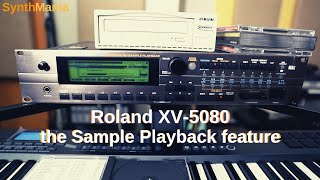
Roland XV-5080 - the Sample Playback feature

SynthMania
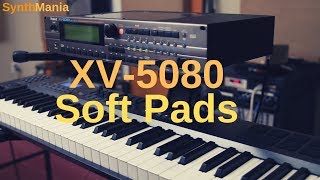
Roland XV-5080 soft pads
SynthMania
Roland | XV-5080 | Factory Presets (No Talking)

Simon Le Grec
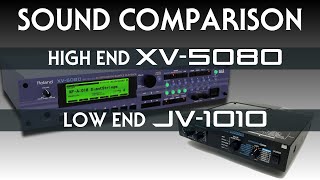
Comparison: XV 5080 High End & JV 1010 Low End

The MIDI Maniac (Roger)
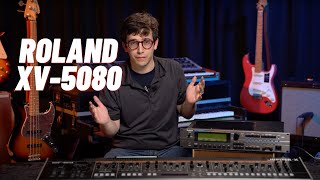
Roland XV-5080: Is It Worth It?

Alamo Music Sound Lab
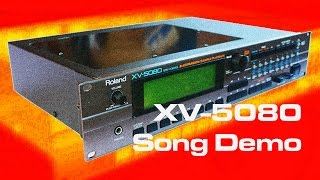
Roland XV-5080 Original Factory Demos - 3 Songs

WayneJoness
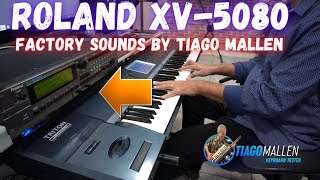
ROLAND XV-5080 (FACTORY SOUNDS AND EDITED EPS) by TIAGO MALLEN EDIÇÃO POR RICHARDSON #roland #mallen
Tiago Mallen
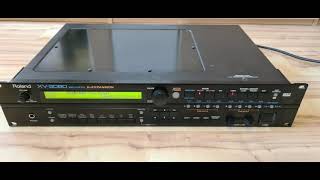
Roland XV-5080/3080 Synthesizer Sound Demo Video

M. Schmied (Mike Vintagemusic)
Reviews
PROS
-
Combines JV and JD series with JD-990 waveforms at 44.1 kHz
-
Can play samples up to 16 bit 48 kHz
-
Nearly 3000 patches with four SRX cards inserted
-
Upgradeable to 128 meg of sample memory
-
Replicates JV1080 sound quality with additional sound banks
-
Authentic plugin version praised
-
Versatile for 90s sound and modern production
-
Extremely stable software
-
Huge palette of sounds for live and studio use
-
128 voices, 32 MIDI channels, durable build
CONS
-
Customs issues and extra fees reported
-
Headphone output may have major audio issues
-
Factory presets described as average and boring
-
Learning curve to fully utilize features
Owner Insights
We analyzed real musician discussions from forums and Reddit to find what players love, question, and tweak about Roland XV-5080.
Features and functionality
-
The XV-5080 boasts a higher audio fidelity than the JV-2080 and avoids the JD-990's filter resonance distortion issue.
Source -
Expansion cards add additional waveforms and presets, significantly enhancing the unit's sound palette beyond its base capabilities.
Source -
The unit's encoder is prone to failure, with no replacement parts available, prompting users to rely on software alternatives.
Source -
The XV-5080 can interface with ZuluSCSI devices, but without functioning RAM, this capability is limited.
Source
Comparisons
-
The XV-5080 offers roughly 3-4 times the "real world" polyphony of the JD-990, making it more versatile for complex textures.
Source
Software and compatibility
Setup and maintenance
-
Owners report frequent capacitor failures, especially surface mount ones, necessitating a full replacement for longevity.
Source -
Deoxit is recommended for cleaning contacts over WD-40, which leaves a film, potentially affecting connection reliability.
Source -
When using a single RAM module, it must be placed in slot A for the XV-5080 to recognize it.
Source -
Cleaning the motherboard with a fine dry paintbrush, cotton swabs, and rubbing alcohol may help resolve memory recognition issues.
Source -
It's suggested to inspect the motherboard for dust, corrosion, or foreign objects, as these can impact functionality.
Source
Mods and upgrades
-
Replacing power supply and system board capacitors can extend unit life by up to 25 years, despite the original design's shortcomings.
Source
Critic Reviews
5.0 out of 5
Based on 2 Reviews and 19 Ratings

436
Incredible!
I using this module more then 5 years, and cant say enough good things about it. Its rompler workhorse, and you can get very deep with programming if you want to. Sound quallity is amazing 24bit/48khz. Downsides are that factory presets sounds average and boring, once you figure out how to do your own it open up wide range of possibilities, and believe it or not it can do almost all type of sounds good.
It has more pros and cons, that is that due to enormous present high end lots of patches sounds bright,but also some sounds form previous machine sound amazingly clear like never before, since you can load sysex from any JV/XP/XV machine. Its also has sample playback, and imported samples due to clear sound engine sounds HD then on any machine i ever heard so far.
It does takes a lot of time to learn all its features properly, but once you understand all its features you realize how much endless variety of tones you can get out of it that you never want to let it go.
I will probbably never sell this stuff. Its just too good.
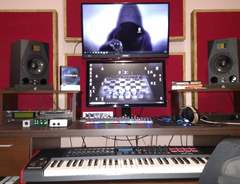
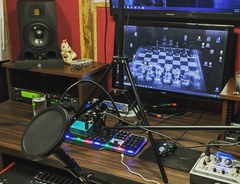

Artist usage
Add artist

There are 3 Roland XV5080s that can be seen in Randy Newman studio in this interview.


"Our music productions for film and television, cinema, games, web, soundtracks and many other areas of application are created in a modern sound studio in a completely virtual environment on the computer (with various soft samplers and plugins on a purely digital basis for the best sound quality - or else with the help of the latest hardware technology, mixing consoles, synthesizers, effect devices and digital signal processors for further sound refinement for the highest quality demands without compromise.
You can find some impressions of the studio on this page."


"A UNIQUE OPPORTUNITY!
Ex-BBC Radiophonic Workshop (Blake’s Seven, The Living Planet) and current film and TV composer Elizabeth Parker is selling the famous circular studio she took with her from the BBC when the RW was disbanded.
The studio is virtually complete, including nearly all the equipment she has been using on a regular basis in her profession - up to and including a film project she is finishing in the first half of November before the studio is dismantled. Just add a mother keyboard, mastering, monitoring, and video, and you have virtually the complete set- up used for prestigious projects like the BBC’s World Cup coverage, The Human Body, Weird Nature, Animal Olympics, the Monty Python Holy Grail DVD, Michael Palin TV series, etc.
The custom woodwork and cabling alone is believed to have cost £4500 in the late 1980s, and is probably one of the most famous studio designs in the world. When it was removed from the BBC, the installation and re-design at Liz's private studio was masterminded by Rupert Brun, one of the BBC's most highly respected engineers.
Full documentation is included in the sale. Removal and/or packing and shipping is a serious task, so please bear that in mind before bidding. VEMIA will assist at cost if you need."
"The studio consists of:
The studio desk, custom made for the Radiophonic Workshop, out of limed Ash. (Buyer dismantles and collects). Complete with a vast quantity of high-quality cabling, with every cable, jack, phono and XLR numbered and labelled by Rupert Brun, with full diagrams, spreadsheets, etc. Roland XV 5080 with 8-voice expansion unit for sample playback Emu Proteus 2000 (with Proteus 1, 2, and 3 (World) Expansion Cards) Proteus 2 and Proteus 3 World Modules. Emu 4XT Ultra with maximum memory. Roland 760 Samplers (x3) with maximum sample and playback memory + mouse unit for 2 of them Emu Xtreme Lead 1 with MoPhat Card. Yamaha 01 Digital Mixer. Yamaha 01V Digital Mixer. Yamaha KM802 Mixer. Spirit Folio F1 100mm Fader Mixer. Peavey PC 1600X Midi Command Stations (x3) Alesis ADAT XT 8 track digital recorder + remote control. Denon DRM-550 Cassette Deck. Akai Professional rackmount DP3200 Routers (x3) 48-Way Patch Bays (x3) Iomega 250 Zip Drives (x2 - one still in box) CD Rom Players (x3) - one still in box. Emu Proformance Piano Module. Emu Procussion Module. Opcode Studio 4 Midi Interfaces (x2) [Opcode] Studio 5 Midi Interface. Apple 7600 computer with unused new RAM + 21" monitor Apple 8600 computer + monitor. PPM Meter - West German, made by RTW, Köln, and bought from the BBC. Magneto Optical 230 drive. Apple Mac G4, Dual Processor with 512MB RAM, 40GB hard drive in four partitions, extra internal 230GB hard drive."


'Sin Sin Sin' "This was the first song we ever wrote, and it basically started off as a bass drum doing fours and a bass sequence in eights over the top of it. He sang the whole of the first verse over the top of that, just like that. It was quite incredible. The sequenced section that you can still hear started off as a Reason sound, and then I added the Roland XV5080, and added an SH101 sound and perhaps a Prophet 5 to give it a little bit more of a gritty, gnarly texture. I messed around with that sound quite a lot. We changed the speed of the song many times, and the Reason sound became so strange and deconstructed that it became part of the song."

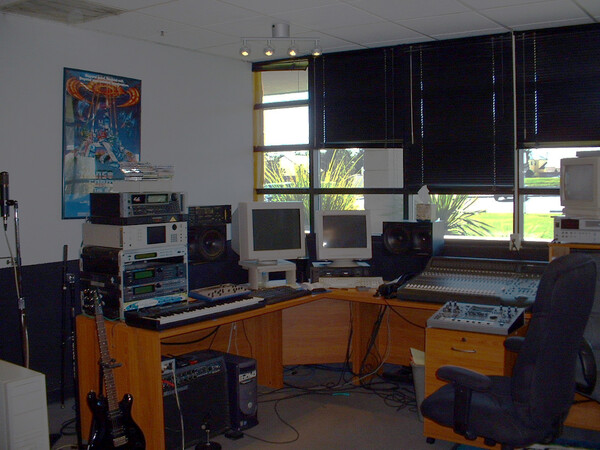
It has been verified that Frank Klepacki, a renowned guitarist, composer, and music producer, utilizes the Roland XV-5080 sound module in his studio setup. This information is substantiated by a visual confirmation of the XV-5080 positioned beneath the JD 990 within his studio in Westwood, as depicted in a photograph of the former office of Westwood Studios.


Clive has an XV-5080 in this video with Pendragon.
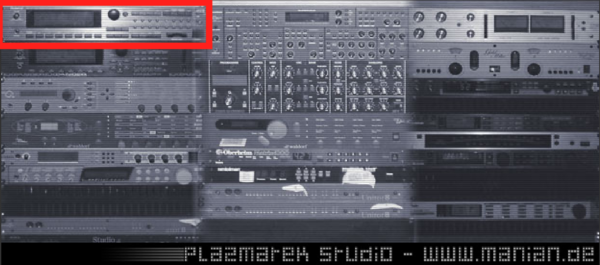
In the user-uploaded photo, DJ Manian is seen using the Roland XV-5080 sound module in his production setup.


Lior Rosner utilized the Roland XV-5080 sound module during his early work at Saban Entertainment/Fox Kids, specifically in the production of soundtracks for shows like "Power Rangers Wild Force." This is evidenced by the frequent use of patches such as "The Andes" from Bank E in episodes like "Unfinished Business," as highlighted in the official Power Rangers video on YouTube.


1:00 aleks synteks uses the roland xv5080, as one of its synthesizers

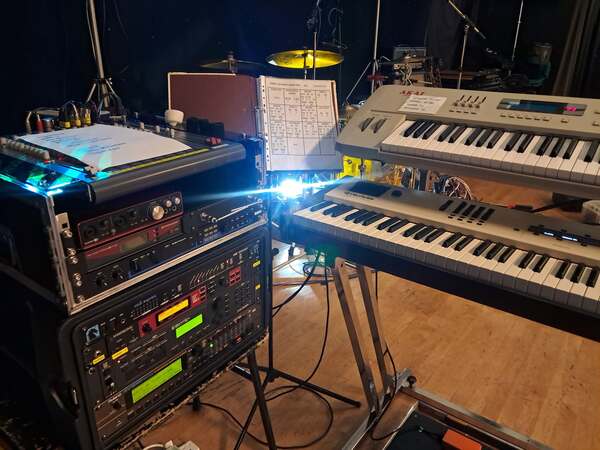
Didge Digital uses the rackmounted Roland XV-5080, as confirmed by a Facebook photo showing it in the bottom rack next to his keyboards.


Richard Andersson uses the Roland XV-5080 as part of his studio and live rig, as detailed on the official Andersson Music website.

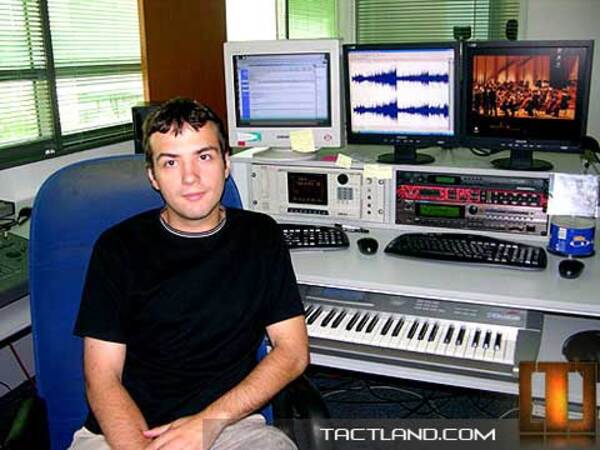
In a photo from the Tactland PDF article/interview available on Mateo Pascual's website, he is seen with a Roland XV-5080 rack sound module in his studio. The unit is clearly identifiable by its distinct front-panel design and labeling, consistent with Roland's flagship XV rack module.
Album Usage
The Roland XV-5080 has been featured on the following albums:
Genre Usage
Based on how artists on Equipboard use this gear, it is most commonly found in the following genres.
Used With
Based on how musicians on Equipboard use Roland XV-5080, it is most commonly used with the following gear.

-s.webp?v=1783238222)




Community setups
Show yours




More Roland Sound Modules
-m.webp?v=1783238222)
$350.00
in Sound Modules Rank


$1,200.00 - $1,999.99
in Sound Modules Rank


$1,350.00
in Sound Modules Rank


$298.54
in Sound Modules Rank


$119.00
in Sound Modules Rank


$500.00
in Sound Modules Rank


$3,900.00
in Sound Modules Rank


$1,250.00
in Sound Modules Rank


$500.00
in Sound Modules Rank


$199.99
in Sound Modules Rank


$200.00
in Sound Modules Rank


$30.00
in Sound Modules Rank


$330.00
in Sound Modules Rank


$349.00
in Sound Modules Rank


$575.00
in Sound Modules Rank


$140.00
in Sound Modules Rank


$154.00
in Sound Modules Rank


$59.71
in Sound Modules Rank


$1,699.99
in Sound Modules Rank


$200.00
in Sound Modules Rank


$200.00
in Sound Modules Rank


$627.41
in Sound Modules Rank


$200.00
in Sound Modules Rank


$125.48
in Sound Modules Rank


$2,248.00 - $2,899.99
in Sound Modules Rank


$15.00
in Sound Modules Rank


$1,045.69
in Sound Modules Rank


$2,450.00
in Sound Modules Rank


-m.webp?v=1783238730)


Accessories & Related Items
-s.webp?v=1782900033)
-s.webp?v=1783316216)


Similar


Most Popular Sound Modules
Most Popular Brands
-
Added to Equipboard on by
lfradkinGear IQ 202
-


