

Pricing and availability




* Product prices and availability are updated by Equipboard every 24hrs and are subject to change. Equipboard may receive compensation for purchases made at participating retailers linked on this site. This compensation does not affect what products or prices are displayed, or the order of prices listed. For more information, please refer to our affiliate disclosure.
Description
Talking shop about Muff-style fuzz with any guitar player that knows his or her stuff is a relatively straightforward conversation. Aside from the myriad of variants, the talk usually evolves into transistors and who used which variant.
There was a curious time in Muff history, when the circuit designed changed drastically. That time was 1978, when the transistors inside were scrapped in favor of operational amplifiers, otherwise known as op-amps, which are integrated circuits, or ICs. This particular variant was only manufactured for around two years, and as such, only a few thousand ever made it out of NYC alive.
Fast forward to 2014, and the Muff masters at Wren and Cuff have crafted the definitive version of the non-transistorized fuzzbox. They call it the Eye See Pi.
Apart from the lack of transistors, the Eye See Pi features a drastically different clipping section for a monstrously woolly sound, such as the one popularized by Billy Corgan of Smashing Pumpkins on Siamese Dream. As expected, the sound of the Eye See Pi is different from a standard Muff circuit. While most vintage muffs are a little “sweeter” sounding, the Eye See Pi is certainly crunchier and more ballsy than a standard Muff.
In 1978, a switch was added to the back of the original, and the Eye See Pi includes this switch as well. The control is labeled as “Tone Bypass” on both old and new pedals. Essentially, it removes the passive tone stack from the circuit for a volume boost and a significantly more raw and open sound. Of course, this switch renders the tone control useless, but we’re guessing that in this mode, you won’t miss it—this switch is just too cool.
If you’re looking for a largely-untamed IC-based fuzz and distortion machine, with the ability to adapt to most genres of music under the sun, look no further than the Eye See Pi.
Wren and Cuff Eye See Pi Features:
- Authentic recreation of the 1978 IC Big Muff from the masters of the circuit, Wren and Cuff
- Tone Bypass switch for a different flavor of Muff
- Smaller Footprint than the original
- True bypass switching
- Standard 9v center-negative operation
Videos

ProGuitarShopDemos
Wren and Cuff Eye See Pi
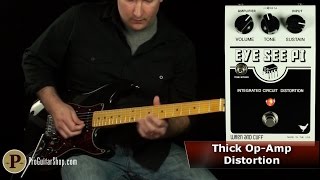
Wren and Cuff Eye See Pi
ProGuitarShopDemos
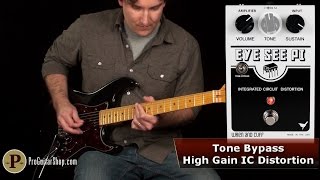
Wren & Cuff Eye See Pi Part 2: Tone Bypass
ProGuitarShopDemos
Wren & Cuff Eye See Pi Op-Amp Distortion
ProGuitarShopDemos
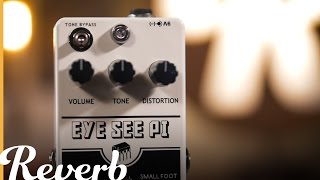
Wren and Cuff Eye See Pi Small Foot Fuzz | Reverb Demo Video

Reverb
Reviews
PROS
-
Superior gain control, excellent for modern distorted tones
-
Tone bypass feature enhances versatility
-
Performs well with bass, though not overly bass-heavy
-
Unique "muff glitch ring mod" effect for distinctive sounds
-
High build quality ensures durability
-
Complements other pedals well in a chain
-
Ideal for achieving the Siamese Dream-era op-amp Big Muff tone
-
Quieter operation compared to similar pedals
-
Warm, articulate fuzz maintains clarity of tone
-
Natural-sounding highs without harshness
CONS
-
Bass response might not satisfy those seeking extremely heavy bass tones
-
Not intended for low gain/clean boost applications
Owner Insights
We analyzed real musician discussions from forums and Reddit to find what players love, question, and tweak about Wren and Cuff Eye See Pi Op-Amp Distortion.
Features and functionality
Comparisons
-
Unlike transistor-based muffs, the op amp muff has a distinct cold, harsh, and scooped sound, differing greatly from other muff variants like the Violet Caprid or Box of War.
Source -
The SUF Pumpkin Pi stands out for a more articulate low end compared to other op-amp muffs, making it preferred by some over the Eye See Pi.
Source -
The Keeley Moon is highlighted for its mids selector and substantial low end, offering unique tonal control compared to standard op amp muffs.
Source
Use cases and applications
-
The op amp muff's tonal characteristics make it less suitable as a main fuzz pedal but perfect for those seeking its specific aggressive and scooped sound.
Source -
The Eye See Pi is particularly suited for scenarios where the pedal chain's dynamics are desired to change drastically with different inputs.
Source -
The Eye See Pi is recognized for its suitability in creating Smashing Pumpkins-style tones, a key attraction for fans of that sound.
Source -
The Eye See Pi is considered a strong contender for those seeking a distinct op amp muff sound, especially in alternative rock contexts.
Source
Build quality
-
The pedal is noted for its substantial weight, being described as the heaviest muff encountered, which adds to its perceived quality and appeal.
Source
Based on 0 Reviews and 0 Ratings
Artist usage
Add artist

In a video by ProGuitarShopDemos, Andy Martin demonstrates the Wren and Cuff Eye See Pi Op-Amp Distortion pedal. Known for its crunchy and aggressive fuzz, this pedal is a modern take on the 1976 IC Big Muff, distinguished by its use of op-amps instead of transistors. The Eye See Pi also features a Tone Bypass toggle switch, offering a more open and raw distortion. As with all Wren and Cuff products, it boasts exceptional build quality and tone.


Genre Usage
Based on how artists on Equipboard use this gear, it is most commonly found in the following genres.
Used With
Based on how musicians on Equipboard use Wren and Cuff Eye See Pi Op-Amp Distortion, it is most commonly used with the following gear.


Similar
Add recommendation2 alternative and related items for Wren and Cuff Eye See Pi Op-Amp Distortion, curated by the Equipboard community.

$75.00 - $250.00

$162.00 - $199.99
More Wren and Cuff Fuzz Effects Pedals

$195.00 - $199.99
in Fuzz Effects Pedals Rank


$199.99 - $299.99


$324.99 - $331.00


$116.00 - $189.99

$295.00 - $299.99

$204.00 - $224.99
.jpg?v=1784940345)


$196.00 - $209.99


$324.99 - $332.00


$169.00 - $188.20
in Fuzz Effects Pedals Rank
-m.webp?v=1784978406)
$179.00 - $209.00
in Fuzz Effects Pedals Rank


$189.00
in Fuzz Effects Pedals Rank


$75.00 - $96.20
in Fuzz Effects Pedals Rank


$220.00 - $249.00
in Fuzz Effects Pedals Rank

.jpeg?v=1784917540)


$179.00
in Fuzz Effects Pedals Rank


$296.00
in Fuzz Effects Pedals Rank


$83.00 - $169.00
in Fuzz Effects Pedals Rank


$199.00 - $224.42
in Fuzz Effects Pedals Rank


$159.00 - $181.00
in Fuzz Effects Pedals Rank


Community setups


Gear Guides
.jpg)






Most Popular Fuzz Effects Pedals
Most Popular Brands
-
Added to Equipboard on by
 kkolar
GearIQ 121523
-


