

Pricing and availability
We compare 600+ stores and found this item at 1 store. Prices updated .
Store
Reviews
Price




Average Price: $250
Standard/Professional
$150
$601+
Price Tier
Budget
Standard
High-end
* Product prices and availability are updated by Equipboard every 24hrs and are subject to change. Equipboard may receive compensation for purchases made at participating retailers linked on this site. This compensation does not affect what products or prices are displayed, or the order of prices listed. For more information, please refer to our affiliate disclosure.
Description
Introduced in 1992, the Boss Dr. Rhythm DR-660 is a drum machine boasting 16 velocity and aftertouch-sensitive pads. This gem of a machine offers a wide array of 255 percussion sounds and a plethora of 250 patterns, giving you the flexibility to create the perfect rhythm for your music. Not just that, it comes equipped with stereo outputs and a suite of on-board effects to further enhance your sound. With the DR-660, you won't just play music; you'll sculpt it.
Key Features: - 16 velocity and aftertouch-sensitive pads - Wide range of 255 kinds of percussion sounds - An array of 250 patterns - Stereo outputs for enhanced sound - On-board effects for added audial dimension
Owner's manual
Boss Dr. Rhythm DR-660 User ManualProduct specs
| Brand | Boss |
| Model | DR-660 Dr. Rhythm |
| Finish | Gray |
| Year | 2000s |
| Made In | Japan |
| Categories | Drum Machines |
| Analog / Digital | Digital |
| MIDI I/O | MIDI Input, MIDI Output |
| Number of Pads | 16 Pads |
| Polyphony | 12 Voices |
FAQs
-
What are the main features of the Boss DR-660 Drum Machine?
-
The Boss DR-660 features 16 velocity-sensitive pads, MIDI input and output, and 12-voice polyphony. It offers a wide range of drum and percussion sounds, making it suitable for diverse musical styles.
-
Is the Boss DR-660 compatible with other MIDI devices?
-
Yes, the Boss DR-660 includes MIDI input and output, allowing it to integrate with other MIDI-compatible devices for expanded control and sequencing capabilities.
-
Can the Boss DR-660 be used for live performances?
-
The Boss DR-660 is well-suited for live performances due to its intuitive interface and responsive pads, allowing musicians to trigger sounds and patterns easily on stage.
-
How many sounds can the Boss DR-660 produce simultaneously?
-
The Boss DR-660 can produce up to 12 sounds simultaneously, thanks to its 12-voice polyphony, enabling complex rhythm patterns and layering.
-
Does the Boss DR-660 allow for custom sound programming?
-
Yes, the Boss DR-660 allows users to program custom patterns and sounds, offering flexibility and creativity in rhythm creation.
Videos

Simon Guitar
Boss DR660 Drum Machine Tutorial pt.1
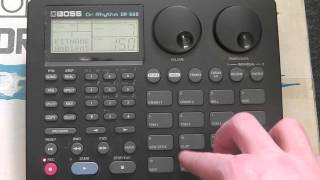
Boss DR660 Drum Machine Tutorial pt.1
Simon Guitar
Boss DR660 Drum Machine Demo
Simon Guitar
the ONLY drum machine you'll ever need...

Tonepusher
Bad Gear - The Memphis Rap Machine

AudioPilz
Boss DR660 Drum Machine Tutorial pt. 2

Static Buzz
Boss Dr.Rhythm Rundown : DR-55, DR-110, DR-220A, DR-220E, DR-550, DR-660

gwEm’s gwEmbassy
Boss DR-660 - Samples and FX Edit Demo (Sounds Only)

wolfgang S vukan
Boss Dr 660 Demo

MossPrinten
Boss Dr 660 Lots of Power in a Little Box

Glenn Main
![Video thumbnail for Boss Dr 660 Demo, Review and Simple Beat Making With The MPC One and Standalone[No Talking]. by G-Soul](https://img.youtube.com/vi/6Yryn_kraYk/mqdefault.jpg)
Boss Dr 660 Demo, Review and Simple Beat Making With The MPC One and Standalone[No Talking].

G-Soul
New Jack Acid - Hardware Sequenced Boss DR-660 Roland JX-3P SE-02 Juno-DS Behringer TD-3

Justin Mullins
Reviews
PROS
-
Great 808 and 909 sounds, excellent for budget-conscious users
-
User-friendly interface, suitable for beginners
-
Features classic drum machine sounds with a lo-fi charm
-
Versatile for genres like EBM and Electro with unique sizzle on high end
-
Useful sequencer that complements other drum machines well
-
Offers two individual outs for enhanced sound routing flexibility
-
Dedicated buttons for rolls and flams add to creative expression
-
Attractive design with a professional, all-business look
-
Notable for its historical use in electronic music production
-
Stands out for its ability to blend digital textures with organic drum sounds
CONS
-
Prone to technical issues such as CPU lockups and pattern repetition errors
-
Sound quality may be too flat or lo-fi for some users’ tastes
-
May cause ear fatigue with extended use due to brightness and top-end sizzle
-
Despite its features, some might find its output quality a step down from higher-end units
Owner Insights
We analyzed real musician discussions from forums and Reddit to find what players love, question, and tweak about Boss Dr. Rhythm DR-660.
Features and functionality
-
The DR-660 offers step and realtime recording with roll/flam and velocity-sensitive pads, making it suitable for finger drumming.
Source -
The DR-660 can be used as a MIDI controller, triggering DAW samples when pads are hit.
Source -
Some users appreciate the jazzy brush kit, though the acoustic drum kits often have a characteristic early 90s booming gated reverb sound.
Source
User experience
Use cases and applications
-
Known for its classic TR samples, the DR-660 is popular in ghetto tech and booty house music.
Source -
The DR-660 is favored for its onboard sounds, which are unique to the model and can't be loaded from external sources.
Source -
To achieve a sound closer to headphone output, users suggest connecting the DR-660 to a full-range speaker like a PA or keyboard amp instead of a mini amp.
Source -
Running the DR-660 through a mini Marshall amp can create a lo-fi, driven sound, though results may vary compared to a full-range speaker setup.
Source
Value and pricing
-
Prices are beginning to rise, suggesting a growing cult status for the DR-660.
Source
Software and compatibility
Setup and maintenance
-
Users recommend purchasing a universal power supply as a replacement, noting it should offer the necessary compatibility for running the DR-660.
Source
Critic Reviews
4.5 out of 5
Based on 4 Reviews and 17 Ratings

26907
The MPC-60 of budget drum ROMplers
My first hardware drum machine was actually the successor to the 660: the DR-770. I got on well with the little blue and orange 770, but found that my ears would start to hurt if I spent too much time banging away at it; the 770 had perhaps more brightness and top-end sizzle than I (or anyone) needed at the time.
I sold my 770 and picked up a used 660 based on the following:
Reviews from owners of both machines stating that (despite way more sample memory on the 770) they found the selection of sounds on the 660 more usable, despite it's flatter, more lo-fi sound quality.
The 660 had two individual outs for routing snares/hats/etc to their own FX/mixer channel. The 770 had just one extra out. For my FX-heavy musical fumbling of that era, 2 individual outs meant "twice as good!".
Separate, dedicated buttons for (MPC-style) rolls and flams, instead of one switchable button for both on the 770. I was listening to a lot of IDM/drill'n'bass at the time... rolling AND flamming in the same recording take somehow seemed important to me.
According to the internet, Roger Linn had supposedly worked on and/or designed the 660, but not the 770, and Tom Jenkinson was on-record as having sequenced all drums on all albums (to that point) using a 660... so, despite the 770 having essentially the same sequencer, I wasn't above buying into some of the 660s very specific pedigree + mojo. Note: I've yet to find any hard evidence that Roger Linn actually contributed to the 660, beyond a single vague line on Roger's own website: "In addition to these designs for Akai, he also helped design products for a variety of companies during the 1990s, including the Japanese Roland company."
The 660 was dressed in black: all business... and therefor sexier. The 770's plastic colors, while still reasonably tasteful for this "Groovebox" era of gear, didn't really fit its design, intent, and sound... the colors said "I'm fun! Bang my pads! Make Crystal Method beats", but the actual experience was "serious drum sequencer for serious(ish) musicians". In both intent and execution, the 660 and 770 are more of a budget, ROMpler-only version of the MPC-60/3000 than any kind of sibling to contemporaneous products like the MC-303/505. I still have a peak-electronica-cash-in-era DR-202 somewhere, it couldn't be more different... mostly for the worse.
Anyway... I overestimated how much use I'd get from the extra outs and extra roll button, but the sounds didn't disappoint: they were indeed more fun, flat, and useful for lo-fi electronic beats, with the standout being a great range of aggressively-late-80s "dance" snares. Most every sound on the 660 starts off somewhere between 80s Phil Collins and Fine Young Cannibals, but you can quickly edit them into something you'd wanna hear for 3 or more minutes. A decade later, when I finally got a real TR-808, I remember being disappointed that its snare didn't have the same cutting presence as the single 808 snare sample on my 660... I tweaked in vain, trying to get the real deal to match its much more cost-reduced great grandson.
Note: I've heard the 660's sample set was sourced from the library of the earlier Roland R8 drum machine and it's expansion cards -- a late-80s instrument now considered a classic by some folks, and still getting action on recent Aphex Twin releases. While I haven't verified this sample-origin story myself, it's worth nothing that, even if true, the R8 is a 44.1kHz/16-bit machine, while the 660 is 32kHz/16-bit -- and the DAC on the much more upmarket R8 is likely to be from a higher shelf of the parts bin... whether or not these realities ultimately makes the 660 sound better or worse than the R8 is up to you and your ears. I've yet to demo an R8 in the flesh.
A couple years after all that, Legowelt helped me discover the crusty joys of Chicago's Dance Mania label, and the dozens of (forgive me) "Ghetto" House tracks and proto-Footwork tracks that used nothing more than the DR-660, a 4-track, a mic, and some attitude to make underground party vinyl. That same recipe was the centerpiece of the early/mid-'90s Memphis rap sound. Shawty Pimp and MC Spade's 1993 Solo Tape is the ultimate in DR-660 ingenuity; other than the background vinyl in the intro shout-outs, that tape is 100%, DR-660, 4-track and a mic. It's gold.
I eventually learned to love my TR-808's snare on it's own terms, and I really don't hammer on the 660 much anymore... but I'd never sell it. Despite sounding a little grainy and muffled by today's 24-bit DAC standards, the 660 represents (for me) a damn good idea, executed perfectly... and the over-achieving it's done in the world at-large since it's release is testament to how right Roland's planners, designers, and Engineers got things with this very approachable 1992 gem.
Preferred Settings + Usage:
The late-'80s Janet Jackson and Fine Young Cannibals-esq snares and the cutting, studio-grade eq treatment baked into all the 808 sounds.
156
Hezké neotřelé zvuky
Boss DR-660 má v sobě spoustu typických zvuků bicích z 90tých let, o kterých jsem vlastně začal přemýšlet až při zakoupení tohoto drum machine modulu. Nikdy jsem je neslyšel v žádném pluginu, opravdu. Ne, teď se nebavím o pokusu napodobit 909 nebo 808 od Rolandu, nebo klasický power rock kit. Ale je tu spousta opravdu dobrých zvuků, které se budou ještě určitě hodit do mé produkce pro žánry Synthwave atd. Není to určitě nejostřejší tužka ve vašem penálu, ale pokud se vám tento modul podaří koupit "levně", doporučuji ho mít. Tento nástroj mám v mém nahrávacím studiu Sunteem records.

One great deum machine
I have 2 of them. That's how much I love this machine.

424
Vintage Digital Drum Machine
I used a lot in many pop arrangement combining this digital texture with organic drum sounds. Punchy and snappy, still very interesting.
Artist usage
Add artist

In this extensive interview by YouTuber Shane Flemming from roughly 2019, DJ Rod talks about the early days of Memphis production. At the roughly 4:40 mark he mentions DJ Pinky's use of the DR-660:
It was me, KE, and DJ Pinky... we were like the main spearheads of production over at [Fela's] house. It was either I'm doin' the beats, KE was doin' the beats or Pinky was doing the beats... AND Fela. All four of us were the ones that used that Roland 660 [...] when we'd use that thing we'd take turns making beats...
Note: There is no "Roland" 660, but Boss is just a subsidiary of Roland, so calling the Boss 660 the "Roland" 660 isn't exactly incorrect.
DJ Pinky is also listed as a Boss DR-660 user in the excellent 90s Memphis Rap Production Guide from Loaded Samples.
Also also: Enjoy this very NSFW early 90s DJ Pinky track that may or may not feature some 660 sounds.
Also also also: I have no idea who the artist "KE" is (or "Keith One/Warren"?) that they keep mentioning in the interview, if anyone has any ideas on that one, go ahead and @me right there in the posting comments.

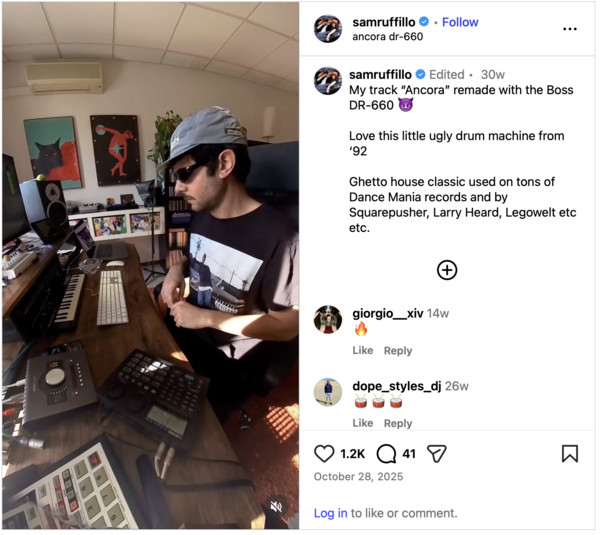
In this screenshot of an Instagram post from 2025, Sam provides a short video demonstration of his DR-660, letting the little plastic gem do it's thing with hard, crunchy Roland PCM '89 sounds and long, murky reverb tails.


In this 2015 interview for the Memphis Flyer, DJ Squeeky reveals the tools of his trade throughout the years:
Q: What are some of the machines that you use to produce?
A: I’ve used the SP-1200 [drum machine]. I had a Boss Dr-660. I had an old Roland keyboard before Mini came out. My music back then was more like a sample thing. I was sampling things that I heard and was putting beats to it. I’m still using the drum machine to make beats. The MPC-3000. I’ve been dealing with Fruity Loops too.
Also, for the historians out there, this Pitchfork review from 2025 mentions the following:
It’s hard to accurately pinpoint the sound’s progenitors, but among longtime fans and the scene’s living elder statesmen, there’s a loose consensus that its initial innovators were DJ Squeeky and DJ Zirk. Kingpin Skinny Pimp, one of the period’s heavyweight MCs, specifically credits Squeeky for originating the ratcheting trap cymbals found in all manner of hip-hop production today. Both DJs traded in swampy murk, programming on rudimentary drum machines like the Boss DR-660 or DR-5. But Squeeky’s work emphasized melody while Zirk’s was darker, more textural.


In this late 2025 interview posted by Al Kapone, Shawty Pimp recalls making his first recordings at DLE's house, where he had the coveted Boss DR-660:
So we used to go to DLE's house, man. And, uh, [ __ ] he had that damn that Bos 660 over there, man. And [ __ ] I just I had to have it, man.


In this interview with Icon Academy, courtesy of YouTube, Malik Jahmil Shannon, aka Shawty Pimp, details how the DR-660 came into his life.
At 20:07, Shawty relays a story about how Tommy Wright III took him to DLE's studio, where he saw the Boss DR-660 for the first time and decided he needed to get one for himself.
Shawty Pimp & MC Spade's 1993 "Solo Tape" uses the Boss DR-660 exclusively for every beat, no other synths, samplers or drum machines were employed, just this one little machine, a 4 track recorder and a microphone.
(yes there is some vinyl playing in the background for the intro shout outs, but once the tape gets started it's all DR-660 from then onward)
Update: I also uncovered a wonderful 2025 6-part series Torii MacAdams wrote for Medium. Part 2 is the best interview with Shawty Pimp I've ever come across:
When his peers were hammering out sparse, Stygian beats, Malik was sourcing lush soul and funk samples from his father’s vinyl collection. Others were pretending to be conversant with Satan and his sulfurous machinations; Malik was functionally conversant with the laid back instrumentation of artists like Roy Ayers and the Isley Brothers. When slightly older, more immediately successful dudes were making gestures toward professionalization, Malik was recording in the safety of his teenage bedroom with a microphone, a four-track cassette recorder, a Boss DR-660 drum machine, and a Gemini DS-1224, a sampler down-market from the comparatively expensive SP-1200. “I didn’t have no pre-made beats until after the cassette era,” he says, laughing to himself. “Before that I couldn’t save my beats. Recorded to tape, letting the drum machine play, hitting the loop, and rapping at the same time. I can’t imagine trying to do that shit now. That shit was crazy!”

In this 2017 interview (5:05) with All Def Music, Tommy Wright III names the Boss DR-660 and DR-5 as the go to machines for himself and others in the Memphis scene.


In this 2024 interview presented by Shangri-La Records, Blackout confirms that he started off with the Boss DR-660.
At 18:24, Blackout states:
"I was using the Boss DR-660 during the core history"
A nice touch: someone in the audience exclaim "YES!" when the 660 gets name checked.
The Blackout Mixtapes 93-95 is one of the earlier productions by Blackout ever released. Already at 0:08, we can hear the 660 patterns kicking in. Throughout his whole discography, Black makes sure to stick loyal to his DR, with a huge probability of its patterns being responsible for the rhythmization of 95% of his discography.

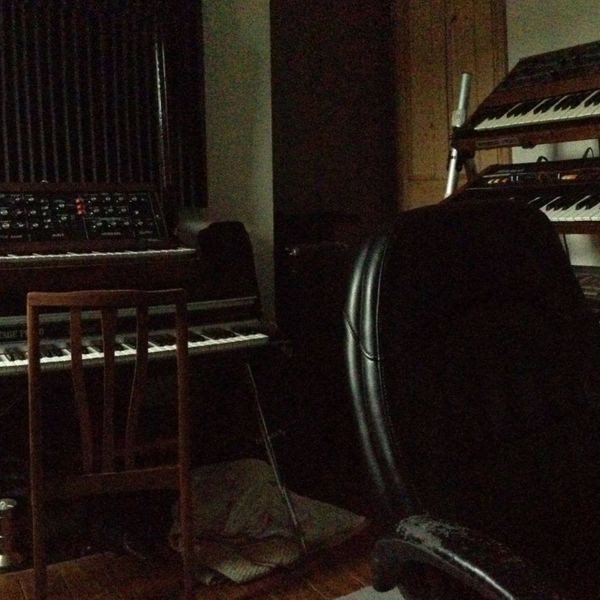
In a 2013 Facebook post titled "Studio lens," YSE showcases the Boss Dr. Rhythm DR-660 drum machine positioned beneath the ARP 2600 in their studio setup.


In this 2019 interview for lebronjames.co (huh? yeah, no idea what's going on there), Gant Man recounts the gear he encountered at Paul Johnson's house:
Q: What was that first pro equipment that you were learning on?
When I first started messing around, I was probably eleven or twelve, and my brother had a Boss Dr. Rhythm DR-110, this really old-school, very limited drum machine. It sounded like a baby, puny 808. Then my brother also had a Roland TR-707 around, and that’s when I actually started learning how to program a little bit better. The radio station had a production studio that had an old-school Yamaha drum machine, but it was kinda weak. It didn’t really have the sounds that we liked to use. So when I got to Paul Johnson’s house, he had a Boss Dr. Rhythm 660 and an Akai S01 sampler, plus a mixing board, studio monitors, cassette deck and all that. He eventually upgraded to a Roland R70 drum machine from there, and then a MPC3000. So my production kind of advanced from there.

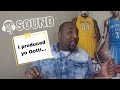
In this 2019 interview posted to Mr. Zee's YouTube channel, DJ Sound lets the world know that he "miss(es) his Boss (DR) 660" (29:20).


In his June 4, 2021 blog post for Loaded Samples, author BINSU states:
DJ Spanish Fly had been producing his own tracks since the 80s, but by 1992 he began using the Boss DR-660 drum machine which was a major turning point for the Memphis Rap Genre.
Additionally, in a Dec 10, 2024 feature for Oxford American DJ Spanish fly himself provided images from his personal archive, one of which bares the caption:
Performing my greatest hits in North Mississippi with a Roland Boss 660 drum machine along with Capt. C.


In this 2016 feature for 5mag.net, author Terry Matthew interviews Jerome Baker (aka "DJ Boris", aka "Lord Damien"). In the process, some equipment is revealed:
At gigs, I had my drum machine of choice, the Boss DR-660, and I’d take it with me and play tracks off of that. Little did I know that Green Velvet, Caj, was at a party and heard one of these tracks. I went to the Cajual/Relief offices one day and Caj came out of the office and was like, “I know you!” We reintroduced ourselves and he mentioned that track I played at the gig. I said it was right on this tape here. He waved me into his office and I threw it in and that’s where the first Relief Records release came from – Black Damien as “DJ Boris.” It was just songs from my DR-660. “Apacalypse” was on there, and I think that’s probably still my biggest record. I know it’s one of my favorites. And it’s actually a re-do of an idea that was one of the tracks I let Gene hear that was “angry!” You can hear how angry “Apacalypse” is even now, but I had a much better arrangement on it. That’s how that EP ended up coming out.
Album Usage
The Boss Dr. Rhythm DR-660 has been featured on the following albums:
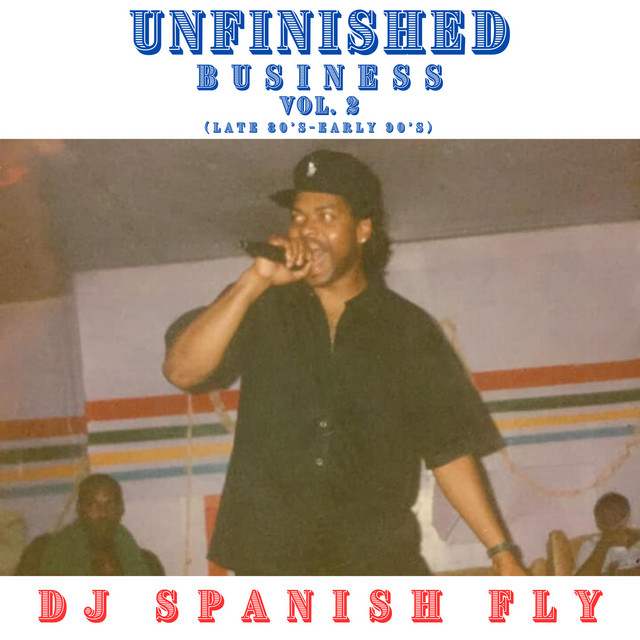
Unfinished Business, Vol. 2 (Late 80's-Early 90's)
DJ Spanish Fly (2023)
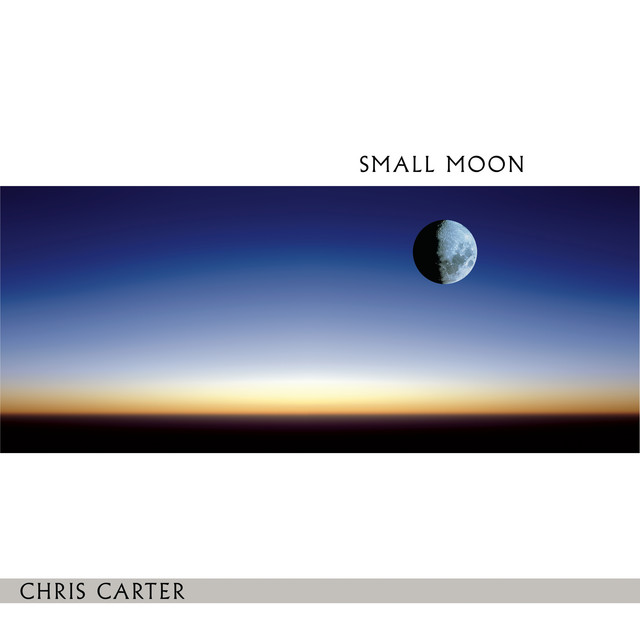
Small Moon
Chris Carter (2018)
Chronology
Jean Michel Jarre (2015)
Dance 2000, Part 2
Larry Heard (1998)
Big Loada
Squarepusher (1997)
Hard Normal Daddy
Squarepusher (1997)
Vic Acid
Squarepusher (1997)
Dance 2000, Part 1
Larry Heard (1997)
Feed Me Weird Things (Remastered)
Squarepusher (1996)
Port Rhombus
Squarepusher (1996)
Stereotype
Squarepusher (1994)
O'Brien
Squarepusher (1994)
Sceneries Not Songs, Volume 1
Larry Heard (1994)
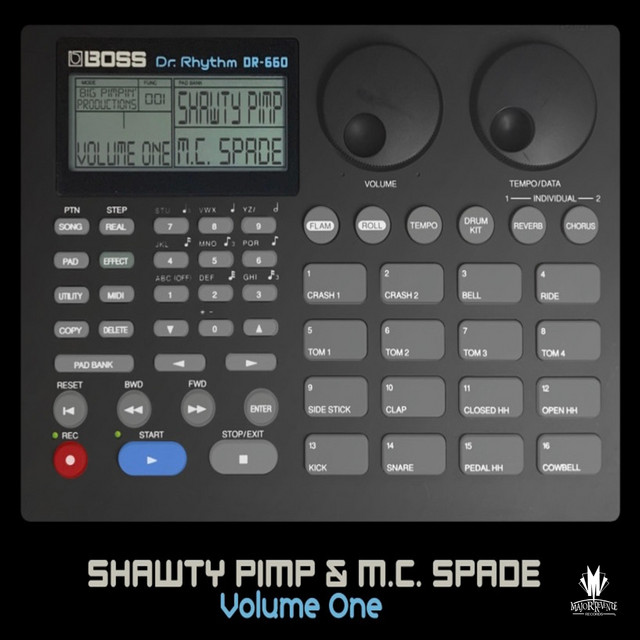
Volume 1
Shawty Pimp (1994)
Psycho Kong
Paul Johnson & Paul Johnson (1994)
Genre Usage
Based on how artists on Equipboard use this gear, it is most commonly found in the following genres.
Used With
Based on how musicians on Equipboard use Boss Dr. Rhythm DR-660, it is most commonly used with the following gear.
-s.webp?v=1783318437)
-s.webp?v=1783349885)



Similar
Add recommendation3 alternative and related items for Boss Dr. Rhythm DR-660, curated by the Equipboard community.

$298.54
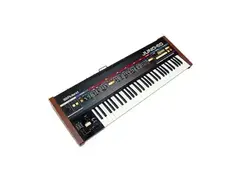
Upmarket Roland-branded take on the 660, released the same year. Most of the 660's same sounds w/ larger body/pads. Features 44.1kHz/16bit fidelity instead of 660's 32kHz/16bit.

$799.99
Same era of Roland tech, similar drum sounds, but with higher spec DAC, 44.1kHz fidelity and better LCD display w/ grid sequencer view. Lacks 660's internal FX, and takes up a lot more space on your desktop. Hard plastic pads instead of soft rubber.

$110.00
660's little brother, w/ only 91 sounds instead of 255. Lacks pitch-editing of sounds, so you can't do proper phonk/memphis cowbell melodies.
More Boss Drum Machines

$400.00
in Drum Machines Rank


$214.95
in Drum Machines Rank


$94.34
in Drum Machines Rank


-m.webp?v=1782917934)
$69.00
in Drum Machines Rank


$199.99
in Drum Machines Rank


$132.44 - $218.00
in Drum Machines Rank


-m.webp?v=1783318437)
$4,699.00
in Drum Machines Rank


-m.webp?v=1783263628)
$77.62
in Drum Machines Rank


$659.00 - $899.99
in Drum Machines Rank


$268.68
in Drum Machines Rank


-m.webp?v=1783349877)
$4,795.05
in Drum Machines Rank

-m.webp?v=1783377972)
$119.99 - $159.99
in Drum Machines Rank


$215.00 - $1,073.79
in Drum Machines Rank


$89.56 - $1,999.00
in Drum Machines Rank


$347.00 - $494.99
in Drum Machines Rank


$1,533.68
in Drum Machines Rank


$399.00
in Drum Machines Rank


$47.00 - $59.00
in Drum Machines Rank


$118.75 - $159.00
in Drum Machines Rank


$1,649.00
in Drum Machines Rank


$249.57
in Drum Machines Rank

.png?v=1783356717)

$499.00
in Drum Machines Rank

-m.webp?v=1783375841)
$244.00 - $299.00
in Drum Machines Rank


-m.webp?v=1783323597)
$399.00
in Drum Machines Rank


$109.99 - $159.99
in Drum Machines Rank


$350.00
in Drum Machines Rank


$570.00
in Drum Machines Rank

-m.webp?v=1783263600)
$125.00
in Drum Machines Rank

$152.10
in Drum Machines Rank


$108.62
in Drum Machines Rank


$237.00 - $339.00
in Drum Machines Rank


$82.26
in Drum Machines Rank


$4,550.00
in Drum Machines Rank


$69.99 - $129.53
in Drum Machines Rank


$119.99 - $159.99
in Drum Machines Rank


Accessories & Related Items


-s.webp?v=1782917934)



Community setups


Gear Guides





Most Popular Drum Machines
Most Popular Brands
-
Added to Equipboard on by
federicovaonaGear IQ 424
-


