-s.webp?v=1784336309)
-xl.webp?v=1784336309)
Pricing and availability




* Product prices and availability are updated by Equipboard every 24hrs and are subject to change. Equipboard may receive compensation for purchases made at participating retailers linked on this site. This compensation does not affect what products or prices are displayed, or the order of prices listed. For more information, please refer to our affiliate disclosure.
Description
When it comes to capturing the essence of classic rock tones, the Laney LA 100 BL guitar amplifier head stands out as a quintessential piece of musical history. Originally designed in 1967 to meet the needs of legendary guitarist Tony Iommi, this amplifier head has been faithfully recreated to deliver the same iconic sounds that defined an era.
The LA 100 BL is a 100-watt powerhouse, built on a foundation of all-valve circuitry that ensures the warmth and dynamic response only tube amps can provide. Its straightforward, no-frills design includes a single channel with a quartet of ECC83 preamp tubes and a pair of EL34 power tubes, offering a wide range of tones from clean and crisp to rich and overdriven. With its hand-wired construction, the LA 100 BL promises reliability and exceptional build quality, making it a durable choice for gigging musicians and studio professionals alike.
This amp head features a simple control layout, including bass, middle, treble, presence, and gain knobs, allowing you to shape your sound with precision. Whether you're looking to replicate the heavy riffs of the 70s or explore new sonic territories, the Laney LA 100 BL provides the flexibility and power needed to achieve your unique sound.
Key Features:
- 100-watt all-valve amplifier head
- Hand-wired circuitry for authentic sound
- Single channel design with ECC83 and EL34 tubes
- Bass, middle, treble, presence, and gain controls
- Faithful recreation of the original 1967 model
- Designed in collaboration with Tony Iommi
Product specs
| Amp Type | tube |
Videos

Kytary Worldwide
Laney LA100BL & LA412 - Tony Iommi's Limited Edition Rig // RIFF REPORT
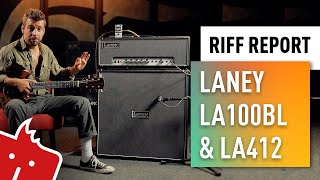
Laney LA100BL & LA412 - Tony Iommi's Limited Edition Rig // RIFF REPORT
Kytary Worldwide
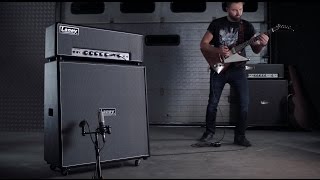
Introducing the limited edition Laney LA100BL, LA412 and Tony Iommi TI-BOOST pedal package

MusicRadar
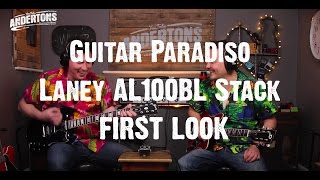
Laney LA100BL Stack & Tony Iommi TI-Boost pedal - FIRST LOOK

Andertons Music Co
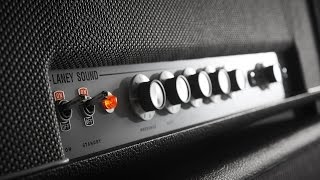
Laney LA100BL Play Through

Laney Amplification
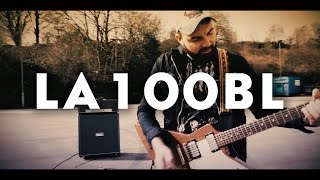
LANEY LA100BL GETS LOUD
Laney Amplification
Reviews
Owner Insights
We analyzed real musician discussions from forums and Reddit to find what players love, question, and tweak about Laney LA 100 BL.
Features and functionality
-
The master volume circuit does not match the punchiness of a JCM800; it offers a sound more akin to Plexis or Fenders.
Source -
The lack of master volume makes balancing drive and volume challenging, especially for those seeking more overdrive.
Source -
Users suggest opting for a 4x12 cab instead of a 2x12 for more output, recommending Fane speakers or a Marshall 1965A/B cab for a large sound with lighter weight.
Source
Comparisons
-
Unlike the JCM800, the LA100SM is perceived as having a darker sound that is distinctively Laney's.
Source -
The LA30BL is compared to the Orange Super Crush 100 for buyers transitioning from Fender combos, noting a distinct stoner rock suitability.
Source -
The LA30BL's perceived loudness is compared to the Orange OR15 and other British wattage amps, suggesting it's louder than similarly rated American amps.
Source
Setup and maintenance
-
The original Supergroups had high plate voltages that modern EL34 tubes struggle to handle.
Source
Use cases and applications
-
The amp is extremely loud when settings are maxed, suitable for users who enjoy cranking their amps.
Source -
Users highlight the LA30BL's suitability for stoner rock, particularly when paired with Greenbacks, despite concerns about their lower sensitivity.
Source -
The LA30BL's sound is favorable for midrange and overdrive tones, less so for those seeking prominent low-end or clean tones.
Source
User experience
-
Owners note the absence of an effects loop, describing the amp as a "one trick pony."
Source
5.0 out of 5
Based on 1 Review and 1 Rating
.jpg?v=1769619958)

41034
they're just superleads (blown up fender tweed bassmans) with partridge transformers (the hiwatt iron)…. almost part for part a plexi front 100 watt marshall but that output transformer does give it a lot more bandwidth... now the Klipp amps are a bit more original
Artist usage
Add artist
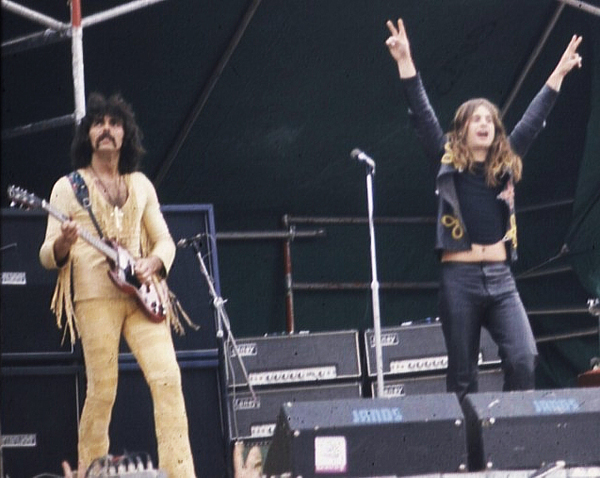
Known among some as the "pre-Supergroup" LA100, Tony used the Laney LA100BL on Black Sabbath and Paranoid. He also toured with one as part of Black Sabbath's endorsement deal with Laney. Besides this 1973 image from a show in Australia, the following sources confirm Iommi's use of the amp:
Guitar Player, 1974 interview (posted online on July 27, 2021 as "Tony Iommi Discusses His Love for the Gibson SG and Laney Amps in This 1974 Interview") by Steve Rosen
His first guitar with Sabbath was a Fender Stratocaster (year unknown), which was plugged into two Marshall (4x12) cabinets powered by two 50-watt amplifiers. As the band grew in popularity they started adding more cabinets, until they were offered an attractive advertising arrangement by Laney Amplifiers in England. Since that time, Tony has been using six 4x12 Laney cabinets which are fed by four 100-watt amps. They are channelled by plugging V-cords into the “normal” outputs (they have “treble” and “normal” sockets) of the four heads. For treble boost, he uses a Rangemaster unit which has been reworked (extra tubes and boosters) by the band’s roadies.
On stage, Tony uses no pedals at the present time, not so much from a religious dislike as from a pragmatic one: He feels they do more harm than good. Because the band tours the United States so frequently, they must contend with the different systems of grounding. In England, their Laney amplifiers give maximum performance, but over here the different ground setup causes the stacks to hiss and growl and perform below average. Therefore, adding any sort of extra unit to the line causes extraneous buzzes. In England, Tony uses a wah-wah and a mini guitar Moog, but found that using them in America caused a significant drop in amplifier power and sound.
The group is now searching for an American made system that won’t plague them with those problems. In the meantime, to accommodate for the ill performance of his Laney stacks in the U.S., Tony must set his amplifier on full volume. The “presence,” “middle,” and “treble” are also on 10 with no bass on the amp whatsoever.
The guitar volume is usually set on full because of the constant thundering chords he hammers out, and the three-way toggle switch (“rhythm,” “middle,” and “lead”) is placed on the up position for chording and in the treble spot for soloing. In the studio, Iommi uses these same settings, but only one 100-watt Laney stack. For a particular solo, though, occasionally he’ll use a Fender amplifier. On record, Tony delves into effects a little more than on stage as on Sabbath, Bloody Sabbath when he used a wah-wah, a Rotosound box (which makes the guitar sound like an organ), and various other boosters and phasers.
Original audio tape for 1974 Guitar Player interview, uploaded to YouTube on May 20, 2023 by Steve Rosen (@ 8:11)
Iommi: And then to the left we've got, I don't know, we brought up the stuff, more, you know, just like... We went out and bought a lot of new equipment, you know, whatever this deal is, Laney's amplifiers, which we still use.
Rosen: You use the Laneys now?
Iommi: Yeah, and not for long, but, uh... I know we just have this deal and we just get all Laney equipment. [...]
Rosen: And how'd you come upon Laney?
Iommi: Well, they're from where we come from and they're built there. And we was offered a good deal to sort of advertise for them. And so we took the deal and got a lot of new equipment. And they use this, if anything went wrong they used to switch [unintelligible] You know, it was so quick, we could— it was good for us because we didn't have to wait about for new stuff, they'd just [unintelligible] straightaway to see if anything went wrong, and... we'd have new equipment then.
Rosen: So, I mean what's your setup now, then, I mean, besides the [unintelligible]?
Iommi: I don't know what I use, uh... I think I use six... six by twelve speakers, cabinets and... four amps...
Rosen: What—?
Iommi: Four one hundreds.
Rosen: Four hundreds?
Iommi: Yeah.
Rosen: I mean... are they hooked in series? Are— the channel, I mean, how do you usually…?
Iommi: There from one into another into another into another, you know...
Rosen: I mean, uh, from... I mean, is there like, is there normal channels, bright, or is there, just...
Iommi: Yeah, there's a normal channel and then there's a... next one's is a treble circuit. I use the normal circuit. It's a normal circuit. I use a treble booster.
Rosen: You do?
Iommi: Yeah, because I didn't like to use the treble circuit because it used to— a lot, lot of noise from it, you know, hissing and... [unintelligible], you know, so I use a treble booster into the amp... into the normal circuit, which sort of boosts the output and gives it this sort of... more power in the front, yeah.
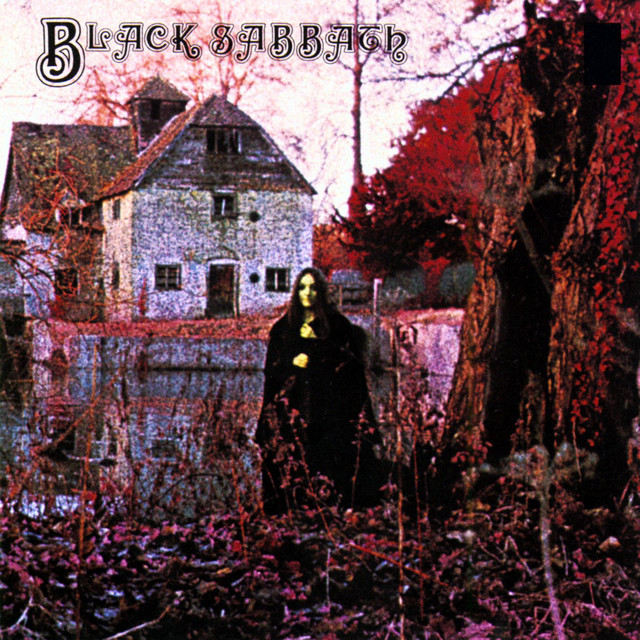
Black Sabbath (1970)
“Money was really scarce in those days, so the whole album was recorded in eight hours on an eight-track machine at Regent Sound in London. We were so pleased to have been given the chance to make a record that the whole experience seemed very luxurious. A record deal in those days was a very big thing. Most of my solos on that record were done the same way I do them now—very off-the-cuff. I performed the extended solo on ‘Warning’ in only two takes. The first one I played was much better than the second one, but our so-called producer, who had never produced an album in his life, decided to put the second one on the record without consulting us. For that album, I used my Gibson SG—the same one I used for the next 10 years—and either a Laney or Marshall cabinet. We didn’t even have time to work on getting sounds—we just set up mics in front of the cabinets and went off. We just played as if we were playing live.”
Guitar World, August 1992, co-interview with James Hetfield (posted online on August 3, 2021 as "Tony Iommi and James Hetfield discuss their guitar journeys with Black Sabbath and Metallica in this classic 1992 Guitar World interview") by Brad Tolinski & Alan Paul
Hetfield: “What kind of amps have you used through the years?”
Iommi: “I used Laneys for years.”
Hetfield: “What did you use for distortion?”
Iommi: “Basically, I just used a little box called a Rangemaster, which boosted the input. Now they build that directly into amps, don't they? Believe it or not, I went to several companies 20 years ago and said, ‘Can you build this in an amp?’
“They all said, ‘Don't be stupid, nobody's going to want to buy something that distorts an amplifier.’ I said, ‘Of course they will. If they like that sound, they'll buy them. If they don't, they'll buy your ordinary one.’ And it took them 15 years before they realized what I was saying. In fact, Laney came to me later and said, ‘Now we know what you were talking about.’”
Gibson, Lifestyle, "Tony Iommi on Early Black Sabbath: 'People Were Very Frightened of Us'" by Steve Rosen (May 20, 2008)
Were you conscious of the guitar sounds you were trying to create? Or did it really not matter to you?
Every time I’m questioned about this, it’s been confusing for me. It’s just something that came out of me that was totally different because it was like doomy and the riffs were a bit frightening. And you know, it was something that I felt. It’s really a mystical thing.
I was always trying to improve the guitar sound all the time and for many years I worked on that. For Paranoid, I was using basically the SG and the Laneys. Everybody else was using HiWatts and Marshalls but I liked Laneys. I really didn’t have an idea for a specific tone. But I thought I got a good guitar sound on that album; I was happy with it.
Were they any specific settings you used?
Basically, I set the presence, middle and treble on 10 with no bass whatsoever. The guitar volume was usually set on full and the three-way toggle switch was set on the up position for chording and in the treble spot for soloing.
Any other pedals or devices?
For treble boost, I used a Rangemaster unit that had been reworked by my roadies. I used a wah-wah, a Rotosound box, and various boosters and phasers. For some of the solos, I used a Fender amp.
What was so special about the Laneys?
First of all, they were free! They gave them to us. Secondly, I liked working with them to get the sound I wanted from them. I never rested; I always kept trying to get it better or get this to do that. It used to drive everybody else mad as well ’cause I’d always want to get out for soundchecks. I always had to try this and that. That’s the way I was because I was always trying to improve the sound. And I would never accept that that’s how it’s gotta be and that’s it, you know? That’s probably why it got me in trouble, trying to get guitar companies to do this and do that. A nightmare. I tried to get them to make me an amp with a preamp. When I got the Laneys, I used to overload the inputs to give it more boost. That’s how I got those sounds on Paranoid.
[...] Do you remember touring in America [for the first time] to support Paranoid?
Not very well. We flew on the same aircraft as Traffic. Jim Capaldi [Traffic’s drummer] came over to Bill and talked for a while. Bill knew Jim off and on from the old days [Sabbath and Traffic were from the Birmingham, England area]. Jim was reassuring because he said, “You guys are gonna tear this place apart.” Traffic were really old-timers. They’d been to America before.
The first gigs that we played were schools and school halls, gymnasiums, that kind of thing. And we couldn’t play ’cause our equipment kept blowing up. We’d get past the first two songs and everything would blow up. We used Laney columns at that time. But we sorted out the equipment thing pretty quick.
Total Guitar, Issue 210, "Tony Iommi interview part one: Gear, tone and early 'Sabbath" by Matthew Parker (December 20, 2010)
What amps were you using in the early days of Sabbath, around the first album 'Black Sabbath'?
"I think I was using Marshall early on, and then Laney on the first album, but when we first wrote ['Black Sabbath'] songs I was using a Marshall 50-watt. I switched to Laney because they started up around the same time as us and they're a Birmingham company. To be honest, they offered to give us all this gear when nobody else did. What do you say to that? 'OK!' So I used them."
What other key pieces of gear did you use back then?
"When I lived in Cumberland, when we did the Mythology thing [Iommi's earlier band], there was a guy up there and I used to use his treble booster called a [Dallas] Rangemaster to give my sound a bit more 'oomph'. A guy from another band up there said, 'I can make that sound better for you'. So he took it off me and brought it back the next day. I don't know what he did to it, but it was really good. I used that treble booster on all the early Sabbath albums and put it into the Laney because it boosted the input and gave it the overdrive I was looking for, which amps in the early days didn't have.
"I used that treble booster up until 1979 when I had a guy come in to build me some Marshalls. They gave me a whole stack of Marshalls and this guy came in and rebuilt them. In the meantime, while he was building these things, he threw my treble booster away. I didn't know until it came to the time when I was looking for it and he said, 'Oh that? I threw it away. It was crap'. I couldn't believe it. I've never seen it from that day on and my amps didn't sound right without it."
Black Country Customs website, January 2017
The LA100BL & LA412 are a faithful, hand built, point-to-point wired, reissue of the original amp and cab Tony used at the beginning of his Black Sabbath career. Everything in the amp is as it was in the original. From the hand drilled turret board, the parts list, the authentic hand wiring process and the original box frame styled output transformer. It is as close to the real thing as buying an original LA100BL.
“The driving force behind the project wasn’t simply just the company’s 50th anniversary on the horizon, but also the fact that Tony Iommi was starting to think about gearing up for Back Sabbath’s final world tour known as “The End”.
The set list for the final tour was to pull material from the whole of Black Sabbath catalogue and Tony had the idea that it would be a fitting way to end his Black Sabbath touring career the same way he began it – playing a Laney LA100BL.
So we started talking about the possibility of building Tony a reissue of the 1969 amplifier that he used on the original Black Sabbath release. First thing we needed to do was to set about listening to these old amps.
Gibson TV, "Icons: Tony Iommi of Black Sabbath" (February 13, 2020) (@ 11:23)
SG, Rangemaster, and Laney amplifiers I used. I had Marshalls at first, then I went to Laney amplifiers and used them because they were from Birmingham, so we had a thing going. They were from Birmingham, we were from Birmingham and... and so they supplied us with all the amps. It was great. I mean, I'm not saying... When we went on tour, I had a lot of problems because I had the treble booster and especially when we came to the States, 'cause we were doing shows like... big shows and some of the ice rinks and stuff and of course the machines would affect— go through the treble booster. It started picking up bloody taxis and, when we'd done The Spectrum in Philadelphia it was horrendous the sound, I mean you could hardly hear the sound above the buzzing. So, you know, it did have its problems but, when it was good, it was brilliant and it was a great combination with the SG. It sort of worked out really well.
Made in Rock, From Stage collection (added August 2020)
BLACK SABBATH
Laney 1968 supergroup 100 watts in newer cab – formerly Tony Iommi
Thomann's Guitars & Basses, Guitar Tech Tips, Episode 76, "Black Sabbath: Tony Iommi Setup REVEALED" (October 14, 2021)
Mike Clement: [...] he was for years looking for, "Oh, this isn't quite my sound, you know?", whatever, and... What we did was we went back and found one of his original amps, or the same type, which was the Laney LA100BL. And we brought it along and, we needed to get it fettled up a little bit, 'cause it wasn't in very good working order. So Mike Hill sort of worked on it and got it working and of course as soon as Tony hit it, he said "That's it! That is the sound I've been wanting for like, the last thirty years!" You know.
Total Guitar, "Tony Iommi on Black Sabbath's Vol 4: "Somebody said, ‘You can’t put Laguna Sunrise on the album with all the heavy stuff.’ Why?"" by Rob Laing (October 1, 2022)
“I had a totally different rig altogether for the last tour. I went to Laney and asked them if they would build a better (more reliable) version of the original amps I had years ago in the early days. They thought about it but they had only made a limited amount because they were expensive.
“I didn’t realise it was going to be as involved as it was. They had a group of people to build these amps but they’d never seen [the originals], they were too young. So they had to be shown how to build each part. It was a lot more than I thought. They put a lot of effort into it to build them how I wanted. Which was great.
“They built me 10. I didn’t use all 10, of course. Pete Cornish built me a new pedalboard to work with these amps because the last system I had was another Iommi version of an amp. The pedalboard had to be different to drive those amps because I drove two different amps at the same time. I’d switch for solos. For this one it was different, it was straight on like it used to be. No fiddling around... I didn’t want all these graphic [EQs] here and there. I just wanted to plug in and play.”
So what exactly does the godfather of heavy look for in his sound?
“It has to be beefy. I try and make it half and half because it’s not the greatest sound to play solos with but it’s a good sound for chords and riffs. So I try to make the best of both worlds and tune into a sound that will cover them both. Ideally, I always want a bit more distortion on the solos, or a bit more raw, I should say. But we went with these amps; straight on. And it worked. I liked them. And we didn’t use loads of effects, I only used the wah-wah and a chorus and delay.”
[...]
“With our last album [2013’s 13] Rick Rubin wanted it to sound like the early days and he said, ‘Can you get any of your original amps?’ It was 50 years ago - where are we going to store amps for 50 years? We arrive in the studio and they’ve got a rack full of amps in there and I said to the engineer, ‘What’s all this?’
“He said, ‘Rick ordered them.’ ‘Why?’ All these old vintage Marshalls and about three Laney Klipp amps, which I had never used but he assumed I had. So I got in there and said, ‘I don’t need these.’ But he said Rick’s ordered them, so at least give them a try. I tried them and I didn’t like them. I said to Rick, ‘Just because they’re vintage amps, it doesn’t mean they sound good.’
“So we had this little thing about what we should sound like. He even phoned this bloke up who he said knew how to get my sound. I said: ‘I’m the one who got the sound. Why were you calling someone else about how to get my sound?’ In the end I used my own amp that I designed [TI 100]. Not the new ones - I wish I’d had those then.”
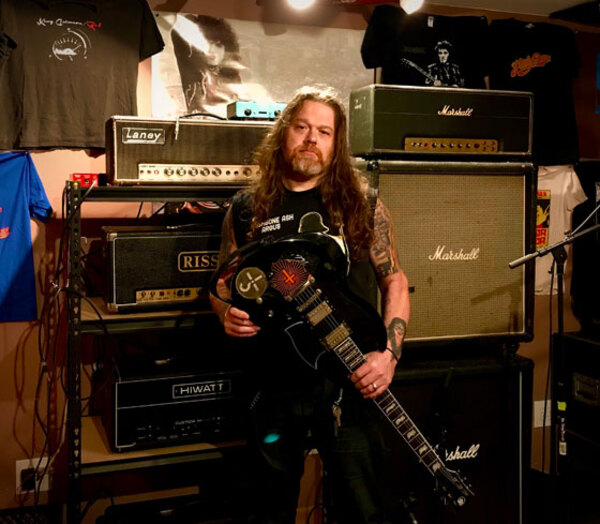
Pictured and mentioned in this May 17, 2021 The Sleeping Shaman interview.
I always love reading your liner notes and posts on social media about the backstories on songs and how they are recorded, so let’s get started, what amps are you currently using?
I find that my 1969 Laney Supergroup is the amp I go to in the studio the most. That’s the one that gives me all the range of sound that I personally like and if I do want to use a pedal, which is not typical for me, that’ll take them well. I have a 1980 Hiwatt DR103, it sounded brutal, but sometimes taking those older amplifiers out on tour is not the best idea because they can blow transformers. Those old amplifiers don’t get that nice gain until they’re turned all the way up, so if you tour for five weeks with the amp turned all the way up every night, when you got something that’s 40 to 50 years old, you’re going to be blowing transformers left and right. In the studio it’s usually the Laney or the Hiwatt, or this amp from the 70s I have that’s called Risson that I toured with a few years ago. I also have a clone of the preamp built by Ben Verellen to use in Europe as the tone is so unique.


Listed for sale secondhand via The Music Locker on November 2, 2023.
A very special piece of history right here. I bought this from Andy Abbott, bassist and vocalist in the 1960s/1970s Birmingham band ‘Galliard‘. Galliard played on the same bills as Black Sabbath, and had various members who went on to play in some pretty famous bands. He bought this local to him in Birmingham back in the early 1970s, and had it throughout his career. It was taken on the road many times, but upon retiring sat in his house unused. It’s now time to find a new home for it!
The amplifier is incredibly original, including the 1969 dated Partridge transformers and the 1969 dated ‘mustard caps’. Someone later on has written a date to the back of ‘1971’ which has probably been decided from the Erie caps dating to 1971. However, most parts are 1969! This one is in good used condition as you can see, with quite a few scuffs and scrapes from years of gigging. The three original transformers come alongside a quad of replacement EL34s, and 3x ECC83s (2x original Brimar and 1x replacement JJ), giving this amplifier a real special sound.
Album Usage
The Laney LA 100 BL has been featured on the following albums:
Genre Usage
Based on how artists on Equipboard use this gear, it is most commonly found in the following genres.
Used With
Based on how musicians on Equipboard use Laney LA 100 BL, it is most commonly used with the following gear.

More Laney Guitar Amplifier Heads

$999.00 - $1,779.00
in Guitar Amplifier Heads Rank


$599.00 - $1,019.00
in Guitar Amplifier Heads Rank


$1,010.57 - $1,399.00


$569.00 - $1,059.00


-m.webp?v=1784612344)
$979.00 - $1,779.00


$525.36 - $1,299.00
.jpg?v=1782303671)


$789.00 - $1,299.00


$844.48 - $1,149.00


.jpg?v=1784480537)
Community setups


Similar


Gear Guides






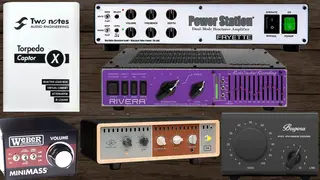

Most Popular Guitar Amplifier Heads
Most Popular Brands
-
Added to Equipboard on by
 ahmed_abdelazim
GearIQ 1726
-


