
Pricing and availability




* Product prices and availability are updated by Equipboard every 24hrs and are subject to change. Equipboard may receive compensation for purchases made at participating retailers linked on this site. This compensation does not affect what products or prices are displayed, or the order of prices listed. For more information, please refer to our affiliate disclosure.
Description
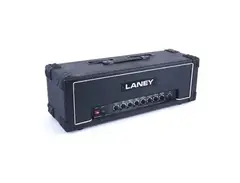
The Laney AOR Pro Tube Lead 50 Series II Head is a classic choice for guitarists seeking authentic tube-driven sound with a touch of British flair. Renowned for its high-gain capabilities, this amplifier head is a favorite among rock and metal musicians who appreciate its versatile tonal range. The AOR series, which stands for "Advanced Overdrive Response," delivers a punchy and responsive sound, making it perfect for powerful riffs and soaring solos.
Designed with the gigging musician in mind, the Pro Tube Lead 50 Series II offers a straightforward control layout that allows for fine-tuning of your sound. With separate preamp and master volume controls, you can achieve the right balance of volume and gain without sacrificing clarity. The amp's EQ section provides flexible tone shaping, giving you the freedom to craft your signature sound.
Built to withstand the rigors of touring, this amplifier head showcases a rugged construction while maintaining a sleek aesthetic. The intuitive design and robust build quality make it a reliable companion for both stage and studio settings. Equipped with a 50-watt output, it delivers enough power to fill any venue with rich, saturated tones.
Whether you're a seasoned performer or an aspiring musician, the Laney AOR Pro Tube Lead 50 Series II Head offers the tools you need to push your creativity and performance to new heights.
Key Features:
- 50-watt tube amplifier head
- Advanced Overdrive Response (AOR) technology
- Dual channel configuration
- Independent preamp and master volume controls
- Comprehensive EQ section
- Robust and durable construction
- Ideal for rock and metal genres
Videos

I Like Old Stuff
GAIN INSANITY! - The Amp Museum #2: Laney Pro Tube AOR Series II
GAIN INSANITY! - The Amp Museum #2: Laney Pro Tube AOR Series II
I Like Old Stuff
Laney AOR Series II play through video

Curran Murphy
Sounds Sick Episode 29: Laney Pro Tube AOR Series II (8 knob)
I Like Old Stuff
Reviews
PROS
-
Delivers classic metal, hard rock, and hair metal tones effectively
-
High gain options with four stages of gain for versatile sound
-
EQ boosts (Treble, Middle, Bass) offer dynamic sound shaping
-
Compatible with both high and low sensitivity inputs for varied tones
-
Excellent performance with overdrive/distortion pedals
-
Offers clean to crunch flexibility with master and preamp volume controls
-
Features a mix of British design and super modded plexi traits
-
Equipped with international voltage selector for worldwide touring
-
Provides value for money, achieving JCM 800 tones affordably
-
Durable and reliable over years of use
CONS
-
Lacks an effective clean & dirty switching due to single-channel design
-
The +8dBv Line Out/Line In not suitable as a proper FX loop
-
Not ideal for scooped modern metal or super loud cleans
-
Can sound muddy in studio settings without proper adjustments
-
Becomes challenging to find available for purchase
Owner Insights
We analyzed real musician discussions from forums and Reddit to find what players love, question, and tweak about Laney AOR Pro Tube Lead 50 Series II Head.
Features and functionality
-
Pulling all three EQ knobs boosts frequencies significantly; bass boost in particular provides a dramatic volume increase, requiring adjustment for balance.
Source -
Some users experienced insufficient cable length for connecting the speaker to an external head, suggesting a need for cable extenders or adapters.
Source -
The EQ boosts bypass the master volume, causing disproportionate bass response when engaged at lower master settings.
Source -
The preamp structure allows for varied tones, from crisp cleans to mushier overdrive, depending on the balance of preamp 1 and 2 settings.
Source
Use cases and applications
Value and pricing
-
These amps are considered a great value, especially with newly replaced components, as they can be found affordably if one is patient.
Source
User experience
-
Owners passionately describe the amp's tone as capable of achieving harsh, loud sounds that cut through mixes, often comparing it to high-end models like the Mesa Roadster.
Source -
Owners note that the stock speaker in the 50W combo can handle up to 70W, though the exact ohm rating is not recalled.
Source -
New tube amp users, previously using solid-state models, report significant differences in pedal response and a broad range of tones to explore.
Source -
Owners emphasize the amp's complexity, requiring intricate adjustments to avoid a "cardboard tone" during initial setup.
Source
Comparisons
-
This amp is often compared favorably to other heavyweights like the Sunn, with many owners citing its underrated status and impressive performance.
Source -
Described as a "gothic version of a Marshall," offering a darker overtone with plenty of high-end available.
Source -
Preferred with guitar cabs containing V30 speakers over GT-75s, which sound suboptimal with this amp.
Source
Setup and maintenance
-
Reverb hum issues are linked to power quality; quiet at some locations but requires tech check for capacitor and power tube replacements if persistent.
Source
4.5 out of 5
Based on 3 Reviews and 7 Ratings

126
Undisputed King ..... Laney
This is a '87 single channel amp with a switchable gain boost (AOR)
x4 12AX7s x4 EL34's
It's a British design and it's basically a super modded plexi in the same theme as JCM800s. Many confuse it as being a JCM800 clone... It isn't. Both came out around the same time and were the product of development towards hotter amps. The difference is Laney went the next mile, added an additional preamp valve and achieved in their production model what alot of people had to get the JCM800s modded to do. And JCM800s still aren't as flexible tonally. There's been some discussion that the AORs were an adaptation of a Lee Jackson design but there's no specific proof. There isn't any getting around the fact it's a similar amp to a JCM800, but then the Laney Supergroup and Klipp amps, the predecessors of the AOR, are very similar to early Marshalls... Which in turn were modded clones of early Fender Bassman circuits. Enough about that. The AOR amps have 2 specific features that set them aside, and arguably ahead, of most other high gain amps from the 80s. Firstly, they have 4 stages of gain... Plug into the High Input and you have 3 stages immediately with a 4th switched in with the AOR boost. If you plug into the Low Input it cuts out an entire valve and drops it to 2 stages of gain. It also disables the High Input completely. So either you get the high gain options of the High Input or you get the cleaner sounds of the Low Input. The other specific features are the EQ boosts. The AOR amps have a pull boost on the Treble, Middle and Bass. They're not like bright controls. They actually have a dB boost in each EQ range and the effect of these boosts is very dynamic, especially the bass. The preamp controls are confusing at first. Preamp 1 Volume controls the gain... But so does Preamp 2 Volume. If you plug into the low input Preamp 1 Volume is disabled entirely since the 2 stages of gain are cut out. Generally Preamp 1 Volume has a more trebly and harsh gain and Preamp 2 Volume has a darker, low mid gain. You mix them together for a desired result. Preamp 1 Level only works when the AOR boost is engaged. It works as a second Master. With lower gain setting it helps to balance out the non-AOR and AOR levels. With the gain close to flat out it the non-AOR sound is as loud as the AOR boost so it's not much of a help. Paradoxically, it still works when plugged into the Low Input... Even though the Preamp 1 Volume doesn't... Weird, right? In this situation you can switch the AOR in with it set as rhythm volume and then switch it off for solos or sections where you need to be heard. On the back panel is a socket for a AOR boost single footswitch, a +8dBv Line Out/Line In (presumably for slaving amps together), 2 speaker outs with a rotary impedance switch that has 4?, 8? and 16? settings, and an international voltage selector rotary switch with everything from 110v to 240v, very handy for people who would drag their amps to tour overseas. So there are stacks of features. The downsides... Firstly, the fact you can't A/B between High and Low inputs means it's hard to get definable clean & dirty switching. There are ways using different pedals and your guitar volume, but it's a pity Laney didn't find a way to make this possible. Secondly, and most frustratingly, the +8dBv Line Out/Line In is so close but so far away from being a proper FX loop. NO effects enjoy the super HOT signal it punches out although some analog pedals will cope with it. Digital fx however just have their input stage overdriven and most pedals attentuate the signal in some way because they are being overpowered. During the same period Laney was producing their AOR30 combo with a -6dB buffered FX loop and a -12db DI out. Why didn't Laney put the same thing in the 50w and 100w heads and combos? In reality, while you can turn the volume right down in your bedroom this isn't a happy camper. It sounds best pushing a quad box with the Master above 4 and you won't make many friends doing that in your bedroom. There are really only a couple of things it won't do. Primarily it won't do scooped modern metal. Those seeking Meshuggah and black metal buzz saw sounds need not apply. Go to the modern valve or solid state section of the store. The other is super loud cleans. It has nice clean sounds and the 100w model is probably better but headroom is limited. I would've given this a 10 but the +8dbv thing is beyond silly. Laney deserves a smacked bottom for getting it right on the 30w and not making the effort with the higher wattage models.

41031
The AORs school the 800 preamp for 80s rock, but the overall build quality is just way less robust.... actually Laney's JCM800 clones are the GH50 and 100 amps.... basically an 800 with a different low gain input topology, a 1/2 tube-driven effects loop and a solo boost powered by the spare triode from the effects loop.... that extra 12ax7 is really wasted in that amp as the loop sucks a rat and the gain boost just makes the thing sound like an AOR, why not get an AOR?

188
The tone I've chasing for, for less than half the price
I've always been a huge fan of classic metal and prog. But later i've started developing an obsession for hard rock/hair metal bands and shredders from the 80' to mid 90's (George Lynch, Van Halen, Reb Beach, Steve Vai, Warren DeMartini, Vinnie Vincent, Richie Kotzen and more) and the tone of those amazing guitar heroes. After my fair share of research, I decided to go with an amp that could get me close to the Hot Rodded Marshall JCM 800 tone without busting the bank, and I found the answer is the Laney AOR. Amazing tone on both clean and AOR (overdriven) channels. For the 400 bucks ($30.000ARS) i've spent on it, it is a dream come true. Please notice that mine is the AOR A10012 Series II combo, not the head, but since the combo wasn't uploaded to this website I had to select this for my equipboard display.

91
The JCM 800 of the Laney line
I've owned this amp for over 2 years and not once has it let me down. I own the 6 knob version of this head and it sounds beautiful. The 6 knob "lower gain" version that I have is a single channel amp with a low and a high sensitivity input. There are push-pull bass, middle and treble knobs that give you a boost in volume for that selected range. They also seem to change the frequency of the channel being boosted, similar to what you can find on Laney's Ironheart line The master volume and preamp volume (basically the gain) give you lots of flexibility from clean to crunch. With an attenuator, you can crank up both to max and have a beautiful crunch at "Bedroom" levels. It is very comparable to a Marshall JCM 800 with regards to the tones that can be achieved on it's own. If you like using pedals though, this amp is for you. Never have I used an amp that sounds so good with overdrive / distortion pedals. For example, using the MXR ZW-44 in the effects loop really gives a powerful kick that sends the tone into that loud mid-range zone and, yes, it sounds very much like Zakk Wylde's tone (depending on the guitar and cab you use of course). For blues, it can hold it's own without any help. On the down side, this amp is not great for clarity. I find it to be naturally loose, which is fine, but it can get quite muddy without assistance in the studio. I use this when I want to do something "Low gain" and bluesy or if I want a crunch tone for rock. If you want to find one of these to buy, your best bet is to go online to eBay, Amazon or any local online classified sites because they are getting harder and harder to find. This head is very hard to beat if you want a JCM 800 style sound without breaking the bank. If you love pedals and the British sound, you'll love this head. Here is a link to a sound trial that I had made when I first got it. https://youtu.be/DgnRX1wr3FY
41031
thorough review! be careful with those push pull pots, they are board mounted
91
Good to know. Thanks!
Artist usage
Add artist

Matt has used these (both six and eight knob versions) since the early days of Sleep and throughout High On Fire. It is featured most famously in the video for Dragonaut.


From Laney Amplification's Facebook page:
"Ace Frehley was one of our biggest artists in the 1980's. After time with KISS, he set out on his own adventure with the pun-centric and all round amazing name 'Frehley's Comet' which really deserves more credit from a pun/banter point of view but anyway we digress. Here is his video for 'Rock Soldiers'.
Notice the custom amp display with all his white AOR Pro Tube Lead heads and cabs. We need more diamond shaped amp displays!"


In his REH instructional video "Rock Chops," at the 9-minute and 20-second mark, Richie Kotzen is seen using a Laney AOR Pro Tube Lead 50 Series II Head, as documented by the video author, maibon01, on YouTube.


what looks to be a Laney AOR Pro Tube amp can be seen in John's rig


In this footage of their live performance in London from 1995 you can see Infernus playing through his Laney AOR 50 Series II amp head with the AOR 4x12" cab from 2:49 to 3:03 mark. You can see it once again from 3:58 to 4:07 mark, then again from 5:48 to 5:56 mark, and then from 6:28 to 6:37 mark. This amp head and cab was used by him on Gorgoroth's early demos and debut album Pentagram.


Album Usage
The Laney AOR Pro Tube Lead 50 Series II Head has been featured on the following albums:

Genre Usage
Based on how artists on Equipboard use this gear, it is most commonly found in the following genres.
Used With
Based on how musicians on Equipboard use Laney AOR Pro Tube Lead 50 Series II Head, it is most commonly used with the following gear.


-s.webp?v=1784934170)

-s.webp?v=1784934383)



Similar
Add recommendation1 alternative for Laney AOR Pro Tube Lead 50 Series II Head, curated by the Equipboard community.

$1,712.88
More Laney Guitar Amplifier Heads

$999.00 - $1,779.00
in Guitar Amplifier Heads Rank


$599.00 - $1,019.00
in Guitar Amplifier Heads Rank


$1,009.15 - $1,399.00


$569.00 - $1,059.00


-m.webp?v=1784905422)
$979.00 - $1,779.00


$524.63 - $1,299.00
.jpg?v=1782303671)


$789.00 - $1,299.00


$843.30 - $1,149.00


-m.webp?v=1784336309)


.jpg?v=1784793231)
Community setups


Gear Guides








Most Popular Guitar Amplifier Heads
Most Popular Brands
-
Added to Equipboard on by
 johnmcclane
GearIQ 175
-


