

Pricing and availability
We compare 600+ stores and found this item at 1 store. Prices updated .
Store
Reviews
Price




Average Price: $259
Standard/Professional
$200
$801+
Price Tier
Budget
Standard
High-end
* Product prices and availability are updated by Equipboard every 24hrs and are subject to change. Equipboard may receive compensation for purchases made at participating retailers linked on this site. This compensation does not affect what products or prices are displayed, or the order of prices listed. For more information, please refer to our affiliate disclosure.
Description
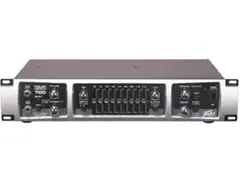
Experience the power and versatility of the Peavey 400 Bass Head, a staple in the world of bass amplification. Whether you're laying down the groove in a small club or driving a larger venue, this bass amplifier head offers the reliability and tonal flexibility that musicians crave. Designed for bassists who require robust, clear sound, the Peavey 400 is equipped with 400 watts of solid-state power, ensuring that your bass lines cut through the mix with authority.
This head is renowned for its ability to deliver exceptionally clean lows and crisp highs. Its preamp section provides a wide range of tonal possibilities, allowing you to shape your sound with precision. The intuitive control panel features a 9-band graphic EQ, which gives you detailed control over your frequency response, making it simple to dial in your perfect tone. A built-in compressor smooths out your dynamics, while the effects loop lets you integrate your favorite pedals seamlessly.
For those who like to experiment with sound, the Peavey 400 Bass Head includes a Bright switch to add presence and definition to your upper frequencies. Whether you're playing rock, jazz, or funk, this amplifier head is versatile enough to handle any genre with ease.
Key Features:
- 400 watts of solid-state power
- 9-band graphic EQ for detailed tone shaping
- Built-in compressor for smooth dynamics
- Effects loop for pedal integration
- Bright switch for enhanced high-end presence
- Rugged design for durability on the road
Product specs
| Brand | Peavey |
| Model | 400 Series Bass Head |
| Finish | Black |
| Year | 1970s |
| Categories | Bass Heads |
| Color Family | Black |
| Direct Output | No Direct Output |
| Electronics | Solid State |
| Impedance | 2 ohms |
| Number of Channels | 2 Channels |
| Number of Inputs | 4 Inputs |
| Output Power (Watts) | 210 |
| Power Tube Type | None |
FAQs
-
How much power does the Peavey 400 Bass Head deliver?
-
The Peavey 400 Bass Head delivers 210 watts of solid-state power, making it suitable for small to medium-sized venues and practice settings.
-
What is the impedance rating of the Peavey 400 Bass Head?
-
The Peavey 400 Bass Head has an impedance rating of 2 ohms, which means it works best with speaker cabinets that can handle this low impedance.
-
Does the Peavey 400 Bass Head have a direct output for recording?
-
No, the Peavey 400 Bass Head does not feature a direct output, so you would need an external DI box for direct recording applications.
-
How many channels does the Peavey 400 Bass Head have?
-
The Peavey 400 Bass Head features two channels, allowing for a range of tonal options and flexibility in sound shaping.
-
How many inputs are available on the Peavey 400 Bass Head?
-
The Peavey 400 Bass Head comes with four inputs, providing ample connectivity for various configurations and setups.
Videos

Johan Segeborn
This 200 Bucks Vintage Peavey Head is a World Class Guitar Amp!

This 200 Bucks Vintage Peavey Head is a World Class Guitar Amp!
Johan Segeborn
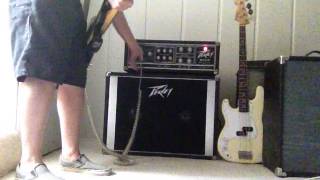
1974 Peavey 400 Series Bass Amp

johnnyangel69
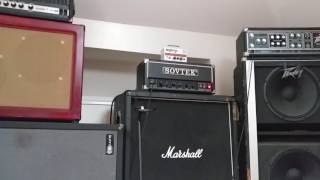
Sovtek Mig 50 & Peavey Bass 400 Series

Readyourownbook
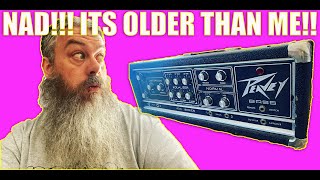
My Gear is Older than ME!!!!!!!! NAD Peavey 400 Series

Andy Bassist
Reviews
Owner Insights
We analyzed real musician discussions from forums and Reddit to find what players love, question, and tweak about Peavey 400 Bass Head.
Build quality
-
At 4 ohms, the amp delivers a loud 140 watts, whereas at 8 ohms, it provides a more moderate 80 watts, making it adaptable to various settings.
Source
Comparisons
Use cases and applications
-
The amp can power configurations like a 2x15 or 4x12 cabinet setup, making it versatile for different rehearsal or performance environments.
Source -
The amp is notably effective for genres like doom and Nola sludge, delivering powerful and consistent performance for these styles.
Source -
Owners often experiment with jumping channels to explore the amp's tone versatility, which is highlighted as a unique feature.
Source
User experience
-
Owners report the Peavey 400b mark III remains loud enough for rehearsals with an 8 ohm cabinet, even in setups with guitars and drums.
Source -
Owners have experienced issues like blowing fuses when pushing the amp hard, indicating the need for cautious volume management.
Source -
The amp is noted for its durability, with one owner using it trouble-free for over two years after a simple clean-up.
Source
Features and functionality
-
The head features dual output jacks wired in parallel, allowing users to connect two 8 ohm cabinets for a combined 4 ohm load.
Source -
The Peavey 400b mark III can effectively drive 8 ohm cabinets, maintaining substantial volume even when not operating at full power.
Source -
The built-in drive/fuzz is insufficient for heavy metal but pairing with a Rat pedal can extend its range to cover hard rock and doom.
Source -
Later 70's models have both series and parallel inputs, unlike early 70's models, allowing for unique tone shaping capabilities.
Source -
With a 6-band EQ, the amp offers substantial tonal versatility, allowing for detailed sound shaping across different music genres.
Source -
Plugging a pedal cable into series and parallel inputs offers different tonal and volume variations, providing more flexibility in sound customization.
Source
Other
-
Transporting these amps can be challenging due to their substantial weight, making them less ideal for frequent gigging without assistance.
Source
Setup and maintenance
5.0 out of 5
Based on 0 Reviews and 1 Rating
Artist usage
Add artist
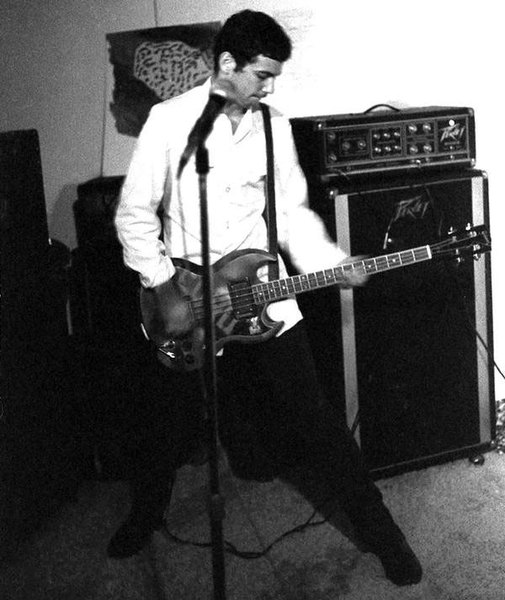
Mike Watt using a Peavey bass rig in 1979; the head is a solid state Peavey 400 bass amp and the cabinet is either a P.A. or bass cabinet by Peavey. This Peavey bass rig is almost excatly similar to what Greg Ginn used up until around 1982-83. Black Flag and Minutemen practically came from the same school (SST Records); it makes perfect sense that they would have strickingly similiar gear at one point. Mike Watt's bass tone while in the Minutemen was often defined by utilizing a significant amount of treble and mid-range sound as opposed to deep low-ends and bass-rich tones, he remains a versatile and incredibly talanted individual.

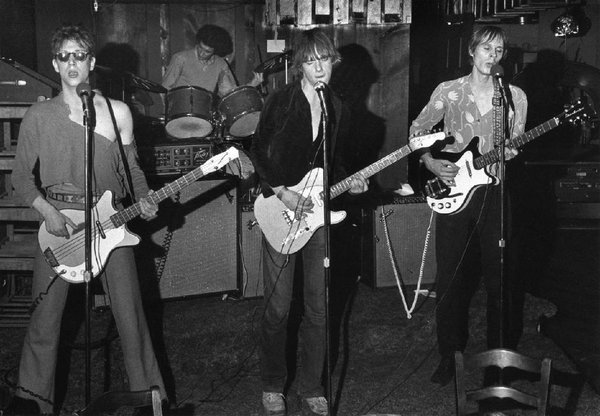
In the provided image, Richard Hell is seen using a Peavey 400 Bass Head.


Genre Usage
Based on how artists on Equipboard use this gear, it is most commonly found in the following genres.
More Peavey Bass Amplifier Heads

$562.00 - $799.99
in Bass Amplifier Heads Rank


$200.00
in Bass Amplifier Heads Rank

.jpg?v=1784922057)


$499.99
in Bass Amplifier Heads Rank

.jpg?v=1784792607)


$499.99
in Bass Amplifier Heads Rank


-m.webp?v=1784041626)


.jpeg?v=1784863480)


Accessories & Related Items


Community setups


Similar


Gear Guides




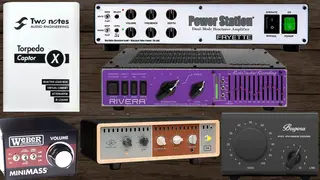


Most Popular Bass Amplifier Heads
Most Popular Brands
-
Added to Equipboard on by
WwaspinnellGearIQ 327
-


