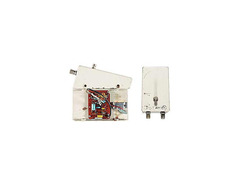
This page about Roger Mayer "Wedge Shaped" Octavia/Octavio is a stub. You can help improve it:


Pricing and availability




* Product prices and availability are updated by Equipboard every 24hrs and are subject to change. Equipboard may receive compensation for purchases made at participating retailers linked on this site. This compensation does not affect what products or prices are displayed, or the order of prices listed. For more information, please refer to our affiliate disclosure.
Description
The OCTAVIA is probably our most famous and distinctive creation. This guitar effect was designed in early 1967 and featured on "Purple Haze" and "Fire" by Jimi. It's unique tones can also be heard on such tracks as "One Rainy Wish", "Little Miss Lover", "Little Wing", "Machine Gun" etc.
The OCTAVIA produces a sound that is an octave higher than the note you are presently playing. This doubling effect is accomplished through electronic mirror imaging techniques that are program sensitive and also respond to the feedforward inputs of the player. The electronic circuitry is analogue in design and will react faithfully to all the subtleties and harmonic overtones from the guitar. The effect produced is very unique but human in quality. The unit that is manufactured today is representative of the latest evolution of Octavia that Jimi used and contains the feedforward and gating effect that my earlier evolutions lacked. The modern clones today often copy the Tycobrahe unit that in fact was a rip off of my earlier 24 volt versions. These units were not designed to work optimally with 9 volts and in fact you would be buying a clone of a copy so it makes sense to buy a unit from the man who invented it.
Electronically the OCTAVIA is an analogue circuit with the properties of a frequency doubler, envelope generator and amplitude modulator with addition frequency shaping filter circuits. The effect produced is subtle to wild depending on the settings used and will respond to the attack of the player. A clean tone from the guitar with say the tone rolled control rolled off will produce "ring modulated" overtones that characterise the solo to "Who knows". The sound is tangibly different if a fuzz unit is in front of the Octavia: an upper octave double is created, clearly demonstrated in the solo to "Purple Haze". The bright harmonics are more controllable if the neck pickup is selected and the tone control set to roll off the treble. The effect really comes into it's own on the top E and B strings from the 7th fret up. A clean and precise picking style is essential with particular attention to accurate fretting techniques.
Jimi placed the Octavia after a fuzz and wah unit in most cases so it would react to the combined effects of both the wah and one or more fuzz boxes. It is important to experiment with how much signal you are driving the Octavia with as this has a great influence on the sound produced.
Product specs
| Analog/Digital | analog |
Videos

Roger Mayer
Roger Mayer New Year's Octavia Pedal

Roger Mayer New Year's Octavia Pedal
Roger Mayer
Reviews
Critic Reviews
Based on 0 Reviews and 0 Ratings
Artist usage
Add artist
Hendrix began using an Octavia after Roger Mayer showed him a prototype in early 1967. Mayer lays out an official timeline of when Jimi was first introduced to this pedal on the official Rocket Series Octavia product page, but he recalls presentation of the prototype in this December 16, 2008 Premier Guitar interview. One unit can be seen as pedal B in this annotated photo from a Band of Gypsys show, provided by Guitar Gear Finder on its Hendrix page.
Rocket Series Octavia Product Page
The OCTAVIA is probably our most famous and distinctive creation. This guitar effect was designed in early 1967 and featured on "Purple Haze" and "Fire" by Jimi. It's unique tones can also be heard on such tracks as "One Rainy Wish", "Little Miss Lover", "Little Wing", "Machine Gun" etc.
The OCTAVIA produces a sound that is an octave higher than the note you are presently playing. This doubling effect is accomplished through electronic mirror imaging techniques that are program sensitive and also respond to the feedforward inputs of the player. The electronic circuitry is analogue in design and will react faithfully to all the subtleties and harmonic overtones from the guitar. The effect produced is very unique but human in quality. The unit that is manufactured today is representative of the latest evolution of Octavia that Jimi used and contains the feedforward and gating effect that my earlier evolutions lacked. The modern clones today often copy the Tycobrahe unit that in fact was a rip off of my earlier 24 volt versions. These units were not designed to work optimally with 9 volts and in fact you would be buying a clone of a copy so it makes sense to buy a unit from the man who invented it.
Electronically the OCTAVIA is an analogue circuit with the properties of a frequency doubler, envelope generator and amplitude modulator with addition frequency shaping filter circuits. The effect produced is subtle to wild depending on the settings used and will respond to the attack of the player. A clean tone from the guitar with say the tone rolled control rolled off will produce "ring modulated" overtones that characterise the solo to "Who knows". The sound is tangibly different if a fuzz unit is in front of the Octavia: an upper octave double is created, clearly demonstrated in the solo to "Purple Haze". The bright harmonics are more controllable if the neck pickup is selected and the tone control set to roll off the treble. The effect really comes into it's own on the top E and B strings from the 7th fret up. A clean and precise picking style is essential with particular attention to accurate fretting techniques.
Jimi placed the Octavia after a fuzz and wah unit in most cases so it would react to the combined effects of both the wah and one or more fuzz boxes. It is important to experiment with how much signal you are driving the Octavia with as this has a great influence on the sound produced.
OCTAVIA / OCTAVIO HISTORY AND DEVELOPMENT
[https://www.roger-mayer.co.uk/pictures/octavio.jpg]
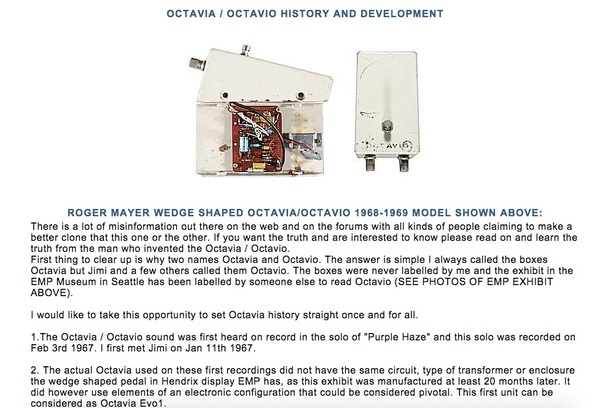
ROGER MAYER WEDGE SHAPED OCTAVIA/OCTAVIO 1968-1969 MODEL SHOWN ABOVE:
There is a lot of misinformation out there on the web and on the forums with all kinds of people claiming to make a better clone that this one or the other. If you want the truth and are interested to know please read on and learn the truth from the man who invented the Octavia / Octavio.
First thing to clear up is why two names Octavia and Octavio. The answer is simple I always called the boxes Octavia but Jimi and a few others called them Octavio. The boxes were never labelled by me and the exhibit in the EMP Museum in Seattle has been labelled by someone else to read Octavio (SEE PHOTOS OF EMP EXHIBIT ABOVE).
I would like to take this opportunity to set Octavia history straight once and for all.
The Octavia / Octavio sound was first heard on record in the solo of "Purple Haze" and this solo was recorded on Feb 3rd 1967. I first met Jimi on Jan 11th 1967.
The actual Octavia used on these first recordings did not have the same circuit, type of transformer or enclosure the wedge shaped pedal in Hendrix display EMP has, as this exhibit was manufactured at least 20 months later. It did however use elements of an electronic configuration that could be considered pivotal. This first unit can be considered as Octavia Evo1."
This Evo1 unit used germanium transistors and a ferrite transformer and also had limited drive capabilities. It was used in the recording of "Purple Haze" and "Fire" with another custom driver in a separate enclosure that also used germanium transistors. This driver was placed in front of Evo1 to give enough drive and extra EQ to satisfy Jimi and produce the sound you hear on the recordings.
After the Purple Haze / Fire session recordings Evo 1 was never used again in it's original form and I consigned it to the trash bin.
It then became obvious that both a driver section and the Octavia section should be combined into one box.
The path of development and understanding through experimentation by Jimi and I was continuous and fast like in F1 Motor Racing and in the space of less than a year at least 15 variations and evolutions had been produced.
These units were used by Jimi and not housed in a wedge shaped box. Some only had a life of a week or so as we both learned and experimented and moved on. It can be thought of as racecar development throughout a season. Maybe the same chassis configuration but lots of component changes.
Later in 1967 after we began recording sessions for the second album "Axis Bold as Love" which used the latest evo of Octavia on several tracks and if you listen carefully the clarity and detail of the Octavia effect was much more defined. Of course at the same time I was updating, building and customising the distortion units to compliment the latest evo of Octavia being now used.
At the end of 1967 I designed the wedge shaped enclosure that was manufactured by my fathers [sic] electronic company and only 5 or so examples were made.
The latest evo of the Octavia were then housed in these new wedge enclosures and still used germanium transistors and ferrite transformers. They however had a DPDT foot switch which the previous versions did not have which were primarily designed for studio work and not suited for touring.
Visually the first wedge boxes used different knobs than the example in the EMP Museum and this identifying factor makes indentification easy to see which series of pedals they are without even looking inside for confirmation..
I went on tour to the USA with Jimi from Jan 30th 1968 until April 19th 1968 where the first wedge shaped Octavia was used on a few special gigs. We did not use it everyday owing to fact they custom made and could not be replaced as I was on tour as well. Having gear stolen from the stage was a real problem every night. We never lost an Octavia though. Jimi and I kept the Octavias save [sic] with us at all times.
After the winter 68 tour in the USA I returned to work at Olympic Studios having left the Admiralty Research Laboratories to start a new career designing and manufacturing recording studio consoles and associated outboard equipment. I of course still kept in close contact with Jimi and the Octavia development continued on. I was also meeting lots of other famous musicians and bands that came to the Olympic Studios who also expressed a desire to have access and own an Octavia example.
It became obvious that a more rugged type of Octavia using silicon transistors and iron type audio transformer would be needed for rugged stage use. The use of low noise silicon transistors was an improvement in temperature stability over the germanium type. The iron laminations construction of the audio transformer did not have the high frequency detail of ferrite type but overall construction was more rugged and not subject to breakage from dropping. Ferrite core material can be damaged more easily than iron laminations.
At the end of 1968 I decided to build a limited run of 5 or so Octavias and 5 Distortion Pedals all housed in the wedge enclosure.
EMP and Tychobrahe derived clones. All the clones I know come from this later series of pedals. This latest series Octavia configuration used a driver section comprising of complimentary NPN PNP low noise silicon transistors driving a commercially obtained iron audio driver transformer. The biasing used for these units were also varied to provide evos that were designed for up to 24V operation for recording studio work to a version that would use an internal 9 Volt battery. This series of pedals used the type of knobs you can observe on the EMP example.
These units were completed in early 1969 and went to guitar players like. Syd Barrett - Pink Floyd Steve Marriot - Small Faces, Peter Frampton - Small Faces. Keith Relf - Yardbirds and Jimi of course.
In May 1969 I went to live in New York City with my new married American wife and started Roger Mayer Electronics building and designing studio equipment. I also had taken a few of the remaining 10 pedals with me to New York. I of course was still in contact with Jimi and the development of the Octavia continued. The aim now was to get rid of the transformer altogether and Jimi and I got together at the Record Plant and Hit Factory to play with the latest evos and distortions I was developing.
After Christmas 1969 I get a call from Jimi saying he needs an Octavia for his upcoming gig News Years eve at the Fillmore East as all his ones were gone missing. Luckily I had an Octavia and distortion left from the 10 I had made earlier that year and took these to rehearsal for the "Band of Gypsys" concert. The results can be heard on the album on tracks such as Machine Gun etc.
1970 saw Jimi really busy but I still caught up with him in the studio and showed him the latest version of the Octavia and new devices coming along when he visited New York.
In October 1970 whist working with Stevie Wonder at Media Studios I hear of Jimi's death. The session was immediately cancelled and everybody was very sad.
The Rocket version of the Octavia is the latest version connected with Jimi and does not use a transformer but represents the last of the development program helped and inspired by Jimi.
This is the reason I have never myself made a replica wedge box or indeed ever claimed that the Rocket Box was used was on "Purple Haze" or "Fire". The wedge box EMP has was never used on these records and was made at least 20 months after the fact. A wedge box made in 1969 was used at the BOG concert but was not exactly the same as the EMP one.
The spirit of the Octavia sound lives on and the latest version the Vision Octavia is an evolution inspired by my memories of Jimi and his music .It is a version I believe Jimi would have loved.
The Tychobrahe clone or more correctly put innaccurate copy was based on a 1969 variation of Octavia for 24 Volt operation and this type was copied from the example Keith Relf had.
So the fact is I think if you want the best and most versatile Octavia sound buy a new Rocket or Vision Octavia because if in my opinion I believed the transformer version was better I would surely be still be using them today. I would obviously reissue my own design if that were the case. By definition a clone is an actual replica of the original not some copy made from a circuit drawing found on the web and of dubious origin. I will never reveal the inaccuracies I have found in the web published schematics and all the clones are not clones but copies with basic flaws.
"ANYWAY YOU LOOK AT IT I DESIGNED THE ORIGINAL"
END OF STORY
Premier Guitar
Well, I went to one gig at Chislehurst Caves about two weeks after I met him and showed him one of the first Octavias backstage. He played through it and said, “Can you do that to it?” and I said, “Yeah, Jimi, you know these things are improving week by week as we get more feedback on it.” And he said, “Right; I’m playing at a club called the Ricky-Tick at Hounslow in about another week. Why don’t you bring it along to the gig and after the gig we can go back to Olympic Studios. I gotta record a couple of solos for a couple of tunes I’ve got.”
So after the gig—it was a very low ceiling at the gig, and he put the neck of his guitar through the ceiling; it basically fucked the machine heads on the top of his guitar, right? And we didn’t have a spare guitar then, so we went back to Olympic afterwards, and we had to send Noel around to the flat. He picked up his Telecaster, and that’s when we did the overdub for “Purple Haze” and “Fire,” using the Octavia.
In 2018, the Octavia that Hendrix used with Band of Gypsys surfaced on Reverb.com. It was later put up for auction via Julien's as Lot #208 of "Icons and Idols: Rock 'N' Roll" in 2020. Both listings share that it was acquired by Gerard "Jerry" Guida—an organist who had recorded with Hendrix—who got verification from Mayer himself in 2000 that it was genuine. It became the basis of the Roger Mayer Purple Haze Octavia, as described in its accompanying manual.
The recording of the solos for "Purple Haze" and “Fire” using the Octavia is told by Mayer in this July 6, 2021 Guitar Player interview.
When did Jimi Hendrix first use your Octavia in the studio?
The recording occurred after a gig at the Ricky Tick in Hounslow [on February 3, 1967.] That was one of Jimi’s early gigs that had been booked on the strength of the success of “Hey Joe” [released in the UK in December 1966].
It was a small, upstairs venue above a bunch of shops in Hounslow, London. I guess it was maybe a 200-seater venue. It was a small club – what they called an R&B club back then – and it had a low ceiling because it was on the second floor of this parade of shops. It was just a big room, really. I reckon the overall height was no more than about ten feet. So, by the time you had a stage and a drop ceiling, there wasn’t much room. I mean this ceiling was almost touching Jimi’s hat!
Being one of Jimi Hendrix’s earliest UK performances, how did the audience react?
The crowd went absolutely mad. Because nobody had ever seen anything like it. Especially the performance side of it. Jimi was doing his stuff – turning his back on the audience and playing his guitar behind his head and round his back and putting it between his legs like he’s fucking the amp with it. You know, the normal sexual antics of Jimi playing. So, he wasn’t thinking twice about his performance, and in the heat of the moment his guitar just went up and straight through the ceiling. [laughs]
What happened to the guitar?
Well, when he put his guitar through the ceiling, he bent one of the machine heads. Obviously, he was playing a Strat upside down, and the top E tuner got bent. That meant he couldn’t keep the guitar in tune properly. This was in the early days, and he only had this one guitar with him at the gig. And the problem was we’d arranged to go to Olympic Studios afterwards to record the solos for “Purple Haze” using my Octavia.
How did you first become involved with Jimi Hendrix?
Jimi had first heard the Octavia about a week before at the Chislehurst Caves gig [in Bromley, UK]. I went backstage into the dressing room, and he played around with it using a practice amp. He said, “This is perfect for my new upcoming single.” He’d already recorded tracks for these upcoming songs, “Purple Haze” and “Fire”. The basic tracks were already done.
So, at Chislehurst, we’d arranged that I’d bring along the Octavia to the Ricky Tick and meet up with Jimi, then go to Olympic Studios’ Studio One with him after the gig to record the solos. I brought along my Octavia and a booster.”
But Jimi Hendrix suddenly had no working guitar?
“He only had one guitar at the gig – this Strat he was using – and he’d just broken it. So, on the way to Olympic, we had to dispatch Noel [Redding] off to get another one. I went in my own car, Jimi went with [Gerry] Stickells, and Noel went off in a taxi to get another guitar.
What guitar did Noel Redding come back with?
It was a regular ‘butterscotch’ [blond] Tele, and I’m pretty sure it had a maple 'board. I think it belonged to a friend of Noel’s that he used to play with. That was the only guitar we could get.
What else do you recall about Jimi Hendrix using that Telecaster?
The “Purple Haze” solos were played on the upper part of the neck and Jimi wasn’t intending to use a vibrato, so it didn’t really matter that it was a Telecaster. The sound of a Tele on the bridge pickup is similar to a Stratocaster in many ways. I mean it’s not worlds apart if you’re playing in the upper register. Plus, with the effects Jimi was using it would have been impossible to tell the difference. I mean the Octavia produces so many more harmonics. Perhaps with a Telecaster the sound might have been a little more piercing, but it was a brand-new sound anyway.
Tell us about the Octavia used by Jimi Hendrix in that recording session…
It was a prototype Octavia, so it wasn’t in any form of commercial enclosure. That pedal used the ferrite transformer and circuitry that we moved over to my latest Octavia, the Purple Haze Octavia. It’s a replica of that original circuit, but with some added features.
Going into Olympic Studios with Jimi, we had access to different power supplies, and I brought along an extra circuit to drive the Octavia correctly – a booster I’d made to produce additional gain and change the driving impedance and the EQ. It wasn’t a treble booster though. It was a different form of booster. But I can’t recall if it was germanium or silicon because I was using both at the time.
What was it like watching Jimi Hendrix put the finishing touches to "Purple Haze"?
It was recorded using a four-track, and the solos were done in two or three takes maximum. Everybody’s mind was blown because nobody had ever heard that type of sound before. It really made the song. It’s a very unique tone, and when it was used sparingly it just worked. It was the same thing when he used it that night on “Fire” – he used it very sparingly.
When “Purple Haze” was released, it caused massive waves. I reckon that was the beginning of psychedelia for Jimi.

Used on "No Man's Land", as stated in Syd Barrett & Pink Floyd: Dark Globe by Julian Palacios. On the official Rocket Series Octavia product page, Octavia inventor Roger Mayer reports that Barret received one of five late 1968 wedge enclosure Octavias.
Rocket Series Octavia Product Page
[15.] At the end of 1968 I decided to build a limited run of 5 or so Octavias and 5 Distortion Pedals all housed in the wedge enclosure.
[16.] EMP and Tychobrahe derived clones.
All the clones I know come from this later series of pedals.
This latest series Octavia configuration used a driver section comprising of complimentary NPN PNP low noise silicon transistors driving a commercially obtained iron audio driver transformer. The biasing used for these units were also varied to provide evos that were designed for up to 24V operation for recording studio work to a version that would use an internal 9 Volt battery.
This series of pedals used the type of knobs you can observe on the EMP example.
[17.] These units were completed in early 1969 and went to guitar players like. Syd Barrett - Pink Floyd Steve Marriot - Small Faces, Peter Frampton - Small Faces. Keith Relf - Yardbirds and Jimi of course.
Syd Barrett & Pink Floyd: Dark Globe, pg. 345
‘No Man’s Land’ is post-punk’s first birthing pang, recorded on 17 April by Syd on his Telecaster, with blasts of Octavia and Buzz-Tone fuzz pedal. The song featured Jerry Shirley on cataclysmic, stuttering drums and John ‘Willie’ Wilson’s pumping bass. Wilson played drums in the Newcomers with Gilmour between 1962 and ’63, and went on to play in Joker’s Wild and Bullitt. Jerry Shirley, seventeen years old, knew Syd from time spent in Cambridge as drummer in the Valkyrie. Lee Jackson of Booker T & the MG’s and the Jimi Hendrix Experience’s Mitch Mitchell heavily influenced his drum style.
Syd asked Wilson to do the session, and Shirley asked to attend as well. (Willie and Jerry Shirley also knew each other from Cambridge and shared a flat round the corner from Syd.) Wilson played drums on ‘No Man’s Land’ and ‘Here I Go’. After the takes with Syd were laid down, Shirley overdubbed the bass part on ‘No Man’s Land’. Because Syd changed the chords in the verse on every take, Shirley couldn’t nail his part live. There is no bass guitar on ‘Here I Go’, which features just Syd and Willie.
Barrett, with Hendrix, was one of five guitarists to get the first Octavia pedal from Roger Mayer’s workshop early in 1969. Syd was intrigued by the Octavia’s tone-bending qualities. Its frequency-doubling circuitry synthesised a second note an octave higher than the note played on guitar. The sound becomes tangibly different if a fuzz unit is sequenced in front of the Octavia: an upper octave double is created. Syd selected the Telecaster’s neck pickup, and used the tone control to roll off treble, damping any bright harmonics.
Unusually, the trio took over Studio Two, where the Beatles recorded. The larger room allowed the impromptu group to let loose and hit their instruments a bit harder. Volume drove Barrett on. Three blisteringly loud takes were completed. Working at a rapid clip, Barrett added his vocal and Shirley redid his bass line. Again, the repeating lyrical motif of holding another’s hand as symbolic of infidelity was employed.
The overdriven fuzz and Octavia coursing through ‘No Man’s Land’ was reminiscent of Stooge Ron Asheton’s fuzz epics.


On the official Rocket Series Octavia product page, Octavia inventor Roger Mayer reports that Frampton received one of five late 1968 wedge enclosure Octavias.
Rocket Series Octavia Product Page
[15.] At the end of 1968 I decided to build a limited run of 5 or so Octavias and 5 Distortion Pedals all housed in the wedge enclosure.
[16.] EMP and Tychobrahe derived clones.
All the clones I know come from this later series of pedals.
This latest series Octavia configuration used a driver section comprising of complimentary NPN PNP low noise silicon transistors driving a commercially obtained iron audio driver transformer. The biasing used for these units were also varied to provide evos that were designed for up to 24V operation for recording studio work to a version that would use an internal 9 Volt battery.
This series of pedals used the type of knobs you can observe on the EMP example.
[17.] These units were completed in early 1969 and went to guitar players like. Syd Barrett - Pink Floyd Steve Marriot - Small Faces, Peter Frampton - Small Faces. Keith Relf - Yardbirds and Jimi of course.

On the official Rocket Series Octavia product page, Octavia inventor Roger Mayer reports that Marriott received one of five late 1968 wedge enclosure Octavias.
Rocket Series Octavia Product Page
[15.] At the end of 1968 I decided to build a limited run of 5 or so Octavias and 5 Distortion Pedals all housed in the wedge enclosure.
[16.] EMP and Tychobrahe derived clones.
All the clones I know come from this later series of pedals.
This latest series Octavia configuration used a driver section comprising of complimentary NPN PNP low noise silicon transistors driving a commercially obtained iron audio driver transformer. The biasing used for these units were also varied to provide evos that were designed for up to 24V operation for recording studio work to a version that would use an internal 9 Volt battery.
This series of pedals used the type of knobs you can observe on the EMP example.
[17.] These units were completed in early 1969 and went to guitar players like. Syd Barrett - Pink Floyd Steve Marriot - Small Faces, Peter Frampton - Small Faces. Keith Relf - Yardbirds and Jimi of course.

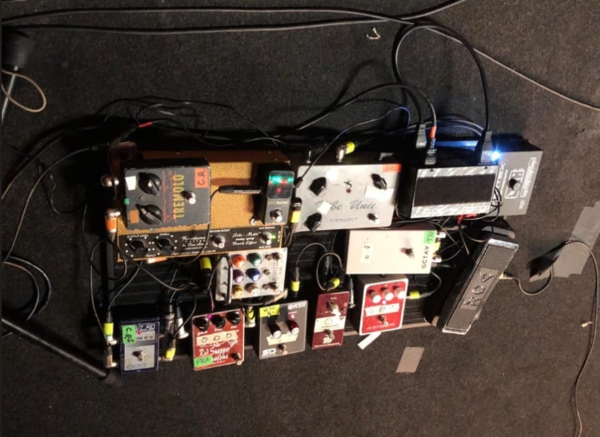
En esta foto podemos ver la pedalera de Carlos Raya en la gira con Tarque y la Asociación del Riff (2018).

On the official Rocket Series Octavia product page, Octavia inventor Roger Mayer reports that Relf received one of five late 1968 wedge enclosure Octavias.
Rocket Series Octavia Product Page
[15.] At the end of 1968 I decided to build a limited run of 5 or so Octavias and 5 Distortion Pedals all housed in the wedge enclosure.
[16.] EMP and Tychobrahe derived clones.
All the clones I know come from this later series of pedals.
This latest series Octavia configuration used a driver section comprising of complimentary NPN PNP low noise silicon transistors driving a commercially obtained iron audio driver transformer. The biasing used for these units were also varied to provide evos that were designed for up to 24V operation for recording studio work to a version that would use an internal 9 Volt battery.
This series of pedals used the type of knobs you can observe on the EMP example.
[17.] These units were completed in early 1969 and went to guitar players like. Syd Barrett - Pink Floyd Steve Marriot - Small Faces, Peter Frampton - Small Faces. Keith Relf - Yardbirds and Jimi of course.
Album Usage
The Roger Mayer "Wedge Shaped" Octavia/Octavio has been featured on the following albums:
Genre Usage
Based on how artists on Equipboard use this gear, it is most commonly found in the following genres.
Used With
Based on how musicians on Equipboard use Roger Mayer "Wedge Shaped" Octavia/Octavio, it is most commonly used with the following gear.

-s.webp?v=1784890914)
Similar
Add recommendation11 alternative and related items for Roger Mayer "Wedge Shaped" Octavia/Octavio, curated by the Equipboard community.

$319.57
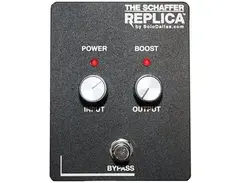
A visual and functional replica of Jimi's legendary Octavia/Octavio.

Arguably the most famous Octavia pedal, the Tychobrahe is beloved by countless players, and has clones of its own. According to Roger Mayer; "The Tychobrahe clone or more correctly put innaccurate copy was based on a 1969 variation of Octavia for 24 Volt operation"

$145.00 - $160.00
The current reissue of the Octavio, following after the previous Dunlop wedge version.

$369.95 - $399.00
Based on a unit Jimi Hendrix used with Band of Gypsys.
The Roger Mayer Hand Signed Limited Edition Purple Haze Octavia is an enhanced version of Jimi Hendrix's famous Octavia pedal, as used on the "Band of Gypsys" recordings and concerts. Handmade in the UK by Roger Mayer himself, the all new, strictly limited edition Purple Haze Octavia captures the essence of Jimi's famous tone in a pedalboard friendly package.
Limited to just 100 units and hand-signed by Roger Mayer. Incl. Certificate of Authenticity.
"The OCTAVIA is probably our most famous and distinctive creation. This guitar effect was designed in early 1967 and featured on "Purple Haze" and "Fire" by Jimi. Its unique tones can also be heard on such tracks as "One Rainy Wish", "Little Miss Lover", "Little Wing", "Machine Gun" etc. The OCTAVIA produces a sound that is an octave higher than the note you are presently playing. This doubling effect is accomplished through electronic mirror imaging techniques that are program sensitive and also respond to the feed forward inputs of the player. The electronic circuitry is analogue in design and will react faithfully to all the subtleties and harmonic overtones from the guitar. The effect produced is very unique but human in quality. The added improvements plus the use of a Wide Bandwidth Ferrite Transformer make the Purple Haze Octavia the ultimate modern version of the Original Invention I produced in 1967."

$102.00 - $117.90
A Octavia based fuzz, with a separate octave volume, and a 'dying battery' toggle that simulates a vintage fuzz running at low voltage.

$399.00
Roger Mayer's latest evolution of the Octavia, the Vision Octavia is designed to honor Hendrix's use of the effect and his legacy.
More Roger Mayer Fuzz Effects Pedals

$339.95 - $399.00
in Fuzz Effects Pedals Rank





$169.00 - $188.20
in Fuzz Effects Pedals Rank
-m.webp?v=1784905243)
$179.00 - $209.00
in Fuzz Effects Pedals Rank


$189.00
in Fuzz Effects Pedals Rank


$75.00 - $96.20
in Fuzz Effects Pedals Rank


$220.00 - $249.00
in Fuzz Effects Pedals Rank

.jpeg?v=1784860561)


$179.00
in Fuzz Effects Pedals Rank


$296.00
in Fuzz Effects Pedals Rank


$83.00 - $169.00
in Fuzz Effects Pedals Rank


$199.00 - $224.42
in Fuzz Effects Pedals Rank


$159.00 - $181.00
in Fuzz Effects Pedals Rank


$83.00 - $101.60
in Fuzz Effects Pedals Rank


$178.72 - $219.00
in Fuzz Effects Pedals Rank


$85.00 - $108.90
in Fuzz Effects Pedals Rank


$79.00 - $108.90
in Fuzz Effects Pedals Rank


$300.00
in Fuzz Effects Pedals Rank

$75.00 - $87.10
in Fuzz Effects Pedals Rank


$59.00 - $83.50
in Fuzz Effects Pedals Rank


-m.webp?v=1784905160)
$169.00 - $179.99
in Fuzz Effects Pedals Rank


$249.00 - $299.00
in Fuzz Effects Pedals Rank


$95.00 - $2,001.63
in Fuzz Effects Pedals Rank

$95.00 - $99.00
in Fuzz Effects Pedals Rank
-m.webp?v=1784905144)
$88.62 - $111.00
in Fuzz Effects Pedals Rank
Community setups


Gear Guides
.jpg)






Most Popular Fuzz Effects Pedals
Most Popular Brands
-
Added to Equipboard on by
 eyeseeofficial
GearIQ 161592
-


