

Pricing and availability
We compare 600+ stores and found this item at 5 stores. Prices updated .
Store
Reviews
Price


Price History
Based on price data from 4 merchants for "Waves H-Delay Hybrid Delay". Prices shown reflect NEW condition. Tracking began Apr 2, 2026.
* Product prices and availability are updated by Equipboard every 24hrs and are subject to change. Equipboard may receive compensation for purchases made at participating retailers linked on this site. This compensation does not affect what products or prices are displayed, or the order of prices listed. For more information, please refer to our affiliate disclosure.
Description
Experience the perfect fusion of classic analog charm and modern digital flexibility with the Waves H-Delay Hybrid Delay plug-in. This versatile delay effect is designed for musicians and producers who crave the warmth and character of vintage delay units, paired with the precision and control of contemporary software. Whether you're crafting subtle slapbacks or creating expansive echo soundscapes, the H-Delay delivers a rich, dimensional sound that adds depth to any mix.
Its intuitive interface mimics traditional hardware, making it a breeze to dial in the perfect delay settings. With features like variable pitch time behavior and infinite feedback, you can explore creative depths previously reserved for hardware aficionados. The built-in highpass and lowpass filters allow you to seamlessly blend your delay effects, ensuring they sit perfectly within any mix. Plus, with MIDI support and tempo-sync capabilities, integrating the H-Delay into your workflow is as smooth as its sonic output.
Unlock a world of sonic possibilities with modulation effects, Lo-Fi settings, and five distinct analog tone options that enhance the plug-in's versatility. Whether you're aiming for a clean digital delay or a gritty analog vibe, the H-Delay is your go-to tool for achieving professional results in any genre.
Key Features:
- Variable delay time up to 3500 ms
- Infinite feedback for endless creative possibilities
- Highpass and lowpass filters for precise sound shaping
- LFO-controlled pitch modulation
- Lo-Fi and multiple analog character modes
- Tap-tempo and full MIDI support for seamless integration
- Intuitive analog-style interface
Product specs
| Software Type | Analog-style Delay |
| Platform | Mac, PC |
| Upgrade/Full | Full |
| Download/Boxed | Download |
| Bit Depth | 64-bit |
| Format | AAX Native, AudioSuite, VST, AU, SoundGrid |
| Hardware Requirements - Mac | Intel Core i7 or higher (M1 support), 8GB RAM minimum |
| Hardware Requirements - PC | Intel Core i5 / AMD Quad-core or higher (AVX required), 8GB RAM minimum |
| OS Requirements - Mac | macOS 10.15.7 or later |
| OS Requirements - PC | Windows 10 or later (21H2), 64-bit |
FAQs
-
What are the standout features of the Waves H-Delay Hybrid Delay?
-
The Waves H-Delay Hybrid Delay offers analog-style delay effects, including tape delay, chorusing, and vibrato, with an intuitive interface. It features BPM sync, modulation, filters, and a tap tempo button for versatile sound shaping.
-
Is the Waves H-Delay Hybrid Delay compatible with my DAW?
-
The Waves H-Delay is compatible with major DAWs that support AAX Native, AudioSuite, VST, AU, or SoundGrid formats, ensuring broad integration across different setups.
-
What are the system requirements for running the Waves H-Delay Hybrid Delay?
-
For Mac, it requires macOS 10.15.7 or later, an Intel Core i7 or higher (M1 supported), and 8GB RAM. For PC, it needs Windows 10 or later (21H2), Intel Core i5 / AMD Quad-core or higher (AVX required), and 8GB RAM.
-
Can I use the Waves H-Delay Hybrid Delay for live performances?
-
Yes, the Waves H-Delay is suitable for live performances, offering real-time control over delay effects with features like tap tempo and modulation to enhance live sound dynamics.
-
Does the Waves H-Delay Hybrid Delay support 64-bit processing?
-
Yes, the Waves H-Delay Hybrid Delay supports 64-bit processing, ensuring efficient performance and compatibility with modern digital audio workstations.
Videos

Waves Audio
Using Waves H-Delay in Electronic Music Production: Part 1 – Drums
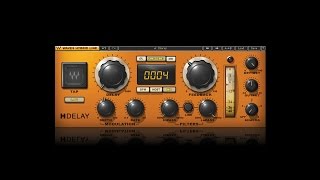
Using Waves H-Delay in Electronic Music Production: Part 1 – Drums
Waves Audio
Kiss Your Vocal Tracks With A Touch Of Slap Delay Using Waves Amazing H-Delay Plug-in

Production Expert
Creating Never-ending Delay with the H-Delay Plugin
Waves Audio
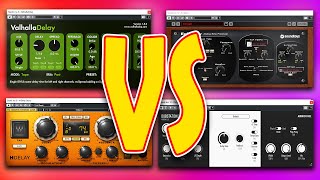
Valhalla DELAY Vs Echoboy vs H-delay VS Dubstation 2 - Plugin differences shootout

White Noise Studio
It's my go to Delay. Waves Audio Plugin in 5 min - H-Delay - Hybrid Delay #udiaudio

UDi Audio
Waves H-Delay LO-FI button in ISOLATION

Andrei Martinez Agras
Reviews
PROS
-
Reminiscent of Roland Space Echo with added low and high pass filters
-
Efficient CPU usage, perfect for home studios
-
Built-in tap button for quick delay setting
-
Presets available for a wide range of sounds
-
Suitable for a variety of instruments, including bass synths and guitars
-
Easy installation and user-friendly interface
-
Unique modulation settings that add character
-
Excellent quality-to-price ratio
-
Versatile enough to work on any audio source
-
Offers an analog-like sound in a digital format
CONS
-
Compatibility issues with macOS Catalina 10.15.6
Owner Insights
We analyzed real musician discussions from forums and Reddit to find what players love, question, and tweak about Waves H-Delay Hybrid Delay.
Features and functionality
Comparisons
-
Echoboy is frequently recommended as a superior analog emulation alternative, providing both clean and lo-fi delay effects.
Source -
Goodhertz DC19 is highlighted for sound design options and chaos, expanding on H-Delay's simplicity while addressing user frustrations.
Source -
Users highlight FabFilter Timeless and Valhalla Delay as worthy alternatives, noting their unique control interfaces and sound quality, especially for experimental workflows.
Source
Software and compatibility
-
Many users express frustration with Waves' licensing model, highlighting issues with reactivation and mandatory updates, especially on new Mac systems.
Source -
Some users mention that Arturia's delay plugins, included in their collection, offer good alternatives, especially since older versions can be acquired at discounted prices.
Source
Use cases and applications
-
Users appreciate H-Delay for its ease of use and quick setup, particularly valuing its analog-style interface and ping-pong delay effect.
Source -
Goodhertz DC19 presets include "bread and butter" options and homages to famous effects, providing diverse starting points for sound design.
Source -
It's noted that H-Delay serves as a quick, reliable choice for last-minute projects, making it a go-to for spontaneous late-night sessions.
Source
Other
-
Deelay by Sixth Sample is highlighted as a powerful free option, with a noted limitation on longer delay times when synced to host tempo.
Source
Value and pricing
User experience
Critic Reviews
4.5 out of 5
Based on 4 Reviews and 49 Ratings

787
One of the best delay plugins available.
Waves H-Delay is amazing. There are tons of pre-configured presets for whatever sound you are looking for, but if you want to get crazy, you can do it in a few seconds. I mean, how can you go wrong with a plugin even Devon Townsend uses for VST delays?

129
Favorite Delay Plugin
I am no stranger to analog gear and the way it sounds compared to it's digital counterparts. However I also see the advantages of having a plugin delay. This is the perfect marriage of the two worlds. I love this delay on everything and it can do some really cool stuff.

Artist usage
Add artist
"...The item is mentioned 35:25 into this video..."


“Waves plugins are a constant on our tracks: L3 is the final limiter on many Tritonal singles; H-Delay is our go-to tape delay plugin; SSL G-Master is the first on our master chain on most records.“


In this video at 2:26 the protools analysis of her unreleased song "Fantasize" shows the use of this plugin
.jpg?v=1783082401)
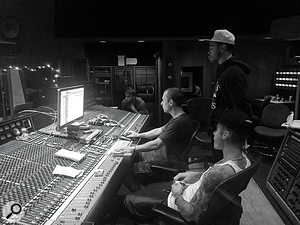
Used on "What Do You Mean?", as stated by Purpose mix engineers Josh Gudwin and Andrew Wuepper in this May 2016 Sound on Sound interview about the mixing of the title track and others.
Gudwin picks out a few other interesting tracks, beginning with a vocal track named ‘vcls’. “That track contains a vocal sample that Blood made of Justin’s vocal. I’m just touching that with the LFO Tool for a bit of pumping, I take out some high frequencies with the Pro-Q 2, and then use the SoundToys Microshift for a slight pitch-shift/chorusing effect. ‘Sry1V’ below that is the vinyl sound in the track. ‘$JBU’ is the main lead vocal bus, on which I have the UAD 1176, Waves De-Esser, Manley Massive Passive, Metric Halo Channel Strip. The sends are to the generic aux tracks at the bottom of the sesion: verb, ping-pong delay, Dimension D. Below the lead vocal bus is the print track of a Bricasti outboard.”
Wuepper: “There are two tracks called ‘Bric’ around the main vocal bus; the one above is the print from the Bricasti effect that was used on the percussion, and the one below is the print of the Bricasti reverb on the vocal. Next are Josh’s vocal delays. Putting delays on audio snippets [ie. copying short vocal clips to new tracks and applying delays as inserts, rather than automating a send from the main vocal track] is a pretty interesting way of doing things. I’ve not seen anyone else do this, but it makes it easier for Josh to manipulate these delays and to go deeper into the effect. He can really fine tune the delay times and decay lengths and so on. Sometimes the feedback you get with plug-ins can act a little weird, and this approach allows him to have more control.”
Gudwin: “The five green tracks are all vocal throws and delays. I don’t like to automate delay throws via aux tracks. The top green track is the master track for the delays, ‘JB Throw All’, and it has a compressor and an SPL Vitalizer. The ‘1147’ delay track has the UAD Cooper Time Cube, with a quick ping-pong-y flutter delay that I use to widen, and the track called ‘1167’ has a basic eighth-note delay from the Echo Boy. The ‘A’ insert is Auto-Tune, but it’s not working on these tracks. When needed, our vocal tuning is normally done by Chris ‘Tek’ O’Ryan in Melodyne. I sometimes do it myself, if I have the time do it, in the stand-alone version.
“The blue vocal tracks below the vocal delay tracks are the main lead vocal comp tracks, and on many of them I have the UAD SSL Channel Strip, UAD LA-2A, and the Waves C6 multiband compressor, and sometimes also the Pro-Q 2 EQ. The ‘DLYP’ track has a delay pan effect, with the SoundToys Primal Tap delay and Panman auto-panner, SSL Channel Strip and the P&M Vinylizer. ‘White’ and ‘Master’ are printed reverbs recorded in two rooms at Henson. They are my main plug-in vocal reverbs, and the green tracks below are pitched with the Elastic Audio X-Form [in Pro Tools] and effected with the Waves H-Compressor for a pumping effect. I pitched the reverbs up an octave or two, and I mixed them in very low. The ‘PCM’ and ‘PC1’ tracks are prints from ping-pong delays from the Lexicon PCM42 outboard.
“Justin’s backing vocal tracks all go to the group track called ‘JBG1’, on which I have a Waves De-esser, an SSL Channel and the C6 multiband compressor, plus there are a number of delays and reverbs via the sends. Trevon’s backing vocals all go to ‘JBTR’, which has similar effects. I wanted to fill the song up a bit more, and sometimes it’s not the most enjoyable process for an artist to sing all these background parts. Plus a different vocalist will add a different texture to the song, as long as it complements the lead vocal and the record. As I mentioned, Julia added her vocals during the final mix in New York, and her group track also has the De-esser, SSl Channel and C6. Right at the bottom are some effects tracks, with the Dimension D and group delay throws, and so on.
(...) 'Love Yourself'
(...) Next are Justin’s vocals, with I overdubbed in New York. Almost all the regular vocal tracks have the UAD SSL Channel, LA2 and the Waves C6 multiband compressor. These three plug-ins work great on his vocals, so I tend to stick with them. Each of the vocal tracks has slightly different settings from them. They all go to Justin’s lead vocal bus above them, which has the FabFilter Pro-DS de-esser and the Pro-2 EQ. Justin’s lead vocals also go through the Bricasti, and the effect is printed. My own four backing vocals went through a vocal bus on which I had the SSL Channel, and a compressor, but they didn’t do much, nor did the sends. These vocals are very much in the background, I just wanted to add some texture really quickly. Finally, at the top of the session everything went through a Master track, on which I had the UAD SSL channel, mainly for compression set to mid-attack and auto-release — without drums you don’t need the slow attack and quick release — a Massey EQ, boosting 100Hz and 16kHz, a FabFilter Pro-L for level, and the Sonnox Oxford Inflator to add some sheen.”
'What Do You Mean?'
(...) “There were a few more complicated vocal effects, like the ‘JG FX’ track, on which I used the Vitalizer doing some spatial expanding, a UAD Fatso to thicken it up, and I then cut some low mids with an EQ, and used a de-esser. This effect track gave more depth to the vocal and made him sound more like an angel! Underneath that are two ‘Radio’ tracks [which sound like they could have come straight from Peter Gabriel’s ’80s Fairlight experiments]. I used Auto-Tune to pitch the vocals up, and then put on a SoundToys AlterBoy, which changed the formant, and then I’m filtering 350Hz and below.
“Below the ‘radio’ tracks are all my vocal delay tracks, in green as usual, with the bus for all delay throws at the top. One delay track, ‘Splaater’, is a flutter delay with Auto-Tune and the Cooper Time Cube, and the other two have the Waves H-Delay and SoundToys Echo Boy. They’re both quarter-note delays, but with different feels. Below the delay tracks are some ad lib tracks, and all the actual lead vocals, pulled out over several tracks. Most of them have my regular trio of UAD SSL Channel, LA2 and Waves C6 plug-ins, and all vocals are sent to the ‘JB Buss’, on which I have the FabFilter DS de-esser, a Manley EQ doing light cuts at 330Hz, 560Hz and 3kHz, and then a whole bunch of sends to my regular aux tracks at the bottom: a hall reverb, a plate reverb, a light quarter-inch delay, a light ping-pong delay and a Dimension D.
“Further down are four Justin backing vocal tracks, which go to a bus above them, ‘JBG1’, on which I have the SSL Channel, boosting highs and cutting lows and doing some heavy compression, a UAD 33609 compressor, and then the Waves Enigma [phaser/flanger] on a Mutron setting, adding some sweeping sounds. The sends are once again hall and plate reverbs, a quarter-note and a ping-pong delay and a UAD Roland Dimension D. Once Justin had decided to go with my rough mix, I spent another half hour on it, doing some EQ adjustments, and that was it.”

Koen Heldens (mixing engineer for XXXTENTACION) claimed they used the H-Delay plugin for the vocal chain on "SAD!" in this Youtube short.

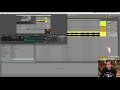
In the "ILLENIUM Production Livestream" on YouTube, Illenium demonstrates the use of the Waves H-Delay Hybrid Delay plugin during his music production process. This provides insight into his gear setup and creative techniques.


Used on "Apeshit", as stated by producer Stuart White in this September 2018 Sound on Sound interview.
The first four aux tracks feature SoundToys effects, namely Little Microshift, two EchoBoy delays, and a delay from the Little PrimalTap. Next are a Hall Reverb aux and a Church Reverb aux, both using Waves’ RVerb, an EMT plate from Audio Ease’s Altiverb, four aux tracks with the Waves H-Delay and various other plug-ins on them as well, and four more reverb auxes with the Avid Revibe II, two Avid D-Verbs and another RVerb.
White: “I use the Little Microshift in pretty much every mix, with the left-right micro pitch-shift effect that’s similar to the classic effect in the Eventide H3000 shift where you pitch one side down six cents and one side up six cents to create width. It’s a good way to get your vocals wider without them being out of phase. It thickens up vocals, and is kind of like a doubler. I do quite a lot of filtering on some of the EchoBoy delays, for example with the Waves REQ, and I am adding colour with the SoundToys Devil-Loc, which is great if you want to colour the delay so it is separate from the main vocal, and compress it with the UAD LA3A and mix that in to taste.”
(...) Beyoncé’s lead vocal tracks consist of three aux tracks, four ‘dirty’ and eight ‘clean’ audio tracks. The audio tracks only have the EQ3 on the inserts and a few of them have a send to the Church Reverb. All White’s processing is done on the three aux tracks. “All lead vocals are sent to the ‘B Aux’ track and the ‘B Parra Aux’ tracks. On the former I have the McDSP DS 555 de-esser. I use the Waves de-esser the most, but in this particular track, because I wanted to compress her voice really hard, I felt that the 555 would work the best. I am rolling off until 6144Hz into what it is detecting; it’s like a side-chain filter. The FabFilter Pro-DS is doing a little more gentle look-ahead de-essing.
“After that there’s some pretty heavy EQ from the EQ3, with a high-pass at 142Hz, a 9dB cut at 244Hz and a 2dB cut at 3kHz. My cut at 244Hz is because she is singing in this husky, low voice, so there’s not a lot of energy in that. I get the energy from the RComp compression, and the EQs, including from the SSL E-Channel, are there to make her sit in the track, rather than making it sound filtered. I love the RComp, mainly because it doesn’t sound like compression to me. The SSL E-Channel adds a bit more compression, and the [Crane Song] Phoenix II Tape Emulation is really cool because while it doesn’t actually sound like tape, it smoothes out transients in a signal just like much analogue equipment does. It enables me to get a fatter vocal sound that again makes the vocal sit in the mix. The final EQ3 has a notch at 3.2kHz to take out some harshness. I also have sends to the Verb aux track, which are the D-Verb and [Waves] H-Reverb, and the Delay 1-4 aux, with the EchoBoy.
The other aux track, ‘B Parra Aux’, is a parallel compression track, with the RCompressor and the CLA 76, which I mixed in low. Both these aux tracks then go to the ‘LD ALL Aux’, on which I’m doing some more surgery with the McDSP AE400 [dynamic EQ], which allows you to set a threshold, just like on a compressor. It’s like turning a volume knob down on a frequency the moment it gets out of control. Finally, there’s the Waves C4, for some control, to keep the vocal even. This track has a lot of energy, so this is an example of using compression for energy, mood and attitude. I also worked a long time to get the compression on Bey’s breaths to pump on the beat. I wanted her breaths to be another percussive element in the track, and getting the attack and release on the compressor right was key to getting that feel and pumping effect.”
Five of the 22 Beyoncé ad lib, backing and harmony vocals below her lead vocals also go to the above-mentioned aux tracks, while the rest have their own signal chains. These audio tracks are sent to several aux tracks, often with tons of plug-ins, and all aux vocal tracks in the end get sent to the ‘Voc All’ group aux right at the top of the session, which has an RCompressor, with ratio at 10:1. There are more group aux tracks, like ‘TrackAux’, ‘FX Voc Aux’, ‘FX’ and ‘Music Aux’, which all get sent to the ‘All Aux’. This in turn gets sent to the ‘no limiter’ mix print track, and finally there’s a Stereo Master track.


In this article by Waves, Mark Ronson states : "Obviously the L2 Ultramaximizer is something I use all the time. And then there’s hardware that I actually have in my studio, like the dbx 160 compressors, but I only have two of those, so once I run out of analog channels I use the Waves dbx 160 in the box. I also use H-Delay a lot, especially for vocals."


Used on "APESHIT", as stated by producer Stuart White in this September 2018 Sound on Sound interview.
The first four aux tracks feature SoundToys effects, namely Little Microshift, two EchoBoy delays, and a delay from the Little PrimalTap. Next are a Hall Reverb aux and a Church Reverb aux, both using Waves’ RVerb, an EMT plate from Audio Ease’s Altiverb, four aux tracks with the Waves H-Delay and various other plug-ins on them as well, and four more reverb auxes with the Avid Revibe II, two Avid D-Verbs and another RVerb.
White: “I use the Little Microshift in pretty much every mix, with the left-right micro pitch-shift effect that’s similar to the classic effect in the Eventide H3000 shift where you pitch one side down six cents and one side up six cents to create width. It’s a good way to get your vocals wider without them being out of phase. It thickens up vocals, and is kind of like a doubler. I do quite a lot of filtering on some of the EchoBoy delays, for example with the Waves REQ, and I am adding colour with the SoundToys Devil-Loc, which is great if you want to colour the delay so it is separate from the main vocal, and compress it with the UAD LA3A and mix that in to taste.”
(...) Jay-Z’s part consists of just two tracks, one lead, and one ad-lib, with an additional ‘reverse’ track, and a ‘jay clean’ track. White: “The main lead vocal track has the SSL E0-channel, Waves C4 multiband compressor for some control, FabFilter Pro-Q2 EQ, with a few notches, and McDSP AE400. Where Jay raps ‘Tell the Grammy’s fuck that 0 for 8 shit / have you ever seen a crowd goin’ apeshit?’, you can hear some stuff in the background, which is another example of me adding flair and energy. That actually comes from the third ‘Voice Sample’ track further up the session, on which I have some automated plug-ins, the ReVibe, Waves S1 Imager, and filter sweep from the EQ3. It’s subtle, but it gives you a little ear candy.”


“H-Delay is a constant go-to. I can get simple, useful delays out of it immediately; it never slows my work flow. The analog modes give the delays great character. It's all over Run the Jewels 3.”


Used on "Closer", as stated by producer DJ Swivel in this February 2017 Sound on Sound interview.
“All Halsey’s vocals apart from her hook vocals further down have tons of plug-ins and sends! The insert chain on these tracks is Auto-Tune, Waves Renaissance De-essser, Waves SSL Channel, Waves RVox, Waves RDe-esser and SPL Vitalizer, and on two tracks I add the Waves RVerb, and on the ‘Delay Chop’, which happens just one moment towards the end, the Valhalla Vintage Verb. Each of Halsey’s vocals here is EQ’ed slightly differently, and also the same with the de-essers. The first in the chain usually works as a normal de-esser, and the second functions more as corrective EQ. They each have different frequencies that they act on, with different thresholds and amounts, and they tend to correct small issues in just one word or so. It may be a harsh upper-mid thing, which female vocals can have, and I just carve out those frequencies with the RDe-esser. I don’t want to take it out of the entire performance, because that frequency may add energy to the overall vocals.
“I also like using the RVox as a second compressor, to really tame the vocal. It just brings it right out in front and sticks the vocal in your face. I usually am pretty subtle with the RVox, but every once and a while I’ll slam it and you get this really cool sound. I learned that from Pensado’s Place. Finally, the SPL Vitalizer again adds some sheen to these vocals. The ‘Halsey Delay’ track adds four delays at the end of the song, with the second one pitched down with Auto-Tune. You can get some cool things by pitching down the vocals in Auto-Tune and changing the throat length and things like that.
“In addition, all these tracks have tons of sends, going to the Lexicon plate reverb, in some cases the Lexicon hall reverb as well, and the H-Delay medium delay and the Doubler for more width. The ‘Halsey Lead 1’ track also has a send to the ‘Tape Delay’ track, on which I have a delay from the Waves Kramer Master Tape plug-in, which is set to a 15ips slap with not a lot of feedback. That delay adds a nice tonality and space. I also have several delay throws on certain words she sings, like in her opening line, where it goes ‘you... you’ on the upbeat.
“By comparison, there are very few treatments on Halsey’s hook vocals, which only have Auto-Tune, the SSL Channel, and the Doubler. Similarly, Drew’s backing vocals also have these plug-ins, and some Lexicon plate reverb. I’m using the SSL Channel to get rid of some high end on some of the tracks, because they were a little too bright, and had different effects on each of them to make sure they were not too similar.


Album Usage
The Waves H-Delay Hybrid Delay has been featured on the following albums:
Blessings
Calvin Harris (2025)

Smalltown Boy (ABSOLUTE. Rework)
Bronski Beat & ABSOLUTE. (2024)
Wonderland
ABSOLUTE. (2021)

Ganglia
Andrew Huang (2020)
Rockabye
Clean Bandit (2019)

Old Town Road (Remix)
Billy Ray Cyrus & Lil Nas X & Mason Ramsey (2019)
ASTROWORLD
Travis Scott (2018)
Esskeetit
Lil Pump (2018)
Black Panther The Album Music From And Inspired By
Kendrick Lamar & SZA (2018)
![Waves H-Delay Hybrid Delay as heard on Bodak Yellow (feat. Messiah) [Latin Trap Remix] by Cardi B (2017)](https://images.equipboard.com/uploads/album/image/658146/bodak-yellow-feat-messiah-latin-trap-remix.jpg)
Bodak Yellow (feat. Messiah) [Latin Trap Remix]
Cardi B (2017)

Bodak Yellow (feat. Kodak Black)
Cardi B & Kodak Black (2017)

Closer
The Chainsmokers & Halsey (2016)
Hymn for the Weekend (Seeb Remix)
Coldplay & seeB (2016)
22, A Million
Bon Iver (2016)
Run The Jewels 3 (Instrumentals)
Killer Mike & El-P (2016)
Run The Jewels 3
Run the Jewels & Killer Mike & El-P (2016)
Purpose (Deluxe)
Justin Bieber (2015)
A Head Full of Dreams
Coldplay (2015)
VERY RARE FOREVER FREESTYLE
XXXTENTACION (2015)

Here Comes The Sun
Will K (2015)
In The Mode
Roni Size & Roni Size / Reprazent (2000)
Genre Usage
Based on how artists on Equipboard use this gear, it is most commonly found in the following genres.
Used With
Based on how musicians on Equipboard use Waves H-Delay Hybrid Delay, it is most commonly used with the following gear.


-s.webp?v=1783316602)




More Waves Delay Plugins

$29.99 - $34.99
in Delay Plugins Rank


-m.webp?v=1783321611)
$160.00 - $199.00
in Delay Plugins Rank


$139.00 - $149.00
in Delay Plugins Rank

.jpeg?v=1783244343)


-m.webp?v=1783316568)
$80.00 - $99.00
in Delay Plugins Rank
.jpg?v=1783082401)


$140.00 - $149.00
in Delay Plugins Rank


$99.00
in Delay Plugins Rank


$49.00
in Delay Plugins Rank


$64.00 - $69.00
in Delay Plugins Rank

-m.webp?v=1783005997)
$59.00 - $89.00
in Delay Plugins Rank


$42.00 - $49.00
in Delay Plugins Rank


$72.00 - $89.00
in Delay Plugins Rank

$66.00 - $79.00
in Delay Plugins Rank


$33.00 - $99.00
in Delay Plugins Rank

$75.00 - $99.00
in Delay Plugins Rank

$82.50 - $99.00
in Delay Plugins Rank

$14.99 - $17.00
in Delay Plugins Rank

$630.00
in Delay Plugins Rank


$49.00
in Delay Plugins Rank

$24.50 - $49.00
in Delay Plugins Rank


Accessories & Related Items


-s.webp?v=1783316979)


-s.webp?v=1783316928)


-s.webp?v=1783317103)


Community setups


Similar


Most Popular Delay Plugins
Most Popular Brands
-
Added to Equipboard on by
 waves_audio
Gear IQ 120
-