
Pricing and availability




* Product prices and availability are updated by Equipboard every 24hrs and are subject to change. Equipboard may receive compensation for purchases made at participating retailers linked on this site. This compensation does not affect what products or prices are displayed, or the order of prices listed. For more information, please refer to our affiliate disclosure.


Reviews
5.0 out of 5
Based on 1 Review and 1 Rating

314
Up From Th DEEEEEEP
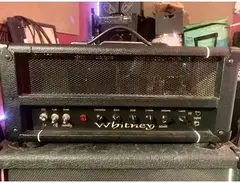
So I was using a Fender HRD 4X10 combo and it was heavy as F---; also it had a marvelous sound, buuuut couldn't give me that "British" tone Ive always loved. I was bemoaning how crappy newer Marshalls sounded to me and a friend said "You need a clone..." Well I searched around and stumbled across this on eBay. I messaged the seller who turns out also built it, and he was gracious in answering all my questions so I bought it. Luckiest thing I did in 2008. Micheal Whitney at that time was an engineer on a nuclear submarine and when he was home from a tour he would go back to his first love which was guitar and building stuff for that. This is a 50 watt clone of an early 80's JCM, though the circuit he used crunches out more like a 70's Hiwatt- brilliant and sandy and bright but not that scorching Marshall tremble, more midrangy and spongy if that makes sense. Switchable at the back for 4-8-16 ohms, 2 speaker outs. Thing is great and plenty loud, but has a 1/2 power switch that will run the tubes as triodes instead of pentodes- drops the wats by roughly half. Clean sounds are bright but not cackling and it takes to the mostly Teles I play quite nicely. I dunno if he is still making amps but if you EVER see one GRAB IT !!!

41029
70s hiwatts needto be cranked to crunch and its a very unique crunch due to the voicing and topology whicha re fairly unique, the pahse inverter plays a big role and its a hifi affair, AC coupled unlike almost every other guitar amp with similar long tailed pair arrangement.... 60s hiwatts and hylight made sound cities are meaner, in the 60 there was an additional cathode follower stage into the phase inverter which reduced the impedance effectively slamming more gain and a wider bandwidth of the preamp's tone into the power amp. Later the tone stack recovery stage was coupled directly to the PI and the triode that used to serve as a buffer into the power amp was repurposed to serve as a voltage reference to make the phase inverter fixed bias as well as AC coupled, a trick from macintosh hifi amps. This is the arrangement you'll find on most hiwatts. Also, as the designe volved bypass capacitors were eliminated from various gains tages increasing internal negative feedback, tightening the response and reducing the gain of each altered stage. Hiwatts are fascinating, nothing like marshalls other than how the power tubes are set up. I've built my own and also designed my own hiwatt influenced amp. Fascinating stuff, dude. Comapred to the amrshall guys Dave Reeves was a real engineer and artist.
314
WOW ! Much of what you've said would make more sense to Micheal who built this amp, all I know is given the right settings this thing sounds like "Slip Kid" so I dropped the HW comment in there, though maybe Townsend was using something else by then
More Guitar Amplifier Heads

$550.00 - $3,421.95
in Guitar Amplifier Heads Rank


$1,282.00 - $1,999.99
in Guitar Amplifier Heads Rank


$1,900.00 - $3,299.00
in Guitar Amplifier Heads Rank


$599.00 - $1,999.99
in Guitar Amplifier Heads Rank


$1,599.00 - $1,848.00
in Guitar Amplifier Heads Rank


$240.00
in Guitar Amplifier Heads Rank


$1,239.00 - $2,398.00
in Guitar Amplifier Heads Rank


-m.webp?v=1783162975)
$1,699.00 - $2,899.99
in Guitar Amplifier Heads Rank


$776.88 - $2,449.99
in Guitar Amplifier Heads Rank


$600.00 - $949.00
in Guitar Amplifier Heads Rank


$600.00
in Guitar Amplifier Heads Rank


$2,031.83 - $3,199.99
in Guitar Amplifier Heads Rank

$2,999.00 - $3,514.27
in Guitar Amplifier Heads Rank


$1,499.00 - $2,149.99
in Guitar Amplifier Heads Rank


$2,199.99 - $2,299.99
in Guitar Amplifier Heads Rank


$1,659.00 - $3,421.95
in Guitar Amplifier Heads Rank


$1,399.99 - $1,519.99
in Guitar Amplifier Heads Rank


$1,399.99 - $1,519.99
in Guitar Amplifier Heads Rank


$1,379.00 - $1,699.00
in Guitar Amplifier Heads Rank


$1,890.00 - $2,749.00
in Guitar Amplifier Heads Rank


$1,500.00 - $1,699.99
in Guitar Amplifier Heads Rank

.jpeg?v=1783115508)


$715.00 - $1,359.00
in Guitar Amplifier Heads Rank


$149.00 - $309.00
in Guitar Amplifier Heads Rank


$1,999.00 - $3,149.00
in Guitar Amplifier Heads Rank


$729.00 - $1,199.00
in Guitar Amplifier Heads Rank


-m.webp?v=1783162998)
$119.00 - $159.00
in Guitar Amplifier Heads Rank


$1,599.00 - $2,222.00
in Guitar Amplifier Heads Rank


$1,799.00 - $2,499.00
in Guitar Amplifier Heads Rank


$1,074.00 - $2,199.00
in Guitar Amplifier Heads Rank


$1,216.00 - $1,999.99
in Guitar Amplifier Heads Rank


$1,299.00 - $2,099.99
in Guitar Amplifier Heads Rank


$839.60
in Guitar Amplifier Heads Rank


$622.00 - $799.00
in Guitar Amplifier Heads Rank


$460.00 - $699.00
in Guitar Amplifier Heads Rank


$1,111.00 - $1,799.99
in Guitar Amplifier Heads Rank


$1,999.00 - $4,599.00
in Guitar Amplifier Heads Rank


$899.00 - $1,349.99
in Guitar Amplifier Heads Rank


$1,999.99 - $2,790.00
in Guitar Amplifier Heads Rank


-m.webp?v=1783162968)
$2,799.00 - $4,499.99
in Guitar Amplifier Heads Rank

$977.00 - $1,579.00
in Guitar Amplifier Heads Rank


Artist usage


Community setups


Similar


Gear Guides







Most Popular Brands
-
Added to Equipboard on by
vern_mcelroyGear IQ 314
-


