

Pricing and availability
We compare 600+ stores and found this item at 1 store. Prices updated .
Store
Reviews
Price




Average Price: $299
Standard/Professional
$100
$501+
Price Tier
Budget
Standard
High-end
* Product prices and availability are updated by Equipboard every 24hrs and are subject to change. Equipboard may receive compensation for purchases made at participating retailers linked on this site. This compensation does not affect what products or prices are displayed, or the order of prices listed. For more information, please refer to our affiliate disclosure.
Description
The Yamaha REV-7 is a classic digital reverb processor that has etched its name into the annals of studio recording lore. Introduced in the mid-1980s, this effects processor continues to charm audio professionals with its distinct sound character and robust build quality. Perfect for both studio and live settings, the REV-7 offers a range of lush reverbs and effects that can add depth and dimension to any musical production. Its 16-bit digital signal processing technology was pioneering for its time and remains a relevant tool for those seeking that iconic '80s reverb sound.
With an intuitive interface, the Yamaha REV-7 allows users to easily navigate through its features, making it a favorite among new and veteran sound engineers alike. It hosts an array of reverb types, including hall, room, plate, and gated, all of which can be tailored to fit your specific needs with adjustable parameters. Whether you are sculpting soundscapes for film, enhancing vocals, or adding ambiance to your guitar tracks, the REV-7 delivers with precision and reliability.
Key Features:
- 16-bit digital signal processing technology
- Multiple reverb types: hall, room, plate, gated
- Versatile for both studio and live applications
- Intuitive user interface with adjustable parameters
- Classic '80s reverb sound for vintage enthusiasts
- Robust construction for long-lasting use
Product specs
| Brand | Yamaha |
| Model | REV 7 Digital Reverberator |
| Finish | Black |
| Year | 1980s |
| Categories | Delay, Reverb |
FAQs
-
What types of reverb effects does the Yamaha REV-7 offer?
-
The Yamaha REV-7 provides a range of reverb effects including hall, room, plate, and more, allowing for versatile sound shaping in studio and live settings.
-
Is the Yamaha REV-7 suitable for live performances?
-
Yes, the Yamaha REV-7 is designed for both studio and live performance use, offering robust reverb effects that can enhance live sound environments.
-
How do you connect the Yamaha REV-7 to a mixing console?
-
The Yamaha REV-7 connects to a mixing console via standard 1/4-inch or XLR inputs and outputs, allowing integration into most audio setups.
-
Can the Yamaha REV-7 be used with both instruments and vocals?
-
Yes, the Yamaha REV-7 is versatile and can be used to add reverb effects to both instruments and vocals, enhancing overall sound quality.
-
Does the Yamaha REV-7 offer MIDI connectivity?
-
The Yamaha REV-7 does not feature MIDI connectivity, focusing instead on high-quality analog reverb processing.
Videos

Blue House Sound Studio
Yamaha Rev 7 - The Forgotten Reverb
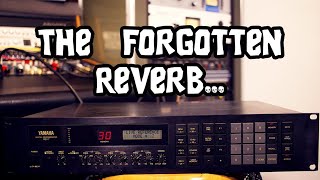
Yamaha Rev 7 - The Forgotten Reverb
Blue House Sound Studio
Yamaha REV 7 - Groundbreaking Reverb & More

Leon Todd
Yamaha Rev7 Big Stereo Demo

Clifton Wright
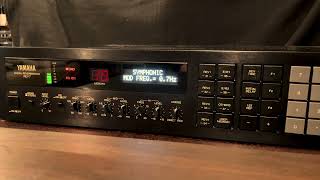
Yamaha REV-7 Vintage Digital Reverb

Rec Gear Demos
Yamaha REV 7 - Vintage Digital FX - Japan - 90’s - SN.15434 - HQ Direct Audio

Audiobitz Collector
Yamaha REV7

Vintage Digital
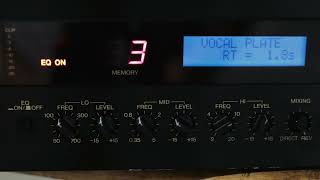
Quick & Dirty audio demo Yamaha Rev 7

mission control
Reviews
Owner Insights
We analyzed real musician discussions from forums and Reddit to find what players love, question, and tweak about Yamaha REV-7.
Features and functionality
-
The Rev 5 includes a hidden utility button for functions like attenuator, mono, and headphone split, adding versatility for various setups.
Source -
Some users highlight that the Rev 7 now includes a dedicated stems feature, eliminating the need for manual MIDI mapping.
Source -
Panning left and right on separate channels can prevent audio summation issues when connecting to an external mixer.
Source
Comparisons
-
The Rev 7 features a metal case compared to the Rev 5's plastic, offering potentially better durability and a more premium feel.
Source
User experience
Use cases and applications
-
The Rev 7's motorized platters and Magvel Pro crossfader are highlighted as ideal for DJs interested in scratching and juggling.
Source -
The Rev 7 may experience audio issues when both main outputs are connected to the same type of input on a mixer, highlighting the need for proper channel assignment.
Source
Build quality
-
Some users note the Rev 5 lacks in microphone sound quality, even when attenuation is adjusted, making it less suitable for vocal-heavy events.
Source -
The Rev 7 is described as having excellent build quality, with some component failures noted but generally regarded as a premium piece of equipment.
Source
Software and compatibility
Critic Reviews
5.0 out of 5
Based on 0 Reviews and 2 Ratings
Artist usage
Add artist

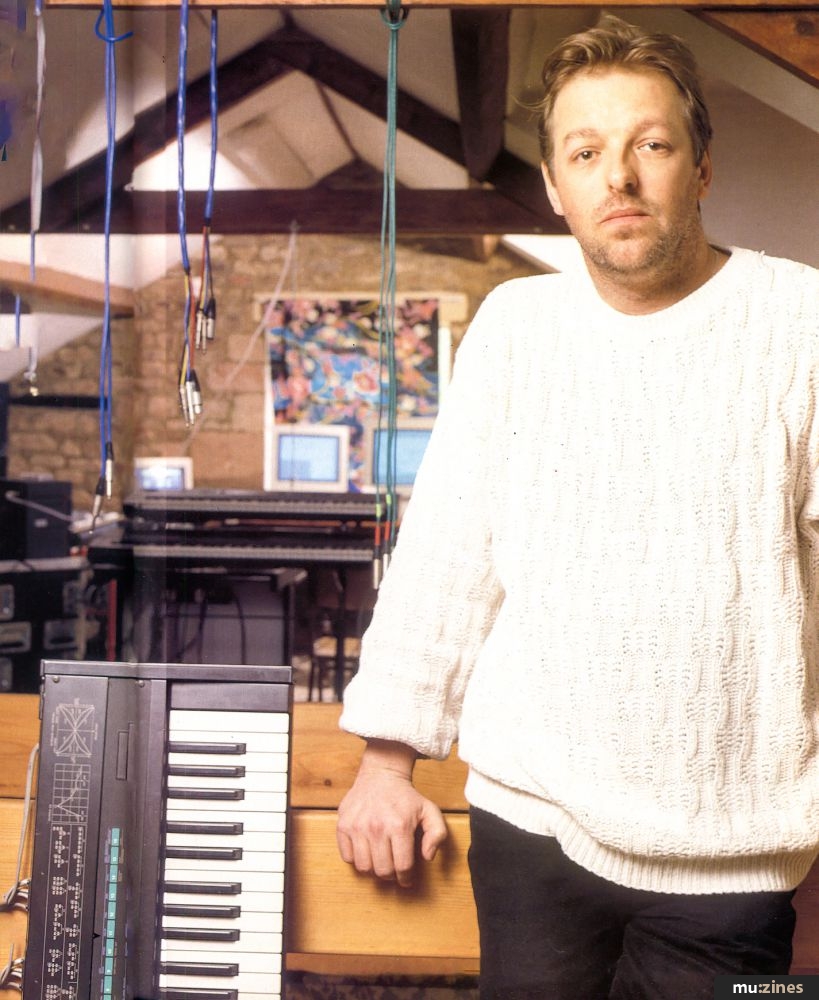
It can be seen in the eleventh photo, captioned "Some of Marius de Vries' outboard gear. From top: Digitech Vocalist II effects, Yamaha SPX900 multi‑effects, Alesis Quadraverb GT and Quadraverb multi‑effects, Mutronics Mutator compressor, Avalon input channel, Yamaha REV7 multi‑effects, Alesis 3630 compressor and Tascam DA30 DAT recorder."


Equipment used on Rick Astley's "Never Gonna Give You Up," which was recorded at Stock, Aitken & Waterman's PWL Studio, included "The Linn 9000, which most sequences and drums were done on, was run from a [Friendchip] SRC synchroniser, and a [Yamaha] DX7 was used for virtually all of the bass lines. There was also a [Roland] Juno 106; a [Yamaha] Rev 5 and Rev 7; Dbx 160 compressors; SDE 3000 delays; an Emulator; and the wonderful Publison Infernal Machine 90, which was the first sampler that could actually pitch?change without really affecting the time signature. You could time?stretch things and make them fit reasonably well — It was a little choppy, but for the time it was phenomenal. Other than that, there was an AMS delay/harmoniser, which always had a number of kick and snare samples, and that was pretty much it."


Jools Holland's equipment list, from the January 1993 issue of Music Technology:
(Helicon Mountain studios)
Instruments: Casio FZ1 Keyboard Sampler Casio FZ10M Sampler Module w/80-disk sound library Casio VZ1 Synth Hohner Clavinet Korg CX3 Organ w/Leslie 145 Cabinet Yamaha C5 Grand Piano Yamaha DX7 Synth
Recording: Atari 1040ST w/Steinberg Pro24 and C-Lab Creator sequencing software Fisher CD Player Revox PR99 two-track Saturn 824 24-track (Dolby SR on arrangement) Soundtracs Quartz 48-channel in-line desk (96 inputs on mixdown) Casio DA1 DAT Recorder Casio DA2 DAT Recorder XRI XR300 SMPTE Synchroniser
Effects: Drawmer Gate Drawmer Dual Compressor/Limiter Eventide Harmonizer Lexicon 480L Reverb Lexicon PCM70 Multi-effects Processor Roland SDE2000 Digital Delay SA PPE 240 Teac Graphic Equaliser Yamaha REV7 Reverb Yamaha R1000 Reverb Yamaha SPX90 (x2) Multi-effects Processor
Microphones: Neumann U87, AKG, Shure, PZM


Value for money is clearly a touchstone for Tom:
"I try always to stick to a Policy of 'if it costs over £100, don't buy it.' You get more music for your money that way."
The studio's effect rack bears witness to the theory, for sitting alongside the ubiquitous Drawmer noise gates and Yamaha REV7 reverb, is that same company's budget-priced multi-effects unit, the SPX 90:
"If you could only have one effect, it'd have to be that — as an all-rounder, I much prefer it to the REV7, though there are some effects you can only get on that — the 7's great for really short, ambient things, like bass drum reverb."

Genre Usage
Based on how artists on Equipboard use this gear, it is most commonly found in the following genres.
Used With
Based on how musicians on Equipboard use Yamaha REV-7, it is most commonly used with the following gear.


-s.webp?v=1783323104)


Community setups
Show yours
More Yamaha Effects Processors


-m.webp?v=1782114263)


-m.webp?v=1783323321)


.jpg?v=1782915672)


Similar


Most Popular Effects Processors
Most Popular Brands


