-s.webp?v=1783177031)
-xl.webp?v=1783177031)
Pricing and availability
We compare 600+ stores and found this item at 1 store. Prices updated .
Store
Reviews
Price




Average Price: $5,151
High-end/Boutique
$100
$501+
Price Tier
Budget
Standard
High-end
* Product prices and availability are updated by Equipboard every 24hrs and are subject to change. Equipboard may receive compensation for purchases made at participating retailers linked on this site. This compensation does not affect what products or prices are displayed, or the order of prices listed. For more information, please refer to our affiliate disclosure.
Description
The AMS DMX 15-80S Digital Delay is a quintessential tool for musicians and sound engineers seeking to add depth and texture to their audio projects. Known for its versatile delay capabilities, this effects processor delivers high-fidelity echo and delay effects, making it a staple in both live and studio settings. Designed with precision in mind, the DMX 15-80S offers an impressive array of features that cater to both novice users and seasoned professionals.
This digital delay unit is equipped with a robust set of controls, allowing for meticulous adjustments to delay time, feedback, and modulation. Whether you're aiming for a subtle echo or a dramatic, layered soundscape, the AMS DMX 15-80S provides the tools you need to achieve your desired sonic outcome. The digital architecture ensures clarity and consistency, while the intuitive interface facilitates easy navigation through its comprehensive settings.
Perfect for musicians who crave creative control, the DMX 15-80S integrates seamlessly into any setup. Its reliable performance is backed by a sturdy build and user-friendly design, making it a trusted choice for enhancing audio production quality. Whether you're crafting a new track in the studio or delivering a live performance, this digital delay unit is engineered to elevate your sound.
Key Features:
- Versatile delay capabilities for a wide range of audio effects
- Intuitive interface for easy navigation
- Comprehensive controls for delay time, feedback, and modulation
- High-fidelity digital architecture for consistent sound quality
- Reliable performance suitable for both studio and live environments
Product specs
| Brand | AMS |
| Model | Model DMX 15-80 S Computer Controlled Stereo Digital Delay |
| Finish | Black |
| Year | 1970s |
| Categories | Delay |
FAQs
-
What are the key features of the AMS DMX 15-80S Digital Delay?
-
The AMS DMX 15-80S is a computer-controlled stereo digital delay known for its high-quality audio processing and versatility. It offers adjustable delay times, modulation capabilities, and is renowned for its use in professional studio settings.
-
How does the AMS DMX 15-80S Digital Delay enhance studio recordings?
-
The AMS DMX 15-80S provides precise delay control and modulation options, allowing producers to create rich textures and depth in recordings. Its high-fidelity processing makes it a staple in achieving professional-grade soundscapes.
-
Is the AMS DMX 15-80S suitable for live performances?
-
While primarily designed for studio use, the AMS DMX 15-80S can be utilized in live settings to add dynamic delay effects. Its robust build and reliable performance make it a viable option for live sound engineers seeking high-quality delay effects.
Videos

Universal Audio
UAD AMS DMX Digital Delay & Pitch Shifter Sound Examples
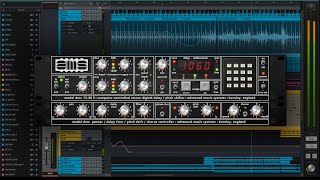
UAD AMS DMX Digital Delay & Pitch Shifter Sound Examples
Universal Audio
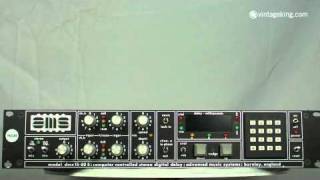
AMS DMX 15-80S Digital Delay | VintageKing.com

Vintage King
AMS DMX: a delay with a terrible secret

No Fun Club
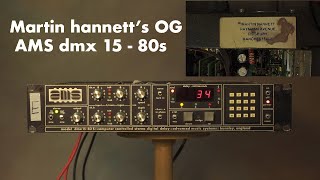
Martin Hannett's OG AMS dmx 15 - 80s

foleytronics fx repair
Reviews
Owner Insights
We analyzed real musician discussions from forums and Reddit to find what players love, question, and tweak about AMS DMX 15-80S Digital Delay.
Features and functionality
-
The AMS DMX 15-80S uses a crystal oscillator for modulating stereo delay time, creating unique pitch modulation effects through speed and depth adjustments.
Source -
The granular module's position control acts as a delay time, allowing cascading pitch-shifted delays and blending traditional pitch effects when paired with a delay line.
Source -
Known for producing thick, rich vocal effects, enhancing vocal tracks with depth and texture.
Source
Use cases and applications
-
The granular module on devices like the Zoia can replicate AMS DMX's pitch-shifted delays, useful for creating cascading effects with a VCA in the feedback path.
Source
Comparisons
-
Granular synthesis, used in older pitch-shifters like the Eventide H910, provides a similar pitch-changing method to the AMS DMX 15-80S, offering a glitchy character.
Source
Mods and upgrades
-
Filtering in the feedback loop, particularly with a multi-filter, can shape pitch-shifted sounds better than an SV filter due to resonance control.
Source -
Some units have a unique power supply connection; internal power supply footprint allows for upgrade with a currently available transformer.
Source
Setup and maintenance
Critic Reviews
5.0 out of 5
Based on 1 Review and 2 Ratings

41029
Groundbreaking
This used to be sitting unloved in a lot if studios under the lexicon and 2290 units and maybe a korg. Yes its old and quirky but its early digital delay lines hold up today. Wh er n its gotta sound like joy division? Yup.
Artist usage
Add artist

Used on "Sex on Fire", as stated by Only by the Night producer Jacquire King in this December 2008 Sound on Sound interview.
- Bass: AMS delay, Sound Toys Echoboy, Empirical Labs Distressor, Chandler TG1, Dbx Disco Boombox
"On the Mix window screen you can see that there are bass DI, bass amp, bass AMS and bass delay tracks. The AMS is a delay that I applied at Blackbird and that I then printed to Pro Tools. The delay is the Echoboy delay, which I added during mixing. The idea was to get a different texture than I could with the AMS delay. Both delays had different delay times, different qualities of sound, and different feedback and modulation effects, and the idea was to spread them out and fatten up the sound, give it some space without putting a reverb or something poky–sounding on it. By spreading the bass out a bit you also make it sound bigger. In addition, there's some Distressor and TG1 compression and some EQ on the bass, as well as some more subharmonic synthesis, again using the DBX Disco Boombox. I have a slightly more modern version of the box."
The item can be seen as a Pro Tools mix channel label in this image from the same interview.
The final Pro Tools Session included four bass tracks: the original miked and DI'd recordings, and duplicates treated with AMS hardware and Sound Toys (right) software delays.
.jpg?v=1783265544)

Used for the lead vocals on "Angel Dance", as is visible in the input chain sheet provided by tracking and mixing engineer Mike Poole in this December 2010 Sound on Sound article.
Poole was organised enough for this interview to supply a copy of his assistant Gordon Hammond's input chain sheet, reproduced on the left.


In this Modern Drummer interview, roadie Jeff Seitz mentions Stewart Copeland using an AMS DMX 15-80 digital delay.


"The new AMS units will still be there - the DMX 15-80S has a 1.6 second delay which is quite enough, and if we want to fly in longer samples like hook lines or multiple backing vocals, we do it from quarter-inch tape. Because the studio isn't being used commercially I don't feel we need 35 second digital delays and I have to be a bit frugal on the financial side. The AMS RMX16 reverb and the Lexicon will stay, although we don't really need all the compressors and noise gates we have. There's a Scamp rack, some Drawmers, Kepex gates, a Universal Audio Limiter and a few other things - I think the Drawmers are my favourites."


On the website, a post by Keith Clark on 07/17 at 11:28 AM states that Mick Jagger used AMS DMX 15-80S Digital Delay on a small studio called "Bamboo Room Studio".


In this 1982 documentary on the making of Gabriel's fourth album, we see a shot of several pieces of gear set up in his then-home studio. At the 10:50 mark, there's a clear shot of the 15-80S delay unit.

.jpg)
In a 2017 Instagram post, Justin Meldal-Johnsen showcased the AMS DMX 15-80S Digital Delay in his studio.

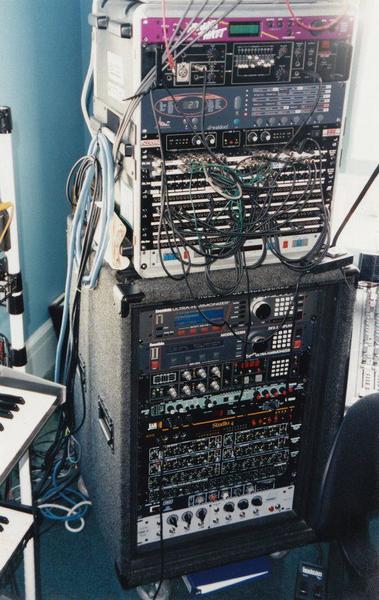
In a 1997 photo from cEvin Key's Vancouver studio, an AMS DMX 15-80S Digital Delay is visible among his equipment racks, illustrating his use of this effects processor.

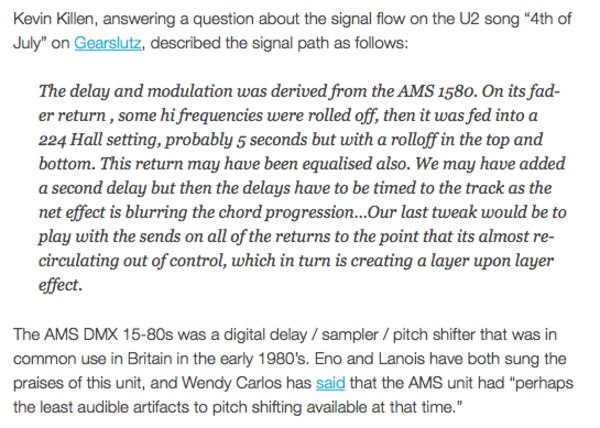
In this article, about how Brian Eno and Daniel Lanois got their shimmer sound, it says, "The AMS DMX 15-80s was a digital delay / sampler / pitch shifter that was in common use in Britain in the early 1980’s. Eno and Lanois have both sung the praises of this unit, and Wendy Carlos has said that the AMS unit had 'perhaps the least audible artifacts to pitch shifting available at that time.'"

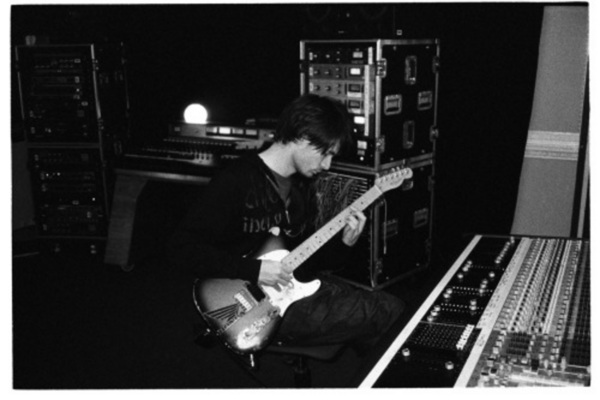
In a 2006 photo of Jonny Greenwood in the control room at Tottenham House during the recording of Radiohead’s In Rainbows, the distinctive keypads and knob layouts of two AMS DMX 15-80S Digital Delay rack units are visible in the bottom left rack case, providing evidence of Nigel Godrich's use of this equipment. An AMS RMX 16 is also visible in the upper left rack unit.

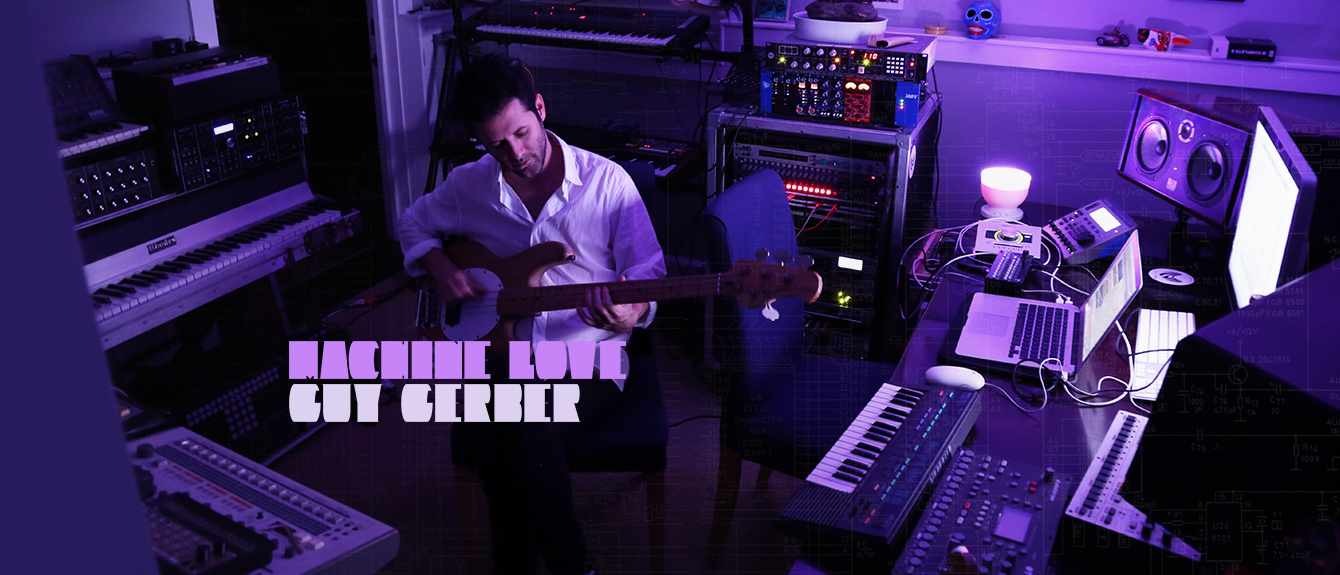
[Gerber plays a track and triggers an effect on the AMS DMX 15-80S digital delay unit] Did you see what it does? How cool is that? Wow. This fucking machine.


Madonna utilized the AMS DMX 15-80S Digital Delay on “Hollywood” and “I'm So Stupid.” "Two machines were used for the extensive vocal editing in “Hollywood” and “I'm So Stupid.” Madonna preferred the Antares Auto-Tune plug in; Mirwais chose an AMS 1580 S-DMX pitch shifter."
Album Usage
The AMS DMX 15-80S Digital Delay has been featured on the following albums:
I Wanna Dance With Somebody (Who Loves Me)
Whitney Houston & Calum Scott (2025)
How To Re-Assemble An Atomic Bomb
U2 (2024)

Look Good
White Denim (2024)

The Story of Light
Steve Vai (2012)
Sex On Fire
Kings of Leon (2009)

Only By The Night
Kings of Leon (2008)
In Rainbows
Radiohead (2007)
...And Justice for All (Remastered)
Metallica (1988)
Faith
George Michael (1987)
Master of Puppets (Remastered)
Metallica (1986)
No Jacket Required (2016 Remaster)
Phil Collins (1985)
Beat Boy
Visage (1984)

Fascination!
The Human League (1983)
Peter Gabriel 4: Security (Remastered Version)
Peter Gabriel (1982)
Unknown Pleasures
Joy Division (1979)
Genre Usage
Based on how artists on Equipboard use this gear, it is most commonly found in the following genres.
Used With
Based on how musicians on Equipboard use AMS DMX 15-80S Digital Delay, it is most commonly used with the following gear.


-s.webp?v=1783349880)
-s.webp?v=1783376725)

-s.webp?v=1783004361)


More AMS Neve Effects Processors


$3,599.00 - $4,955.00


$3,599.00 - $5,150.00


$1,857.84 - $2,675.00


$1,188.00 - $1,490.00

$2,590.00 - $9,405.00


$2,590.00 - $12,395.31


$1,575.00
in Effects Processors Rank


-m.webp?v=1783389562)
$600.00
in Effects Processors Rank


$146.00
in Effects Processors Rank


Community setups


Similar


Most Popular Effects Processors
Most Popular Brands
-
Added to Equipboard on by
 equipboard
Gear IQ 4934
-


