

Pricing and availability
We compare 600+ stores and found this item at 1 store. Prices updated .
Store
Reviews
Price




Average Price: $800
Standard/Professional
$500
$1501+
Price Tier
Budget
Standard
High-end
* Product prices and availability are updated by Equipboard every 24hrs and are subject to change. Equipboard may receive compensation for purchases made at participating retailers linked on this site. This compensation does not affect what products or prices are displayed, or the order of prices listed. For more information, please refer to our affiliate disclosure.
Description
Emax II is a true 16-bit sampler with more polyphony, it also uses digital filters and components.
The Emax II which was released in 1989 brought the Emax series up to modern specs with 16-bit sampling, 16-voice polyphony, 16 MIDI channels, stereo samples, 1MB RAM expandable to 8MB, SCSI, 8 assignable outputs and the SE's synthesis functions.
The E-Mu Emax II is a 1MB mono 16-bit sampler. Its maximum sample rate is 39kHz but it can play back samples created at 44.1kHz. The filter is 24dB/oct and, while digital, sounds as good as analog. It is also controllable in real-time, which at the time was a major breakthrough. The Emax II also has very robust SCSI implementation that makes it compatible with many external drives (Syquest removable media, MO drives, CD drives, and hard drives with a maximum partition of 540MB). It can send and receive clock signals. When slaved, it accepts 24, 48, or 96 ppq with pulses at least 1ms wide and 1 to 5 volts. When sending clock, it sends 24 ppq at 5 volts and 6ms wide.
The sample time on the Emax II with 1MB is 26.1 seconds (20.000kHz), 23.7 seconds (22.050kHz), 18.9 seconds (27.778kHz), 16.8 seconds (31.250kHz), & 13.4 seconds (39.0625kHz).
There are also some undocumented, hidden features on this keyboard, available by selecting the master module. Select it and then choose option 9. Then choose 9 again even though only 1-8 are offered as selections. When prompted for a password, enter 3629 (EMAX on the touchpad). Here are the undocumented functions:
Features: Polyphony: 16 voices (or 16 mono voices with stereo chorus) Sampler: 16-bit Memory: 1MB (expandable to 8MB) LFO: Yes Arpeg/Seq - 16-track sequencer; arpeggiator Keyboard: 61 notes (with velocity and poly pressure messages) Effects: Chorus Control: 16 MIDI channels 5 Octave velocity sensitive keyboard 14 Velocity curves Velocity control over Volume, Amplitude Attack, Filter Cutoff, Filter Q, and Filter Attack 3.5" Floppy disk drive (double sided, double density disks) Internal and external SCSI connection (internal HD power supply) 32 Character Backlit LCD RS-422 Computer Interface port MIDI In MIDI Out/Thru Programmable Arpeggiator 16 Track Sequencer 1/4" Clock In 1/4" Clock Out 2 Programmable wheels (real-time pitch, cutoff, attack, level, and LFO modulation control) 2 1/4" Footswitch Ins 1 1/4" Foot pedal In 1 1/4" Audio In 1 Stereo 1/4" Headphone Out 1 1/4" Mono Mix Out 2 1/4" (1 stereo pair) Outs 6 1/4" (3 stereo pair) Sub Outs: L and R stereo or Tip-output and Ring-effect return Date Produced: 1989
Product specs
| Brand | E-MU Systems |
| Model | Emax II 61-Key 16-Voice Sampler Workstation |
| Finish | Black |
| Year | 1989 |
| Categories | Samplers, Workstation Keyboards |
| Analog / Digital | Digital |
| Key Size | Full Size |
| Keyboard Action | Synth Action |
| MIDI I/O | MIDI Input, MIDI Output, MIDI Through |
| Number of Keys | 61 Keys |
| Polyphony | 16 Voices |
FAQs
-
What is the polyphony capability of the E-Mu Emax II?
-
The E-Mu Emax II offers 16-voice polyphony, allowing you to play multiple notes simultaneously, which is ideal for complex compositions and layered sounds.
-
Does the E-Mu Emax II support MIDI connectivity?
-
Yes, the E-Mu Emax II includes MIDI Input, MIDI Output, and MIDI Through, making it easy to integrate with other MIDI-compatible devices and software.
-
What type of keyboard action does the E-Mu Emax II have?
-
The E-Mu Emax II features a synth action keyboard, which provides a smooth and responsive feel suitable for a variety of playing styles.
-
How many keys are on the E-Mu Emax II?
-
The E-Mu Emax II is equipped with a full-size 61-key keyboard, offering a wide range of notes for performance and recording.
-
Is the E-Mu Emax II a digital or analog instrument?
-
The E-Mu Emax II is a digital sampler workstation, designed to capture and manipulate sounds digitally for versatile music production.
Videos

Espen Kraft
Emu Emax 2 | Sometimes the sequel is the best one
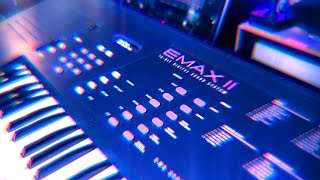
Emu Emax 2 | Sometimes the sequel is the best one
Espen Kraft
Emu EMAX II vs Emax I (1 of 3)

DX5
Synth Stuff Ep. 46 - E-mu Emax II

tritonrecordings
Emu Emax II - Proof of working device Soundlibrary Liquid Stack

synthtools
Reviews
Owner Insights
We analyzed real musician discussions from forums and Reddit to find what players love, question, and tweak about E-Mu Emax II 16-bit Digital Sound System Sampler Keyboard Workstation.
Setup and maintenance
Mods and upgrades
Critic Reviews
4.0 out of 5
Based on 0 Reviews and 1 Rating
Artist usage
Add artist

Pictures of cEvin's Last Rights tour drumosaurus from 1992. Also featured in his setup was an E-mu emax II.

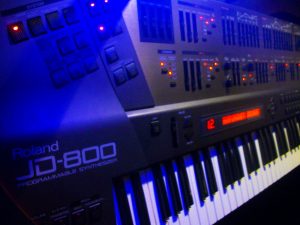


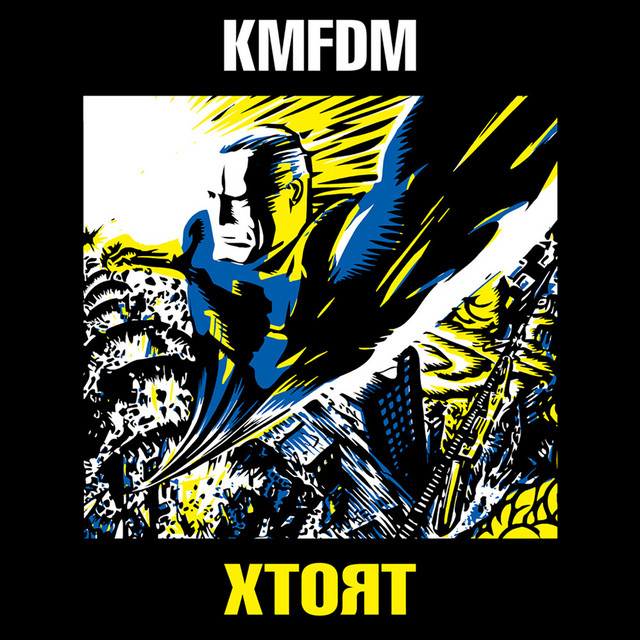
In an interview with Keyboard Magazine, Sascha Konietzko mentioned, "The difference was the approach. I started Xtort after coming off two pretty extensive tours in '95. What I did was, sat down and totally re-did my studio. I switched all my sampling stuff from [E-mu] Emax II to Akai [samplers]." This statement confirms that Sascha Konietzko previously used the E-Mu Emax II 16-bit Digital Sound System Sampler Keyboard Workstation in his music production before switching to Akai samplers.


In the YouTube video titled "Is the Emax better than the Emax 2?", Espen Kraft demonstrates and discusses the sonic and interface differences between the E-Mu Emax and the E-Mu Emax II 16-bit Digital Sound System Sampler Keyboard Workstation, indicating he uses both instruments.


Adams does his composing at his home studio in Berkeley, which consists of several Yamaha keyboards, including an SY77, SY99 and Electone, Korg Wavestation, Emu Proteus 1 module and Emax II, Kurzweil K2000, Lexicon LXP15 reverb, Macintosh computer with software such as Performer and Blank Software's Alchemy, and a small 16-channel desk ("I can't remember the name. I only use this studio for writing, and I write as much with the sequencer as with pen, paper and piano").

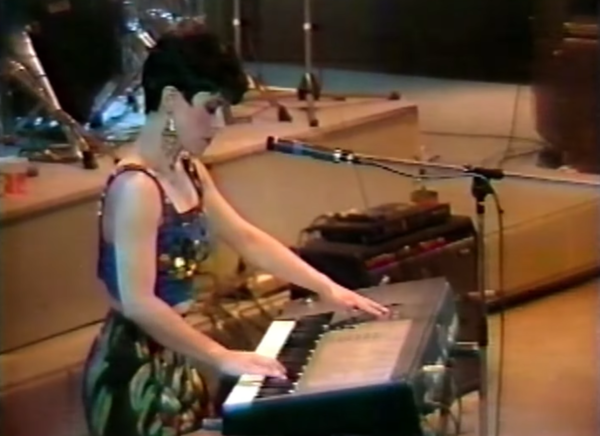
In This Image Cecilia Can Be Seen Using The E-mu Emax II Playing Tren Al Sur At Viña Festival 1991

Translation: "I bought a E-Mu Emax II sampler. That i could bring home and learn how it works."
Source: NHV interview from The Devil's Cradle: The Story of Finnish Black Metal

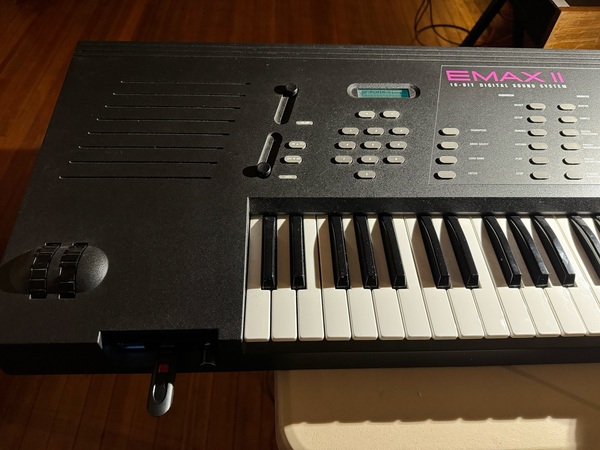
On Instagram, Josh Hager shares an image of the E-Mu Emax II 16-bit Digital Sound System Sampler Keyboard Workstation, captioned "On today's episode of 'It's alive.'"

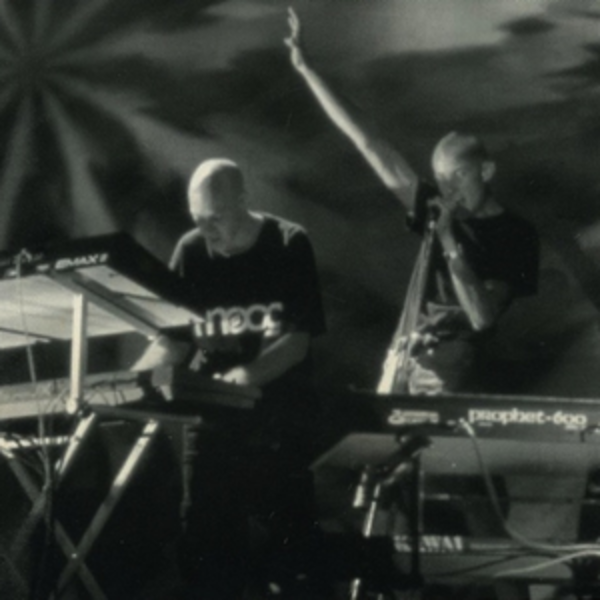
Dwayne can be seen playing the keyboard in the concert photo.


Album Usage
The E-Mu Emax II 16-bit Digital Sound System Sampler Keyboard Workstation has been featured on the following albums:
Genre Usage
Based on how artists on Equipboard use this gear, it is most commonly found in the following genres.
Used With
Based on how musicians on Equipboard use E-Mu Emax II 16-bit Digital Sound System Sampler Keyboard Workstation, it is most commonly used with the following gear.


-s.webp?v=1784991545)


More E-Mu Synthesizers
-m.webp?v=1784991545)


.jpg?v=1785025535)


$3,266.16 - $3,499.99
in Synthesizers Rank


$469.00 - $699.99
in Synthesizers Rank


$20,218.87
in Synthesizers Rank


Accessories & Related Items

Community setups


Similar


Gear Guides






.webp)

Most Popular Synthesizers
Most Popular Brands
-
Added to Equipboard on by
 jack_fairy
GearIQ 477
-


