

Pricing and availability
We compare 600+ stores and found this item at 1 store. Prices updated .
Store
Reviews
Price




Average Price: $5,400
High-end/Boutique
$500
$1501+
Price Tier
Budget
Standard
High-end
* Product prices and availability are updated by Equipboard every 24hrs and are subject to change. Equipboard may receive compensation for purchases made at participating retailers linked on this site. This compensation does not affect what products or prices are displayed, or the order of prices listed. For more information, please refer to our affiliate disclosure.
Description
Step into the world of classic digital sampling with the E-Mu Emulator III, a synthesizer that stands as a beacon of innovation from the late '80s. This iconic instrument merges digital sampling with traditional synthesis, offering musicians an expansive playground of sound possibilities. The Emulator III features 16 voices of polyphony, allowing for lush, layered compositions, and its 16-bit sampling capability ensures high-quality audio reproduction. With a built-in sequencer and a vast library of sounds, this synth is perfect for artists looking to explore vintage tones with modern precision.
The Emulator III is celebrated for its comprehensive control panel, which provides intuitive access to its wide array of functions, from editing samples to creating complex soundscapes. Its compatibility with MIDI enables seamless integration into any modern studio setup, making it a versatile tool for both live performance and studio recording. Whether you're a seasoned professional or an aspiring musician, the Emulator III offers a timeless sonic palette that continues to inspire creativity.
Key Features:
- 16 voices of polyphony for rich, layered sounds
- 16-bit digital sampling for high-quality audio
- Built-in sequencer for complex compositions
- User-friendly control panel for intuitive operation
- Extensive sound library with vintage and modern tones
- MIDI compatibility for easy integration into studio setups
- Classic design with robust build quality suitable for live and studio use
Product specs
| Brand | E-MU Systems |
| Model | Emulator III 61-Key 16-Voice Sampler Workstation |
| Finish | Grey |
| Year | 1987 |
| Categories | Samplers, Workstation Keyboards |
| Analog / Digital | Digital |
| Key Size | Full Size |
| Keyboard Action | Synth Action |
| MIDI I/O | MIDI Input, MIDI Output, MIDI Through |
| Number of Keys | 61 Keys |
| Polyphony | 16 Voices |
FAQs
-
Is the E-Mu Emulator III suitable for live performances?
-
Yes, the E-Mu Emulator III is well-suited for live performances due to its 61-key full-size keyboard and 16-voice polyphony, allowing for versatile sound creation and playback.
-
What type of connectivity does the E-Mu Emulator III support?
-
The E-Mu Emulator III supports MIDI connectivity with MIDI Input, Output, and Through ports, making it easy to integrate with other MIDI-compatible equipment.
-
How does the polyphony of the E-Mu Emulator III impact its performance?
-
With 16-voice polyphony, the E-Mu Emulator III allows for complex layering of sounds and simultaneous playback of multiple samples, enhancing its capability for intricate music production.
-
What is the keyboard action type of the E-Mu Emulator III?
-
The E-Mu Emulator III features synth action keys, which provide a smooth and responsive playing experience suitable for various playing styles.
-
Can the E-Mu Emulator III be used as a standalone sampler?
-
Yes, the E-Mu Emulator III functions as a standalone sampler workstation, capable of sampling, editing, and playing back sounds without needing additional equipment.
Videos

INHALTVIDEO
E-MU Emulator III Demo by INHALT
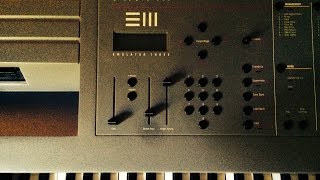
E-MU Emulator III Demo by INHALT
INHALTVIDEO

E-Mu Emulator series: Classic Synths that Defined the 80s

Fuzz City Records
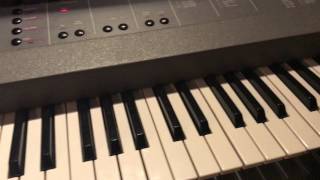
Emu Emulator III

Monkey Marc
Reviews
PROS
-
Unique 16-bit analog filters offer a distinct sound
-
Capable of producing deep, mysterious, and romanticized sounds
-
Warmer and denser sound compared to the Emulator II
-
Multitimbral capabilities across different MIDI channels
-
Features a built-in 16-track sequencer and LCD screen
-
Can be upgraded with modern components like LED backlit MOD and Pitch wheel
-
Regarded as a powerful tool in the Golden Age of Hip-Hop
CONS
-
High price point making it less accessible
-
Prone to internal issues like aging flat cables and cards dislodging
-
Internal fans cause noise and annoyance
-
Some users find it too digital sounding compared to the warmer Emulator II
Owner Insights
We analyzed real musician discussions from forums and Reddit to find what players love, question, and tweak about E-Mu Emulator III.
Features and functionality
Comparisons
-
The Emulator II's 12-bit playback of 8-bit samples adds a distinctive grain and texture, particularly noticeable in lower-key samples.
Source -
While the Emax is favored by some for its sound, the Emulator III is still a studio staple, offering superior sample-making capabilities compared to the cheaper Emulator IV E64.
Source
Use cases and applications
-
Industrial bands favored Emulator II for its unique sound, as exemplified in Depeche Mode's "Fly on the Windscreen."
Source
Software and compatibility
-
Arturia Emulator V software is highlighted as lacking the authentic sound of the Emulator II despite its modern capabilities.
Source
5.0 out of 5
Based on 4 Reviews and 11 Ratings

133
Emulator Three was a one-of-kind incomparable producer's power tool -- when it works...
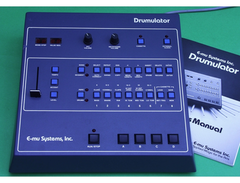
In 1987, the EIII, E3 or Emulator Three from E-Mu Systems was an ambitious and remarkable music construction tool. It was a pristine 16-bit 44.1khz stereo sampler, an analog synthesizer, a 16 track sequencer with a built-in keyboard, LCD screen, and internal hard drive. Built aesthetically with the same legendary DNA as found with the original Emulator, Emulator II, Drumulator, iconic SP-12 and later, SP-1200 products -- at $12,000+ new, the E3 was a heavy-weight without competition unless you could afford a Fairlight CMI or Synclavier. My E3 has been road tested (and failed often), but as perhaps one of the 1st true Digital Audio Workstations, it was an easy, fun and high-quality tool for making great music. With just 8mb of memory (yep, that was a lot back then), it doesn't get turned on much anymore -- still, it looks good and sounds great so I will never sell it. Thank you E-Mu, the Golden Age of Hip-Hop would not be the same without you.

71
SOUNDWISE - A MARVEL...
...otherwise - rather unstable, inside there is a lot of flat cables, which are ageing in a bad way, and the cards, that get out of their sockets every time I calmly walk in the room the EIII in question is standing in (at least that's my impression), so the Instrument behaves in a quirky way. And every time in a different one. Very funny indeed. So now I'm searching for a good tech with an endless patience. But again: the sound of the EIII is absolutely phenomenal. It's big and breathing.

257
The EIII
My favourite sampler, second only to the underrated Prophet 2002, resonant filters, super fat sampling. Not a lot to add other than to say i used this to death on my Wintersun releases on Automatic Records release (back in the day). PS: the mac editor i had using a Macintosh SE was incredibly handy and a real must have too.

Artist usage
Add artist
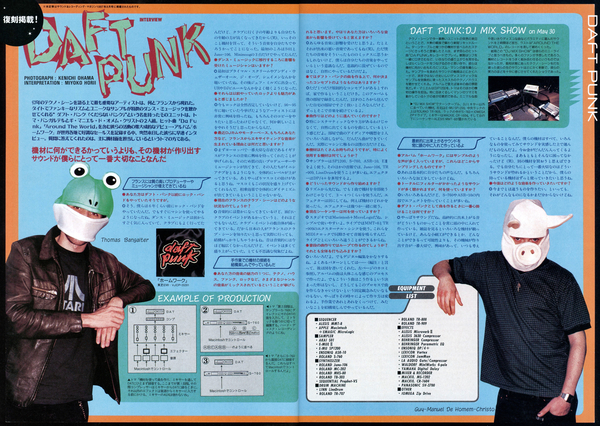
A 1997 interview with Japanese magazine 'Sound & Recording' contains a list of gear Daft Punk used on their album "Homework," among which is an "E-MUE III," referring to an E-mu Emulator III.


On the back cover of Jean-Michel Jarre's "Rendez-vous" album, a list of instruments used in its production includes the E-Mu Emulator III. This detail is noted in the LP Cover Art blog on Wordpress, which provides insight into the gear employed by Jarre during the album's creation.

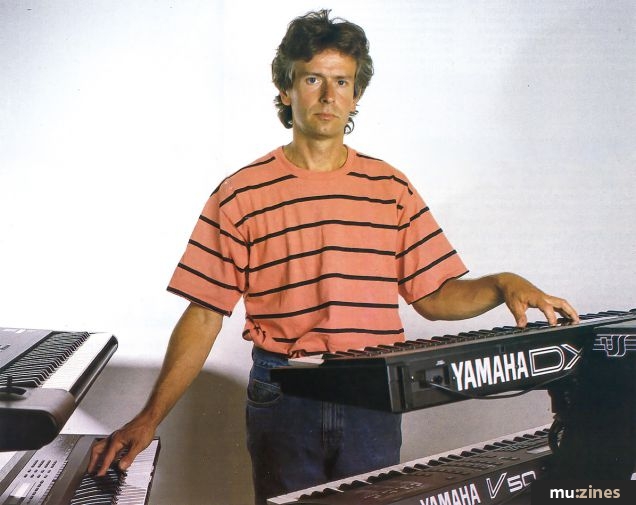
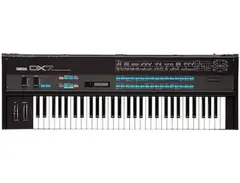
"My main instruments are the Yamaha CP70/80 electric grand, the DX7, plus the Emulator II and EIII. I know the EII better, so the more ambitious sounds on this album are from the EII. The Kurzweil modules have various digital sampled sounds, and the acoustic guitar sounds on the 1000PX are really good. I also use the D50 - it has lots of beautiful sounds which can be accessed without editing. In terms of effects I use a lot of Rev7, and recently I started using a Boss chorus."


Alan Wilder uses the E-Mu Emulator III, as listed in the equipment section of the Sound On Sound article "UNSOUND RECORDINGS."


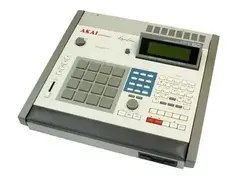
Studio buffs tend to forget that modern recording studios are imposing and disorientating places for the average lay person. The technology seems to be surpassed in complexity only by military and space hardware, and Mark King's 'home' studio is certainly state of the art, as the above listing indicates. There's also a Macintosh SE30 with Performer software, an SRC SMPTE-to-MIDI convertor, Adams Smith Zeta 3, NS 10 and Tannoy DTM8 monitors, and two Otari MTR90 24-track recorders with 48 tracks of Dolby SR. Sound sources include a DX7, Roland D110 and 550, Yamaha TX816, Juno 60, Emu III and Emax, Casio CZ101, plus an Akai-Linn MPC60 workstation and a DDrum 2 drum sampler.


The Body Bags score was composed using Digital Performer software running on a Macintosh Iicx computer. Sampling was done with an Emulator IIIxp and a Forat F16. Other electronic instruments include Hammond B3, Wurlitzer electric piano, MicroMoog, Roland MKS80, D550, Prophet VS, Yamaha DX and TX series, EMU Proteus 1 and 2, Korg M1r and M1rex, and an AKAI 612.
The score was digitally recorded using Alesis ADATs and BRC and John Hardy microphone preamps. Microphones included AKG414, Shure VP88 and SM57. The music was mixed on a custom Speck Electronics model 62 console. Signal processors used include: Behringer MDX 2000, SNR 802, DBX165a, B&B and Troisi cq, Dyna-Mite, Aphex expander gates, Lexicon and Yamaha Reverbs, Zoom, TC and Korg delays. Additional DSP and editing done in Sound Designer/Sound Tools. -John Carpenter


There were a lot of keyboards and samplers and modules used here is the studio list;
Mirage Sampler Prophet 2002 Sampler Emulator E2 Sampler Emulator E3 Sampler Akai S612 Sampler
Moog Mini Moog Model D Synthesizer Roland JX8P Synthesizer Arp Solina String Machine
Bosendorfer Grand Piano
On stage;
Yamaha mother keyboard with weighted action Roland JX8P Korg M1 Midi Step Midi foot controller rack including Oberheim disc readers which read Prophet, Mirage and Emulator samples

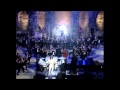
Yanni used the E-Mu Emulator III for a short period of time from about 1989 to 1994. It can be seen in the Live at the Acropolis video being used as the main sound for 'Santorini'. It is the large grey console on the top-left tier (Yanni's top-right).


Teddy Riley, known for his work as a singer, keyboardist, and music producer, has confirmed using the E-Mu Emulator III. In an interview featured on soulandfunkmusic.com, Riley stated, "I also used the [E-mu] Emulator Three when it first came out — that long, big keyboard that gave everybody problems. But I liked the first Emulator."


"I use the Emulator III as my major instrument and there's also some D50s, DX7s and DX7IIs - I still like the DXs for bright, percussive sounds. But I think you need to become familiar with your library so you know exactly what sounds you have at your disposal. I just get so sick of learning new instruments."


Instrument-wise, the S1000 inevitably features on the album, along with the EIII, and various other keyboards. A Mac II handles sequencing duties. "We've got a massive library for the EIII now, some great samples. We've spent 18 months sampling, so that's our main tool. We've also been using the Korg T3, and we've just got the new Roland D70, which is very good because it gives you much more of the analogue style live fader control, which is what you want. You don't want to read through manuals and alter every Partial — all that matters to the musician in the studio is that you can get the sound in your mind as quickly as possible.


Album Usage
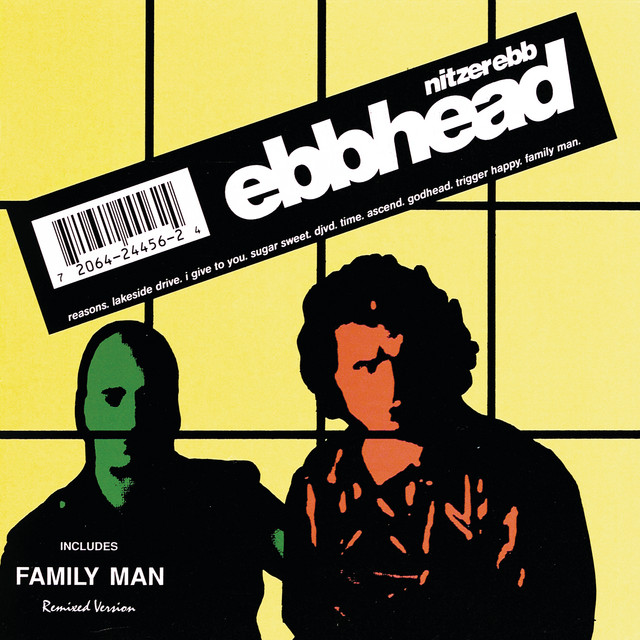
The E-Mu Emulator III has been featured on the following albums:




Genre Usage
Based on how artists on Equipboard use this gear, it is most commonly found in the following genres.
Used With
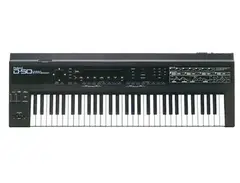
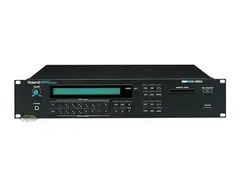
Based on how musicians on Equipboard use E-Mu Emulator III, it is most commonly used with the following gear.



Similar
Add recommendation1 alternative for E-Mu Emulator III, curated by the Equipboard community.
-m.webp?v=1784818691)
$297.47
I own both, so I could compare. They are very different but comparable in a way. They both sound just great. Notwithstanding the fact that the EIII has resonant analog filters and the ASR-10 has non-resonant (though one can remedy this by loading the waveboy filter algorithm) digital ones.
More E-Mu Synthesizers
-m.webp?v=1784818718)


.jpg?v=1784030062)


$3,272.18 - $3,499.99
in Synthesizers Rank


$469.00 - $699.99
in Synthesizers Rank


$20,256.12
in Synthesizers Rank


Accessories & Related Items

-s.webp?v=1784818718)

Community setups


Gear Guides






.webp)

Most Popular Synthesizers
Most Popular Brands
-
Added to Equipboard on by
adamdavidsonGearIQ 266
-


