

Pricing and availability
We compare 600+ stores and found this item at 1 store. Prices updated .




* Product prices and availability are updated by Equipboard every 24hrs and are subject to change. Equipboard may receive compensation for purchases made at participating retailers linked on this site. This compensation does not affect what products or prices are displayed, or the order of prices listed. For more information, please refer to our affiliate disclosure.
Description
Explore the vast sonic landscapes of orchestral music with the E-Mu Proteus 2 Orchestral module. This sound module is designed for musicians who demand authentic orchestral sounds without the need for a full orchestra. The Proteus 2 is renowned for its extensive collection of orchestral samples, making it a popular choice among composers and performers alike. Featuring a wide range of instrumental sounds, from strings and brass to woodwinds and percussion, it provides an expressive palette that brings compositions to life.
The module operates using a 16-bit sound engine, ensuring that every note is captured with clarity and precision. With its intuitive interface, musicians can easily navigate through patches and make real-time adjustments, allowing for seamless integration into any setup. Whether for studio recording or live performance, the E-Mu Proteus 2 offers flexibility and high-quality sound that stands the test of time.
Key Features:
- 16-bit sound engine for high-quality audio reproduction
- Over 300 orchestral sound presets
- Intuitive user interface for easy navigation and editing
- MIDI compatibility for integration with existing setups
- Multi-timbral capability supporting up to 32 voices
- Comprehensive selection of authentic orchestral instruments
Product specs
| Brand | E-MU Systems |
| Model | Proteus/2 Rackmount 32-Voice Sampler Module |
| Finish | Black |
| Year | 1990 |
| Made In | United States |
| Categories | Digital Synthesizers, Rackmount Synths |
| Analog / Digital | Digital |
| MIDI I/O | MIDI Input, MIDI Output, MIDI Through |
| Polyphony | 32 Voices |
FAQs
-
What kind of sounds does the E-Mu Proteus 2 Orchestral module offer?
-
The E-Mu Proteus 2 Orchestral module is known for its comprehensive collection of orchestral sounds, including strings, brass, woodwinds, and percussion, making it ideal for composers and producers seeking realistic orchestral textures.
-
How does the E-Mu Proteus 2 handle MIDI integration?
-
The E-Mu Proteus 2 features MIDI Input, Output, and Through, allowing seamless integration with other MIDI-compatible devices and DAWs for versatile sequencing and control options.
-
Is the E-Mu Proteus 2 suitable for live performances?
-
With its 32-voice polyphony and rackmount design, the E-Mu Proteus 2 is well-suited for live performances, providing robust orchestral sounds without the need for a computer.
-
Can the E-Mu Proteus 2 be used in a modern digital audio workstation setup?
-
Yes, the E-Mu Proteus 2 can be integrated into modern setups using MIDI connections, allowing you to trigger its sounds within your DAW environment.
-
What makes the E-Mu Proteus 2 different from other sound modules?
-
The E-Mu Proteus 2 is distinguished by its focus on high-quality orchestral samples, offering a rich palette of sounds specifically tailored for orchestral music production.
Videos

zibbybone
Emu Proteus 2 Orchestra Expander Module Demo Song
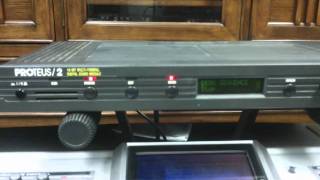
Emu Proteus 2 Orchestra Expander Module Demo Song
zibbybone

E-mu Proteus 2 Compilation (UPDATED)

Gabe Pickles’ Media Shack
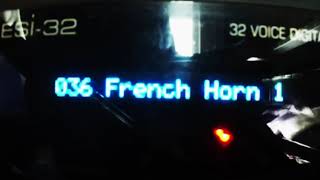
EMU Proteus 2 1990 - All presets HQ audio no taking

Jimi Uno's Pound Store Synth Emporium
"Flute" (E-MU Proteus 2 Orchestral) Demo 2022

Furkan Kılıç
"Harp" (E-MU Proteus 2 Orchestral) Demo
Furkan Kılıç
Reviews
Owner Insights
We analyzed real musician discussions from forums and Reddit to find what players love, question, and tweak about E-Mu Proteus 2 Orchestral module.
Features and functionality
-
The Proteus 2000 requires a ROM installed to produce sound, as samples and presets are stored on ROMs, with user presets stored separately on the main board.
Source -
The Composer ROM, typically included with the Proteus 2000, offers 8 banks of 128 presets and over 1000 samples, making it a comprehensive sound source.
Source -
The Proteus 2000 employs E-mu Z-plane filters, praised for their versatility and Oberheim-like character, with MIDI control via SYSEX and CC for deeper modulation.
Source
Comparisons
-
The Protozoa ROM includes sounds from Proteus 1, 2, and 3, but lacks the higher 64 presets from each original module's 192 presets.
Source
Use cases and applications
-
The Proteus 2000's built-in arpeggiator is highly praised for its versatility and ease of use, enhancing its appeal as a multi-functional rompler.
Source -
The Proteus 2 Orchestral is noted for its suitability in creating 90s video game soundtracks and is frequently used for nostalgic sound design.
Source -
Proteus 2000 excels in vaporwave production due to its unique filter and pitch interpolation characteristics, offering a distinctive 90s vibe.
Source
Value and pricing
-
ROM expansions for the Proteus series can be costly, often making it more economical to purchase units with desired ROMs already installed.
Source
User experience
-
Users appreciate the Proteus 2000's ease of patch editing, emphasizing the ability to reprogram lead sounds by altering samples and adjusting ADSR settings.
Source -
The Proteus 2000 is noted to be 32-part multitimbral, making it highly effective in hardware sequencing setups where multiple sounds are layered in a mix.
Source
Critic Reviews
4.0 out of 5
Based on 2 Reviews and 5 Ratings

195
Great, plenty of great sounds, easy to edit, 6 outputs
I have owned one of these for almost 23 years. It has great sounds, is easy to edit, even though the screen display is very limiting, and I like that I get 6 outputs to route sounds out, that can be setup in stereo pairs if I want, or not.

356
proteus2
Not quite a new box, but at the same time a little retro will not hurt.
Artist usage
Add artist

"Peter Howell in Studio B. A pair of S550 samplers, a Proteus and a pair of DAT recorders can be seen in the rack to the rear. There's an Arp Odyssey on top of the left-hand rack, which also contains a CD player, D550, TX802 and a pair of TG55s."

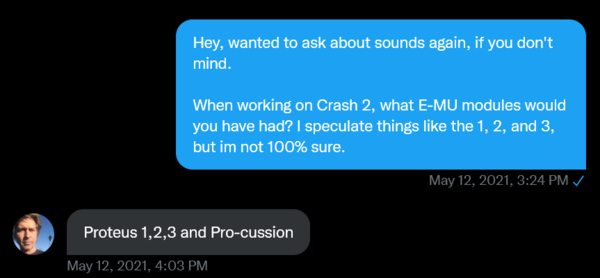
When asked in regards to the modules Josh used on Crash Bandicoot, he said he used a Proteus/1, 2, and 3, Pro-cussion, Vintage Keys, Morpheus, and the Carnaval. Recalls all of them being the standard version. Later replaced either a Proteus/1 or 2 with a Proteus 2000.


A UNIQUE OPPORTUNITY!
"Ex-BBC Radiophonic Workshop (Blake’s Seven, The Living Planet) and current film and TV composer Elizabeth Parker is selling the famous circular studio she took with her from the BBC when the RW was disbanded.
The studio is virtually complete, including nearly all the equipment she has been using on a regular basis in her profession - up to and including a film project she is finishing in the first half of November before the studio is dismantled. Just add a mother keyboard, mastering, monitoring, and video, and you have virtually the complete set- up used for prestigious projects like the BBC’s World Cup coverage, The Human Body, Weird Nature, Animal Olympics, the Monty Python Holy Grail DVD, Michael Palin TV series, etc.
The custom woodwork and cabling alone is believed to have cost £4500 in the late 1980s, and is probably one of the most famous studio designs in the world. When it was removed from the BBC, the installation and re-design at Liz's private studio was masterminded by Rupert Brun, one of the BBC's most highly respected engineers.
Full documentation is included in the sale. Removal and/or packing and shipping is a serious task, so please bear that in mind before bidding. VEMIA will assist at cost if you need."
The studio consists of:
The studio desk, custom made for the Radiophonic Workshop, out of limed Ash. (Buyer dismantles and collects). Complete with a vast quantity of high-quality cabling, with every cable, jack, phono and XLR numbered and labelled by Rupert Brun, with full diagrams, spreadsheets, etc. Roland XV 5080 with 8-voice expansion unit for sample playback Emu Proteus 2000 (with Proteus 1, 2, and 3 (World) Expansion Cards) Proteus 2 and Proteus 3 World Modules. Emu 4XT Ultra with maximum memory. Roland 760 Samplers (x3) with maximum sample and playback memory + mouse unit for 2 of them Emu Xtreme Lead 1 with MoPhat Card. Yamaha 01 Digital Mixer. Yamaha 01V Digital Mixer. Yamaha KM802 Mixer. Spirit Folio F1 100mm Fader Mixer. Peavey PC 1600X Midi Command Stations (x3) Alesis ADAT XT 8 track digital recorder + remote control. Denon DRM-550 Cassette Deck. Akai Professional rackmount DP3200 Routers (x3) 48-Way Patch Bays (x3) Iomega 250 Zip Drives (x2 - one still in box) CD Rom Players (x3) - one still in box. Emu Proformance Piano Module. Emu Procussion Module. Opcode Studio 4 Midi Interfaces (x2) [Opcode] Studio 5 Midi Interface. Apple 7600 computer with unused new RAM + 21 monitor Apple 8600 computer + monitor. PPM Meter - West German, made by RTW, Köln, and bought from the BBC. Magneto Optical 230 drive. Apple Mac G4, Dual Processor with 512MB RAM, 40GB hard drive in four partitions, extra internal 230GB hard drive."


List of equipment at his studio:
KEYBOARDS F Kaim & Son grand piano Korg SG1D master keyboard
SAMPLERS Akai S1000HD Akai CD3000
SOUND MODULES Emu Proteus 1 Emu Proteus 2 Orchestral Emu Proteus 3XR World Emu Morpheus Sequential Circuits Prophet 2002
DRUM MACHINE Roland R8
COMPUTING & SOFTWARE Atari 1040ST Emagic Notator Time + Space sample CD‑ROMs
RECORDING Alesis ADAT (x5) Alesis BRC remote control Soundtracs Jade mixer Drawmer dual gate TC Electronic M5000 digital effects Lexicon PCM70 digital effects


According to an interview in Modern Drummer titled "Paul Wertico: Paul Wertico's Secret Story," Paul Wertico uses the E-Mu Proteus 2 Orchestral module as part of his musical gear.

David Ferguson's equipment list:
Apple G3 266 computer, 96Mb RAM/4Gb HD. Akai S3000XL sampler. Alesis ADAT XT digital recorder/BRC remote. Alesis Microverb effects. Bit 99 synth. Drawmer DS201 Gate & LX20 compressor. Emagic Logic Platinum 2.6 sequencer. Emu Proteus 1, 2 & 3 sound modules. ("On the album, the 'Hall Strings' preset from Emu's first Proteus module is used a lot, because it's a great marcato string sound.") Emu Proformance piano module. Ensoniq VFX synth. FriendChip Timecode Refresher. Iomega Jaz drive. Korg 1212 PCI card. Korg DRV3000 effects. ("Weird and sometimes wonderful.") Korg Wavestation SR synth. Lexicon MPX1000 effects. Logan String Melody keyboard. ("The last of Random Hold.") Mackie 32:8:2 mixer. Oberheim DPX1 sample player. Roland D550 synth. Roland S760 samplers/SP700 playback unit. Sony 600Mb optical drive. Sony DTC690 DAT recorder. Spirit Absolute 2 monitors. SPL Vitalizer enhancer. Symetrix 511A noise reduction. Tascam DA30 MkII DAT recorder. TC M2000 Wizard effects. Yamaha AN1x synth. Yamaha SPX50 effects.


"Own a part of video game history! This Proteus 2 was used in writing and arranging music for iconic computer games, including Commander Keen, Wolfenstein, Doom, Duke Nukem 3D and many more.
I love the sounds in this box. The instruments use samples of the "real" instruments. All samples are 16-bit. Polyphony is 32 voices which can be layered with up to 8 sounds on each key. The three stereo outputs can be configured as 6 polyphonic submixes, or they can be used as effect sends/returns (for a performance setup). It automatically switches itself for 110 or 220 volt operation.
For full information, download the manual: bobbyprince.com/manuals/E-Mu_Proteus_Manual.pdf (copy and paste since links are not supported in this description)."


Included in his studio are synthesizers such as the Roland MKS-70, two MKS-50s, a MKS-80 and D-50; Yamaha TX-81Z; four Oberheim Matrix 1000s, E-mu Orbit and Morpheus, and a Casio VZ-10M. Sample players include Kurzweil 1000AX+, Roland U-110, Oberheim DPX-1, E-mu Proformance Piano and Proteus (as well as the Proteus 2 and 3), Alesis NanoBass and samplers, including a Casio FZ-10M, two Akai S-1000s and three Akai CD-3000s. He also turns to E-mu Procussion, Roland R-8M, Alesis DM-5, Roland BD-1 and a Roland SPD-11 for drum sounds.


David Bergeaud confirmed his use of the E-Mu Proteus 2 Orchestral module by listing it among his synthesizers on eBay, indicating its role in his various game projects. For further information, refer to the Facebook group post on Ratchet & Clank fans.
https://www.facebook.com/groups/ratchetclankfans/posts/8289617861060344/

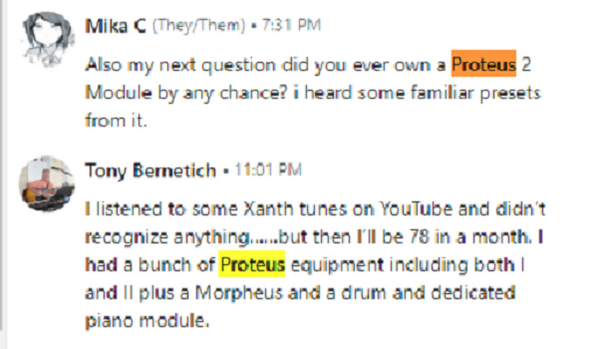
Composer Tony Bernetich has confirmed his use of the E-Mu Proteus 2 Orchestral module by stating, "I had a bunch of Proteus equipment including both I and II plus a Morpheus and a drum and dedicated piano module." This statement serves as proof of his use of this specific sound module. The confirmation is supported by a source image available on Equipboard.


The E-Mu Proteus 2 Orchestral module used by Roger Limb can be seen in an image from the Radiophonic Workshop Gallery.


Howard Goodall confirmed his use of the E-Mu Proteus modules by stating, "Well, for those electro-music buffs who might know about it, I have all the Proteus machines, which are all very good sampled sounds." This information is sourced from the Red Dwarf Smegazine (November 1992) available on the Internet Archive.
Album Usage
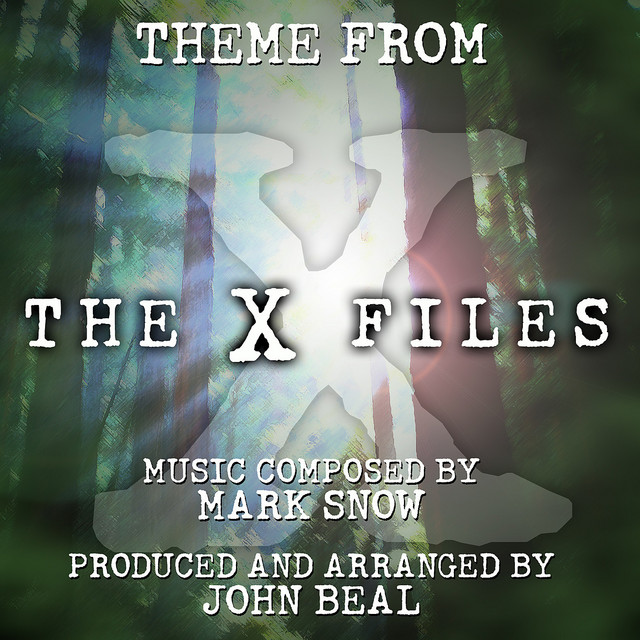
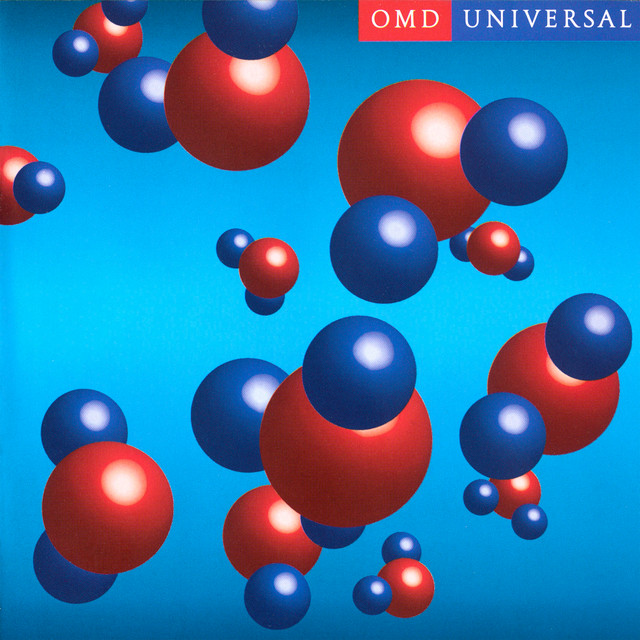
The E-Mu Proteus 2 Orchestral module has been featured on the following albums:
Genre Usage
Based on how artists on Equipboard use this gear, it is most commonly found in the following genres.
Used With
Based on how musicians on Equipboard use E-Mu Proteus 2 Orchestral module, it is most commonly used with the following gear.


-s.webp?v=1783316277)


More E-Mu Sound Modules

$75.00
in Sound Modules Rank


$49.99
in Sound Modules Rank


$626.93
in Sound Modules Rank


$41.20
in Sound Modules Rank


$399.00
in Sound Modules Rank
.jpg?v=1783256941)


$556.31
in Sound Modules Rank


$1,671.81
in Sound Modules Rank


-m.webp?v=1783238222)
$350.00
in Sound Modules Rank


$194.73
in Sound Modules Rank


$1,250.00 - $1,999.99
in Sound Modules Rank


$1,350.00
in Sound Modules Rank


$906.26
in Sound Modules Rank


$298.54
in Sound Modules Rank

$2,299.00 - $2,333.00
in Sound Modules Rank


$550.00
in Sound Modules Rank


$119.00
in Sound Modules Rank


$261.00
in Sound Modules Rank


.jpg?v=1783200117)

$500.00
in Sound Modules Rank


$3,900.00
in Sound Modules Rank

$4,999.99
in Sound Modules Rank


$495.00
in Sound Modules Rank


$1,250.00
in Sound Modules Rank


$65.55
in Sound Modules Rank


Accessories & Related Items


Community setups


Similar


Most Popular Sound Modules
Most Popular Brands
-
Added to Equipboard on by
 horseman
Gear IQ 13728
-


