

Pricing and availability


* Product prices and availability are updated by Equipboard every 24hrs and are subject to change. Equipboard may receive compensation for purchases made at participating retailers linked on this site. This compensation does not affect what products or prices are displayed, or the order of prices listed. For more information, please refer to our affiliate disclosure.
Description
Unleash your sonic creativity with the Image-Line Harmor, a revolutionary additive synthesis engine that transforms your musical ideas into rich, complex soundscapes. Unlike traditional subtractive synthesizers, Harmor offers unparalleled freedom by allowing you to visually craft your sound through its intuitive interface. With the ability to draw filter types and manipulate parameters using its renowned multipoint envelope editor, Harmor gives you the power to fine-tune every nuance of your music.
Designed for both the ambitious beginner and the seasoned synth enthusiast, Harmor features a unique image synthesis capability, enabling you to import and manipulate bitmaps to create intriguing audio effects. Whether you’re resynthesizing audio files or exploring the vast possibilities of image-to-sound transformation, Harmor ensures faithful and versatile reproduction of your creative vision. Its efficient engine ensures that even complex operations remain CPU-friendly, allowing for seamless multitasking and creativity without limits.
Harmor's versatile sound design capabilities are further augmented by its robust effects section, featuring everything from distortion and chorus to the formidable Soundgoodizer. With two independent parts, or layers, you can sculpt even more intricate sound structures, making it a playground for sonic experimentation. Plus, its visually engaging spectrogram helps you understand and visualize the evolution of each partial, making learning and mastering this powerful tool an engaging experience.
Key Features:
- Additive synthesis with visual editing
- Image and audio resynthesis capabilities
- Multipoint envelope editor for detailed parameter control
- CPU-efficient engine for smooth operation
- Two independent layers for complex sound design
- Comprehensive effects section including distortion, chorus, and reverb
- Visual spectrogram for intuitive learning and sound monitoring
Product specs
| Plugin Format | VST |
Videos

FL Studio
Image-Line | Harmor
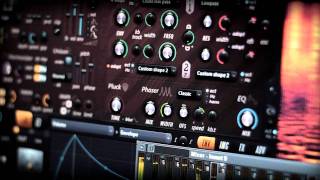
Image-Line | Harmor
FL Studio
Harmor | Synthesis Tools
FL Studio
FL STUDIO Guru | Harmor Vocal Resynthesis
FL Studio

Harmor | SeamlessR Addition Library
FL Studio

MMTV: Image-Line Harmor Top Features | Eric Burgess

MusicMarketingTV
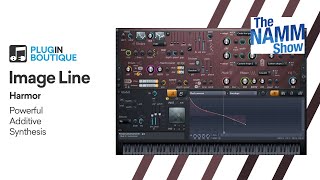
Image Line's Harmor Synth in FL Studio at NAMM 2022!

Plugin Boutique
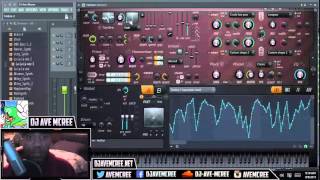
Image-Line Harmor Overview/Introduction video

Ave Mcree

Image-Line - Huge Harmor Phase Bass | Eric Burgess
MusicMarketingTV
Reviews
PROS
-
Unique sound design capabilities with powerful additive synthesis engine
-
Ability to import and resynthesize audio samples and images
-
Allows for drawing custom filters, providing creative freedom
-
Exceptional for basses, leads, and pads, especially in electronic genres
-
Offers deep modulation and routing options for complex sound creation
-
Good value for money, included with FL Studio
-
Versatile resampling capabilities for innovative sound manipulation
-
Low CPU usage, efficient for intensive projects
-
Parallel synths provide extensive creative possibilities
-
Visually appealing interface enhances user experience
CONS
-
LFO out of sync and difficult to edit
-
Complex interface may be intimidating for beginners
-
MacOS incompatibility limits user base
-
64-bit version may require bridging, affecting performance
-
Frequency cutoff issues may frustrate users
Owner Insights
We analyzed real musician discussions from forums and Reddit to find what players love, question, and tweak about Image-Line Harmor.
Features and functionality
-
Harmor's additive engine generates 516 partials, offering deep sound design capabilities beyond typical filters and phasers.
Source -
Harmor's frequency-dependent unison effect is a powerful tool, particularly effective for creating supersaws and bass sounds with distinct character.
Source -
Harmor's image resynthesis tab allows users to run samples through its engine, enabling resampling of other synths for unique sound creation.
Source
Use cases and applications
-
Harmor excels in creating pads, leads, plucks, arps, and basses, but is less suited for FM synthesis, sampled instruments, and granular synthesis.
Source -
Harmor is often used for sample manipulation and creating unusual sound effects, showcasing its strength in experimental sound design.
Source -
Harmor's capabilities extend beyond typical synth functions, making it particularly powerful for creating diverse and experimental sounds.
Source
User experience
-
Stereo width adjustments can significantly enhance the perceived clarity and loudness of Harmor patches.
Source -
Harmor's clean, bright sound makes it easier to add dirt and darkness, offering a flexible starting point for diverse sound design.
Source -
Owners report a significant challenge in mastering Harmor, with its complexity being a notable barrier for new users.
Source -
Owners highlight the importance of learning synthesis theory (oscillators, filters, ADSR, LFO) to better grasp Harmor's unique engine and functionalities.
Source -
Despite its complexity, owners who persist with Harmor often use it extensively, with some relying on it for the majority of their sound design needs.
Source
Comparisons
-
Users note that Harmor has a steeper learning curve than Serum, but offers unique sound design possibilities that are not directly comparable.
Source -
Users suggest starting with simpler synths like Serum or Massive to build foundational understanding before tackling Harmor's complex interface and features.
Source
4.5 out of 5
Based on 50 Reviews and 201 Ratings


103
The "everything" plugin.
Image-Line gave birth to Harmor in October of 2011, and its the definitive Jack-of-all-trades in my eyes. It's the perfect plugin for rigorous and extensive sound design and can produce some of the most unique sounds you'll ever hear. I love it so much. I wish I could hug it and cuddle it, but that's impossible with digital software, unfortunately. Its purposes range from simple things like leads, plucks, pads, and basses, but it has a really, really big ace up its sleeve; the IMG tab. With this, you can import any sample you'd like, and re-synthesize it into a disgustingly filthy growl, or stretch it into digital robotic beauty. However the IMG tab is not limited to audio. You have the ability to import images. Already you're probably thinking "how does that... what?" Harmor is an additive synthesizer, which, in simple terms, means creating a timbre using many sine waves at different frequencies. Each sine waver is referred to as a "harmonic," hence the name "Harmor." However each sine wave besides the fundamental is technically referred to as a "partial." So with this plugin, you can literally make any sound you desire. Yes, literally any sound, with no limitations. Easily a 5/5 just for it's sampling and re-synthesis capabilities. If you don't have this plugin, buy it. Its worth every penny.

41029
hugging, wow, I there's another reason to have some hardware...
41029
I totally started typing before finishing the review a minute ago and started talking about partials, then I finished it and was like, oh, he mentioned they're partials... duh

120
Thanks ImageLINE
Just like its little brother Harmless, Harmor is driven by a powerful additive synthesis engine. Its modules will look familiar to subtractive synthesizer enthusiasts: oscillators, filters & phasers, these are featured in Harmor but, because performed through additive synthesis, offer more freedom. You don't just select filter types, you draw them.

454
An amazing synth
If you ask me, Harmor deserves the reputation Massive has (and by that I mean it should be sought after by thousands of aspiring electro/dubstep producers). I first discovered it's power while watching SeamlessR's tutorials and live streams, and since then pretty much all of my productions have used Harmor in some way. A great synth for leads, pads, and especially basses. It's about one hundred dollars on Guitar Center, and it's the best hundred dollars you'll make buying a VST.

145
Very Good
Harmor is a very good additive synth. You can articulate everything from the unison pitch to the prism amount. The effects are very good and can completely change the sound. The only thing I dislike about it is the LFO, which is always out of sync even in tempo mode, and can not be edited very well.

6893
Really good synth
I used this since a lot back when I was an FL user, and I recently got the standalone version to use in Ableton. It's still an incredible synth, with the best unison I've heard on any synth hands down, great resampling capabilities, and tons of programming capabilities. It can be a little intimidating for beginning users, but once you get under the hood, it's a great synth.
41029
this is a great synth to layer with a hardware analog, you get the 'thick' of the drifty VCOs and deep bass and evolving mid texture from Harmor... lately I have ben using a MIDI Moog with Harmor and my DX7 running into the audio input of a sub phatty for insanely complex, velocity sensitive bass lines... take away Harmor and it loses something even if I have Harmor buried in the mix

215
Worth Learning
Despite the complex interface, it is capable of making loads of sounds if you learn how to use this plugin. Would recommend to newbies that cannot afford major VSTs such as Serum, as it is included with FL

31
The god of all plugins
Harmor is amazing I use it for almost everything from resampling vocal tracks to leads to hardcore basses. Wonderful selection of effects and inclusion of the harmonizer from harmless, visually appealing too, along with a wavetable synthesizer such as massive or serum and an fm such as fm8 or sytrus it's a must have plugin for electronic producers. The best basses can be made when you use vocodex or ohmicide on it.
41029
an underrated component of FL
Harmor and Harmless have been growing on me a lot to reinforce the lows on my hardware generated basslines.... these plugins sound REALLY good in the mix and have great modulation and routing capabilities as well as th ability to create really complex oscillator shapes. I think they're supposed to contend with NI's Massive, but the character is different and I prefer them for two reasons: 1) Massive is so ubiquitous that I just never want to hear it again and 2) Harmor and Harmless were included with FL producer

103
What I love about this synth is the audiofile resynthesize function. Very cool, flexible synth with a lot of neat features. The sound quality isnt the best compared to, say U-he Diva and Sonic Projects OP-X, imo.
41029
agreed about the sound quality, but I am typically using it for doubled parts and then I'm processing the crap out of it.... its much more CPU friendly than the U-he stuff

633
Harmor must be purchased separatey.

149
What a beast!
This is by far my favourite synth! My go-to for resampling, basses, pads, leads, plucks and everything else there is. Since it is additive based it can do things that I don't know are possible in any other synth i know!

Wonderful synth.
Harmor is able to resample, subtract and add. I love harmor, however I never use it for resampling, I use it always for my leads, pads, arpeggiators and basses. A wonderful synthesizer, not even that expensive either.
There's nothing bad about harmor really, I recommend getting this synth.
CPU Usage isin't really high at all. (Atleast for me.) Pentium G3420
Artist usage
Add artist

Madeon mentions using Harmor during an interview with Computer Music magazine.
"I know I keep saying how amazing FL Studio is but that's the truth! Poizone, Harmless, Harmor, Sytrus – they're all excellent synths."


In this photo, Harmor can be seen running in FL Studio on one of what appears to be Audien's laptops.


On his Facebook page, Ummet Ozcan is shown using Image-Line Harmor in a photo hosted by Akamaihd.


At 21:00 in Virtual Riot's livestream he opens Harmor to make a "weird sound." The software synthesiser continues to be seen frequently after this point.


he mentions and uses this on their song "dancing with your ghosts" in future music magazine interview video in the series in the studio


At 39:34 he mentions Harmor is one of his favorite synths and explains how he used to to create spectograph images in the Doom soundtrack.


"I started using more of FL Studio’s own stuff—Harmor, 3osc, Sytrus, and a bunch of other underrated plugins. They do pretty much exactly what you want them to do when you know them well enough."

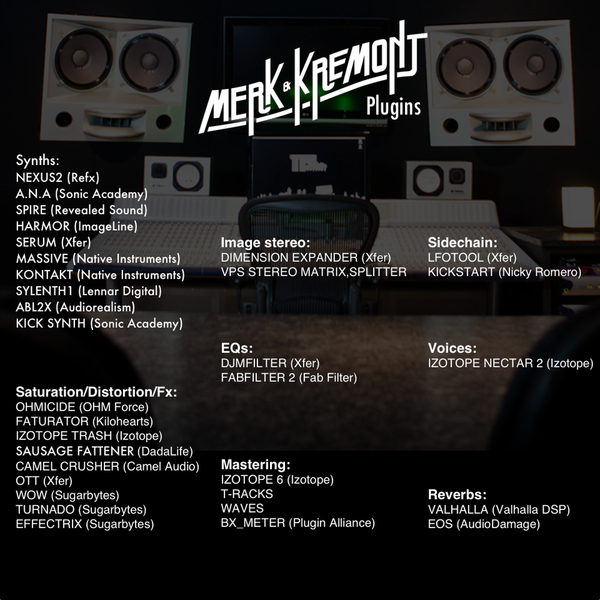
Merk & Kremont have included Image-Line Harmor in their gear list, as shown in their Facebook timeline photo.


In his video "How To Make A Gypsy Song" (which, unluckily, isn't longer available on his channel) K-391 opens Harmor at 0:48


When asked what his favorite plugin is in an interview with YourEDM, Haywyre simply replies, "Harmor." The interview is from January 2014 and can be found here.


"Using only @image_line_ Harmor to mangle beats is amazing."


In this article Hellberg says: "Even though I've been using FL Studio for several years, I only started using Harmor, its built-in plugin synth, a few months ago. Harmor is very different to many other soft synths as it's an additive synthesizer instead of an FM or subtractive one. I myself use Harmor a lot for resynthesising samples from sample packs, as well as taking a small part of a loop or a vocal and making it sound almost unrecognisable with all of Harmor’s functions. You can achieve much more unique sound design with Harmor than most of the other soft synths out there.”
Album Usage
The Image-Line Harmor has been featured on the following albums:




Genre Usage
Based on how artists on Equipboard use this gear, it is most commonly found in the following genres.
Used With
Based on how musicians on Equipboard use Image-Line Harmor, it is most commonly used with the following gear.





More Image-Line Synth Plugins

$65.00
in Synth Plugins Rank


$79.00
in Synth Plugins Rank


$65.00
in Synth Plugins Rank


$79.00 - $79.97
in Synth Plugins Rank


$479.00
in Synth Plugins Rank


$139.00 - $179.00
in Synth Plugins Rank


$149.00
in Synth Plugins Rank


$49.00 - $149.00
in Synth Plugins Rank


$99.00
in Synth Plugins Rank


$69.99 - $189.00
in Synth Plugins Rank


$165.25 - $179.00
in Synth Plugins Rank


$479.00
in Synth Plugins Rank


$26.00 - $29.00
in Synth Plugins Rank


$49.00 - $199.00
in Synth Plugins Rank

-m.webp?v=1783173606)
$149.00
in Synth Plugins Rank


$149.00
in Synth Plugins Rank


-m.webp?v=1783143010)
$119.00 - $149.00
in Synth Plugins Rank


$108.50 - $129.00
in Synth Plugins Rank


$69.00 - $99.00
in Synth Plugins Rank


$58.00 - $69.00
in Synth Plugins Rank


$166.83
in Synth Plugins Rank


$53.00 - $129.99
in Synth Plugins Rank


$90.60 - $99.00
in Synth Plugins Rank


$163.00
in Synth Plugins Rank


$125.00 - $149.00
in Synth Plugins Rank

$149.00
in Synth Plugins Rank


$139.00 - $154.00
in Synth Plugins Rank


$92.00 - $99.99
in Synth Plugins Rank


-m.webp?v=1783143372)
$49.00 - $154.00
in Synth Plugins Rank


$199.00
in Synth Plugins Rank


Community setups


Similar


Gear Guides







Most Popular Synth Plugins
Most Popular Brands
-
Added to Equipboard on by
Rretrofusion456Gear IQ 207
-


