

Pricing and availability
We compare 600+ stores and found this item at 2 stores. Prices updated .
Store
Reviews
Price




Average Price: $2,524
High-end/Boutique
$300
$801+
Price Tier
Budget
Standard
High-end
Price History
Based on price data from 1 merchant for "Mesa Boogie Mark V Head". Prices shown reflect NEW condition. Tracking began Apr 2, 2026.
* Product prices and availability are updated by Equipboard every 24hrs and are subject to change. Equipboard may receive compensation for purchases made at participating retailers linked on this site. This compensation does not affect what products or prices are displayed, or the order of prices listed. For more information, please refer to our affiliate disclosure.
Description
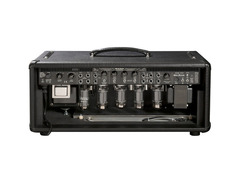
The Mesa Boogie Mark V Head is not just an amplifier; it's a sonic time capsule that encapsulates decades of iconic Mesa Boogie tones. This 90-watt powerhouse is designed for guitarists who crave versatility without compromise. Featuring three distinct channels, each with three modes, the Mark V allows you to traverse a spectrum of tones from shimmering cleans to thunderous high-gain power. This isn't just an amp—it's a precision tool that offers tonal sculpting akin to a master artisan at work.
A standout feature is the five-band EQ, which provides unparalleled control over your sound. Whether you're cutting through a dense mix or crafting the perfect solo, this amp head allows you to shape your tone with surgical precision. The intuitive layout ensures that every tweak and adjustment is within reach, making it equally suitable for stage performances and studio recordings.
For those who demand more than just raw power, the Mesa Boogie Mark V Head offers infinite tonal possibilities in a robust, expertly crafted package. Pair it with your favorite cabinet and experience a sonic landscape limited only by your imagination.
Key Features:
- 90-watt output power
- Three independent channels with three modes each
- Five-band graphic EQ for precise tone shaping
- Multi-Watt power settings (90/45/10 watts)
- Simul-Class power section with EL34 and 6L6 tubes
- Built-in reverb and effects loop
- MIDI control for seamless integration with modern setups
Product specs
| Brand | Mesa Boogie |
| Model | Mark V 3-Channel 90-Watt Guitar Amp Head |
| Finish | Various |
| Year | 2009 - 2025 |
| Made In | United States |
| Categories | Guitar Heads |
| Built-In Effects | Built-In Effects |
| Electronics | Tube |
| Impedance | 4 ohms, 8 ohms |
| Number of Channels | 3 Channels |
| Number of Inputs | 1 Input |
| Output Power (Watts) | 90 |
| Power Tube Type | 6L6 / EL34 |
| Reverb | Spring Reverb |
FAQs
-
What are the core tonal characteristics of the Mesa Boogie Mark V Head?
-
The Mesa Boogie Mark V Head is known for its versatile tonal range, offering everything from pristine cleans to aggressive high-gain sounds. Its three channels provide a wide array of tones suitable for various genres, including rock, metal, and blues.
-
Is the Mesa Boogie Mark V Head suitable for live performances?
-
Yes, the Mesa Boogie Mark V Head is ideal for live performances with its 90-watt power output, ensuring plenty of volume and headroom. It also features multiple channels and built-in effects, providing flexibility and ease of use on stage.
-
Can the Mesa Boogie Mark V Head use both 6L6 and EL34 power tubes?
-
Yes, the Mesa Boogie Mark V Head can accommodate both 6L6 and EL34 power tubes, allowing players to tailor the amp’s response and tonal characteristics to their preference.
-
Does the Mesa Boogie Mark V Head include built-in reverb?
-
Yes, the Mesa Boogie Mark V Head features a built-in spring reverb, adding depth and dimension to your sound across all three channels.
-
How many channels does the Mesa Boogie Mark V Head have?
-
The Mesa Boogie Mark V Head has three independent channels, each offering distinct voicing options, making it highly adaptable for various playing styles and musical genres.
Videos

Musik Schmidt
Mesa Boogie Mark V Head
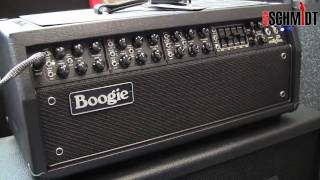
Mesa Boogie Mark V Head
Musik Schmidt
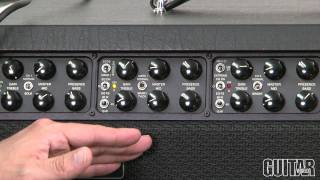
Mesa/Boogie Mark V Amp

Guitar World
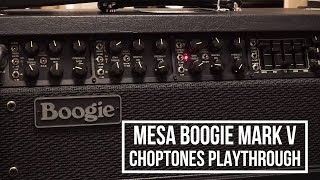
Mesa Boogie Mark V | The ULTIMATE Playthrough (with 6L6 and EL34 tubes)

ChoptonesOfficial
Mesa Boogie Mark V Head

N Stuff Music
Reviews
PROS
-
Exceptional versatility covering clean, crunch, and high-gain metal tones
-
High-quality build and durable craftsmanship typical of Mesa Boogie
-
Wide tonal range from Fender cleans to Marshall-like crunch
-
Excellent built-in reverb, channel and foot-switchable
-
Highly responsive graphic EQ with a wide sweep
-
Performs well even at low volumes, retaining tonal quality
-
Provides a "tweaker's dream" with numerous adjustable settings
-
Capable of replacing multiple amps with its diverse sound palette
-
Warm tube sound with powerful preamp capabilities
-
Can emulate classic and modern tones with ease
CONS
-
Complex setup can be time-consuming for optimal sound
-
Potential for flubby sound if unfamiliar with settings
-
Requires careful attention to cabinet impedance to avoid damage
-
Initial learning curve to fully utilize its capabilities
Owner Insights
We analyzed real musician discussions from forums and Reddit to find what players love, question, and tweak about Mesa Boogie Mark V Head.
Mods and upgrades
Value and pricing
Comparisons
-
Users suggest the Mark V:90's three channels and additional features, like a footswitch with reverb and mute toggles, justify its higher cost compared to the V:35.
Source -
The Mark V can approximate Rectifier tones using the Xtreme mode, but inherently lacks the Recto's loose feel, being more mid-focused and tightly voiced.
Source -
The Mark V provides a unique blend of Marshall-like articulation and Rectifier thickness, achieving a tight, mid-heavy sound that can be adjusted for different styles.
Source
User experience
-
Some owners reported the V:25/V:35 can have a sudden volume jump, though not all users experience this issue, suggesting it may vary by individual unit.
Source -
Users suggest the amp sounds better when connected to a 12" speaker rather than the stock 10" speaker for greater bass response and reduced boxiness.
Source -
Owners report the amp's cleans rival Fender Twins, and its complexity requires time to master, but it offers a wide tonal range once learned.
Source
Use cases and applications
-
The Mark V:35 includes a solo function, which is absent on the V:25, providing an extra boost for solos without adjusting other settings.
Source -
The Mark V excels in mid-focused, tight metal tones and is praised for its ability to cut through mixes when mids are boosted rather than scooped.
Source -
The amp excels in delivering articulate high-gain tones with clear chord definition, making it ideal for metal genres while maintaining a vocal midrange for single-note leads.
Source
Features and functionality
-
The Mark V:90 offers a reverb tank that some owners feel sounds superior to the smaller V:25, providing richer reverb tones.
Source -
The Mark V offers nine distinct amp voicings and a highly interactive EQ, which acts like a drive pedal for precise tonal adjustments.
Source -
The Mark V's EQ knobs act as pre-gain overdrive controls, affecting the texture and amount of distortion, while the graphic EQ is post-gain for tone shaping.
Source
Critic Reviews
5.0 out of 5
Based on 2 Reviews and 2 Ratings

This is my first tube amplifier and an amp I will own for life
This amp is capable of many sounds, but excels in high gain and chunky tones.
740
Mesa Boogie Mark V Head with 3 different chanels
The warmth of tubes, the quality of preamp and and powerfullness of the amp is the good thing that you get on Mesa Boogie, be carefull of what you do with cabinets impedance 16 / 8 or 4 or your amp can become out of service !!!!!! I also used my old but terror sounding MARK III always alive
Artist usage
Add artist

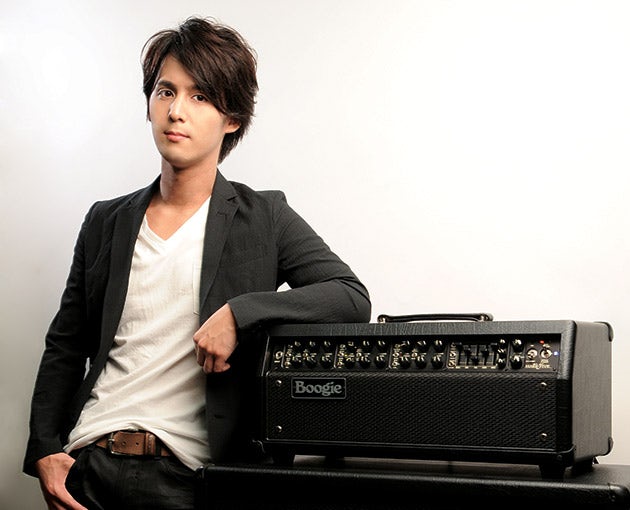
According to his artist page on the official MESA/Boogie® website, guitarist Joe Cocchi uses the Mesa Boogie Mark V Head.
According to his artist page on the official MESA/Boogie® website, Sean Delander uses the Mesa Boogie Mark V Head.

According to his artist page on the official MESA/Boogie® website, guitarist Nicholas Cassarino uses the Mesa Boogie Mark V Head.


In the description of this YouTube video, it is confirmed that Doug Weiand uses a Mesa Boogie Mark V Head.

Genre Usage
Based on how artists on Equipboard use this gear, it is most commonly found in the following genres.
Used With
Based on how musicians on Equipboard use Mesa Boogie Mark V Head, it is most commonly used with the following gear.


More Mesa/Boogie Guitar Amplifier Heads

$1,800.00 - $3,299.00
in Guitar Amplifier Heads Rank


$2,999.00 - $3,498.65
in Guitar Amplifier Heads Rank


$715.00 - $1,359.00
in Guitar Amplifier Heads Rank


$1,899.00 - $3,149.00
in Guitar Amplifier Heads Rank


$1,599.00 - $2,099.00
in Guitar Amplifier Heads Rank


$3,409.99 - $3,659.00
in Guitar Amplifier Heads Rank


$1,750.00
in Guitar Amplifier Heads Rank


$2,399.00 - $3,069.00
in Guitar Amplifier Heads Rank


$1,900.00
in Guitar Amplifier Heads Rank


$689.00
in Guitar Amplifier Heads Rank


$4,146.74
in Guitar Amplifier Heads Rank


$2,029.00 - $2,590.00
in Guitar Amplifier Heads Rank

-m.webp?v=1784646056)
$1,850.00
in Guitar Amplifier Heads Rank
-m.webp?v=1784844233)
$3,599.00 - $4,581.05
in Guitar Amplifier Heads Rank


$1,300.00


$3,409.99 - $4,222.00


$2,999.00 - $3,699.00


$1,299.00 - $1,999.00


.jpg?v=1784670046)

$2,399.00 - $2,599.00


$2,999.00 - $3,299.00


-m.webp?v=1784844857)
$1,099.00 - $1,799.00


$1,999.00 - $2,159.00


$899.00 - $1,359.00

-m.webp?v=1784820280)
$1,544.00 - $3,499.00


$1,800.00


$1,850.00


$2,499.00 - $2,880.00


$1,229.00


$2,499.00 - $2,539.00


-m.webp?v=1784103472)


Accessories & Related Items


Community setups


Similar


Gear Guides








Most Popular Guitar Amplifier Heads
Most Popular Brands


