
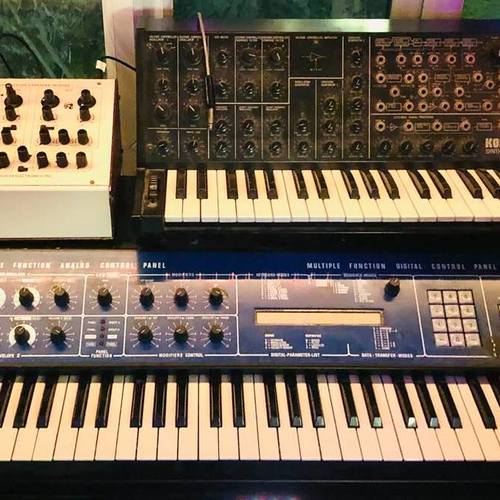

Pricing and availability
We compare 600+ stores and found this item at 1 store. Prices updated .
Store
Reviews
Price




Average Price: $9,552
High-end/Boutique
$500
$1501+
Price Tier
Budget
Standard
High-end
* Product prices and availability are updated by Equipboard every 24hrs and are subject to change. Equipboard may receive compensation for purchases made at participating retailers linked on this site. This compensation does not affect what products or prices are displayed, or the order of prices listed. For more information, please refer to our affiliate disclosure.
Description
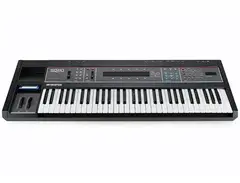
The PPG Wave 2.2 synthesizer is a timeless bridge between digital brilliance and analog warmth, heralding a new era in music production. With its unique wavetable synthesis and hybrid architecture, the Wave 2.2 offers a soundscape that inspired countless musicians and producers. Its distinctive blend of digital oscillators and analog filters allows for the creation of complex, evolving textures and tones that are as relevant today as they were in the '80s. Whether you're looking to recreate the iconic sounds of the past or forge new sonic territories, the PPG Wave 2.2 stands as a testament to innovation and quality in sound design.
Key Features:
- 16 oscillators per two voices for rich, layered sounds
- Unique wavetable synthesis for creating up to 8000 distinct waveforms
- Analog SSM-based filters for warm, musical tone shaping
- 8-voice polyphony for complex arrangements and textures
- Integrated 8-track sequencer for intricate compositions
- 21 parameter knobs for hands-on control over sound design
- Digital patch storage for preserving your sonic creations
Videos

RetroSound
PPG wave 2.2 Wavetable Synthesizer 1982 - sound demo
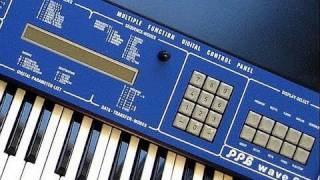
PPG wave 2.2 Wavetable Synthesizer 1982 - sound demo
RetroSound
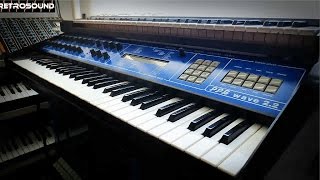
PPG wave 2.2 Synthesizer (1982) - RetroSound soundscapes - sound demo
RetroSound
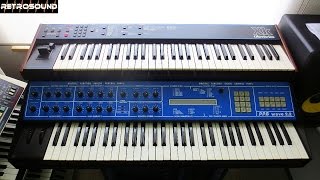
PPG wave 2.2 Synthesizer (1982) sound demo (Depeche Mode, Art Of Noise)
RetroSound
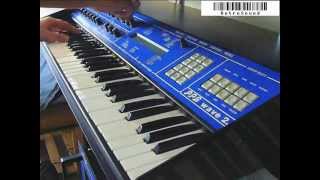
PPG wave 2.2 Synthesizer "Arpeggiator"
RetroSound
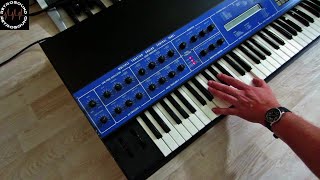
PPG wave 2.2 Wavetable Synthesizer (1982) The Pure Sound (no fx)
RetroSound
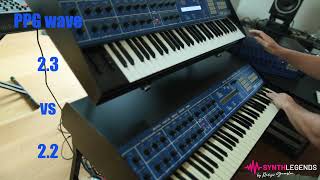
PPG wave 2.2 vs 2.3 are there any differences?

synthlegends
Reviews
Owner Insights
We analyzed real musician discussions from forums and Reddit to find what players love, question, and tweak about PPG Wave 2.2.
Features and functionality
-
Real-time scanning through the wavetable offers unique sonic possibilities, enhancing the PPG Wave 2.2’s sound range.
Source -
The PPG Wave 2.2's analog SSM filters provide a warm crunch, effectively complementing its digital elements.
Source -
The PPG Wave 2.2's internal sampling rate is 195312.5 Hz, contributing to its smooth sound compared to standard DSP approaches.
Source -
The PPG Wave 2.2 only changes the wavetable index on waveform period boundaries, ensuring zero crossings to avoid unwanted clicking noises during wavetable sweeps.
Source
Software and compatibility
Comparisons
User experience
-
The PPG Wave 2.2’s modulation retains the original's quirky and semi-broken characteristics, resonating with the nostalgic charm of early digital synthesis.
Source -
The PPG Wave 2.2's unfiltered waveforms are described as noisy and metallic, contributing to its unique sonic character, though they may sound monotonous if overused.
Source
Critic Reviews
Based on 0 Reviews and 0 Ratings
Artist usage
Add artist

Accoring to this article Curt Smith used a PPG Wave when recording Tears For Tears classic album Songs From the Big Chair


"I think that came along about '82. That was another one I got because it had a sound all of its own. It was away from the normal analogue synths, yet away from the samplers as well. It was such a good idea to have a machine with the variability and sharpness of digital sound, but still with the warmth of filters and envelopes. There wasn't a need to learn a completely new way of working, but you got a completely new sound. Even today, there's nothing that sounds quite like the PPG. You can hear its individual quality no matter how much other stuff you MIDI in with it."


"The Transcendent was soon joined by a Moog Micromoog, a Crumar string synthesiser, a Fender Rhodes, a Roland Jupiter 4, an early PPG system (with which he performed his original solo concerts), a PPG Wave 2.2 (a gift from PPG because the original instrument was so unreliable), a Jupiter 8, a Fairlight Series II and a Fairlight Series III."

:format(jpeg):mode_rgb():quality(90)/discogs-images/R-1144519-1199716505.jpeg.jpg)
Andy Latimer is noted for using the PPG Wave 2.2 synthesizer on Camel's 1984 album "Stationary Traveller," as detailed in the album's liner notes on Discogs.


"Really, this year, the bass and the Chapman stick have been left firmly on their stands. I've been working on my singing and performing and doing a lot of writing. We've also finished our own studio — a small 24-track in north west London with an Otari machine and a Soundcraft series 2000/400 desk.
"And we've got a PPG which has been an integral part of the writing — a PRK (the performance keyboard), 2.2 (the free standing synth) and a Term (the computer terminal). It's versatility is amazing, but really one of the developments I'd like to see for '85 is more reliable software.
"The PPG can be a little temperamental. We took it on the road for a tour which took us all over the place, and we didn't have any problems, though we did have an exceptionally brilliant keyboard roadie, Chris Miring, who usually works for Joan Armatrading. But back in the studio, the PPG started to have a few tantrums.'

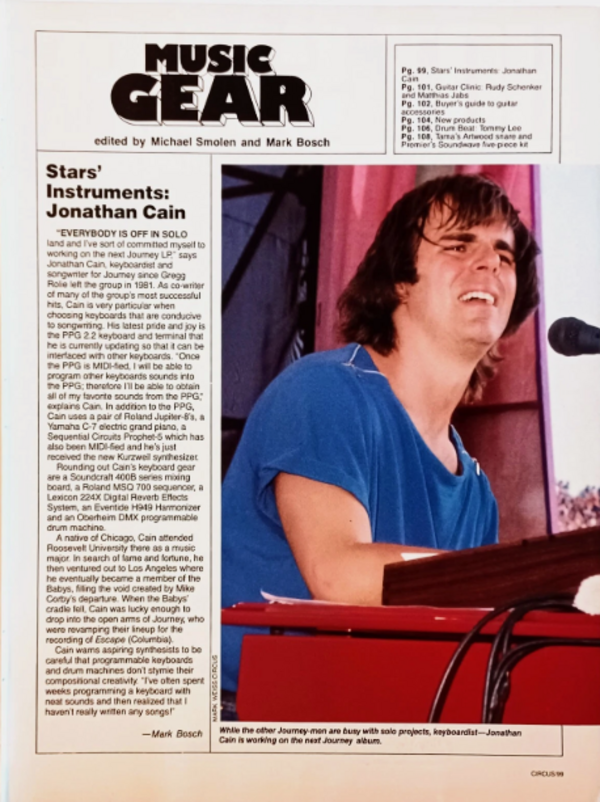
According to Circus Magazine, Jonathan Cain used the PPG Wave 2.2 synthesizer during his time with Journey in the early 1980s.


David Bryan's PPG Wave 2.2 is shown on the "Backstage with Bon Jovi" website in their Instrument Collection.

This has been edited from the Schools programme "Science Topics" broadcast in 1983. This episode was title "Electronics In Action" and contains footage of the band performing on the Oxford Road Show in 1982, tinkering with Lament in the studio and Midge demo-ing antique synth!

We know that for the first album, the band used a PPG Wave 2.2 on the recording, and in this video clip, under a Yamaha DX7, there is a PPG Wave.


"We also use quite a lot of old stuff, because I've still got things like a PPG 2.2, and we've used a Prophet 5, Juno 106 and Jupiter 8 because there's a lot of arpeggiated stuff. A big problem with a lot of modern sequencers is that you have to write arpeggiation in yourself- there isn't actually a machine which arpeggiates, which is a shame because it's nice when it's more random. We use S1000s, S900s, and an FZ1. I tend to use the FZ1 as my main sampler just because that happened to be the one that I bought."


"Q. I noticed that during your solo albums you moved through the gamut of classic 80s keyboards including the PPG Wave, Yamaha GS-1 and Roland D-50. What are your fave synths from the 80s?
I loved the GS-1. It was big and high quality but I don’t think I used it a lot on my solo albums. I think it was originally made for the small church market in America so that they could get the sounds they needed without buying a huge church organ. I had a deal with Yamaha who stuck with us over the years and when the GS-1 came out I ended up going to Hamburg and sitting with a Yamaha programmer who created some great string sounds for me. I loved playing that instrument and I could play the vibrato with my feet. I’d stand up and rock back back to keep the sustain going and do the vibrato with my foot.
I used the PPG a lot. I got into the Rack Mounted DX-7, the TX-816. I’d got into MIDI in the early days in my own studio for the first couple of solo albums, Transportation and Stand Up and Walk and linking all these things up to get new sounds. I had a Prophet T8, the Prophet Sampler, the Roland D-50. it was like Keyboard City. The Prophet VS was used a lot. I really liked the joystick and the way you could morph between sounds."


Album Usage
The PPG Wave 2.2 has been featured on the following albums:

Lament (2024 Steven Wilson Mix)
Ultravox & Tigerlily (2024)

Hyperdrama
Justice (2024)
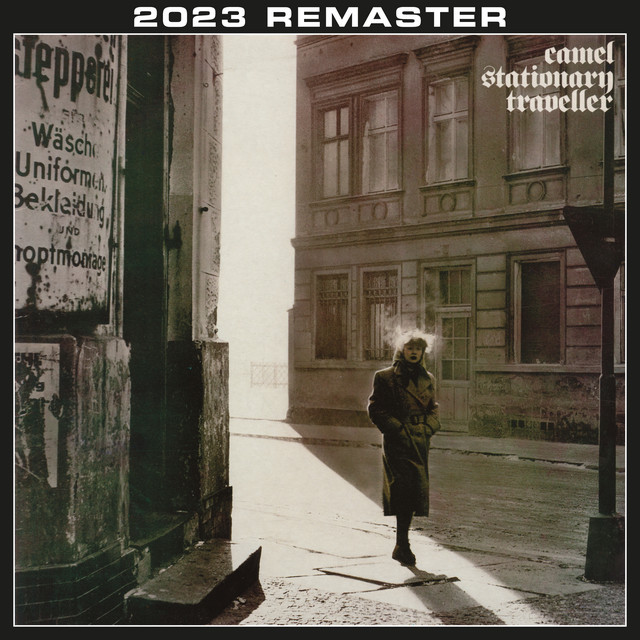
Stationary Traveller (2023 Remastered & Expanded Edition)
Camel (2023)
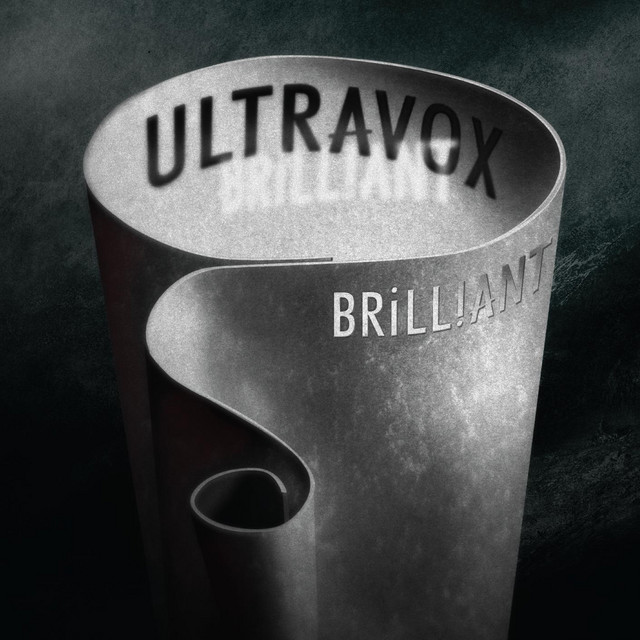
Brilliant
Ultravox & Tigerlily (2012)
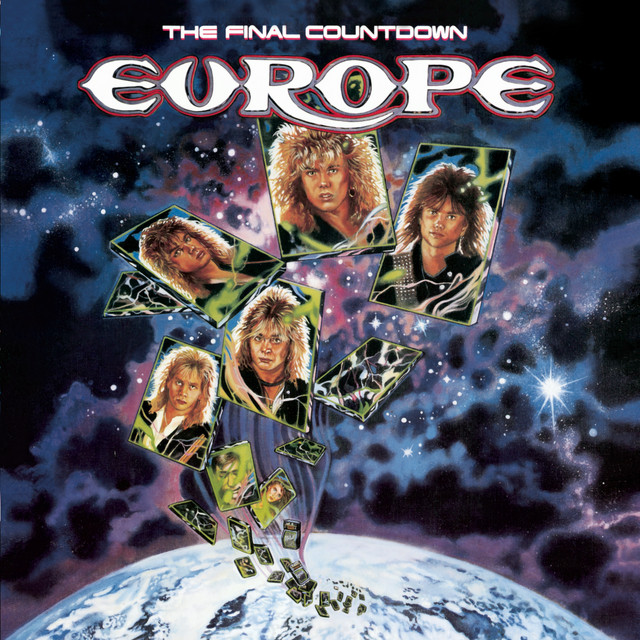
The Final Countdown (Expanded Edition)
Europe (1986)
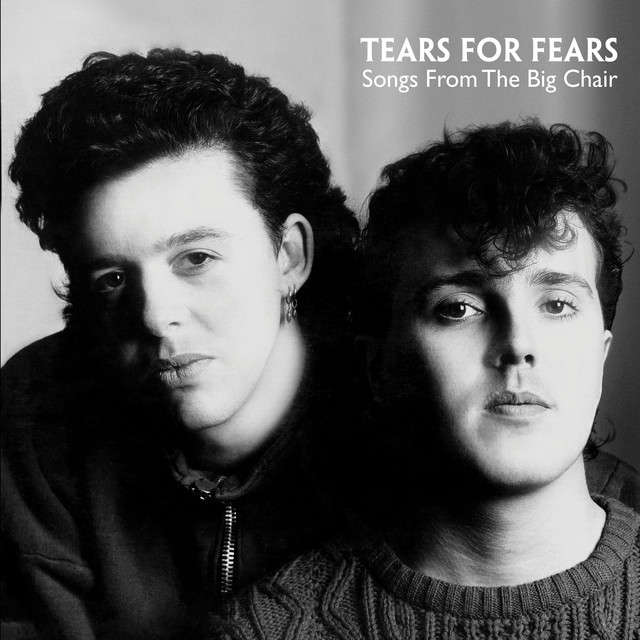
Songs From The Big Chair
Tears for Fears (1985)
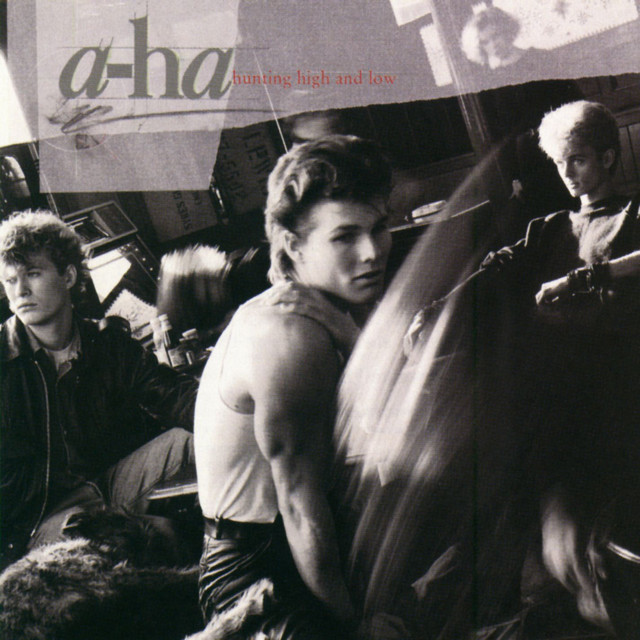
Hunting High and Low
A-ha (1985)
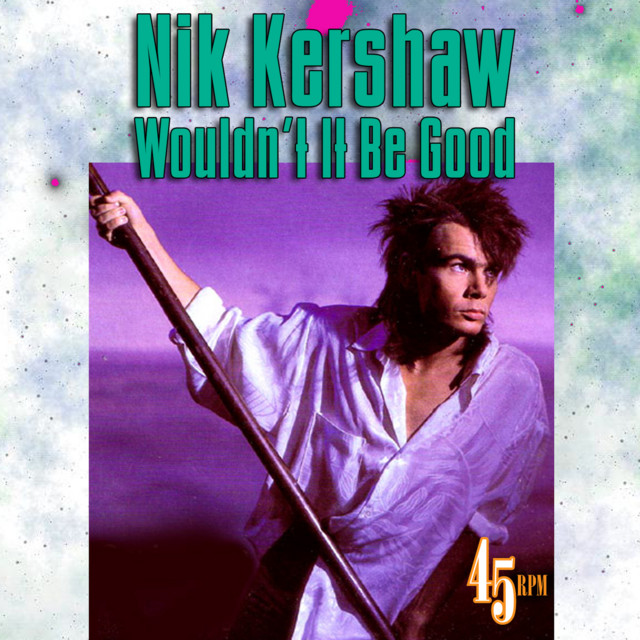
Wouldn't It Be Good
Nik Kershaw (1984)
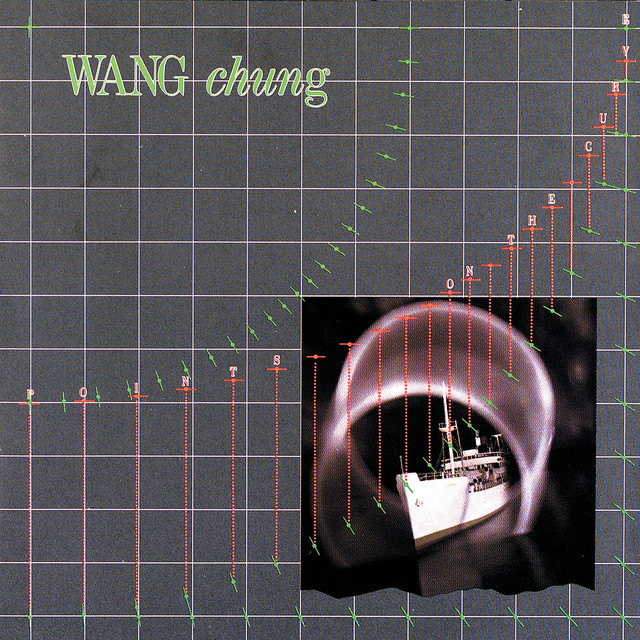
Points On The Curve
Wang Chung (1984)
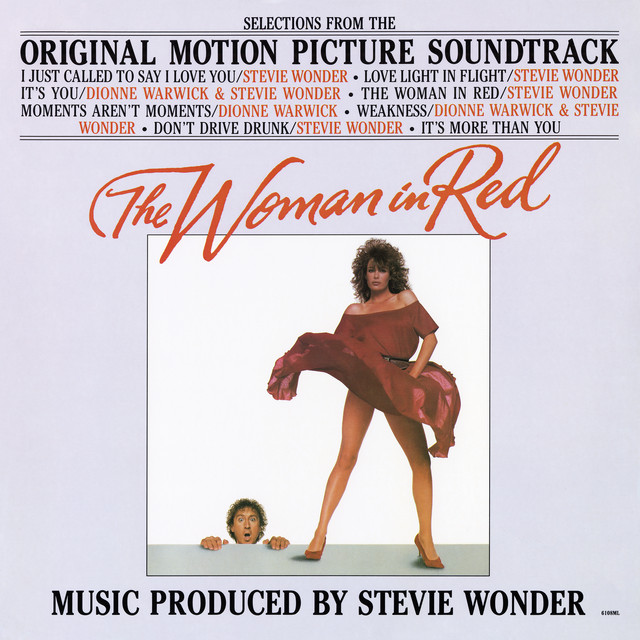
Selections From The Original Soundtrack The Woman In Red
Stevie Wonder & Dionne Warwick (1984)
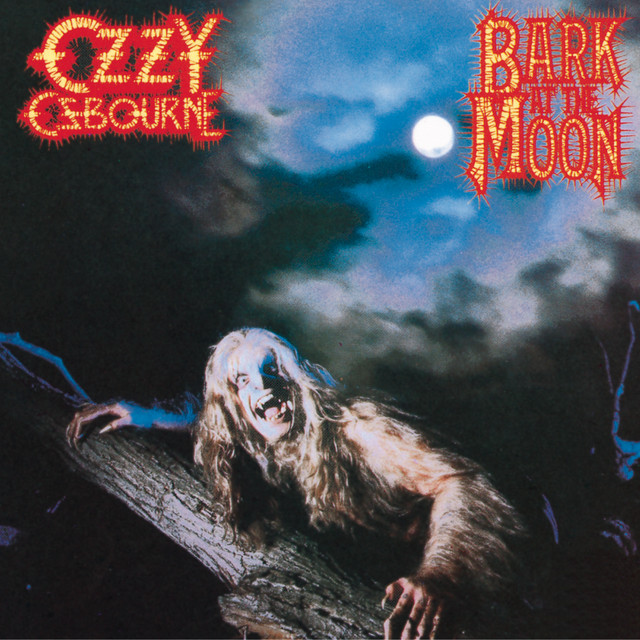
Bark At The Moon (Expanded Edition)
Ozzy Osbourne & Ozzy Osbourne (1983)
Genre Usage
Based on how artists on Equipboard use this gear, it is most commonly found in the following genres.
Used With
Based on how musicians on Equipboard use PPG Wave 2.2, it is most commonly used with the following gear.


Community setups
Show yours
More PPG Synthesizers


$3,283.92 - $3,499.99
in Synthesizers Rank


$469.00 - $699.99
in Synthesizers Rank


$19,535.25
in Synthesizers Rank


$999.00 - $1,084.00
in Synthesizers Rank


$3,216.54 - $3,590.00
in Synthesizers Rank


-m.webp?v=1783177119)
$1,200.00
in Synthesizers Rank


$439.00 - $549.00
in Synthesizers Rank
.jpg?v=1783110493)

-m.webp?v=1783263595)
$388.00 - $579.99
in Synthesizers Rank


$752.32 - $2,398.00
in Synthesizers Rank


$279.00 - $349.00
in Synthesizers Rank


$2,000.00
in Synthesizers Rank


$411.00 - $699.99
in Synthesizers Rank


$2,432.00 - $2,870.95
in Synthesizers Rank


$1,470.85 - $1,899.00
in Synthesizers Rank


$299.29 - $652.00
in Synthesizers Rank


$385.00 - $530.00
in Synthesizers Rank


$1,361.33 - $1,839.99
in Synthesizers Rank


$220.00 - $749.99
in Synthesizers Rank


$493.48 - $899.99
in Synthesizers Rank

$279.00 - $449.99
in Synthesizers Rank


$278.85 - $1,763.18
in Synthesizers Rank


$57.95 - $495.44
in Synthesizers Rank


$325.00 - $1,332.49
in Synthesizers Rank

-m.webp?v=1783255096)
$1,709.10 - $1,944.00
in Synthesizers Rank


$397.06 - $699.00
in Synthesizers Rank


$499.99 - $719.99
in Synthesizers Rank


$309.99 - $915.00
in Synthesizers Rank


$3,999.00 - $4,999.00
in Synthesizers Rank


$1,469.00 - $2,159.99
in Synthesizers Rank
.jpeg?v=1783244343)

$290.00
in Synthesizers Rank


$479.99 - $1,099.00
in Synthesizers Rank

$166.00 - $299.00
in Synthesizers Rank


$627.41
in Synthesizers Rank


$385.00 - $529.99
in Synthesizers Rank


Accessories & Related Items



Similar


Gear Guides









Most Popular Synthesizers
Most Popular Brands
-
Added to Equipboard on by
 miggityfriggity
Gear IQ 5535
-


