

Pricing and availability
We compare 600+ stores and found this item at 1 store. Prices updated .
Store
Reviews
Price




Average Price: $200
Budget/Beginner
$300
$701+
Price Tier
Budget
Standard
High-end
* Product prices and availability are updated by Equipboard every 24hrs and are subject to change. Equipboard may receive compensation for purchases made at participating retailers linked on this site. This compensation does not affect what products or prices are displayed, or the order of prices listed. For more information, please refer to our affiliate disclosure.
Description
Unleash the full potential of your guitar rig with the Tech 21 Power Engine 60, the ultimate companion for musicians who crave clean, uncolored amplification. Whether you're a gigging guitarist or a studio aficionado, this 60-watt, 1x12" powered extension cabinet delivers transparent power that lets your true tone shine. With the Power Engine 60, you're not just amplifying sound; you're amplifying your voice.
Designed with versatility in mind, this powerhouse cabinet is perfect for pairing with any preamp, whether it's analog or digital, tube or solid-state. Its Celestion Seventy 80 speaker ensures that every note you play is delivered with clarity and precision. Forget about cumbersome setups; the Power Engine 60 features XLR and 1/4" inputs, making it adaptable to any setup while the balanced XLR output allows for seamless daisy-chaining of multiple units.
Need to tweak your tone on the fly? The onboard active 3-band EQ gives you the tools to shape your sound to perfection, whether you're chasing that perfect mix or cutting through the band with authority. The Tech 21 Power Engine 60 is your ticket to rich, dynamic sound that respects the integrity of your tone.
Key Features:
- 60-watt, 1x12" powered extension cabinet
- Celestion Seventy 80 speaker
- XLR and 1/4" inputs
- Balanced XLR output for daisy-chaining
- Onboard active 3-band EQ for tone shaping
Product specs
| Brand | Tech 21 |
| Model | Power Engine 60 |
| Finish | Black |
| Year | 2013 |
| Made In | United States |
| Categories | Guitar Speaker Cabinets |
| Color Family | Black |
| Impedance | 8 ohms |
| Speaker Configuration | 1x12" |
FAQs
-
What is the primary purpose of the Tech 21 Power Engine 60?
-
The Tech 21 Power Engine 60 is designed to amplify the sound of preamps, amp modelers, and effects units without altering their tone, making it ideal for guitarists using digital or analog preamps.
-
Does the Tech 21 Power Engine 60 color the tone of my preamp or modeler?
-
No, the Power Engine 60 is known for its transparent amplification, ensuring that the original tone of your preamp or modeler remains unchanged.
-
Is the Tech 21 Power Engine 60 suitable for live performances?
-
Yes, with its 60-watt power output and 1x12" speaker configuration, the Power Engine 60 is capable of delivering sufficient volume for small to medium-sized venues.
-
Can the Tech 21 Power Engine 60 be used with other amplifiers?
-
Yes, you can use the Power Engine 60 alongside other amplifiers to expand your setup, thanks to its 8-ohm impedance and versatile connectivity options.
-
How does the Tech 21 Power Engine 60 handle effects pedals?
-
The Power Engine 60 is designed to work well with effects pedals, ensuring that the nuances and dynamics of your pedalboard are accurately reproduced.
Videos

Tech21nyc
Tech 21 Power Engine 60
Tech 21 Power Engine 60
Tech21nyc
VOX Tonelab ST/Tech 21 Power Engine Demo

Sweetwater
BOSS GT-10 Guitar Pedal thru a Tech 21 Power Engine 60 Amp
Sweetwater
Tech 21 Power Engine 60 Amp Demo - Vince Genella

Vince Genella
Native Instruments Guitar Rig 4 thru a Tech 21 Power Engine 60 Amp
Sweetwater
Tech 21 SansAmp Character Series with Power Engine 60
Tech21nyc

TECH 21 POWER ENGINE 60 test + FLYRIG RK5 + FENDER TELE + GIBSON L6S (with English subtitle)

ILDI RIDER
IK Multimedia iRig and Tech 21 Power Engine 60

Live2PlayNetwork
Tech 21 Fly Rig 5 into a Tech 21 Power engine 60

Jordan Steele
Reviews
PROS
-
Clean, uncolored sound perfect for amp modelers and cab sims
-
Excellent stage monitor with direct XLR out for flexible routing
-
Lightweight yet powerful, easy to transport for gigs
-
Supports stereo configurations for expansive sound
-
Global EQ allows sound customization based on venue
-
Reliable performance with plenty of headroom for live setups
-
Directional sound helps avoid overwhelming bandmates on stage
-
Cost-effective compared to other FRFR solutions in its class
-
Versatile inputs, including XLR, for diverse gear compatibility
CONS
-
No longer in production, limiting availability
-
Lacks a visible ready light for quick status checks
-
Not a true FRFR; struggles with advanced modeling amps
-
Limited to 60 watts, may not satisfy high-power needs
-
Stock speaker can sound muddy with certain IRs and models
Owner Insights
We analyzed real musician discussions from forums and Reddit to find what players love, question, and tweak about Tech 21 Power Engine 60.
Comparisons
-
The Tech 21 Power Engine is considered more affordable than the Line 6 Power Cab, with used prices around $270 for 1x12 and 60 watts.
Source
Use cases and applications
-
The Power Engine is favored for providing an "amp feel" at home, contrasting the small stereo system feel of studio monitors.
Source -
For live shows, use the 1/4" line out from the Two Notes Cab M+ to the Deuce Deluxe while sending the XLR out to the mixing board.
Source -
The Deuce Deluxe can be used as a powered speaker for various instruments and music, not just for guitar setups.
Source
Features and functionality
User experience
-
Users highlight running setups with pedalboards and IRs directly into the Power Engine, bypassing traditional cabs for a more versatile sound setup.
Source
Value and pricing
-
The affordability of used Tech 21 Power Engines makes them an attractive option for those seeking a budget-friendly amp solution.
Source
Software and compatibility
Setup and maintenance
-
Owners mention that the Power Engine 60 may suffer from issues with board-mounted jacks or pots, requiring advanced PCB skills for diagnosis and repair.
Source
Build quality
-
The Power Engine 60 is noted for its slightly heavy build due to MDF material, which may affect portability.
Source
4.5 out of 5
Based on 2 Reviews and 3 Ratings

1200
Good Powered cabinet for older modelers or preamps, not good for modern modelers.
So I've had the Power Engine 60 for a little while now and there are things it excels in. I have an older Tech 21 RK5 Flyrig and that through the powercab is pretty damn awesome. It can get loud as hell even for a hard hitting drummer and comes with some great features.
You can use this for a stereo rig, has a balanced XLR out with ground lift which is a nice feature. The global EQ in the back is great for shaping the sound of the cab based on the scenario you find yourself in. Has two types of inputs including an XLR in. It's basically a flaw powered amp with a pretty flat response speaker in it.
Here is the big con, and one I wish I could give 3.5 stars to instead of 4: It's not great for modern modeling amps. I tried using the power cab with my HX Stomp and the modeling on that thing is advanced to the point that the powered cab is kind of obsolete. I had to put the HX Stomp into preamp mode to get good sounds out of it, even then with the stock speaker it's nothing crazy to write home about. I've heard guys modding this amp with tweeters to get that full frfr sound, but it's not exactly something a newbie or someone getting into modeling wants to do. It doesn't take IR's well even with the tone shaping features in the back of the cab something is always going to sound off or muddy. Being that this has a power amp attached to a speaker, using full blown amp models doesn't exactly have the desired effect and things again sound weird.
That all out of the way, for what it is, it's extremely well made, and if you have an old Line 6 Pod or something laying around the house, this would be a killer addition to it. If you have a tech 21 sansamp laying around, this is ideal for that as well. But if you got a helix or kemper or whatever modeler out there and need a powered cab solution, I'd recommend looking elsewhere sadly.

Artist usage
Add artist

In a YouTube video Matt (now Lou) makes a tutorial on how to play “wut I leik abt u”, they use their Jazzmaster and their tech 21 power engine 60. This is confirmed by their friend Hayden in the comment section.


Light, simple. My main amp since 1997. Specially with PAST PERFECT & darkRehearsalExperiment projects.

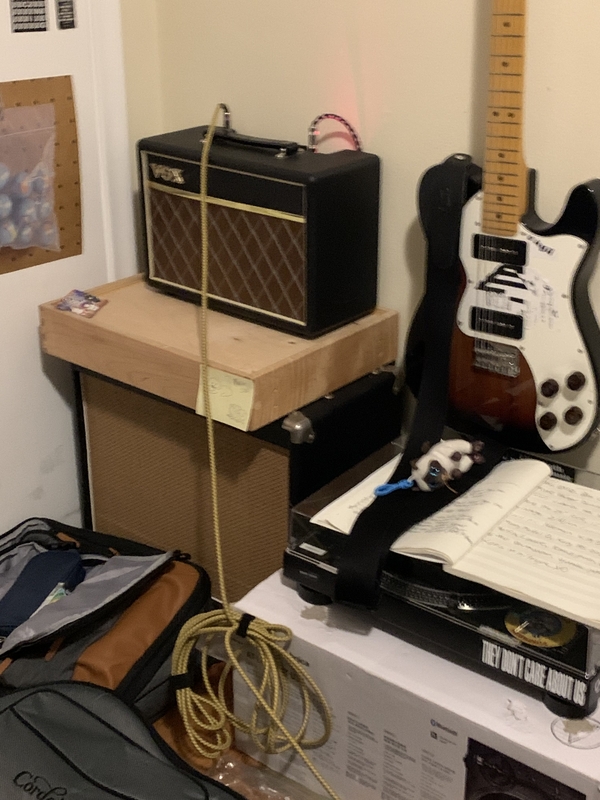
Joseph Johnson uses a vintage modified Tech 21 Power Engine 60 as part of his new amplifier setup. The bottom cabinet features an 8-ohm 100-watt speaker made in New York, replacing the stock speaker. This is supported by the image provided on Equipboard.
Genre Usage
Based on how artists on Equipboard use this gear, it is most commonly found in the following genres.
Used With
Based on how musicians on Equipboard use Tech 21 Power Engine 60, it is most commonly used with the following gear.
-s.webp?v=1784386645)
More Tech 21 Combo Guitar Amplifiers


.png?v=1784351442)

$159.00 - $229.99
in Combo Guitar Amplifiers Rank

$699.00 - $1,026.85
in Combo Guitar Amplifiers Rank


-m.webp?v=1784413195)
$650.00 - $1,049.99
in Combo Guitar Amplifiers Rank


-m.webp?v=1784413078)
$1,669.99 - $2,199.99
in Combo Guitar Amplifiers Rank


$701.63 - $949.99
in Combo Guitar Amplifiers Rank


$297.00
in Combo Guitar Amplifiers Rank


$1,899.99 - $2,199.99
in Combo Guitar Amplifiers Rank

.png?v=1784409024)

$1,450.00 - $1,799.00
in Combo Guitar Amplifiers Rank


$670.00 - $769.99
in Combo Guitar Amplifiers Rank


-m.webp?v=1784386706)
$1,099.99 - $1,399.99
in Combo Guitar Amplifiers Rank


$599.00 - $1,999.99
in Combo Guitar Amplifiers Rank

$1,379.99 - $1,679.99
in Combo Guitar Amplifiers Rank


$350.00 - $729.99
in Combo Guitar Amplifiers Rank


$1,899.00 - $1,999.99
in Combo Guitar Amplifiers Rank
.jpeg?v=1784405436)

$949.00 - $1,799.99
in Combo Guitar Amplifiers Rank


$999.99 - $1,149.00
in Combo Guitar Amplifiers Rank


$1,439.82 - $1,649.00
in Combo Guitar Amplifiers Rank


$1,759.00 - $2,899.99
in Combo Guitar Amplifiers Rank


$210.00 - $399.99
in Combo Guitar Amplifiers Rank


$399.00 - $749.99
in Combo Guitar Amplifiers Rank


$720.00
in Combo Guitar Amplifiers Rank

-m.webp?v=1784413195)
$650.00 - $1,049.99
in Combo Guitar Amplifiers Rank


$1,199.00 - $2,299.99
in Combo Guitar Amplifiers Rank


$99.95 - $2,199.99
in Combo Guitar Amplifiers Rank

$450.00 - $1,149.00
in Combo Guitar Amplifiers Rank


-m.webp?v=1784413626)
$1,222.69 - $1,469.99
in Combo Guitar Amplifiers Rank


$229.99 - $349.99
in Combo Guitar Amplifiers Rank


$350.00 - $1,259.99
in Combo Guitar Amplifiers Rank


$1,897.80 - $2,651.58
in Combo Guitar Amplifiers Rank


$375.00 - $499.99
in Combo Guitar Amplifiers Rank


-m.webp?v=1784386645)
$90.00 - $129.99
in Combo Guitar Amplifiers Rank


$2,199.00 - $2,729.99
in Combo Guitar Amplifiers Rank


$399.00
in Combo Guitar Amplifiers Rank

-m.webp?v=1784386598)
$175.00
in Combo Guitar Amplifiers Rank

.png?v=1784329102)


$439.00 - $799.99
in Combo Guitar Amplifiers Rank


Accessories & Related Items


Community setups


Similar


Gear Guides







Most Popular Combo Guitar Amplifiers
Most Popular Brands


