

Pricing and availability
We compare 600+ stores and found this item at 6 stores. Prices updated .
Store
Reviews
Price






Price History
Based on price data from 5 merchants for "Waves Aphex Vintage Aural Exciter". Prices shown reflect NEW condition. Tracking began Apr 2, 2026.
* Product prices and availability are updated by Equipboard every 24hrs and are subject to change. Equipboard may receive compensation for purchases made at participating retailers linked on this site. This compensation does not affect what products or prices are displayed, or the order of prices listed. For more information, please refer to our affiliate disclosure.
Description
Reignite your sound with the Waves Aphex Vintage Aural Exciter, a digital homage to the legendary Aphex Aural Exciter from the 1970s. This plug-in resurrects the essence of the rare tube-powered original, famed for its ability to add sparkle and presence to tracks without increasing their levels. Used by iconic artists like Jackson Browne and Linda Ronstadt, the original unit was a secret weapon in the studio, credited on numerous classic albums. Now, this sought-after sound is just a download away.
The Waves Aphex Vintage Aural Exciter is the perfect tool for musicians and producers looking to enhance the brightness and vibrancy of both vocal and instrumental tracks. It features intuitive controls, including Mode, Meter, Input, AX Mix, and Output, ensuring you have complete control over your audio enhancement process. A unique Analog section allows you to infuse just the right amount of analog warmth, bridging the gap between vintage allure and modern precision.
Compatible with both Native and SoundGrid licenses, this plug-in supports multiple audio configurations and sample rates, making it a versatile addition to any studio setup. Whether you're looking to breathe new life into a tired mix or add that finishing touch to a fresh recording, the Waves Aphex Vintage Aural Exciter is your ticket to sonic brilliance.
Key Features:
- Faithful emulation of the rare tube-powered original
- Enhances brightness, vibrancy, and depth without increasing levels
- Ideal for both vocal and instrumental tracks
- Mix and AX modes for versatile configurations
- Supports up to 24-bit/192 kHz resolution (Native)
- Compatible with Mono and Stereo components
- Works with RTAS, Audio Suite, VST, AU
- PC and Mac compatible
Owner's manual
Waves Aphex Vintage Aural Exciter User ManualProduct specs
| Software Type | Exciter |
| Upgrade/Full | Full |
| Download/Boxed | Download |
| Authorization Type | Waves License Center |
| Hardware Requirements - Mac | Intel Core i7 or higher (M1 support), 8GB RAM minimum |
| Hardware Requirements - PC | Intel Core i5 / AMD Quad-core or higher (AVX required), 8GB RAM minimum |
| OS Requirements - Mac | macOS 12 or later |
| OS Requirements - PC | Windows 7 (SP1) or later |
FAQs
-
What does the Waves Aphex Vintage Aural Exciter do?
-
The Waves Aphex Vintage Aural Exciter enhances audio by adding phase shift and harmonics, bringing out clarity and brightness that EQ alone can't achieve. It's ideal for revitalizing dull recordings and adding sparkle to individual instruments or full mixes.
-
Is the Waves Aphex Vintage Aural Exciter compatible with my DAW?
-
The Waves Aphex Vintage Aural Exciter is compatible with most major DAWs, including Ableton Live, Pro Tools, and Logic Pro, as it supports VST, AU, and AAX formats.
-
What are the system requirements for the Waves Aphex Vintage Aural Exciter?
-
For Mac, it requires macOS 12 or later with an Intel Core i7 or higher (M1 support) and 8GB RAM. For PC, it needs Windows 7 (SP1) or later with an Intel Core i5 / AMD Quad-core or higher (AVX required) and 8GB RAM.
-
How does the Waves Aphex Vintage Aural Exciter differ from a traditional EQ?
-
Unlike traditional EQ, the Waves Aphex Vintage Aural Exciter adds harmonics and phase shift to enhance clarity and presence, making it effective for adding life and brightness to tracks without boosting volume.
-
Can the Waves Aphex Vintage Aural Exciter be used on vocals?
-
Yes, the Waves Aphex Vintage Aural Exciter is excellent for vocals, providing added presence and shine, making them stand out in a mix without overpowering other elements.
Videos

Waves Audio
How to Use the Waves Aphex Vintage Aural Exciter Plugin
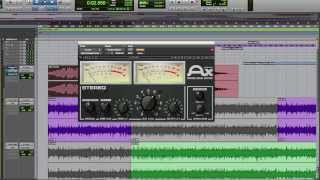
How to Use the Waves Aphex Vintage Aural Exciter Plugin
Waves Audio
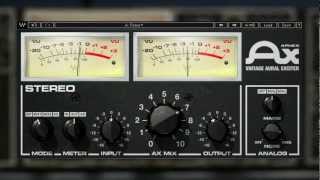
Val Garay Talks Waves Aphex Vintage Aural Exciter®
Waves Audio
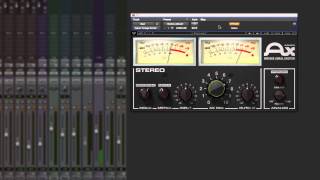
Using Waves Aphex Vintage Aural Exciter To Bring Character And Sheen

Production Expert
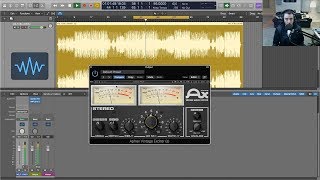
Pro Mastering Secret 🎛 Waves Aphex Vintage Aural Exciter

Sean Divine
Aphex Aural Exciter Waves Plugin Breakdown

Warrior Sound - Unders
Classic Plugins: Episode 1 | Waves Aphex Vintage Aural Exciter

Green Light Sound
Reviews
PROS
-
Adds a distinct vintage 1970s sound, especially on drums and percussion
-
Provides a unique exciter effect that can't be replicated with EQ
-
Enhances liveliness and presence in vocals and instruments
-
Effective in brightening mixes, especially in muddy tracks
-
Smoothly saturates low frequencies, ideal for retro 60s sounds
-
Useful on auxiliary buses for subtle, crisp enhancements
-
Versatile for mixing, effective for background vocals and master channels
CONS
-
Can sound harsh if not used sparingly
-
Limited to specific use cases; not for individual/master channels
-
Price considered high by some for its specialized use
Owner Insights
We analyzed real musician discussions from forums and Reddit to find what players love, question, and tweak about Waves Aphex Vintage Aural Exciter.
Features and functionality
-
The Waves Aphex Aural Exciter offers a unique implementation of EQ and saturation, providing its own distinct character that differs from typical saturation plugins.
Source -
The Waves Aphex Exciter includes a VU meter with a clipping indicator that activates when levels exceed 0dBFS, offering precise monitoring.
Source -
The AX mode is designed for use on an aux bus, enhancing flexibility when routing tracks as sends.
Source
Use cases and applications
-
Owners often use the Aphex Exciter on synths, blending a small amount of the signal to enhance the sound uniquely.
Source
Comparisons
-
Some users suggest that while exciters can emulate saturation and EQ, the Aphex Exciter provides a unique sound not easily replicated by basic saturation plugins.
Source -
Unlike other exciters, the Waves Aphex Exciter replicates the sound of a rare mid-70s physical device, providing a distinctive vintage audio character.
Source
User experience
-
Users report that the Aphex Exciter is highly effective when no preferred saturation plugins are available, indicating its standalone value.
Source
4.5 out of 5
Based on 2 Reviews and 18 Ratings


938
UP ! UP ! UP-MORE-FREQ!!
on final, i use this in master channel for boosting freqency every 2019 songs in my work.
Artist usage
Add artist
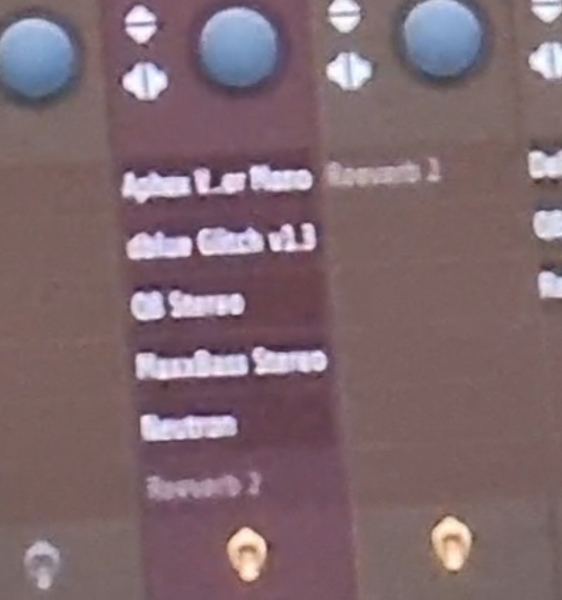
In the Avicii Museum they showcased the project file for 'Friend Of Mine'. In the mixer track you can see he used this plugin.


The plugin can be seen 1:51 into this video: https://www.youtube.com/watch?v=YSMIfiGNVPY


In the "Dave Clarke EMP Toolbox Overview" video on Waves.com, Dave Clarke discusses using the Waves Aphex Vintage Aural Exciter plugin.


In this video at 15:40 we can see Waves Aphex Vintage Aural Exciter


In the YouTube video titled "Blackmill Tutorial #1: One Last Chance (FL Studio 12)" by BlackmillMusic, Blackmill is seen using the Waves Aphex Vintage Aural Exciter as an effect.


Used for Quavo and Offest's features on Beyoncé and Jay-Z's "Apeshit", as stated by producer Stuart White in this September 2018 Sound on Sound interview.
The first four aux tracks feature SoundToys effects, namely Little Microshift, two EchoBoy delays, and a delay from the Little PrimalTap. Next are a Hall Reverb aux and a Church Reverb aux, both using Waves’ RVerb, an EMT plate from Audio Ease’s Altiverb, four aux tracks with the Waves H-Delay and various other plug-ins on them as well, and four more reverb auxes with the Avid Revibe II, two Avid D-Verbs and another RVerb.
White: “I use the Little Microshift in pretty much every mix, with the left-right micro pitch-shift effect that’s similar to the classic effect in the Eventide H3000 shift where you pitch one side down six cents and one side up six cents to create width. It’s a good way to get your vocals wider without them being out of phase. It thickens up vocals, and is kind of like a doubler. I do quite a lot of filtering on some of the EchoBoy delays, for example with the Waves REQ, and I am adding colour with the SoundToys Devil-Loc, which is great if you want to colour the delay so it is separate from the main vocal, and compress it with the UAD LA3A and mix that in to taste.”
(...) “The Migos vocals came in as seven audio tracks, with the Avid D-Verb on each of them. Putting a D-Verb on a track before EQ is not something I normally do, but it sounded great. So I adjusted them a bit, but otherwise left them as they were. The tracks also came in with the Aux track above, and the EQ3, with a high pass at 60Hz and notches at 430Hz and 1.41kHz and a high boost, the Waves API 2500 compressor, the RComp, the Waves Q10 EQ, following a slightly similar curve to the EQ3, the Waves De-esser, the Waves Aphex Aural Exciter, and the Avid Dyn3 expander/gate. I added the EQ3, with another high-pass filter at 144Hz, and the RComp, with a ratio of 10:1.”


Used on Cardi B's vocals for "Bodak Yellow", as mentioned by mix engineer Evan LaRay in this February 2018 Sound on Sound interview. An image of the "ELR" settings can be found here.
In his mix of ‘Bodak Yellow’, Evan LaRay used almost identical vocal chains on two auxiliary busses. The ‘Vox 1’ chain includes FabFilter’s Pro-DS de-esser and Waves’ C4 multiband compressor, plus the Waves CLA Vocals plug-in and SoundToys’ Decapitator saturation processor.
The main ‘Hook’ and ‘Verse’ vocal tracks have similar plug-in chains, incorporating the EQ3 seven-band, Waves CLA-76 and Waves De-esser, though the ‘Hook’ also has FabFilter’s Timeless 2 delay. LaRay explains, “The EQ on the ‘Hook’ has a high-pass, around 100Hz, and I’m also cutting 3dB at 300Hz, because the vocal sounded a bit muddy, and again 3dB at 4kHz, because there was a piercing frequency there. The CLA keeps the peaks in check, and the de-esser again takes some higher frequencies out, at 4270Hz, and the Timeless is another favourite plug-in. I think in general the FabFilter plug-ins are extremely dope. I wanted the ‘Hook’ vocal to stand out from the ‘Verse’ vocal, so I used a stereo delay preset, and then tweaked that. The presets on the FabFilter plug-ins are pretty good: you just run through all of them and then choose the best one. In this case I lowered the width and the wet value of the stereo delay preset, and that sounded good and gave the hook its own space. The three plug-ins on the ‘Verse’ track do pretty much the same.
“The ‘Inout’ tracks that are below the ‘Hook’ and the ‘Verse’ are vocal doubles. They are words or lines we use for emphasis and additional power on these lines and words. They come from one of her original vocal takes, which I just cut and cleaned up. Both ‘Inout’ tracks have the Waves RCompressor, just containing these words and lines so they don’t overwhelm the ‘Hook’ or the ‘Verse’ vocal, and then the FabFilter Pro-Q2, taking out some high frequencies, again to make sure it doesn’t clash with the leads, and also cutting below 200Hz. And there’s a delay on these tracks to put them in a slightly different space from the lead vocal tracks.
“In addition to the two ‘Inout’ tracks, both the ‘Hook’ and the ‘Verse’ tracks are also accompanied by an ‘Ad Libs’ track, which were some ad libs Cardi had recorded with Mike over at Krematorium. Mike had also set up a separate aux track for these ad libs, which is ‘Vox2’, and I liked that and kept two of the plug-ins he had on that: the [Avid] Sansamp for some distortion and the SoundToys Panman. I then added the D-Verb and the [Waves] CLA Vocals. I adore the CLA Vocals. I use it on every track I work on. When I don’t use it, the vocals sound completely different. I’d love to know what exactly it does! Finally, the inserts have the Waves L1, just to control the peaks.
“The other tracks — ‘EXF1’, ‘EXF2’, ‘EXF3’ and ‘EXF4’, are because I prefer to create a new track if I want to have a specific effect on specific words or phrases. I prefer doing that to automating the effects on a track. Automation is great, but I tend to only do volume automation. So I copy audio to another track, and then put the effect on that, and in this case I created four different effects tracks with four different delays. ‘EFX1’ is the main one, and has the same three plug-ins as the Verse tracks — EQ3 three-band, CLA76 and Waves De-esser — just with the EQ3 cutting more of the high frequencies. Then there’s an eighth-note ping-pong delay from the Waves H-Delay, and then a D-Verb set to ‘hall’ with 7s decay and a 15ms pre-delay. ‘EFX2’ has another H-Delay delay, ‘EFX3’ the Timeless 2 delay, and ‘EFX4’ again has the H-Delay plus a D-Verb.”
All the main vocal audio tracks go to LaRay’s ‘Vox1’ aux group track. This, he explains, has “A FabFilter Pro-DS de-esser, then the Waves RCompressor controlling the peaks, the Waves C4 multiband compressor boosting the high end and containing the lows in her voice, so it doesn’t cut through too much, and Waves CLA Vocals. Again, it’s really making my vocals sound good. I push the Pitch fader to stereo, spank it on the compressor, also push up the treble to brighten it up, turn the reverb down to ‘tight’, and lower the delay by 9dB because my own quarter delay is my main vocal delay, and it sounds great. There’s also a SoundToys Decapitator, to add more harmonic distortion, and then there’s the Waves RVox. That was supposed to be the final plug-in on the insert, but then I realised the vocal was still peaking too much once she began rapping loudly, so I put on the L1 [limiter] to control that.”
The ‘special sauce’ in Evan LaRay’s mixes comes from a parallel aux channel containing a blend of compression, saturation, EQ and other processors. Key ingredients are Waves’ PuigChild compressor and PuigTech equaliser.
The ‘Vox1’ and ‘Vox2’ tracks also each have a Trim plug-in on an insert, and sends to the ‘Verb’ aux and to the ‘ELR’ (LaRay’s initials) track. “I put the Trim on all my tracks at the end of the vocals, and at the end of the beat, because the vocals actually began distorting in places. These two tracks were too hot, and I wanted to make sure they had a good level before going to the ‘Sub Print’ track. I have the ‘ELR’ aux track in every session. It’s most of all parallel compression, but I also always try out new things with distortion, exciters and things like that, and I label that ‘ELR’. In this case it really is the ‘ELR’ track that makes the vocals cut through the mix.
“The compression on the ‘ELR’ track comes from the Waves PuigChild 670, which is a great compressor, and it’s compressing a lot, so the vocal stays right there in the middle. The signal is then going to the PuigTech EQP-1A, which is boosting some low end to add some warmth to the vocals, and some 5kHz, and then the Waves Aphex Vintage Aural Exciter, set to AX Mix 6, for some added crispness and clarity, then the EQ3 seven-band to control the low mids, and another De-Esser cutting 4398Hz, to finalise the vocal sound. The L1 also helps keep the vocals in the same place. Finally, the ‘Verb’ send on the ‘Vox1’ and ‘Vox2’ tracks goes to the ‘Verb’ aux, which has the Waves RVerb, and that pretty much glues everything together.”


"Waves have brought out their recreation of the Aphex Aural Exciter, and there's something about that that's really really special. It can just add harmonic energy in just that right kind of way." - at 16:59 at the Waves webinar with Guy Sigsworth

Used for Quavo and Offest's features on Beyoncé and Jay-Z's "Apeshit", as stated by producer Stuart White in this September 2018 Sound on Sound interview.
The first four aux tracks feature SoundToys effects, namely Little Microshift, two EchoBoy delays, and a delay from the Little PrimalTap. Next are a Hall Reverb aux and a Church Reverb aux, both using Waves’ RVerb, an EMT plate from Audio Ease’s Altiverb, four aux tracks with the Waves H-Delay and various other plug-ins on them as well, and four more reverb auxes with the Avid Revibe II, two Avid D-Verbs and another RVerb.
White: “I use the Little Microshift in pretty much every mix, with the left-right micro pitch-shift effect that’s similar to the classic effect in the Eventide H3000 shift where you pitch one side down six cents and one side up six cents to create width. It’s a good way to get your vocals wider without them being out of phase. It thickens up vocals, and is kind of like a doubler. I do quite a lot of filtering on some of the EchoBoy delays, for example with the Waves REQ, and I am adding colour with the SoundToys Devil-Loc, which is great if you want to colour the delay so it is separate from the main vocal, and compress it with the UAD LA3A and mix that in to taste.”
(...) “The Migos vocals came in as seven audio tracks, with the Avid D-Verb on each of them. Putting a D-Verb on a track before EQ is not something I normally do, but it sounded great. So I adjusted them a bit, but otherwise left them as they were. The tracks also came in with the Aux track above, and the EQ3, with a high pass at 60Hz and notches at 430Hz and 1.41kHz and a high boost, the Waves API 2500 compressor, the RComp, the Waves Q10 EQ, following a slightly similar curve to the EQ3, the Waves De-esser, the Waves Aphex Aural Exciter, and the Avid Dyn3 expander/gate. I added the EQ3, with another high-pass filter at 144Hz, and the RComp, with a ratio of 10:1.”


Album Usage
The Waves Aphex Vintage Aural Exciter has been featured on the following albums:
![Waves Aphex Vintage Aural Exciter as heard on Bodak Yellow (feat. Messiah) [Latin Trap Remix] by Cardi B (2017)](https://images.equipboard.com/uploads/album/image/658146/bodak-yellow-feat-messiah-latin-trap-remix.jpg)


Genre Usage
Based on how artists on Equipboard use this gear, it is most commonly found in the following genres.
Used With
Based on how musicians on Equipboard use Waves Aphex Vintage Aural Exciter, it is most commonly used with the following gear.




-s.webp?v=1784872185)
More Exciter Plugins

$0.00
in Exciter Plugins Rank


$39.00 - $39.90
in Exciter Plugins Rank

$20.00 - $45.00
in Exciter Plugins Rank


$29.00
in Exciter Plugins Rank


Accessories & Related Items

-s.webp?v=1784871993)


-s.webp?v=1784871558)


-s.webp?v=1784871769)

-s.webp?v=1784872234)


-s.webp?v=1784871854)


Community setups


Similar


Gear Guides





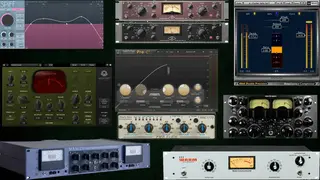


Most Popular Exciter Plugins
Most Popular Brands
-
Added to Equipboard on by
.jpg?v=1784902512) gchiaren
gchiarenGearIQ 37849
-