

Pricing and availability
We compare 600+ stores and found this item at 1 store. Prices updated .
Store
Reviews
Price




Average Price: $140
Standard/Professional
$50
$176+
Price Tier
Budget
Standard
High-end
* Product prices and availability are updated by Equipboard every 24hrs and are subject to change. Equipboard may receive compensation for purchases made at participating retailers linked on this site. This compensation does not affect what products or prices are displayed, or the order of prices listed. For more information, please refer to our affiliate disclosure.
Description
David’s take: The Burn Unit has been a 27-year project to design and manufacture an analog circuit that can closely replicate the sounds of amplifiers producing different levels and textures of distortion, while keeping a simple, easy to understand control-set. The one amp that set the journey off more than any other was a Dumble ODS, which was in my studio for an extended stay. When the amp was at low volume levels the overdrive was not terribly inspiring, or distinct from other master volume amps, but when the amp could be played at loud club levels, it was fantastic. Since I had been able to spend time inside the chassis, I could see that the power amp was somewhat like Fender amps I had worked on, although it had some tweaks in the phase inverter and power supply. I also had the chance to look inside and play two other Dumble ODS amps that belonged to another friend, they were a little older and had Fender transformers. So, the average guitar player using a nice tube amp, might have something reasonably close to the output stage of the little known, but rather expensive ($5,000 at the time) Dumble. The preamp on the Dumble had some neat features like a “jazz/rock switch, I preferred “rock of course”, it seemed a lot of other ODS users did too when I saw them play live. This setting was most like a Fender blackface, although again with some tweaks. To sum it up, a Dumble is still a tube amp with lots in common with classic tube amps, the main thing being the difference between the distortion, voicing and texture that can be created in the overdrive section of the preamp. A pedal, when thoughtfully designed, can go a long way to reproducing this sound.
By 1998 I had started making pedals, I was selling Tone Pump overdrives and had good reviews. I thought I should revisit the ideas I had for my Burn Unit project. I had come up with a basic set of controls that could get a lot of textures from lot of amps. I thought it was just as important to emulate distortion from Fender Tweeds amps (large and small), blackface, vintage Marshalls along with that somewhat unknown Dumble ODS sound that I really liked. I never thought I could market a pedal that only created a Dumble sound since only serious guitar nerds knew what it was. I also liked some advantages that op-amps had, I could make complex chords sound clearer, you could actually play 5 note chords with a lot of sustain, where with a magic tube amp cranked you were lucky to get a 4-note chord to work well, usually leaving out the 5th, but that dom7#9 is still pretty cool!
I also wanted the Burn Unit to have a voicing that was complimentary to a guitar’s tone knob. I loved how Larry Carlton “rolled the tone knob back to 3” on Kid Charlemagne and other tunes, and Eric Johnson got that thousand-pound violin tone from rolling the tone knob way back, but with pedals, the voicing of the tone knob could be redundant and end up sounding compressed or heavily muted. When guitar players roll the tone knob back on the bridge pickup, you get to build the harmonics against the guitar’s fundamentals, instead of building harmonics on top of harmonics, which gets splashy sounding. The “tone knob trick” goes a long way to getting that detailed but soft distortion (read: no ice pick). You just set the Burn Unit (or amp) for plenty of harmonics/sustain and top, then roll back the tone knob on the guitar to get a fat balanced tone, all the experienced players know this trick.
The Dynamics knob (now a 3-way toggle) allows you to set the point a secondary compression/distortion kicks in. The Burn Unit has two clipping sections, each can be adjusted, much of the thinking here was, tube amps clip in at least two places, the preamp and the power amp, and often one handles more of the harmonics/texture than the other. The Burn Unit can achieve this between the Burn setting, and dynamics setting. In keeping with tradition, the compact Burn Unit has an internal bass trim pot, it’s set to work with neutral amps at our shop, so you may never need to touch it, but, if you like internal controls, and want to give it a twist, you can dial in the bass to match your own amp.
Product specs
| Brand | Barber |
| Model | Compact Burn Unit |
| Finish | Black Sparkle, Raw Metal |
| Year | 2021 - 2025 |
| Made In | United States |
| Categories | Overdrive and Boost Pedals |
| Pedal Format | Standard |
FAQs
-
What type of tones can I expect from the Barber Electronics Compact Burn Unit?
-
The Barber Electronics Compact Burn Unit delivers a range of overdrive tones from smooth, creamy sustain to aggressive, biting distortion, making it versatile for rock, blues, and more.
-
Does the Barber Electronics Compact Burn Unit work well with both single-coil and humbucker pickups?
-
Yes, the Compact Burn Unit is designed to complement both single-coil and humbucker pickups, providing clear, dynamic overdrive tones regardless of your guitar's pickup configuration.
-
What power supply is required for the Barber Electronics Compact Burn Unit?
-
The Compact Burn Unit requires a standard 9V DC power supply, commonly used with most guitar pedals, for optimal performance.
-
How does the Compact Burn Unit differ from other overdrive pedals by Barber Electronics?
-
The Compact Burn Unit is known for its compact size while still delivering the same high-quality overdrive tones and dynamic response that Barber Electronics pedals are renowned for.
-
Can the Barber Electronics Compact Burn Unit be used as a clean boost?
-
Yes, the Compact Burn Unit can be adjusted to provide a clean boost by setting the gain lower, allowing it to enhance your guitar's natural tone without adding significant distortion.
Videos

johngregsonguitar
Barber CBU (Compact Burn Unit) Demo
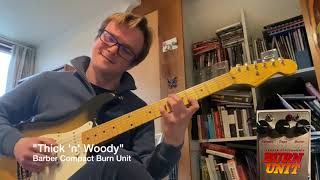
Barber CBU (Compact Burn Unit) Demo
johngregsonguitar
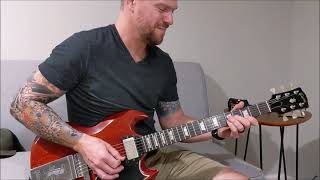
Barber Electronics low gain Compact Burn Unit

roknfnrol
Reviews
Owner Insights
We analyzed real musician discussions from forums and Reddit to find what players love, question, and tweak about Barber Electronics Compact Burn Unit.
User experience
-
The Compact Burn Unit is praised for delivering "best tone" experiences, with its versatile settings providing numerous excellent tonal options rather than a single sweet spot.
Source
Features and functionality
-
The Compact Burn Unit offers substantial gain, capable of both high-gain sounds and lower gain, edge-of-breakup tones when rolling back the guitar volume.
Source
Comparisons
-
The Direct Drive v4 has a Marshall JT and JCM voice, providing more gain than the 1/2 Gainer, contrasting with the lower-gain characteristics of the Gain Changer and 1/2 Gainer.
Source
Based on 0 Reviews and 0 Ratings
Genre Usage
Based on how artists on Equipboard use this gear, it is most commonly found in the following genres.
Similar
Add recommendation2 alternative and related items for Barber Electronics Compact Burn Unit, curated by the Equipboard community.

A limited edition variant of the Burn Unit, the Five Watt World combines the Burn Unit with the discontinued Barber Super Sport, to achieve both JTM45 and Dumble ODS inspired tones.
-m.webp?v=1784334591)
More Barber Electronics Overdrive Effects Pedals


.jpeg?v=1784600206)


-m.webp?v=1784612449)
$105.00 - $399.52
in Overdrive Effects Pedals Rank


$100.75 - $120.99
in Overdrive Effects Pedals Rank


-m.webp?v=1784559380)
$785.62
in Overdrive Effects Pedals Rank


$180.00 - $217.74
in Overdrive Effects Pedals Rank


$139.00 - $999.99
in Overdrive Effects Pedals Rank


$70.00
in Overdrive Effects Pedals Rank


-m.webp?v=1784612140)
$149.00 - $186.99
in Overdrive Effects Pedals Rank


$198.00 - $229.99
in Overdrive Effects Pedals Rank


.jpg?v=1784563516)

$102.50 - $185.00
in Overdrive Effects Pedals Rank


$99.00 - $142.00
in Overdrive Effects Pedals Rank

Accessories & Related Items


Artist usage


Community setups


Gear Guides




Most Popular Overdrive Effects Pedals
Most Popular Brands
-
Added to Equipboard on by
 thethoptergod
GearIQ 304
-


