

Pricing and availability




* Product prices and availability are updated by Equipboard every 24hrs and are subject to change. Equipboard may receive compensation for purchases made at participating retailers linked on this site. This compensation does not affect what products or prices are displayed, or the order of prices listed. For more information, please refer to our affiliate disclosure.
Description
The Call76 Compact Bass is an 1176-style studio-grade FET compressor, complete with dedicated controls for parallel compression and side chain filtering. We’ve taken everything that was great about the original Call76, added new features optimized for bass and compressed the whole lot down into a pedal-board-friendly package!
A single combined Attack/Release control provides a continuous sweep of useful settings while avoiding combinations that can result in ugly distortion artifacts creeping into the lower registers.
In addition to this pedal’s low-noise circuitry and fast, musical FET response, two special features lift the Call76 Compact Bass above the competition. The first is the Dry Blend control, which lets you mix your dry signal back in with your compressed signal for true parallel compression, an indispensable studio recording technique. By combining the compressed and dry signals, you get all of the tone thickening and increased sensitivity of the style compression, while retaining the natural attack and dynamic expression in your playing. It’s the ultimate in transparent compression – both fat and punchy at the same time.
This pedal’s second secret weapon is also culled from the studio engineer’s handbook. The Call76 Compact Bass allows you to rein in the amount of compression applied to the lowest frequencies via a variable-frequency high-pass filter placed in the compressor's side-chain. With the HPF control dialled in, the compression ratio effectively becomes frequency dependent. The low strings come back to life, adopting an extra weightiness, power and dynamic response, while the higher strings are strictly controlled, preventing slapped and popped notes from leaping out of the mix. This unique bass compressor is like having your own studio engineer sat on your pedal-board!
Key Features: • 100% Class-A discrete signal path • Classic, ultra fast “FET” response • Studio-grade discrete-transistor pre-amp • Combined Attack/Release control • Dedicated Ratio control • Dry Blend control for parallel compression • Variable-frequency sidechain filter (HPF) control • Optimised for bass but can process any source • High-current, low-noise electronics • Ultra-wide frequency response • Ultra-high input impedance • Silent switching • High-quality “signal-conditioning” bypass mode • Premium components throughout • Advanced power supply filtering and protection • Flexible external power requirements (9-18V DC) (Not Included) • PSU Spec. 78mA @ 9V / 103mA @ 18V • Designed in England
IN: The Call76 features a very nice studio-grade input preamplifier. This works as an interface between the guitar and the compressor sections. In exactly the same way, a studio-engineer will first amplify a dry guitar signal before applying additional processing. The In control allows the user to vary the gain of this pre-amplifier. Turning the In control clockwise increases the overall gain of the pedal. This also increases the amount of compression. The guitar will become increasingly touch sensitive as gain is increased. Too much gain and the pre-amplifier will clip and distort.Compression is greatly reduced at lower gain settings, as much of the signal entering the compressor section falls below the compressor's internal threshold. Signal level must exceed this threshold in order to initiate gain-reduction. So, at lower gain settings, only the signal peaks are compressed.
HPF: The HPF knob controls the cut-off frequency of a high-pass filter positioned in the compressor's side chain circuitry. Attenuating low frequencies from the side chain has the effect of freeing up the low bass strings from excessive compression. This fattens the tone of your instrument and lets the low strings breathe. Dynamic control is still fully active for the higher registers, meaning that any slaps and pops are suitably taken care of! Turning the HPF knob clockwise will raise the cut-off frequency and free up more of the low end.
OUT: The Out control simply determines the level of the signal present at the pedal's output. This can be set in order to keep the overall effected level close to that of the dry (bypass) signal. Alternatively, the level can be increased to help project a guitar solo.
DRY: The Dry control varies the amount of dry, uncompressed signal present at the pedal's output, thereby mixing the original,uneffected signal back in with the compressed signal. You can adjust the balance between the compressed and uncompressed signals by adjusting the Out and Dry knobs accordingly. Correct adjustments should deliver the increased sensitivity and sustain of the compressed signal, combined with the greater dynamic integrity of the uncompressed signal.
RATIO: Turn the Ratio control clockwise to increase the compression ratio. The Ratio control allows the user to adjust the amount of gain reduction applied for any given increase in guitar signal. At the lowest ratio setting, doubling the input signal (an increase of 100%)will result in the output increasing by 19%. At the highest ratio setting, the output would rise by only 3.5% for the same increase in input signal. The latter case represents "limiting". Changing the ratio setting also varies the threshold level of the unit. This helps to keep the output at a consistent level, regardless of settings. In practice, lower Ratio settings will provide more gentle, transparent compression, while higher Ratio settings will deliver more aggressive compression with a tightly controlled dynamic range – in other words, the loudest and quietest notes you play will end up at roughly the same level.
ATT/REL: Compressor attack and release controls are all too often misunderstood, which is unfortunate as they are instrumental in achieving a usable sound. In most cases attack and release parameters should be adjusted to optimise the compressor's dynamic response to that of a particular instrument. However, they can also be adjusted to create strong dynamic effects. Incorrect settings can produce nasty distortions and frequency-dependent artifacts. The Att/Rel knob adjusts the two parameters simultaneously to offer the user a choice of the most useful settings without any headaches! All our favorite combinations are here. All the troublesome settings are carefully side-stepped. Just adjust to taste! The attack parameter can be thought of as the time taken for the compressor to react to the presence of a signal, i.e. the delay from the instant when you play the note to the moment the compressor actually reduces the gain. The longer the attack time/delay, the more pronounced the beginning of each note will sound. Increasing the attack time highlights the percussive "snap" of picked, popped and slapped notes. The release parameter can be thought of as setting the duration of the gain reduction applied to the signal. This would be measured from the time that compression is triggered to the point that the compressor has returned to its idle state. For maximum effect when processing bass guitar, the release time must be set so that the compressor responds fully to every note played – in other words, short enough for the compressor to fully recover in the time between one note ending and the next note beginning. Turning the Att/Rel knob clockwise will reduce the release time while increasing the attack time, best for percussive playing. Rotating the Att/Rel knob anti-clockwise will increase the release time while reducing the attack time for a smoother, more “spongy” feel.
Product specs
| Power | 9V, 18V |
Videos

IvanBassist
Origin Effects Cali76 Comparison | Compact Bass vs Bass Compressor
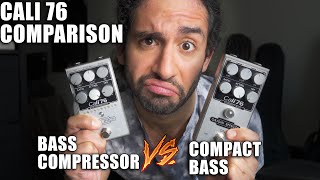
Origin Effects Cali76 Comparison | Compact Bass vs Bass Compressor
IvanBassist
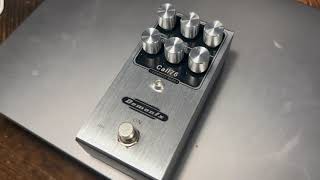
Cali76 Compact Bass Compressor From Demonfx

sospedals
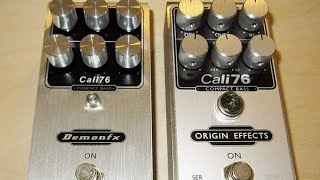
Testando o som do Demon FX inspirado no Cali76 – vale a pena?"👀👀

alex garcia
Reviews
5.0 out of 5
Based on 0 Reviews and 2 Ratings
Genre Usage
Based on how artists on Equipboard use this gear, it is most commonly found in the following genres.
More Demonfx Compressor Effects Pedals

-m.webp?v=1784819004)
$256.85 - $359.00
in Compressor Effects Pedals Rank


$94.00
in Compressor Effects Pedals Rank


$139.00 - $189.00
in Compressor Effects Pedals Rank


$172.09 - $200.00
in Compressor Effects Pedals Rank


$65.00
in Compressor Effects Pedals Rank


$142.50 - $306.00
in Compressor Effects Pedals Rank


$272.11
in Compressor Effects Pedals Rank


$70.00 - $105.00
in Compressor Effects Pedals Rank


$219.00
in Compressor Effects Pedals Rank


$68.00
in Compressor Effects Pedals Rank


$274.00
in Compressor Effects Pedals Rank


$93.00 - $120.99
in Compressor Effects Pedals Rank


$107.00 - $125.99
in Compressor Effects Pedals Rank


$48.20 - $77.93
in Compressor Effects Pedals Rank


$109.99 - $115.99
in Compressor Effects Pedals Rank


$80.00 - $119.00
in Compressor Effects Pedals Rank


$269.00 - $349.99
in Compressor Effects Pedals Rank


$229.00
in Compressor Effects Pedals Rank


$199.95
in Compressor Effects Pedals Rank


$99.95 - $149.97
in Compressor Effects Pedals Rank


$225.00 - $299.00
in Compressor Effects Pedals Rank


$138.78 - $199.00
in Compressor Effects Pedals Rank


$212.99 - $666.00
in Compressor Effects Pedals Rank


$177.49 - $239.22
in Compressor Effects Pedals Rank


$140.50 - $175.99
in Compressor Effects Pedals Rank


$222.00 - $229.00
in Compressor Effects Pedals Rank


$145.05
in Compressor Effects Pedals Rank


$199.00
in Compressor Effects Pedals Rank


$29.60 - $37.99
in Compressor Effects Pedals Rank


$266.74 - $275.00
in Compressor Effects Pedals Rank


$227.90 - $279.30
in Compressor Effects Pedals Rank


$17.90 - $28.90
in Compressor Effects Pedals Rank


$171.00
in Compressor Effects Pedals Rank


$94.00 - $188.99
in Compressor Effects Pedals Rank


$25.00 - $79.00
in Compressor Effects Pedals Rank


$214.18
in Compressor Effects Pedals Rank


$88.81
in Compressor Effects Pedals Rank


$123.00 - $129.00
in Compressor Effects Pedals Rank


$200.00 - $254.00
in Compressor Effects Pedals Rank


Artist usage


Community setups


Similar


Gear Guides




.jpg)
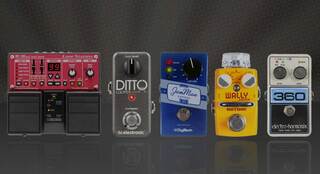
Most Popular Compressor Effects Pedals
Most Popular Brands
-
Added to Equipboard on by
 yigityigit
GearIQ 6092
-


