This page about PPG Wave 2.3 is a stub. You can help improve it:


Pricing and availability




* Product prices and availability are updated by Equipboard every 24hrs and are subject to change. Equipboard may receive compensation for purchases made at participating retailers linked on this site. This compensation does not affect what products or prices are displayed, or the order of prices listed. For more information, please refer to our affiliate disclosure.
Description
Step into the world of digital synthesis with the PPG Wave 2.3, a classic synthesizer that has carved its niche in the annals of electronic music history. This iconic instrument combines the best of both worlds, marrying the warmth of analog filters with digital wavetable oscillators, offering a unique sound palette that has captivated musicians for decades. With its distinct sonic capabilities, the PPG Wave 2.3 is not just a synthesizer but a creative tool that empowers artists to explore new dimensions of sound.
The PPG Wave 2.3 features a 61-key keyboard that provides a responsive and expressive playing experience, making it an ideal choice for both studio recordings and live performances. Its interface is intuitive, allowing users to dive deep into sound design without getting lost in complexity. The synthesizer is renowned for its ability to produce lush pads, dynamic leads, and intricate textures, contributing to its status as a favorite among electronic musicians and producers.
Whether you're looking to recreate the classic sounds of the past or craft entirely new sonic landscapes, the PPG Wave 2.3 stands as a testament to the enduring power of innovation in music technology.
Key Features:
- Digital wavetable synthesis combined with analog filters
- 61-key keyboard for expressive performance
- Intuitive interface for deep sound exploration
- Capable of producing a wide array of sounds, from lush pads to dynamic leads
- A staple in electronic music production and live performance setups
Videos

Torsten Abel
PPG WAVE 2.3 Sounds

PPG WAVE 2.3 Sounds
Torsten Abel
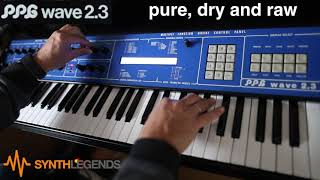
PPG wave 2.3 pure, dry and raw (no FX)

synthlegends
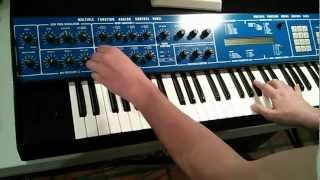
PPG Wave 2.3 - quick demo

ymarcc
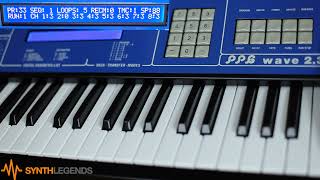
PPG wave 2.3 Sequencer and Arpeggiator Quick Tutorial
synthlegends
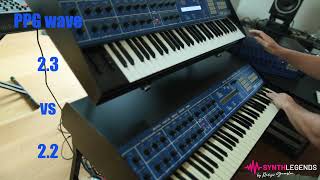
PPG wave 2.2 vs 2.3 are there any differences?
synthlegends
Reviews
Owner Insights
We analyzed real musician discussions from forums and Reddit to find what players love, question, and tweak about PPG Wave 2.3.
Value and pricing
-
Despite modern alternatives, the PPG Wave 2.3's unique sound appeals to enthusiasts, especially for those seeking '80s Tangerine Dream tones.
Source
Features and functionality
-
The analog filters in the original and reissue PPG Waves differ, with the reissue using different filter chips, impacting their sonic character.
Source -
The PPG Wave 2.3 offers a choice between recreating its classic aliasing or using interpolation to reduce aliasing for smoother wave transitions.
Source -
The PPG Wave 2.3's aliasing, a result of technical limitations in its processor and converters, contributes to its distinct pitch tracking sound, which some synths now simulate.
Source -
The PPG Wave 2.3 uses 12-bit samples, unlike its predecessor's 8-bit, enhancing sound depth and richness.
Source -
The PPG Wave 2.3's keypad is used for selecting wavetables and modes, potentially being replaced with MIDI capabilities in newer versions.
Source -
Originally lacked filters; SSM filters were added due to unexpected grunge from buggy waveform calculations.
Source -
The Waveterm module, with its screen and disk drives, facilitates sample and waveform editing, directly transferring data into the PPG's RAM.
Source
Use cases and applications
-
PPG Wave synthesizers, while distinct in sound, may not be the best choice for creating a wide variety of vintage and modern sounds, as other synths like the Blofeld might.
Source -
The PPG Wave's bright and strident sound is ideal for standout leads but may require complementary synths like a Prophet to mitigate harshness in a mix.
Source -
Known for its use in '80s music, with distinctive sounds in albums like Tangerine Dream's "Exit" and Patrick O'Hearn's work.
Source
Comparisons
-
The Behringer Wave, though not as close to the PPG 2.3 as the Waldorf M, is considered excellent value at a third of the cost.
Source -
The Waldorf hardware and Groove Synthesis 3rd Wave offer modes that replicate the original PPG 2.x aliasing, differentiating them from other products using PPG waveforms.
Source -
The Waldorf Blofeld, with PPG wavetables and filter models, offers a modern alternative to the vintage PPG Wave 2.3.
Source -
The PPG Wave 2.3 is noted for its unique ability to create glassy sounds and digital noise, unlike traditional subtractive synthesis.
Source
Mods and upgrades
-
Allowing users to load custom waveforms could bypass copyright issues while maintaining the PPG Wave 2.3's unique sound character.
Source
User experience
-
Some enthusiasts prefer a modern PPG-inspired synth with additional features, suggesting a mix of vintage sound and contemporary capabilities would be desirable.
Source -
Owners note the UI is archaic and cumbersome, reflecting its vintage nature, making modern alternatives like the 3rd Wave more appealing.
Source
Critic Reviews
5.0 out of 5
Based on 0 Reviews and 5 Ratings
Artist usage
Add artist
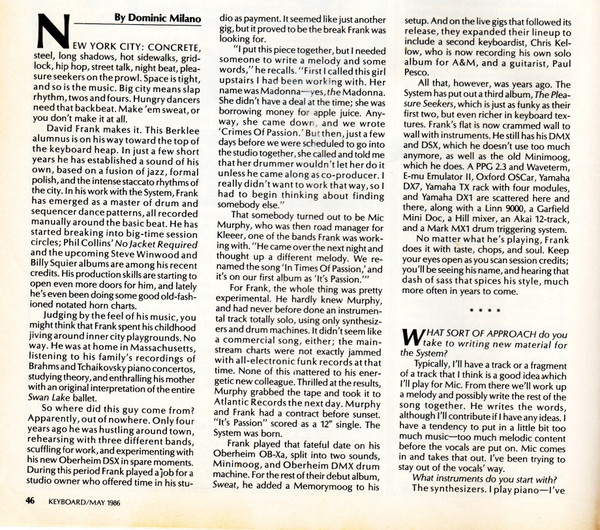
David Frank used the PPG Wave 2.3 synthesizer, as noted in the May 1986 issue of Keyboard Magazine.

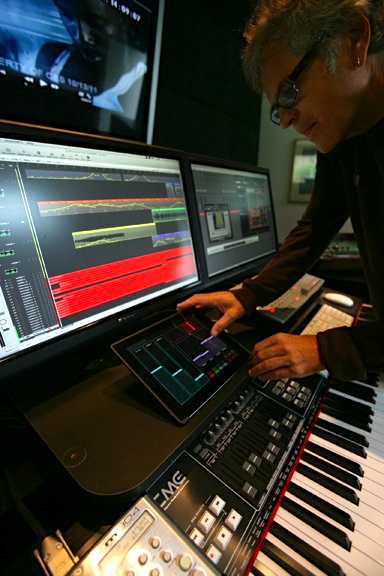
"At the time I was using a NED Synclavier as my workstation controlling a few midi synths and modules like a Nord 2, Virus, PPG 2.3, Jupiter 6 and a rackmount synth called a Morpheus by EMU. The Morpheus, like a lot of the rackmount modules in the ‘90s, had this little screen with tons of pages to figure out which made programming painful, but once I figured out the programming architecture it yielded some interesting clangy metal sounds and some strange ambiences, which became a big part of the palette and sound of Fallout."


The list of synthesizers and samplers that the radiophonic workshop back in 1985.

In this interview, Mark's use of the PPG Wave 2.3 is mentioned.


At around the 2:50 mark, a PPG Wave synthetizer can be seen in Gilmour's rig.

"Joie is also the proud owner of a PPG Wave 2.3 (the Waldorf Wave's predecessor — see the RetroZone in SOS December 1996), and is therefore well qualified to sing the Waldorf's praises, or otherwise: "The new one's definitely less buzzy! The old PPG is astonishing really, and has a totally distinctive kind of sound to it." (soundonsound.com, Jan 1997)


The PPG Wave 2.3 synthesizer is confirmed to have been used by Luca Anzilotti, as it is mentioned on the inner sleeve of the Off – "Electrica Salsa (Baba Baba)" single, according to the Discogs entry for the release.


In a studio tour featured on MusicRadar Tech's YouTube channel, Emperor Machine (Andy Meecham) showcases the PPG Wave 2.3 synthesizer, highlighting its role in his creative process.


This article from International Musician & Recording World July 1985 issue (reproduced on Sting's website) mentions Kenny Kirkland using a PPG Wave 2.3 on the then-forthcoming Dream of the Blue Turtles tour.


In this video laza can be seen using a ppg wave 2.3 synthesizer.
In the "Classix Nouveaux Medley" video by beatlecorp, S Paul Wilson can be seen using the PPG Wave 2.3 synthesizer during the tour in the Netherlands.

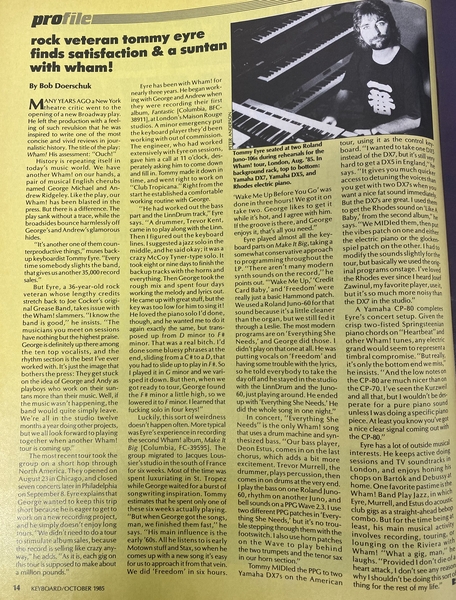
Tommy Eyre's use of the PPG Wave 2.3 is confirmed by the October 1985 issue of Keyboard Magazine. The article, authored by Bob Doerschuk, states on page 14: "Tommy Eyre used the PPG Wave 2.3 on tour with Wham! on the song 'Everything She Wants'."
Album Usage
The PPG Wave 2.3 has been featured on the following albums:
Akon (Rhythm Is A Dancer Remix)
Snap! (2025)
No Comment (Remastered)
Front 242 (2016)
In Rainbows
Radiohead (2007)
Astronomica
Crimson Glory (1999)
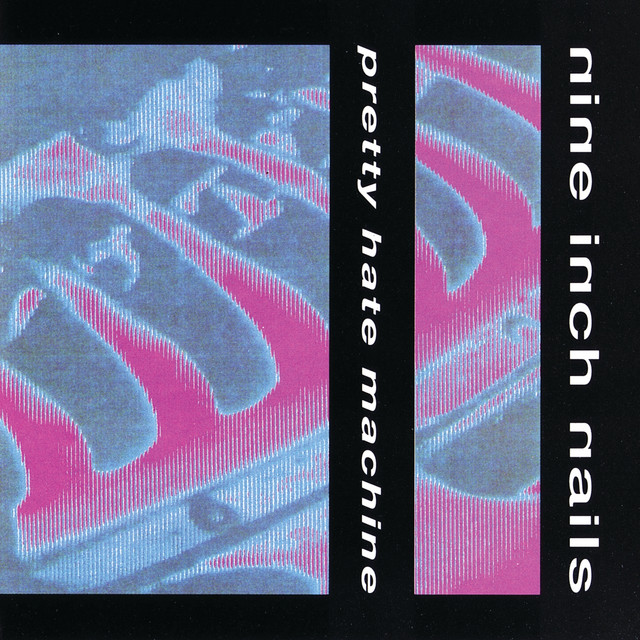
Pretty Hate Machine
Nine Inch Nails (1989)
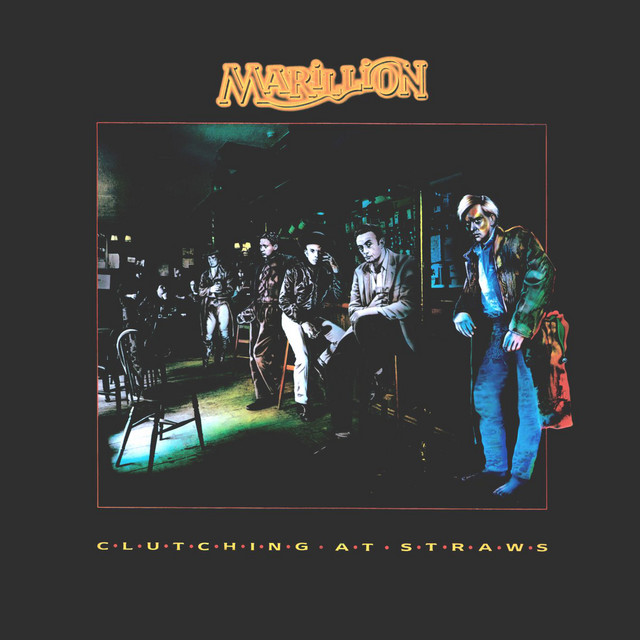
Clutching at Straws
Marillion (1987)
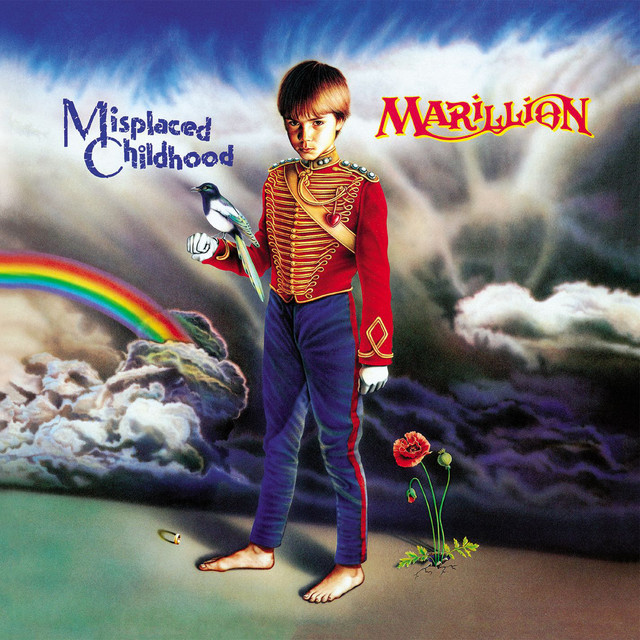
Misplaced Childhood (2017 Remaster)
Marillion (1985)
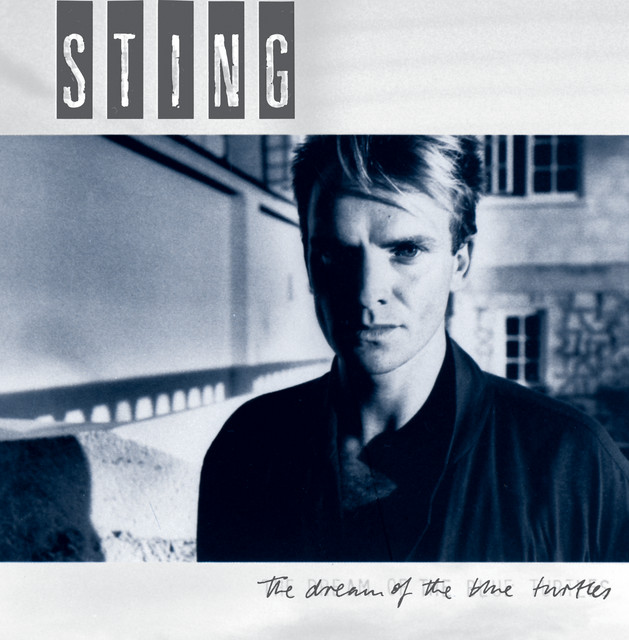
The Dream Of The Blue Turtles
Sting & Sting (1985)
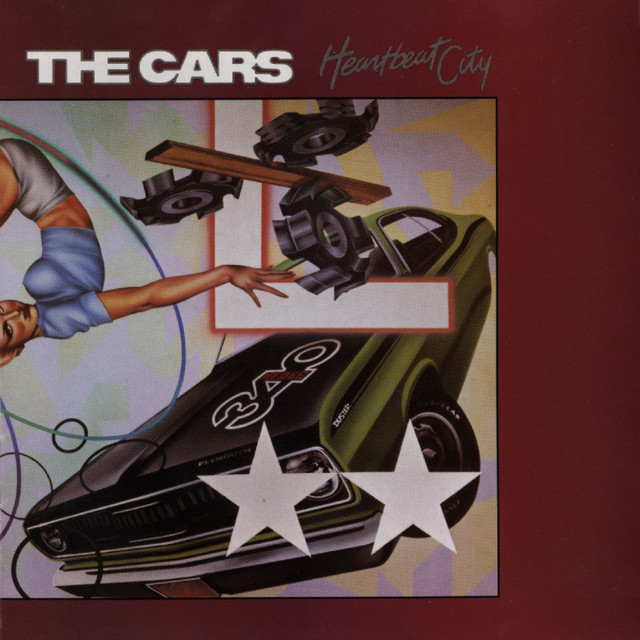
Heartbeat City
The Cars (1984)

Everything She Wants (Remix)
WHAM! (1984)
Genre Usage
Based on how artists on Equipboard use this gear, it is most commonly found in the following genres.
Used With
Based on how musicians on Equipboard use PPG Wave 2.3, it is most commonly used with the following gear.


-s.webp?v=1782917887)


More PPG Synthesizers


$3,283.92 - $3,499.99
in Synthesizers Rank


$469.00 - $699.99
in Synthesizers Rank


$19,535.25
in Synthesizers Rank


$999.00 - $1,084.00
in Synthesizers Rank


$3,216.54 - $3,590.00
in Synthesizers Rank


-m.webp?v=1783177119)
$1,200.00
in Synthesizers Rank


$439.00 - $549.00
in Synthesizers Rank
.jpg?v=1783110493)

-m.webp?v=1783292131)
$388.00 - $579.99
in Synthesizers Rank


$752.32 - $2,398.00
in Synthesizers Rank


$279.00 - $349.00
in Synthesizers Rank


$2,000.00
in Synthesizers Rank


$411.00 - $699.99
in Synthesizers Rank


$2,432.00 - $2,870.95
in Synthesizers Rank


$1,470.85 - $1,899.00
in Synthesizers Rank


$299.29 - $652.00
in Synthesizers Rank


$385.00 - $530.00
in Synthesizers Rank


$1,361.33 - $1,839.99
in Synthesizers Rank


$220.00 - $749.99
in Synthesizers Rank


$493.48 - $899.99
in Synthesizers Rank


$279.00 - $449.99
in Synthesizers Rank


$278.85 - $1,763.18
in Synthesizers Rank


$57.95 - $495.44
in Synthesizers Rank


$325.00 - $1,332.49
in Synthesizers Rank


-m.webp?v=1783255096)
$1,709.10 - $1,944.00
in Synthesizers Rank


$397.06 - $699.00
in Synthesizers Rank


$499.99 - $719.99
in Synthesizers Rank


$309.99 - $915.00
in Synthesizers Rank


$3,999.00 - $4,999.00
in Synthesizers Rank


$1,469.00 - $2,159.99
in Synthesizers Rank
.jpeg?v=1783244343)

$290.00
in Synthesizers Rank


$479.99 - $1,099.00
in Synthesizers Rank

$166.00 - $299.00
in Synthesizers Rank


$627.41
in Synthesizers Rank


$385.00 - $529.99
in Synthesizers Rank


Community setups


Similar


Gear Guides









Most Popular Synthesizers
Most Popular Brands
-
Added to Equipboard on by
 javawarrior
Gear IQ 210
-


