
Pricing and availability




* Product prices and availability are updated by Equipboard every 24hrs and are subject to change. Equipboard may receive compensation for purchases made at participating retailers linked on this site. This compensation does not affect what products or prices are displayed, or the order of prices listed. For more information, please refer to our affiliate disclosure.
Description
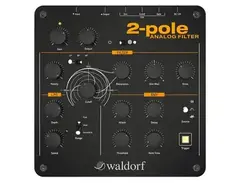
Unleash a sonic revolution with the Waldorf 2-Pole Filter, the perfect companion for musicians in search of vibrant, expressive sound manipulation. Whether you're laying down tracks in the studio or elevating your live performances, this all-analog signal path device serves as a versatile tool to twist and mangle your audio in fascinating ways. The 2-Pole Filter's multimode capabilities enable you to explore lowpass, highpass, and bandpass modes, each offering a unique flavor to your sound.
The adjustable LFO and variable envelope triggering open up a world of dynamic modulation, allowing you to infuse your music with everything from subtle undulations to intense, swirling chaos. Transform your sonic palette with the envelope follower, perfect for crafting funky wah-wah effects or animating pad sounds. And with the preamp's overdrive feature, guitarists and bassists can add layers of warm saturation or gritty distortion, making the 2-Pole an essential addition to any setup.
Key Features:
- All-analog signal path for authentic sound manipulation
- Multimode filter with lowpass, highpass, and bandpass options
- Adjustable LFO for diverse modulation effects
- Envelope triggering for responsive sound shaping
- Preamp with overdrive for direct guitar or bass connection
- CV inputs for enhanced expressive control
Product specs
| Brand | Waldorf |
| Model | 2-Pole Analog Filter |
| Finish | Black |
| Year | 2014 - 2025 |
| Made In | Germany |
| Categories | Desktop Synths |
| Analog / Digital | Analog |
FAQs
-
What type of filter is the Waldorf 2-Pole and what is its primary use?
-
The Waldorf 2-Pole is an analog filter designed for processing audio signals. It is primarily used to shape and sculpt sound by cutting or boosting specific frequencies, making it ideal for creative sound design in both live and studio settings.
-
Does the Waldorf 2-Pole filter work with both mono and stereo signals?
-
The Waldorf 2-Pole is designed to process mono signals. For stereo applications, you would need to use two units, one for each channel, to maintain stereo integrity.
-
How does the Waldorf 2-Pole filter differ from digital filters?
-
The Waldorf 2-Pole is an analog filter, providing a warm, natural sound that is often preferred for its musical quality and character. Unlike digital filters, it offers a more organic response, which can be particularly appealing for analog synth enthusiasts and sound designers.
-
What kind of power supply does the Waldorf 2-Pole require?
-
The Waldorf 2-Pole requires a 12V DC power supply, which is typically included with the unit. Ensure you use the correct power adapter to avoid any damage to the device.
-
Can the Waldorf 2-Pole filter be used with a synthesizer?
-
Yes, the Waldorf 2-Pole is ideal for use with synthesizers. It allows you to further manipulate and enhance the sound of your synths by adding dynamic filtering effects to your patches.
Videos

WaldorfMusicChannel
Waldorf 2 pole Tutorial (english version)
Waldorf 2 pole Tutorial (english version)
WaldorfMusicChannel
NAMM 2014: Waldorf 2-Pole Filter

sonicstate
Waldorf 2-POLE ANALOG FILTER - first soundcheck - HQ Audio

Jürgen Driessen
NAMM 2014: Waldorf 2-Pole Analog Filter

MusicRadar Tech
Volca Bass Techno Experiment w/ Ditto X4 Looper + Waldorf 2-Pole Filter

Slenterende Beer
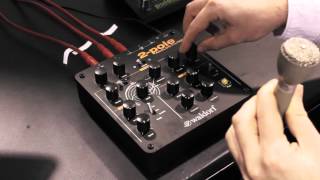
Waldorf 2-Pole Filter NAMM 2014

DV247 Music Store UK TV
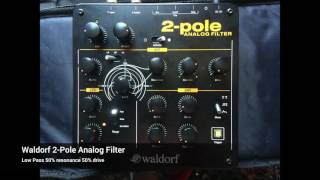
Waldorf 2 Pole Analog Filter vs Logic X Auto Filter

The Home Studio Doctor
Reviews
Owner Insights
We analyzed real musician discussions from forums and Reddit to find what players love, question, and tweak about Waldorf 2-Pole filter.
Features and functionality
-
The 2-Pole offers more envelope settings like Attack, Decay, Hold Time, and Threshold, providing enhanced control over sound shaping compared to the MF-101.
Source -
The 2-Pole includes three simultaneous drive/distortion types (Gain, Drive, Rectify), offering a wider palette of tonal distortion options than the MF-101.
Source -
The 2-Pole is equipped with a manual envelope trigger, allowing for real-time manipulation that's not available on the MF-101.
Source -
The 2-Pole's envelope and LFO sections complement fuzz pedals, enhancing their sonic range and versatility.
Source -
The 2-Pole is triggered by CV inputs, including envelope, cutoff, and gate CV, complicating use with digital polysynths lacking CV output.
Source
Comparisons
-
The MF-101 is praised for its creamy, full sound, especially valued in Moog products, contrasting with the 2-Pole's unknown timbre among users.
Source
Use cases and applications
-
The 2-Pole's versatility with Low Pass, High Pass, and Band Pass filters makes it adaptable for various sound design scenarios, unlike the Low Pass-only MF-101.
Source -
The 2-Pole excels in guitar setups, blending well with fuzz, delay, and reverb pedals for dynamic soundscapes.
Source -
Incorporating the 2-Pole into a pedalboard with a Fix’d Fuzz and multiple delays provides a rich, textured sound for guitarists.
Source -
A setup with dual loopers allows for intricate layering, enabling solos over varied loop lengths with the 2-Pole.
Source -
The 2-Pole can function like a paraphonic synth when paired with digital polysynths, applying a single filter to multiple oscillators.
Source -
Owners highlight the challenge of configuring the 2-Pole with digital polysynths, suggesting routing MIDI through an analog synth with CV output as a potential solution.
Source
Value and pricing
-
With the 2-Pole being cheaper than the MF-101, it presents a cost-effective option for those seeking versatile filtering capabilities.
Source
Critic Reviews
4.0 out of 5
Based on 1 Review and 10 Ratings

Artist usage
Add artist
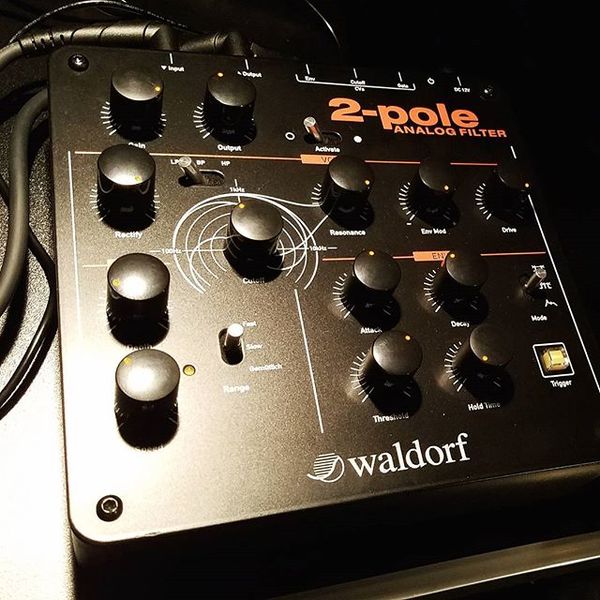
WOW DUDE THIS THING IS ABSOLUTELY BADASS!! So happy to have added this to the studio. Unbelievable work #waldorf

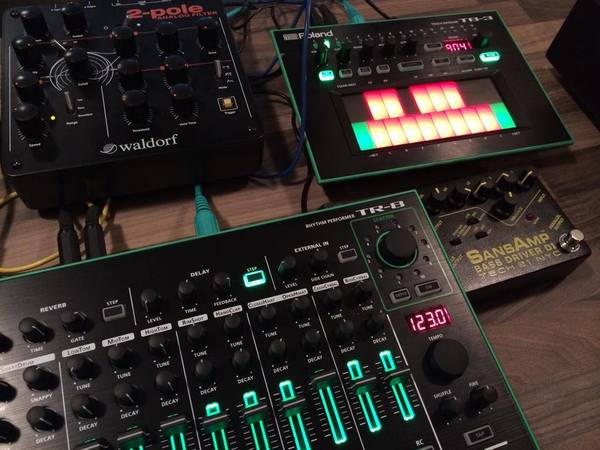
In this photo, Marc Romboy is shown with the Waldorf 2-Pole Analog Filter, highlighting its role in his studio setup.


In the video titled "My Synth Studio Revealed | Studio Tour 2025," at the timestamp 1:02:36, a Waldorf 2-Pole Analog Filter Pedal is visibly part of Anthony Marinelli's pedal collection, confirming his use of this specific music gear.

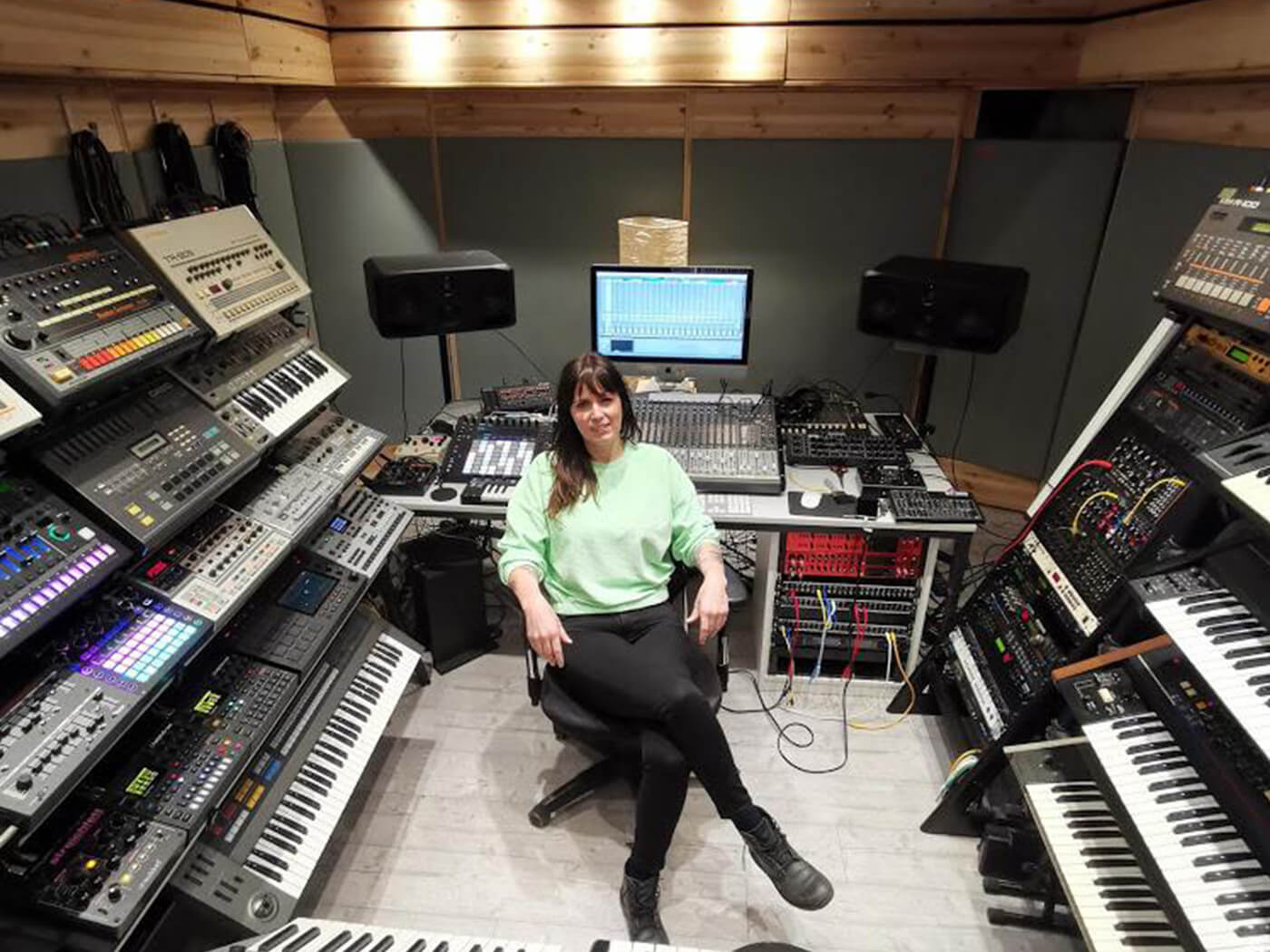
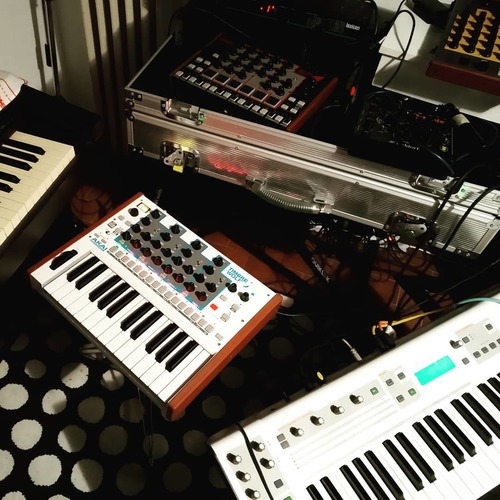
As seen in the keyboard shelf photos of this MusicTech article. "2-Pole" label is just visible in largest desktop photo.

.jpg)


In the Attack Magazine article by Adam Gilbert, Fred Everything discusses using the Waldorf 2-Pole filter in his studio setup.

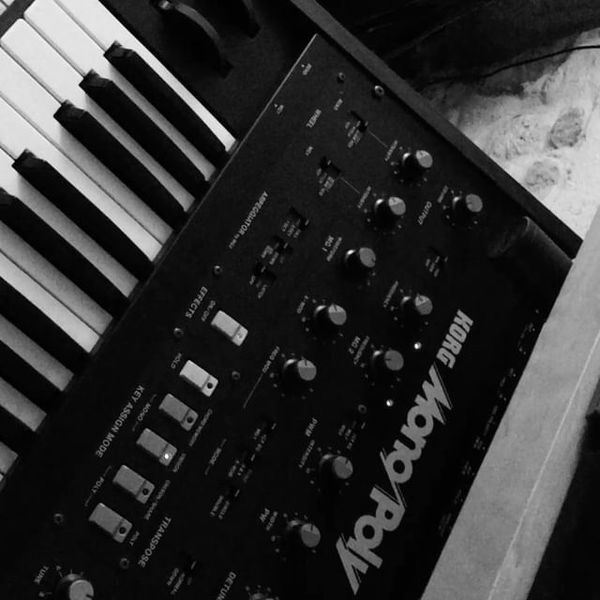
In this video we can see that djedjotronic is using the Waldorf 2-Pole filter

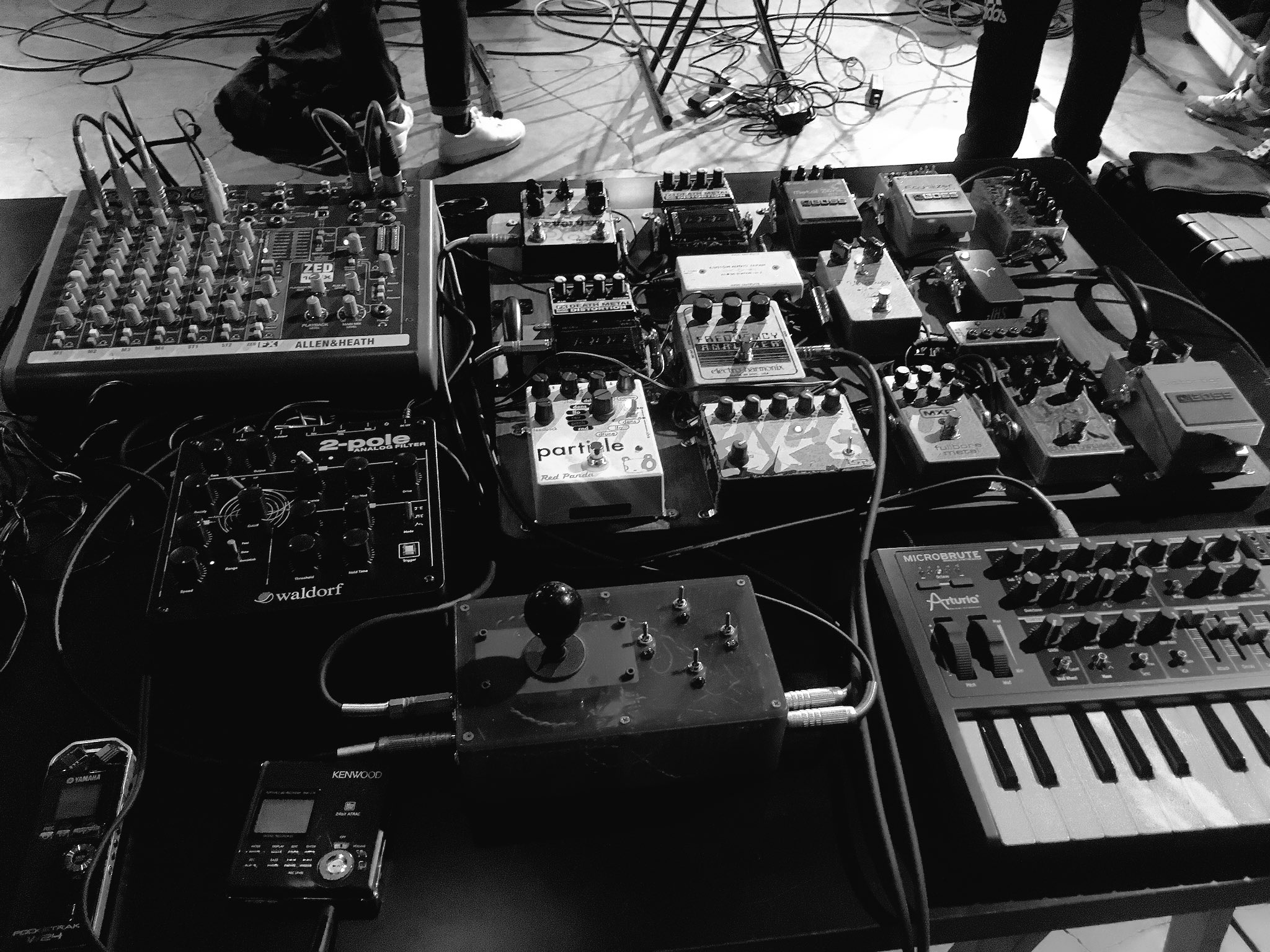
in this twitter post, you can see the waldorf 2 pole filter in kazuma kubota’s setup


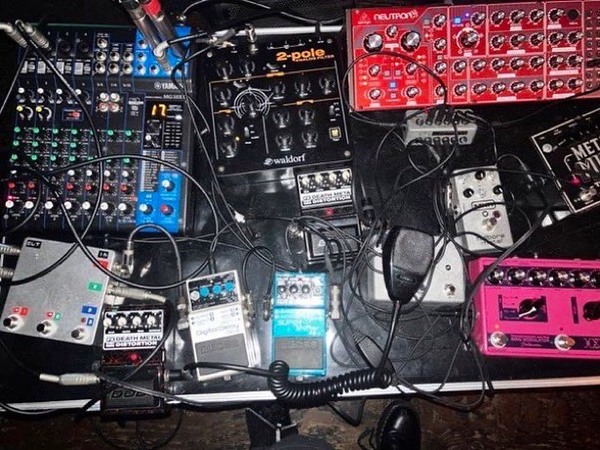
Patrick Hyland, in an interview with Reverb, confirmed the use of the Waldorf 2-Pole filter to process the sound of an Elka Panther transistor organ in Mitski's song "I Bet on Losing Dogs" from the album "Puberty 2". Hyland stated:
Oh yeah, that’s an Elka Panther transistor organ going through the Waldorf 2–pole filter, which is a really fun and I think kind of criminally underutilized filter.
This information was provided by Reverb.com in an interview conducted by Matt Biancardi.

Genre Usage
Based on how artists on Equipboard use this gear, it is most commonly found in the following genres.
Used With
Based on how musicians on Equipboard use Waldorf 2-Pole filter, it is most commonly used with the following gear.
-s.webp?v=1784559397)




Community setups
Show yours
More Waldorf Effects Processors


$1,500.00
in Effects Processors Rank


-m.webp?v=1784559394)
$640.00
in Effects Processors Rank


$204.57
in Effects Processors Rank


$1,799.00
in Effects Processors Rank


$1,549.00
in Effects Processors Rank


$1,999.00
in Effects Processors Rank


$749.99 - $833.21
in Effects Processors Rank


$132.00
in Effects Processors Rank


$1,450.00
in Effects Processors Rank


$3,799.00 - $4,999.00
in Effects Processors Rank


-m.webp?v=1784612521)
$40.00 - $2,999.00
in Effects Processors Rank

$5,777.00 - $6,999.00
in Effects Processors Rank

.jpg?v=1784591665)

$1,153.00 - $2,635.00
in Effects Processors Rank


$894.83 - $1,799.95
in Effects Processors Rank


$3,578.14 - $4,750.00
in Effects Processors Rank


$229.00
in Effects Processors Rank


$620.00
in Effects Processors Rank


$69.95
in Effects Processors Rank


$199.99 - $280.00
in Effects Processors Rank


-m.webp?v=1784559423)
$320.00
in Effects Processors Rank


$749.99 - $4,999.00
in Effects Processors Rank


$419.99 - $1,179.99
in Effects Processors Rank


$1,710.00
in Effects Processors Rank


$2,999.00 - $3,250.00
in Effects Processors Rank


$629.99 - $849.00
in Effects Processors Rank


$35.79 - $199.00
in Effects Processors Rank


$2,555.00 - $2,850.00
in Effects Processors Rank

-m.webp?v=1784386736)
$250.00 - $936.00
in Effects Processors Rank
-m.webp?v=1784559456)
$450.00 - $699.00
in Effects Processors Rank


$4,999.00 - $8,032.24
in Effects Processors Rank


$1,275.00
in Effects Processors Rank

.jpg?v=1784600206)


$163.65
in Effects Processors Rank


$1,342.25
in Effects Processors Rank


$202.50 - $599.99
in Effects Processors Rank


$300.00
in Effects Processors Rank


$66.00
in Effects Processors Rank


$175.00
in Effects Processors Rank


$475.00
in Effects Processors Rank

Accessories & Related Items


Similar


Most Popular Effects Processors
Most Popular Brands
-
Added to Equipboard on by
AalexspiritGearIQ 79
-


